
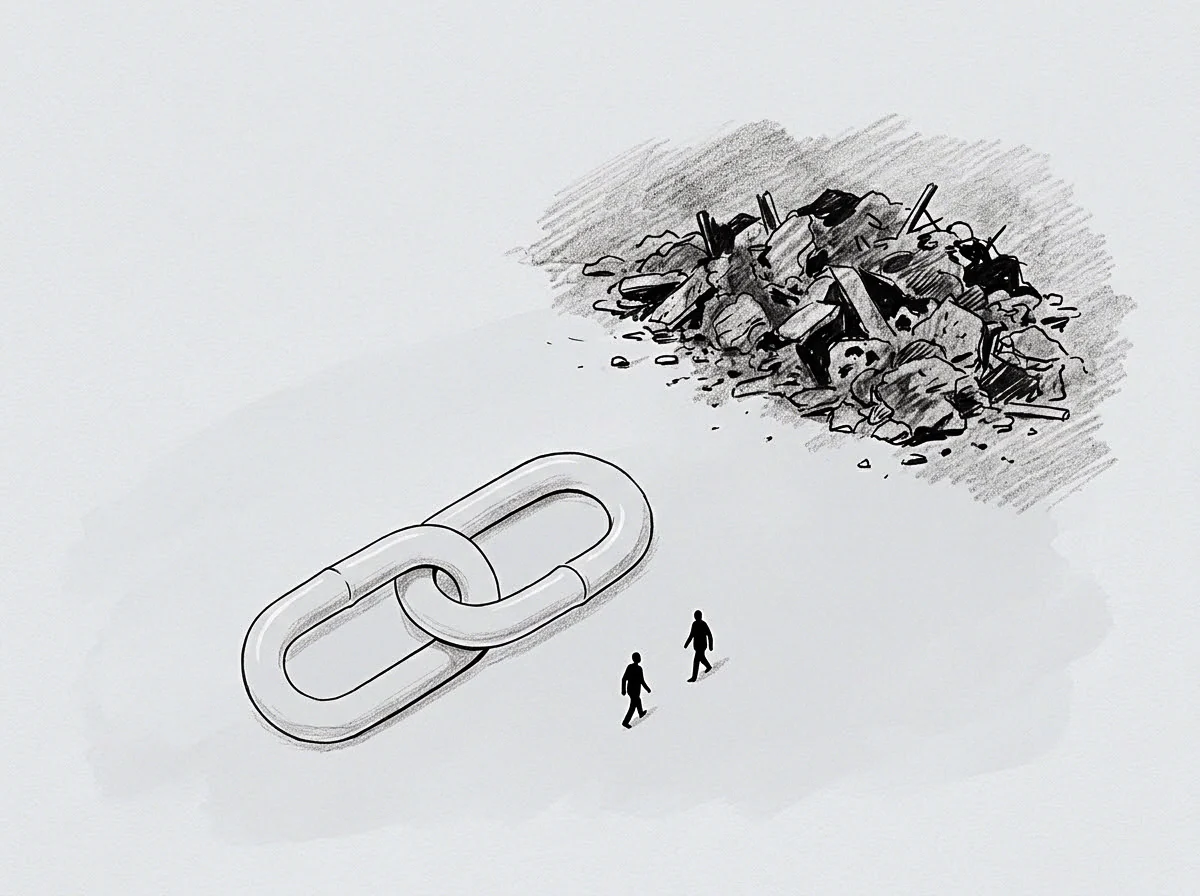
What the registrar says
Years of arguing about who built what, and the part that settles it is a field in a form neither of us filled in on purpose. A claim gets a reply; a line in a register does not, because a
A structural weakness represents an overlooked or underspecified condition within an operational process or a formal arrangement. A soft point is an area of latent vulnerability that might not be evident under normal operating conditions but can lead to disproportionate costs or liabilities when external pressures or internal changes occur. This condition differs from a known risk in that its existence or precise mechanism of failure is not always documented or understood until after an incident has occurred.
It typically governs aspects of a system or agreement where the boundary of responsibility is ambiguous, or where a dependency relies on unstated assumptions about behavior, resource availability, or compliance requirements. The scope of a soft point applies broadly across any formal or informal system, from client agreements to internal workflows and regulatory commitments, halting where explicit terms or robust controls are in place to address the specific condition and its potential consequences. It often requires specific expertise to identify proactively.
The identification of soft points often requires a deep understanding of how a system behaves under stress, rather than merely reviewing its written specification. A founder might discover a soft point in their daily operations through repeated minor failures or unexpected resource drains that do not align with documented procedures or projected expenditures. This discovery process highlights areas where the system’s design or its practical implementation deviates from an ideal state, exposing the operator to unforeseen burdens and potential liabilities.
Measuring the precise extent of this vulnerability can be challenging, as its potential costs are hypothetical until the trigger condition manifests. The profile of such a vulnerability includes not only its location within the process but also the specific conditions under which it becomes active, which might involve changes in personnel, client demands, or increased regulatory scrutiny.
When a soft point is triggered, its effects seldom remain isolated; instead, they often initiate a sequence of related failures or escalating costs that compound over time, creating a ripple effect across interconnected operations. This cascade begins with the immediate consequence of the vulnerability, such as a missed deadline, a compliance infraction, or an unexpected technical failure, and then extends to secondary effects like reputational damage, increased audit scrutiny, the loss of trust from key partners, or even direct financial penalties and legal action. For the person holding the seat, managing this impact typically consumes significant attention capacity and energy, diverting resources from primary objectives and imposing an unbudgeted load on their limited operational capacity, potentially causing burnout.
The unstated or unquantified nature of the soft point means that the full extent of the ripple effect is difficult to predict or budget for in advance, turning what might initially appear as a minor issue into a substantial operational drain on resources and capacity, compromising overall stability and long-term viability. This progression demonstrates how a latent issue can transform into an active constraint on the founder’s ability to operate effectively, often requiring a disproportionate expenditure of time and capital to resolve once it has surfaced and its true scope is understood. The downstream consequences can influence client relationships and future revenue streams directly, affecting the work’s sustainability.
Addressing a soft point before it becomes active demands a deliberate investment of resources to either harden the vulnerable area or establish clearer terms and controls. The cost of prevention is not solely monetary; it also involves the founder’s time spent on careful analysis, detailed documentation, and the redesign of processes to close gaps in the existing arrangement. This often means converting an implicit understanding into explicit protocols, thereby removing the ambiguity that allowed the soft point to exist within the system.
For example, codifying a procedure previously handled by informal agreement, adding an additional verification step to a critical data transfer process, or implementing a new system for tracking regulatory updates can mitigate such a vulnerability. The value of this investment lies in avoiding the higher, unpredictable costs associated with reactive management once the vulnerability has been exploited, ensuring greater stability and predictability in future operations and reducing overall operational load.
Years of arguing about who built what, and the part that settles it is a field in a form neither of us filled in on purpose. A claim gets a reply; a line in a register does not, because a
The terms are written where they belong. Each field holds three desks, and every entry a desk writes raises the terms it uses, each term given a meaning, a mechanism and the places it appears. The record on these pages stays first person and hand made; the fields grow the nomenclature.