
The price that names its maker
A price is not a number. It is an act, and only the owner is entitled to perform it, so the day one piece of a shared field gets one, the field stops being shared and becomes work with a producer attached to it.
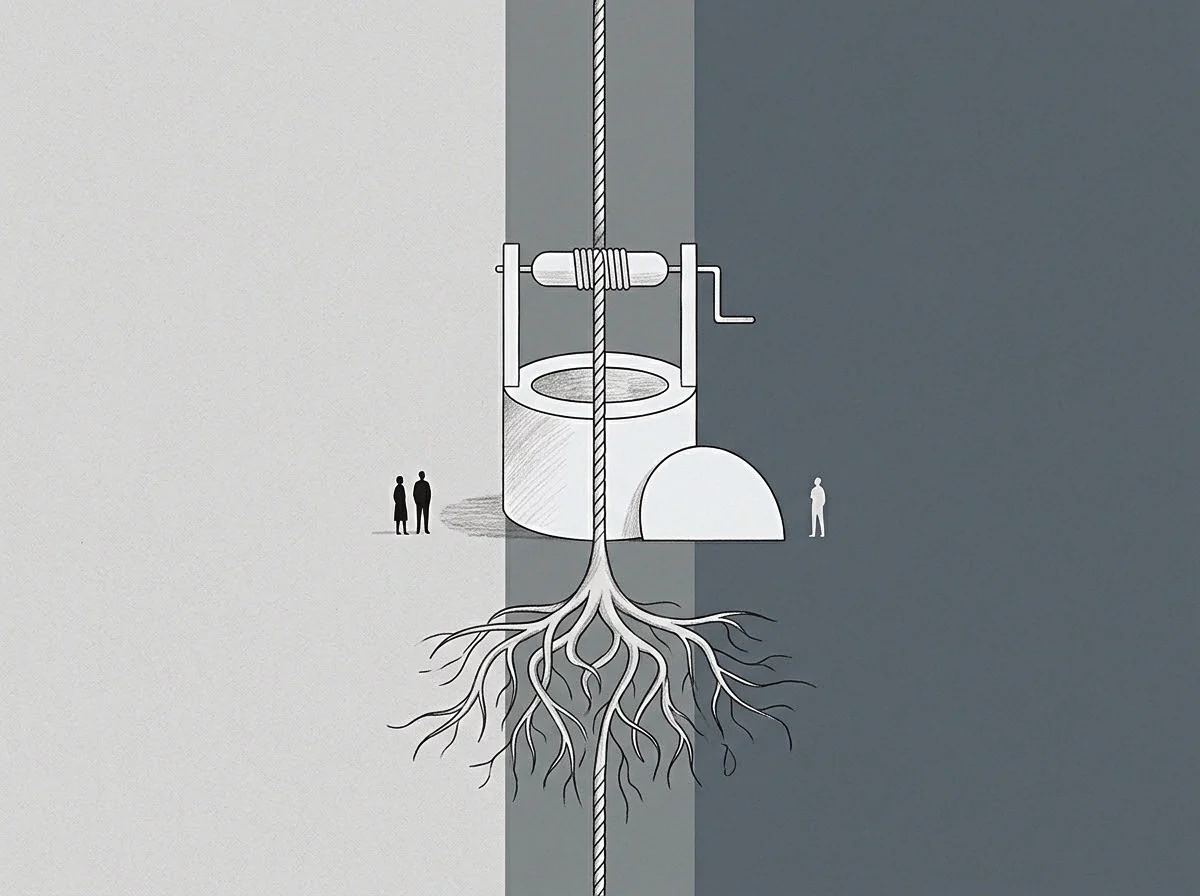
Commons
The word cost and the word price get used for the same thing, and they do opposite work. A thing has a cost the way it has weight: energy, capacity, attention, spent on the producer’s side, sitting inside whoever spent it, with no opening anywhere in a producer for somebody outside to come and read it off. A price has to leave, or it is not a price.
It gets said out loud, in a room with a second person in it who is free to say no, and the saying is the whole of it. Nobody finds a price inside a piece of work. Somebody performs one, and the entitlement to perform it sits with exactly one party in the world, which is the party that owns the thing.
Before any of that there is the field: a subject two people can both talk in with no line drawn through it, the shape of an offer, what a business is actually selling, the words a client will recognise the moment the client hears them. Nobody owns a subject. You talk in it for free, and for the one who does not practise the craft it is better than free, because talking in a field is where the material of a craft gets picked up without any of it being made.
That is commons, and it works.
Then I said that one piece of that work was mine, made for a client, with a figure attached to it. Not an argument, not a claim about anybody. A sentence with a rate in it, said the way anything else gets said.
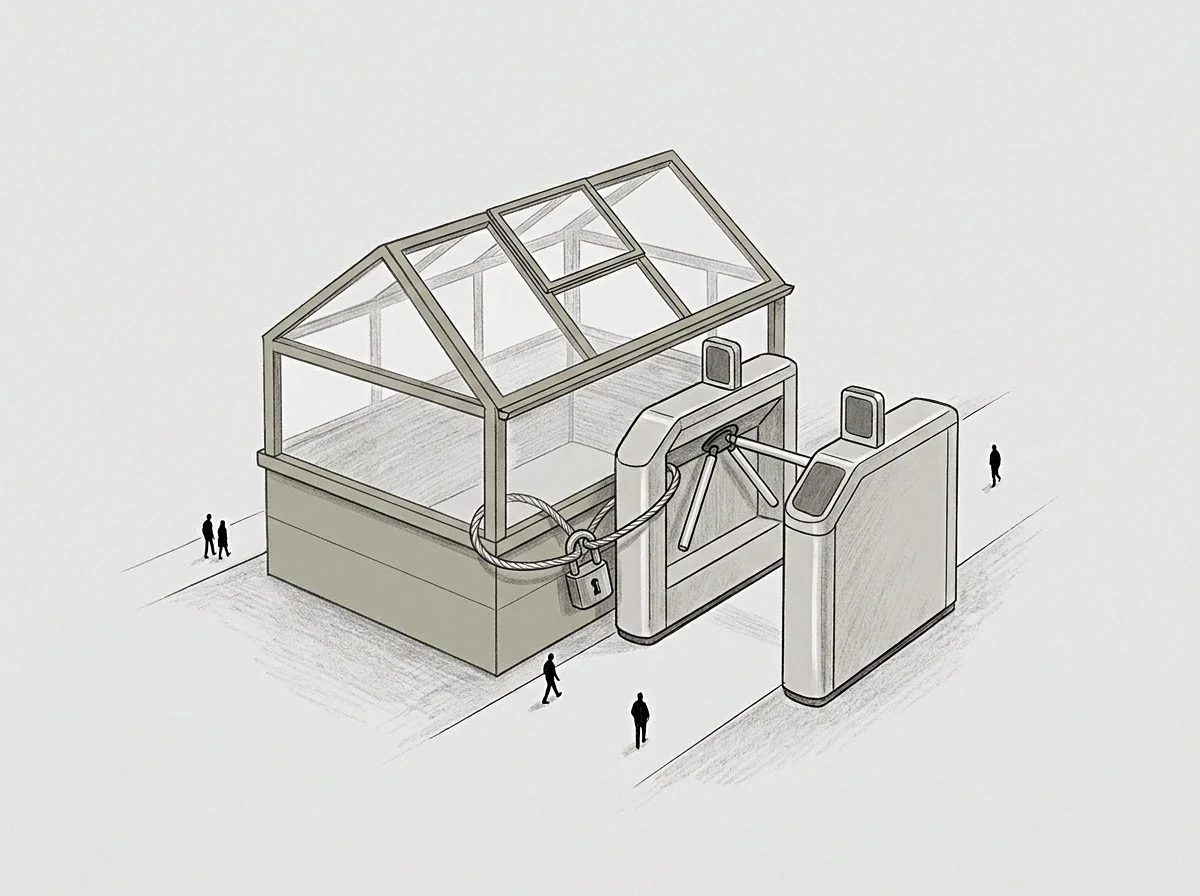
Open ground one morning, and the next morning ground with a fence on it, and my name on the fence.
Enclosure is the word for that, and it names a moment rather than a policy. A field that had run as commons between two parties gets stated as priced craft, and the commons becomes titled land. What changes is not who is allowed in.
What changes is what a sentence spoken in there is doing from then on, because from then on the field has a producer, and anybody talking in it is talking on somebody’s ground.
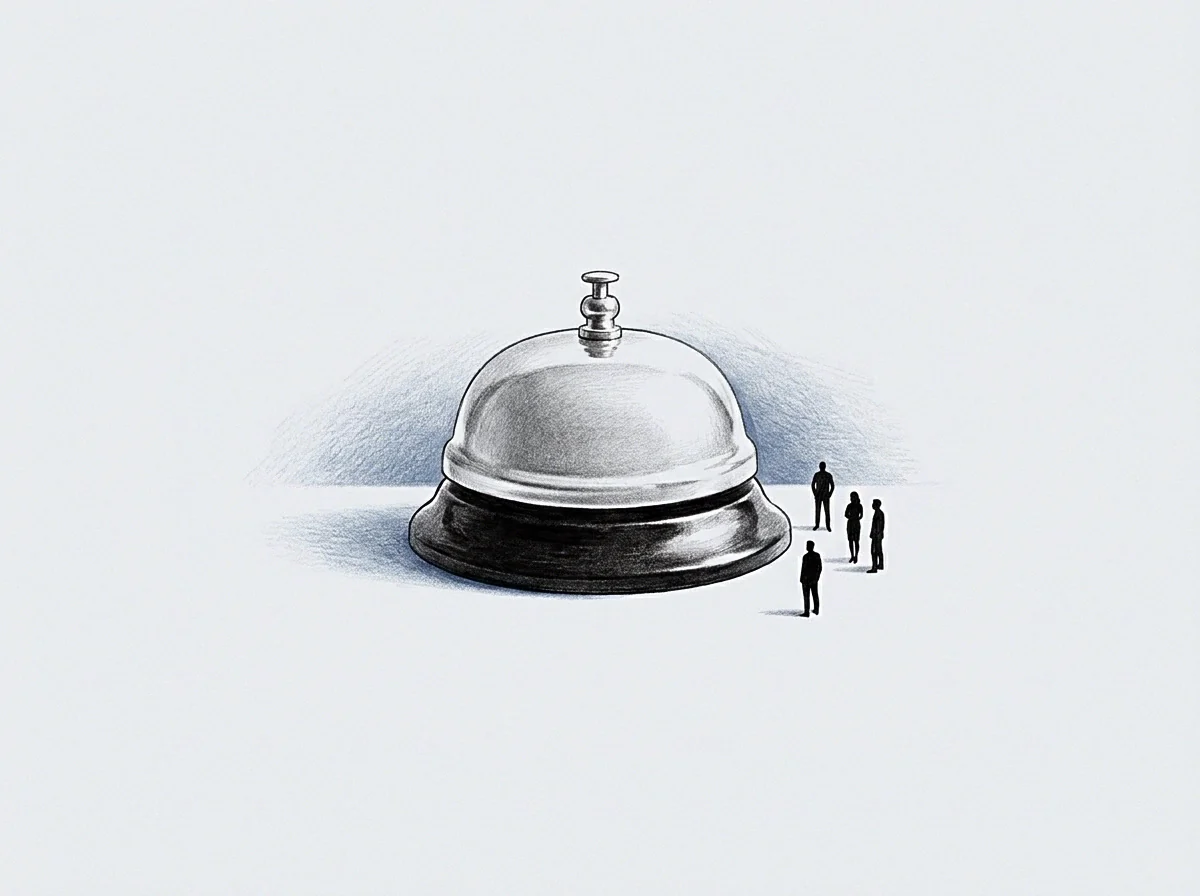
Price
A price is cardinal, an actual figure and not a direction. Said out loud to somebody who is not you it becomes public, attached to a specific thing rather than to a person or a period, and dated by the saying. Hold the same figure in your head and none of that survives.
It stays a rate you would like to get.
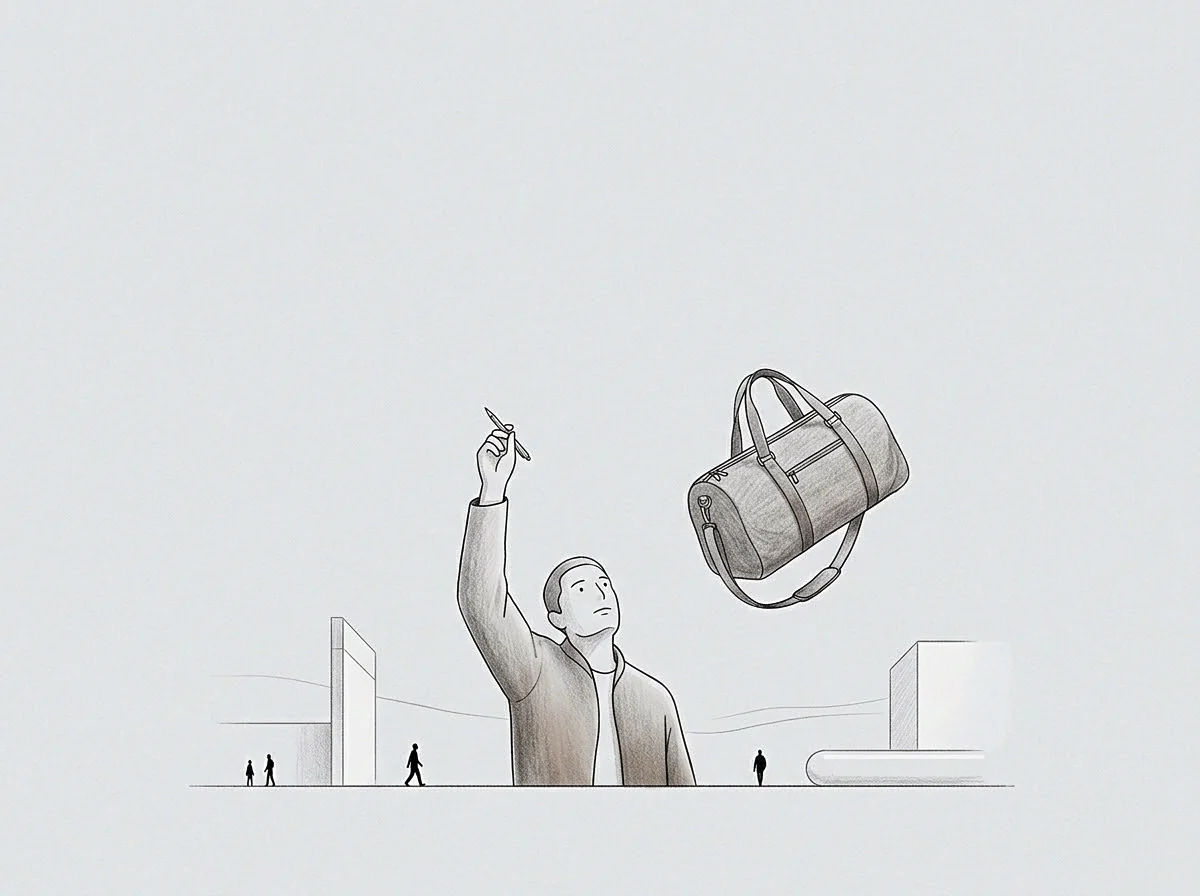
What a Quote Does That a Complaint Cannot
Cost cannot carry title, and the reason is mechanical rather than moral. The one who paid a cost is the only one who knows it, and it leaves no trace outside the person who bore it. You can say you bore one.
Nobody can check you on it. So a cost, however real and however large, cannot establish whose the work is, and saying it at greater length does not improve its standing. It stays private, it stays unprovable, and that is not a flaw in it.
That is what a cost is.
A price does the opposite in one move. It gets performed out where the producer meets the market, and performing it is how title gets exercised: I made this, and this is what it goes for. The figure is not the point.
The point is that naming a figure is something only the owner of a thing is allowed to do, and doing it where other people can hear is how the world finds out who the owner is.
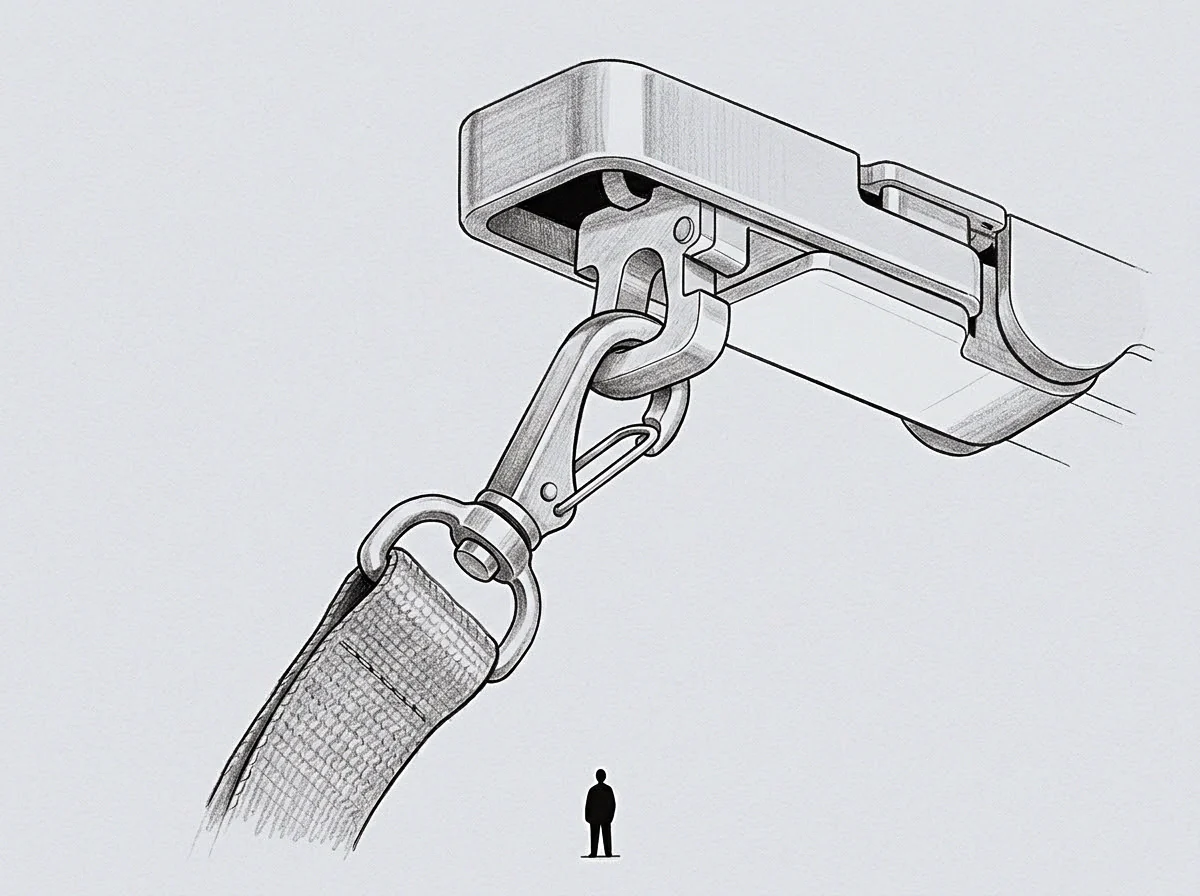
The Second Signature
A price is witnessed too, because a second party is in the room by definition, or there is no price, only a wish. Then the client pays, and something further happens that the producer does not perform at all. The market countersigns.
Somebody from outside the whole arrangement, spending money that was never mine, confirms that the thing has a maker and that the maker is the one who named the rate. An accepted price is therefore a provenance record, a document carrying two signatures, mine in the quote and the client’s in the payment, and it is the one document in the arrangement that neither party can go back and adjust.
A piece of work with an invoice behind it can only be worn by the name on the invoice.
The property that makes this work on craft is the property that makes it poison somewhere else, and the two cases have to be held next to each other, because a person who learns the rule in one place will carry it into the other and do damage with it. A figure attached in public to a piece of work turns territory into property, which is what you want: the thing stops being a subject anybody can talk in and becomes an object with a producer. The same figure attached to something relational runs the inverse.
You put a number on care, on hours given because somebody needed them, on years of being reachable, and the number protects none of it. It converts the thing into a transaction, and once converted it does not convert back. Cardinality is the whole of the difference in both directions, and it is the reason price belongs on the artifact and cost belongs on the person, and the reason the record keeps two words where most people keep one.
I ran the wrong one of them for years. The figure was available to me every time and I reached for the other register instead, the ordinal one, because saying what a thing goes for felt like a claim and saying what it took felt like a fact. It is the reverse of that.
What it took is unprovable by design. What it goes for is the one claim in the set that gets countersigned by somebody with nothing at stake in me.
So a rule for anybody who has started making things that other people buy, and it holds with no figure in it. If you want it known that the work is yours, stop describing what it cost you. Put a price on it and let somebody pay the price.
One of those is a story about a person. The other is a record, and a record does not need the person standing next to it.
Boundary
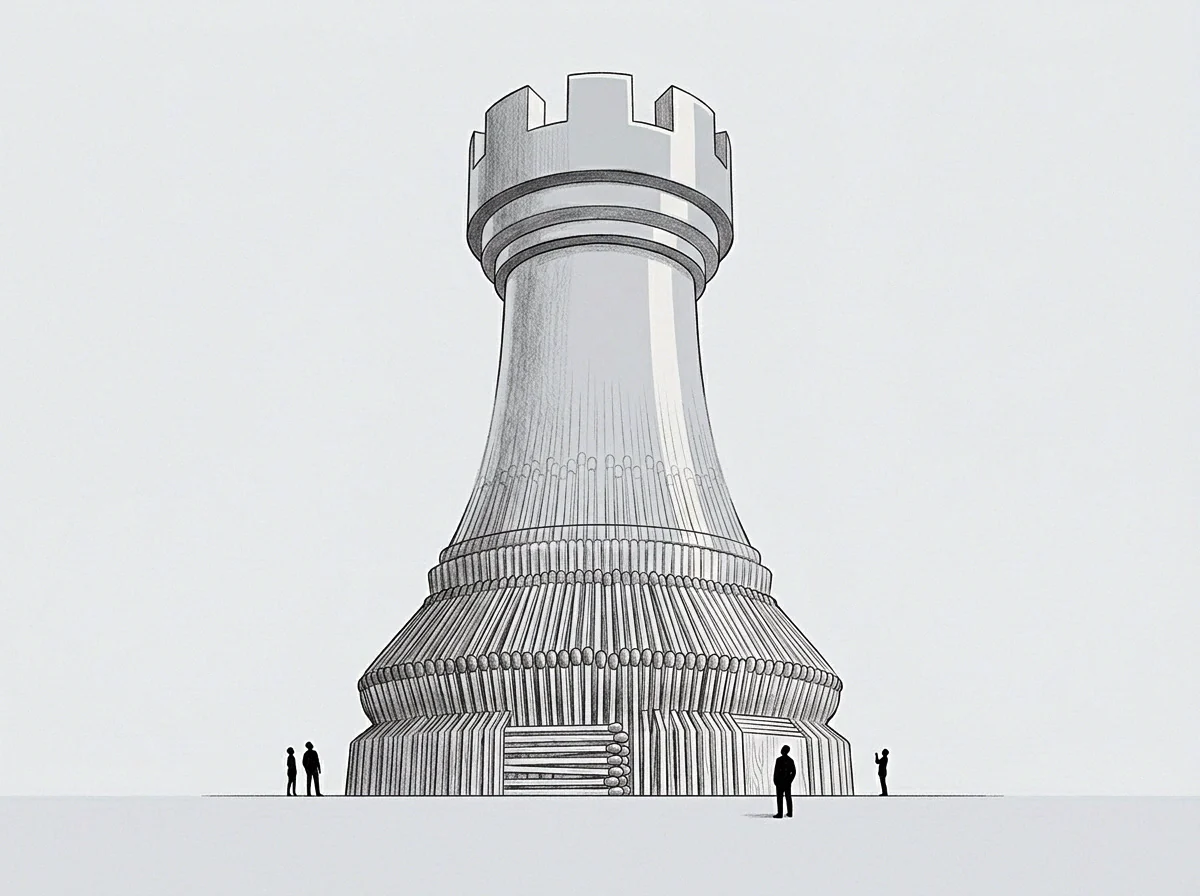
Why a shared subject coordinates as well as it does got worked out in a museum. Susan Leigh Star and James Griesemer went through the founding papers of a zoology museum at Berkeley, the first thirty years of it, and published what they found in 1989 in a journal of science studies. I came to it long after I could have used it.
The museum got built out of people who agreed about almost nothing. The director wanted a survey of the animal life of California. The woman who paid for the place wanted something else from it.
The people running the university wanted a collection they could point at. And the specimens were arriving from amateur collectors, trappers and farmers, who were not scientists, had no interest in the theory, and had no reason to care what any of it was for.
What the two of them found is that the cooperation did not come out of agreement and never needed to. It came out of objects sitting in the middle of all those parties at once: standard collecting forms, field notebooks kept to one method, maps of the state, the specimens. Each of those was loose enough for every group to use inside its own idea of the work, and firm enough to stay the same object while it moved between groups.
They called it a boundary object, and the part of the argument that gets skipped is the sharp one. You can get a room of people onto one thing by agreement. An object passed between them does the same job, and it costs a great deal less.
The term travelled a long way out of that museum. The study of people working together through computers took it up first, then information science, then organisational research, all of them needing a word for the thing that lets trades with no common language build one object anyway. Star came back to it herself in 2010 to say it was being used loosely, which is what happens to a term that works.
My own word for it is plainer than the name. A shared subject has no owner, and the missing owner is not a defect in it. It is the working part.
Every party runs the subject through its own frame and nobody has to take on anybody else’s, and that is what makes it worth having on both sides. It is also the whole of the problem. A thing that keeps one identity across parties keeps it by belonging to none of them, so it can never carry a claim.
The field I stood in ran that way for years, the coordinating was good, and I would keep it, and it could never have carried mine.
What makes a shared subject work is the same property that stops it ever being yours.
I paid for that reading in years. For a long time I put work into a shared subject and waited for ownership to come out of the other end, and ownership does not come out of contribution. Craft left in that class gets used by everybody who touches it, correctly and at no charge, and leaves no record anywhere of who made it.
A price is the act that takes one artifact out of the class, never the subject; the subject stays open and should stay open, and losing it was never on the table. So what the mistake takes is not the field. It is the years of work that went into it with nothing afterwards to show whose it was, and at the end of them the only argument left to me was the argument from cost, the one nobody can check.
Owner
The owner does not feel the enclosure.
Whoever was standing in the field when the fence went up feels it, and it does not reach that person as an argument. It arrives as a draft.
What had been running in that field has a physics. Material moves from a place with more of it towards a place with less, and that movement needs three things at once: contact, a gradient, and something permeable in between. Remove any one of the three and the movement stops.
The gradient is not available as a control. It is the asset itself, the reason there is anything there to pick up, and it stays as long as the work gets done.
Which leaves two, and both went inside a week without either being planned as a strategy. Contact went first, because the weeks filled with delivery and there was nothing left over for the long open conversation. The second control is a rule, and one sentence is enough to state it: writing on the artifact is out.
It takes almost nothing to put a hand on an artifact, and that is the act that turns somebody watching into somebody who made it, so one rule closes the whole supply line. What radiates still radiates. Diffusion needs a medium, and the medium was gone.
The access was never the thing that changed; the membrane was.
There is a second reason a fence like that registers as hard as it does, and it has nothing to do with what anybody in the field wants. What counts as work can come down to two lines: the concept, and the room where the concept gets performed. The middle is not on the list.
The middle is where the shape gets made, the writing of what the thing actually is, the levels, the order things get sold in, the method for setting a rate, the whole labour of turning a concept into something that can be sold. Where that middle has always arrived finished, handed over by whoever was standing nearest, it has no line, no price and no name. Work that arrives finished never gets costed, and what is not costed cannot be priced.
In that arithmetic a business grows as a run of concepts, each one roughly free.
So a certain kind of want becomes cheap to state and entirely sincere at the same time. What the want would take appears nowhere in the arithmetic, because the arithmetic has no line for the thing that would have to be supplied. It is asked at concept price, and it is meant every time it is said.
I want to be part of that.
Paper
You take the price off and the arrangement does not stop being backed by something. I ran one for years with nothing under it but my own conduct: no contract, no assignment of anything, nothing written down that a person could hold up later. It held, and the lesson is not that the backing was thin.
The backing was good. It was also the only backing in the arrangement, and it is the one kind nobody can ever check, including me.
A written commitment carries a date, and a date is what makes it possible to lay what was said next to what turned up. That is the whole reason paper is hard to get out of certain arrangements. Whoever writes the terms down has created the comparison, and an arrangement that would not survive the comparison will not produce the page that allows it.
What gets offered instead is the fresh start: drop what has accumulated, begin again, nothing behind and nothing in front. It sounds generous every time, and where nothing was ever written, it is also the only move there is. So the line does not fall where it first looks like it falls.
It is not priced against unpriced. It is chosen and bounded against obligated and accruing. Something given because I chose to give it, with an edge on it and nothing running up behind it, costs little, and a figure attached to that would turn a thing given into a thing sold, which is the conversion to keep out.
Something supplied under an obligation nobody stated, with no edge anywhere on it, runs a bill daily whether or not anybody is looking. A price belongs on engagements. What sits outside an engagement is outside it by design, and the question to put to any arrangement that has gone a long time without paper is not whether the rate was right.
What has been holding the thing up, and would that still hold if somebody laid what was said next to what arrived?
Rate
What I got wrong for longest was not the pricing of any particular job. It was the field I left unpriced on purpose, and the reason sitting under that. A rate that has not been said cannot be turned down.
You say the figure out loud and it can come back refused, and the refusal lands on a person who named something wanted. You say nothing and there is nothing there to refuse. It is the same move as keeping a thing uncheckable by keeping it unstated, turned around and run on myself.
A branch left unspecified is an open loop, and open loops bill daily. A specified branch is one page, written in the first days instead of held in suspension for months, and it names three things:
- what keeps running;
- what gets shut;
- where the person doing it ends up.
The page is a making cost, paid once, and paying it retires the bill. A rate does the same job. Written down, it is an object with edges, and objects hold themselves.
Kept in the head as a figure I might say if the conversation goes well, it stays a want, and wants run heavy. The field had stood open for years, and in all of them I never once said out loud what a piece of it went for.