
Waiting has a price and it is not zero
Delay on something you can undo and delay on something you cannot look identical from outside, and they are not the same act. One is a queue. The other is a position somebody is holding, and it gets worth more the less anybody knows.
Option
Sort what a person owes by one property and only one. Can the thing be undone. Work that ends with a term is reversible, because the term closes and the next one opens clean.
A proposal can be withdrawn and nobody is owed anything for the withdrawal. A pitch binds no one until a signature sits under it. A public page can be rewritten this evening and rewritten differently next month.
The one item left over is the one where putting a name at the bottom takes away the ability to change your mind, and it sits still for years while everything above it moves.
The axis is not size and it is not urgency. I sorted by those for a long time and neither sort separates anything: the stalled item looks like every other late item, a bit heavier, a bit older, the same species as the rest. Reversibility cuts it out at once and puts exactly one thing on its own side of the line.
That property decides what the waiting is. On everything reversible, waiting is a queue. The thing is late, then one day it is done, and the lateness cost some patience and nothing else.
On the item that cannot be undone, waiting holds something open. The page is unsigned, so the future can still be revised, and the seat the page describes can still turn out to have a different capacity to deliver by the time anybody checks. The less that can be said about that future, the more the holding is worth.
That is arithmetic before it is anything else, and it runs whether or not anybody at the table has noticed it running.
Nothing is moving, so nothing is being decided.
I believed that sentence for years and it is false. Nothing moving is a thing decided again, at a price, by whoever holds the seat that signs. The page in a queue and the page being held look the same from outside, and only one of them gains value while you stand there waiting for it.
Most of what a person owes can be undone, and the item that cannot is the item that stops.
Wait
Where the Arithmetic Came From
The name to look this up under is real options theory, and it is worth carrying with the names attached, because the ordinary way of deciding is wrong in one specific place and this work says exactly where. Stewart Myers put the phrase into finance in the late 1970s. A company’s chances to invest, Myers argued, do not behave like assets already owned.
They behave like options: a right held, not an obligation carried. Real, because the thing underneath is a plant or a field or a licence rather than a share, and because nobody will ring a bell when it has to be used.
Robert McDonald and Daniel Siegel put a number on waiting in 1986, in a paper called The Value of Waiting to Invest. They built a commitment that cannot be reversed, gave it a payoff that drifts and wanders over the years, and asked when to go. The ordinary rule says go once the expected return clears the cost of going.
Their answer was that this bar is set too low, because the ordinary sum quietly prices the right to wait at zero, and the right to wait is not worth zero. Under plain assumptions the trigger sits at a multiple of the cost rather than a shade above it.
In 1983, before either of those, Ben Bernanke had already set the part that says why the waiting is worth anything at all. It is worth something because of one branch of the future, the branch where committing turns out badly. A good branch keeps.
If the future comes out better, the commitment can be made then, on the same terms, and nothing was lost by not making it sooner. A bad branch does not keep. Once a name sits under the page, what happens under it is the signer’s to carry, and no later information takes it back.
The field calls that the bad news principle, and in practice it means the worst branch prices the holding, not the average one.
Avinash Dixit and Robert Pindyck wrote the book that turned this into a field, Investment under Uncertainty, in 1994. You need three conditions to hold before the right to wait is worth anything at all. The commitment cannot be undone.
The future is not known. Postponing is actually available, which in practice means nobody has attached a price to the delay. Where all three hold, the bar for acting sits above where the ordinary sum puts it, by the size of the thing you destroy when you act.
Raise the not-knowing and the worth of waiting goes up, not down. A future nobody can describe does not push the holder to settle it. It pays to keep it open, and it pays more the less anybody knows.
What the Field Did With It
Since then the work has gone everywhere a commitment is expensive to reverse. Oil and mineral development, where a field that has been found is not a field that has been drilled, and the licence to develop is itself the option while the commodity price does the not-knowing. Drug development, where each stage gate is priced as the right to buy the next stage rather than as a cost.
Plant capacity, grid capacity, whether to spend on a measure now or after the measurements get better. Corporate finance teaches it beside discounted cash flow as the correction to it, because discounted cash flow prices a project as though the choice were now or never, and almost nothing a person decides is now or never. Dixit used the same machinery on a stubborn fact about slumps: cheap money does not restart investment in a year nobody can read, and an operation that has stopped does not start again the moment the conditions that stopped it reverse.
The bar to go stands above the bar to stop. The gap between the two is the option, and it is why things sit.
Said in my register it is shorter. Waiting is a position, not an absence. The page nobody signed is a person standing somewhere and holding something with a value on it, and while it stays unsigned the right to say something different next month about what can be delivered stays in the hand.
That is the supply being protected. Nothing was produced, nothing was refused, and the position held perfectly.
What it cost me to find that true was years of correct arguments. I built a case and I rebuilt it, and every line in it was true, and not one line of it reached the thing that was holding. A case can be right the whole way down and still miss, when what is unresolved sits outside the terms altogether.
I was pushing on the payoff. A bad case is the cheap error. You make it, it fails in front of you, and you stop making it.
A good case aimed at the wrong quantity never fails in front of you, so you make it again, better, and the supply goes out through sentences that are correctly reasoned and structurally unable to land.
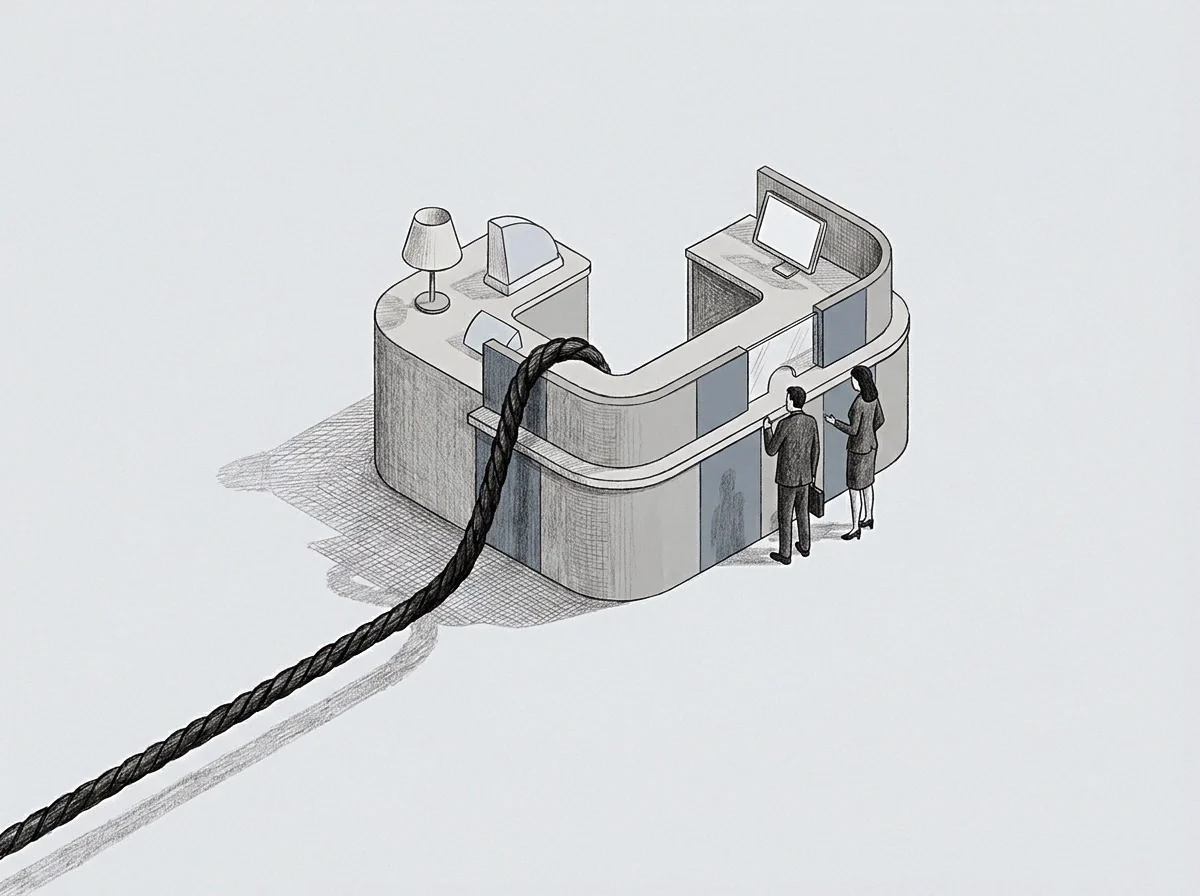
Gradient
There is a second mechanism that looks identical from outside, and telling the two apart changes everything you would do about either. George Akerlof set it out in 1991, in a lecture to economists that went into print under the title Procrastination and Obedience. The model in that lecture is honest in a way these models usually are not.
You feel a cost that lands today with far more weight than a benefit that is spread out and late. So on any given day, doing the task costs something concrete while the good of having done it sits somewhere out of focus, and tomorrow is the choice that feels rational. Then the part that lands: every postponement carries a real intention, held at full strength, to have the thing finished shortly.
Nobody is lying about intent. The intent is correct, and it will be correct again tomorrow, at the same strength, and neither instance tells you anything about the day after. The example in the lecture was a box that needed posting.
Eight months, and a renewed intention at the top of every one of those weeks. Economics built its present-bias literature on that paper, David Laibson in 1997 and then Ted O’Donoghue and Matthew Rabin in 1999, who split the people who know they will do this again from the people who do not.
It is my priority.
Neal Miller set out the other one in 1944, and the runway work in that lab is what shows you the outside of it. Rats, food at the far end, a mild shock at the same end, and a measure of how hard the animal pulls, taken at one distance from the end after another. Both pulls get stronger as the end gets nearer, and that much was already known.
What the measurements gave was the slope: the pull away climbs at a steeper rate than the pull towards, so the two cross somewhere short of the end. Far out, approach wins and the animal moves in. Close in, avoidance wins and it stops or backs off.
Distance restores approach and it comes in again. What falls out of that is specific and unpleasant to sit with. The pull towards is at its highest when the goal is furthest off, so the warm sentence about the future arrives just before the failure to produce, and those two are one pattern seen from two distances rather than a person being inconsistent.
So two people with an unsigned page in front of them can be doing entirely different things. One is holding an option, because the holding is worth something while the delivery cannot be described yet. The other is discounting, freshly, each day, and would still be discounting if every unknown in the room went away tomorrow.
You test it by moving the not-knowing. You take it out of the first case and the waiting stops, because the holding lost its value. Take it out of the second and the box still does not get posted.
So the question worth asking is not how long has this been going on, and it is not whether the intent is real, because the intent is real in both. It is what would have to stop being unknown for the waiting to stop being worth anything.
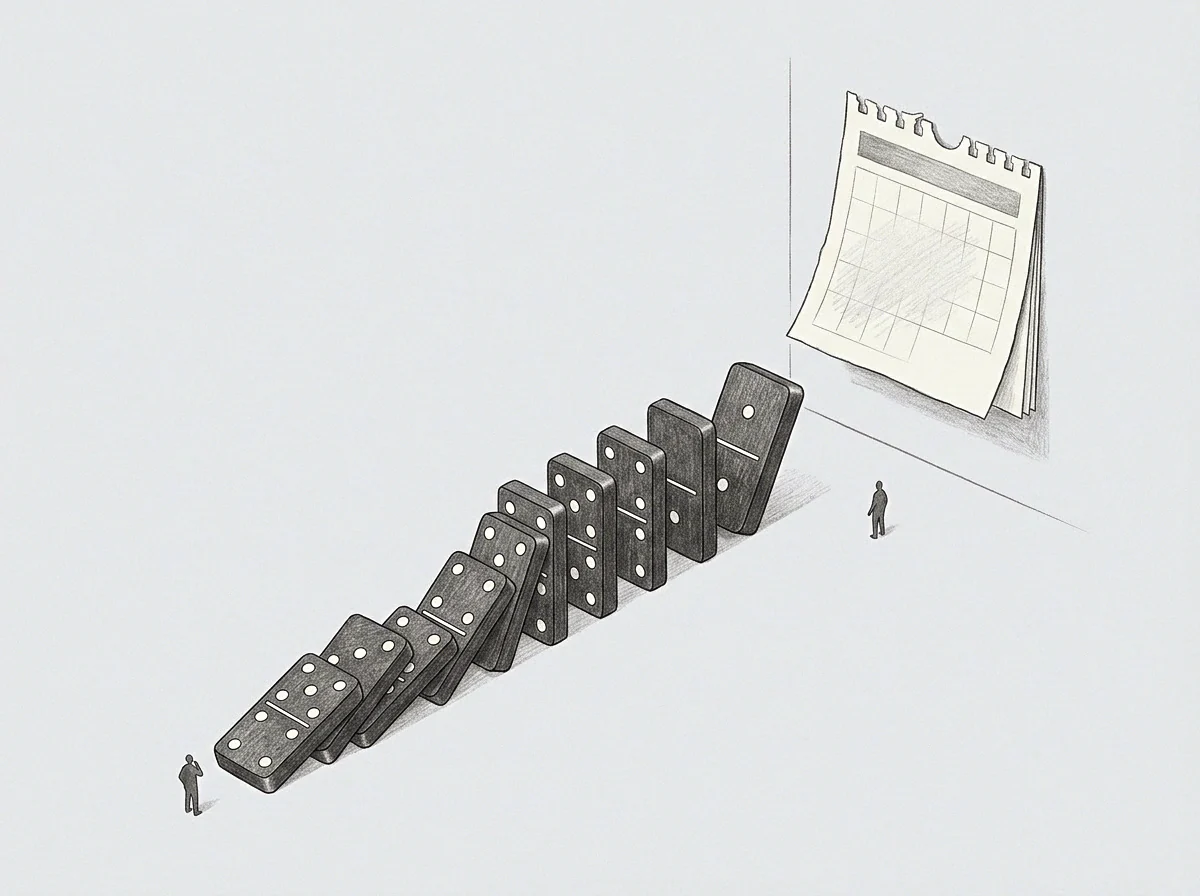
Threshold
I stopped asking when it would be signed. The question with the arithmetic in it is what lowers the bar the other side of the table is standing at, and one thing lowers it, and it is not pressure. Less not-knowing.
Nothing in the document was ever in dispute. The disagreement sat outside everything that could be negotiated, so a cleaner clause does not reach it, a date does not reach it, and a better case, made better, does not reach it at all.
Three things that feel like they must move a threshold, and touch nothing:
- Urgency, said in any tone, including the calm one.
- Fairness, shown line by line, agreed to on the spot.
- Weight, sincerely felt, sincerely restated.
What was unresolved sat inside the seat that had to sign, in whether the thing could be delivered at all, and it took me a long time to accept that this is not a quantity anybody outside that seat can reduce. Delay there is not a decision being taken. It is a valuation being run, and a valuation does not answer to a deadline, or to a consequence, or to a conversation held in good faith.
You can argue with a decision. There is nothing to argue with in a number that is simply larger than the one you are offering.
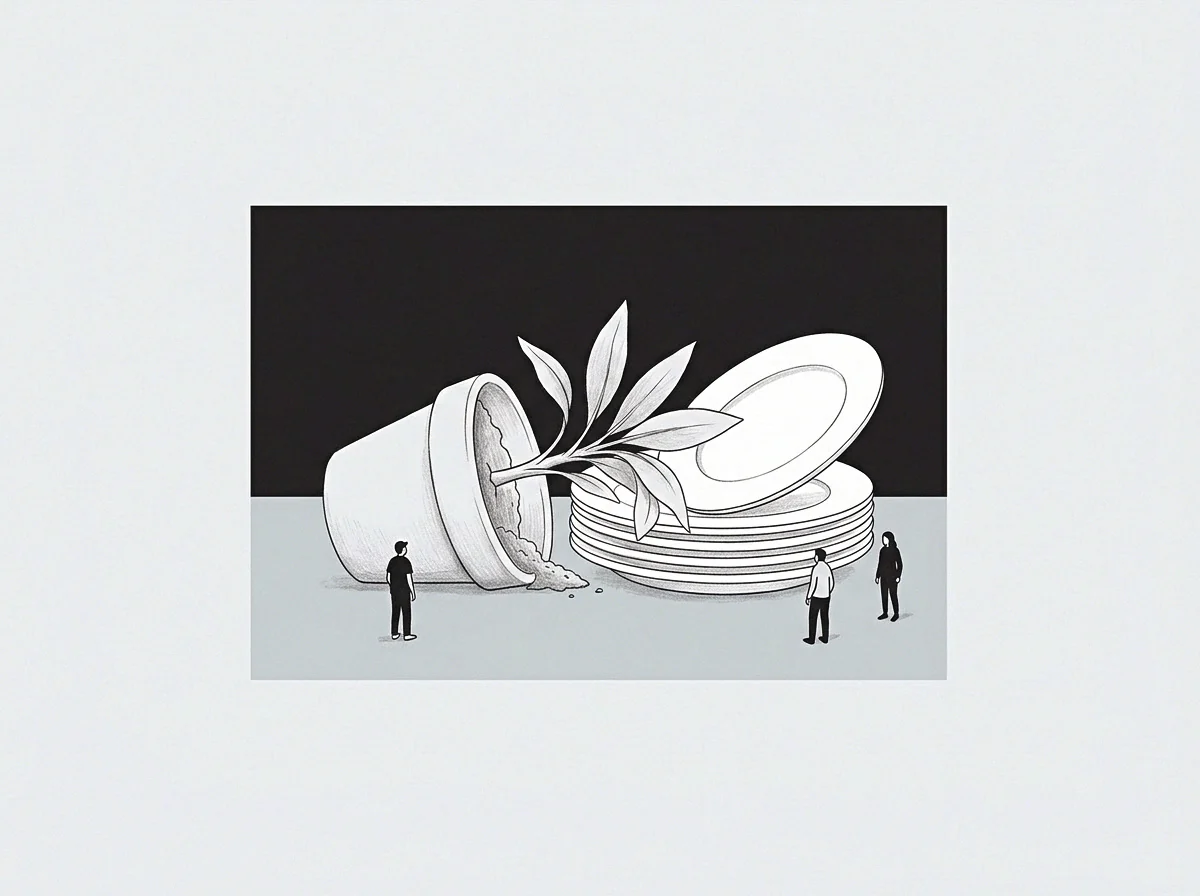
Bridge
There is a move in the other direction and it belongs to Thomas Schelling, in The Strategy of Conflict, 1960. The argument there is that bargaining power comes from taking your own choices away rather than from keeping them, and the work took a Nobel in 2005. The picture in the book is two cars meeting on a one-lane bridge.
The driver who visibly tears out the steering wheel takes it, because that driver cannot be the one who swerves any more and both of them can see that it is gone. Burning the boats behind the army is the old version. A deposit you forfeit if you walk is the small one, and the field has spent sixty years cataloguing the rest of them under the name commitment device.
That is the same arithmetic run backwards. The person holding a choice gets something out of holding it. Destroying a choice in plain sight is worth something against the other side of the table.
A person who has understood only the first half of that will read every removal of their own options as a loss, and will hand over the bridge every time, politely, while explaining that nothing has been given up.
I would rather keep my options open.
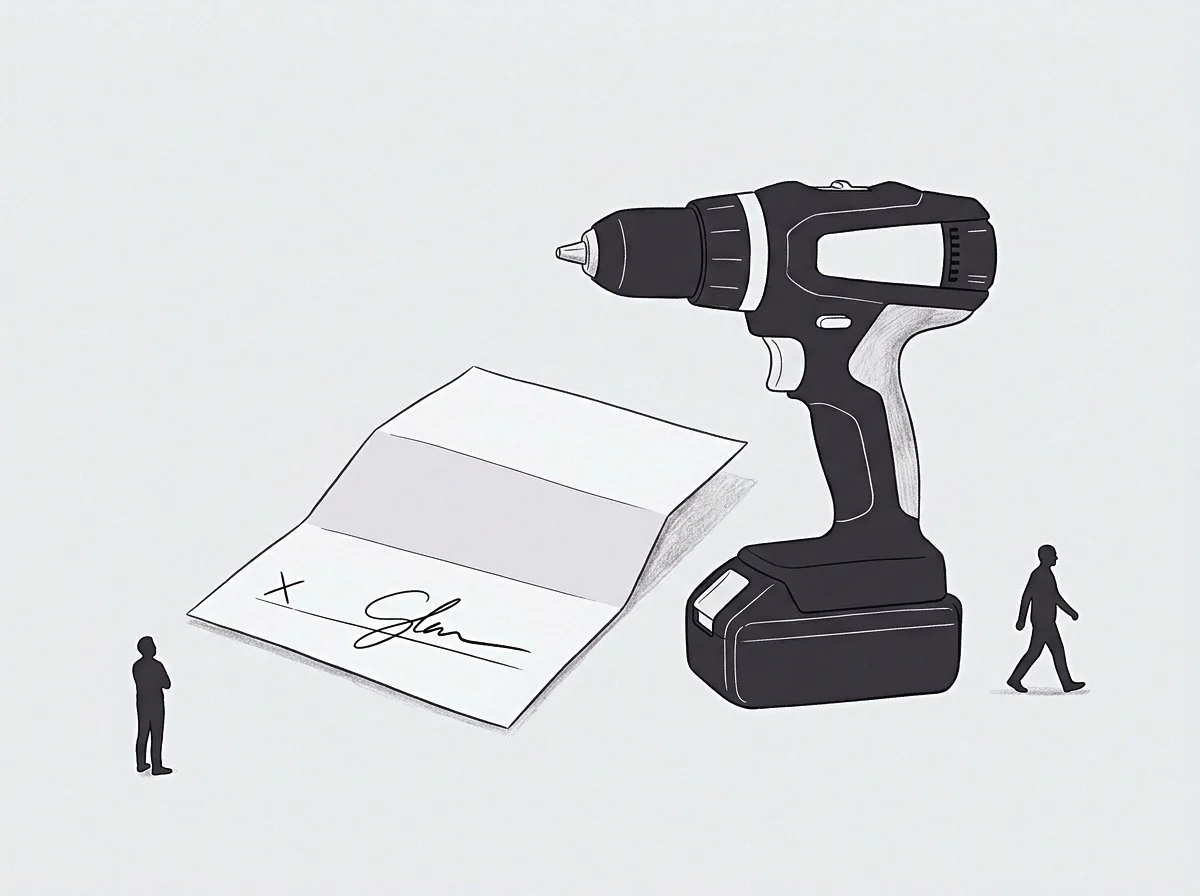
Expiry
An option does not die because the waiting got unreasonable. It dies when there is nothing left underneath it. That is in the theory and it was the last piece of it I understood.
The right is written over an asset. Move the asset onto routes the right has nothing to say about, and the right is still sitting there, worded exactly as it was, reaching nothing. No date is involved.
Nobody announces it. The holding did not expire. It emptied, and emptying looks from outside like no event at all, which is why the person holding it can go on valuing it at the old number for a long time.
An offer arriving after that is somebody exercising a right at the old price, over an asset already gone from under it. It reads as generous, or as late. It is neither.
It is a valuation nobody updated.
The theory runs on my side of it too, and that is the part it cost me something to see. For a long time I held a right of my own, which was the right to leave, and I did not use it, and the reason was the same reason the seat across from me did not sign. My not-knowing was large, and all of it sat on alternatives.
Under that much not-knowing the right to leave was worth more held than used. Nobody chooses that. It gets computed, quietly, by the same arithmetic that was keeping the page unsigned on the other side of the table.
When the not-knowing about alternatives resolved, the right to leave dropped to nothing and I used it. One theory, two seats, and it came out the opposite way on each because the unknown broke in one direction only.
Albert Hirschman named the shape of that in 1970, in Exit, Voice and Loyalty. Something starts going bad and a person has two responses available: leave, or speak up. A third word governs which one comes out, and it is loyalty, which holds the leaving down and pushes the extra weight onto the speaking.
The finding that carries here is the hard one. Speaking has force only where leaving is credible. So the sentences never had to get better for them to start landing, and mine did not get better.
What changed was whether the person saying them could go. You cannot price an argument. You can price a person who can leave, and the side of the table that has to sign prices that one every time.
So the rule I carry now, before making any case for a signature at all. I ask what the unsigned page is worth to the side that is not signing it. If it is worth nothing, then the disagreement is about terms and can be won on terms.
If it is worth something, then the terms were never the subject and had not been the subject for a long time, and two moves exist and no others: shrink the not-knowing, which is usually not mine to shrink, or move the thing the page is written over, which always is.