
No one to hold
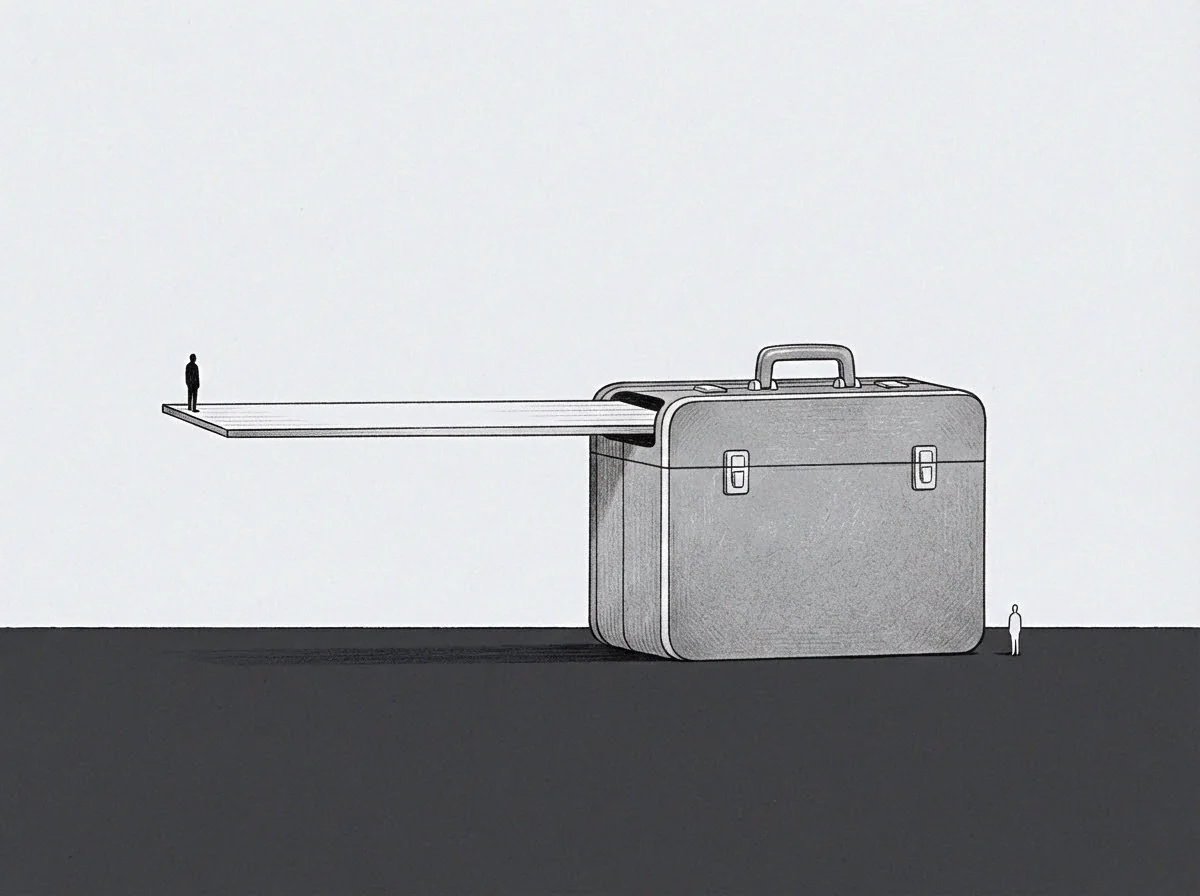
A want only becomes collectible when there is one name on each end of it. Sent to a we, it goes to an address where nobody lives, and years of asking can produce nothing without a single person ever having refused.
We
A person feels a we, and a person sends a request to a we, and those are two different objects wearing one word. The first is a state inside somebody’s head. It is real, somebody has measured it, and there is no trick in it.
The second is an address, and there is nobody living at that address. Years of my asking went to the second one and I did not work that out until the end.
The Word in the Head
Agnew and colleagues, in 1998, put a name on the first one, cognitive interdependence. They took people who were committed to somebody, listened to how they spoke about the thing they were in, and found the pronouns move from I to we in a way you can count, with the size of the move tracking how committed the person is. Aron’s self-expansion model says what the move is made of.
In a close relationship a person pulls the other one’s abilities, their way of seeing, their standing, into his own picture of himself, and holds them there as partly his own. The scale that measures it is called inclusion of other in self: two circles overlapping by degrees, and the person points at the pair that matches how it sits. The field has used it since to predict how satisfied people say they are, and how they split a reward between themselves and the other one.
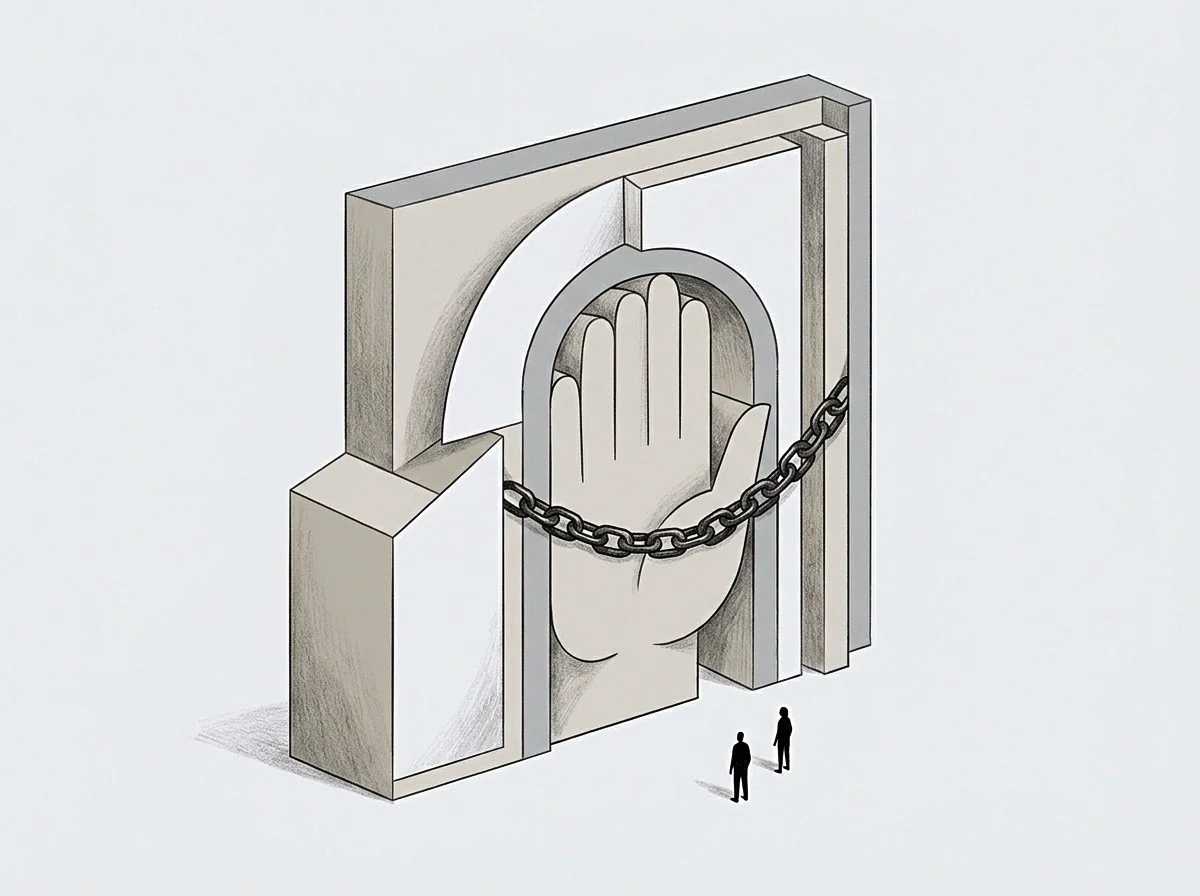
Which puts the we in somebody’s mouth somewhere other than where I had it. It is not a claim being made against me. It is a representation running.
A person who stands near a build long enough starts holding that build as partly theirs, and the holding is cognitive, not tactical. They are not lying when they say it.
We built this.
Proximity is the whole input.
What the research cost me was the villain. I had carried the we for a long time as a thing being taken, somebody lifting a build off the table in front of me and putting a shared name on it, and there is a certain fuel in reading it that way. Read it the other way and the fuel goes.
Nothing was being taken, because a head that stands near work long enough merges it without deciding to, and the person holding the merged version has no idea a second version exists. I had to put the anger down before the sentence would go in, and putting it down is not free. Under the anger there was nobody to be angry at.
Under that there was the thing I had actually been waiting for all those seasons, somebody saying out loud who did what, and it was not coming, not because it was being withheld but because in that head it had already been said, correctly, every time the word came out.
What the Form Was Built to Do
Then there is the form the word sits in, and the economists got to it first. Alchian and Demsetz, in 1972, went at a plainer question: why does a firm exist at all, instead of a market where every job is its own contract between strangers. Their answer is team production.
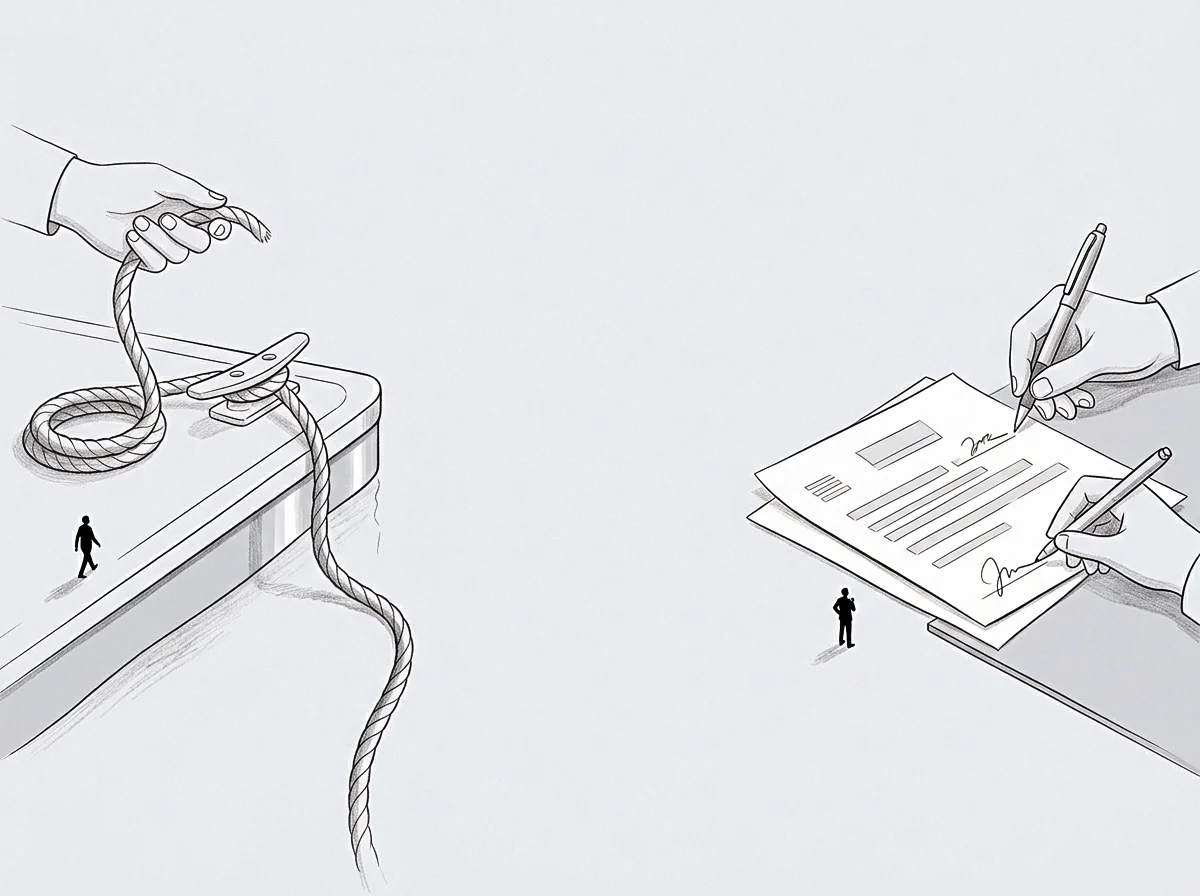
Some work only comes out joined. Two men carry a load up a stair and the load arrives at the top, and there is no reading anywhere that says how much of the carrying was in which pair of hands. Where output arrives like that, the separate parts of it cannot be priced, so the arrangement does the only other thing available to it: somebody is handed what is left after everyone else has been paid, and that somebody, holding the leftover, is the one with a reason to watch the rest.
The share stands in for the measurement nobody can take.
Which tells you what that form is for, and it is not what I had assumed it was for. It is the form you use when the work does not come apart. Not a form that tries to see who did what and does it badly.
A form chosen because seeing who did what was already off the table.
What that one took off me was the second story, the one sitting under the first. I had it that my work did not register because somebody would not look at it, and that if the looking ever happened the registering would follow. Read it the way the economists have it and there is nothing in there to look with.
The million small jobs did not go missing somewhere in transit. They landed in a structure that takes no reading of whose week a thing came off, and I stood in front of that structure season after season asking it for the reading, and every time it gave me back the one thing it holds.
The pronoun and the form are the same fact at two layers. The word is what the form sounds like coming out of a person.
Where the Ownership Was Meant to Sit
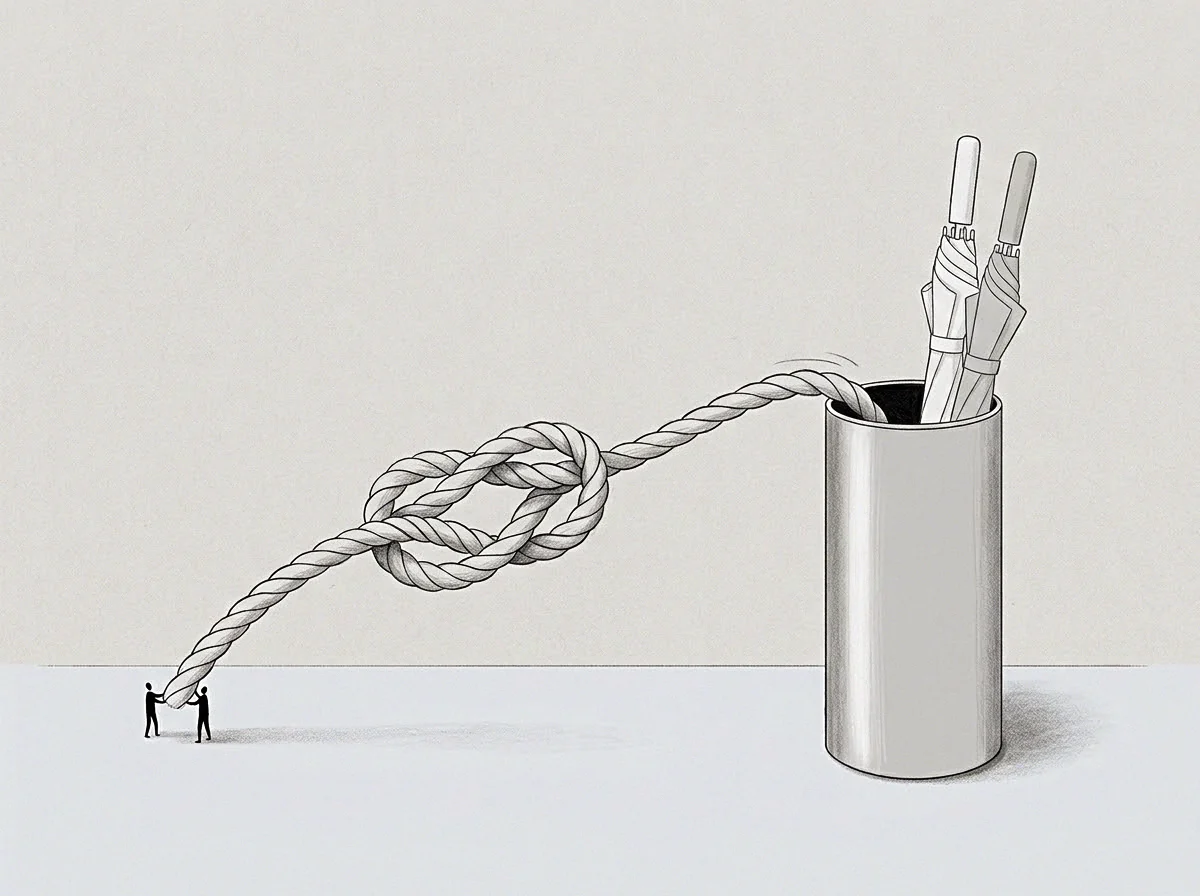
Hart and Moore, in 1990, took the next question in the line. If the joined output cannot be split, who should hold the object itself, and their answer goes under the name property rights theory. Ownership, in their reading, is the right to decide about a thing in all the situations nobody wrote down in advance, and it belongs with the side whose stake is specific to that one thing, the side whose input is worth close to nothing the moment you carry it anywhere else.
Not because that side has earned it. Because that is the side whose reason to keep putting work in dies without it. Hand the object to the portable side and the specific side stops investing, and the theory says so flatly, as a prediction.
The field has used it since to work out why one firm buys another instead of just contracting with it, and where the line between inside and outside a company falls.
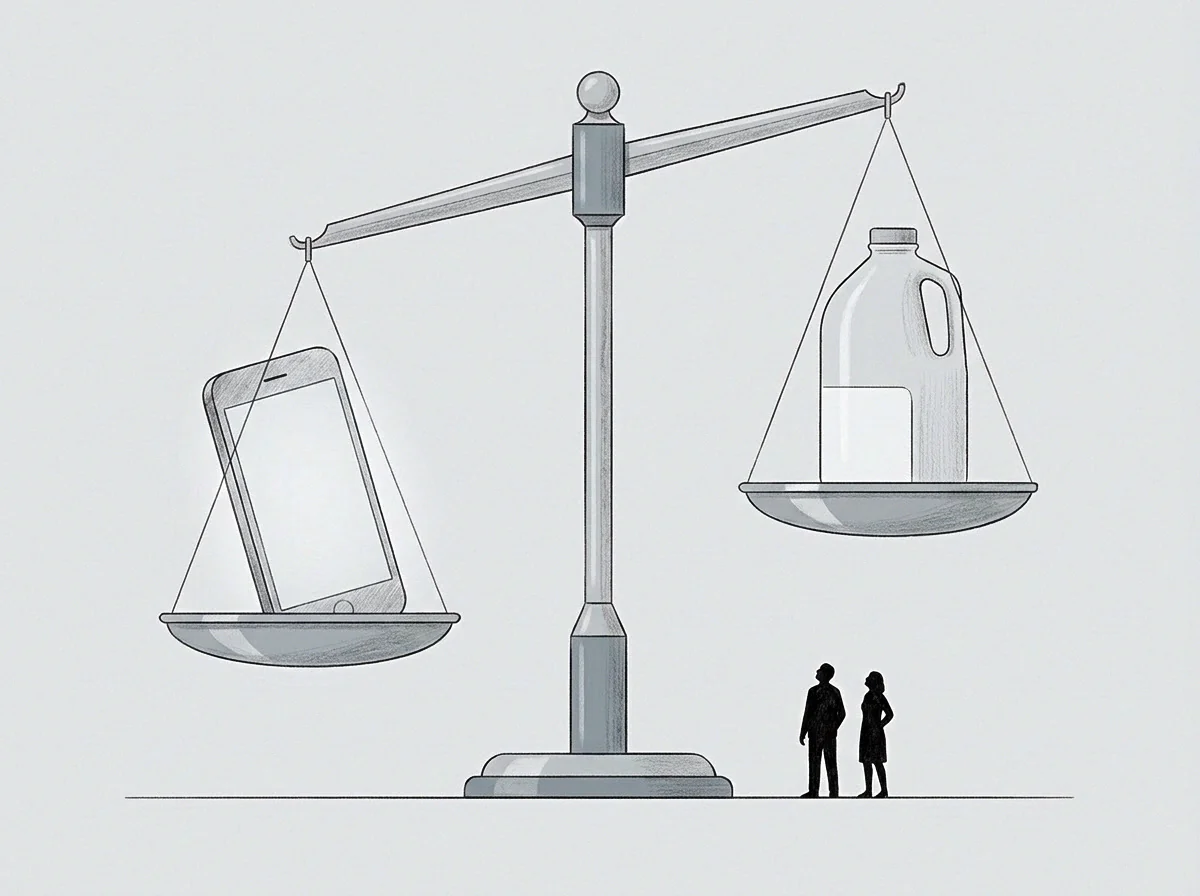
Run my own case through that and the allocation was backwards from the first week. What I put in was specific to that one build and worth nothing anywhere off it. What came from the other side of the arrangement was portable, and stayed portable the whole way through.
By the theory I should have stopped seasons before I did, because an arrangement shaped like that removes the reason to keep going. Mine did not remove it, and working out why cost me more than either of the other two readings. I was not building for ownership.
I already held it, in my own name, and no piece of it was ever in question. What I was buying with all those seasons was the seat not being empty. That is the only reading the years make sense under, and it is not a flattering one.
The pronoun sounds like a share of the build, and there is nothing under it to be a share of.
What I Signed by Saying Nothing
And this is my part, because I never said the word once. I said I built it, to everyone, in every channel, for years, and I was consistent about it in a way I was quietly proud of. But I let theirs stand.
A pronoun you leave standing for years is a pronoun you have ratified, and I left it standing on purpose: a seat with somebody visible in it was what I wanted, and the word was what kept somebody in the seat. So the pronoun had two supports under it and no author. One side merged the work into itself, which is a thing a head does without deciding to, and the other side said nothing.
A word held up that way for that long does not come back down with a correction, because by then it is not a claim anybody is making, it is a fixture in the room, and pulling out a fixture costs more than the thing it was holding.
So the test, when you hear a we you did not say: not whether you ever agreed to it, but how many seasons you let it stand in a room without correcting it. That is the number that counts, and letting it stand is the agreement.
Author
A joint pronoun is a seat with nobody sitting in it.
Put a job in that seat and the job has no owner. Nobody dropped it. It was dropped.
The sentence comes out already cleaned of whose week it was, and it sounds cooperative, which is why nobody in the room hears a problem in it.
We got busy.
That is a complete report on years. It says what happened, it says who is answerable, and the answer to the second one is nobody.
For a long time I had no words for the other end of it either. A line arrives, it is agreeable, nothing in it is false yet.
We’re going to do it.
What I wanted to ask, and could not find the shape of for years, was which name sits down and does it. That question has no polite form inside a we. Asked out loud it lands as an accusation, because the pronoun has already given the answer, and the answer it gives is both, and both is nobody.
So I did not ask it. I went and did it, and the doing went into the word.
I asked for terms for years. The ask kept changing its form and no form of it ever arrived. What I never checked was the address.
A request can change shape as often as it likes and it still has to land on somebody’s week and take something off them, and I was handing mine to a word. You cannot ring a word. It has no hands.
The live version arrives the moment somebody senses an arrangement ending.
We could have both moved faster.
The pronoun used on purpose, to spread one failure evenly across two names, one of which did the work. The answer to it is one letter. There is no we anywhere in what I finally sent.
So the term I write in now, ahead of scope and ahead of dates, is the addressee. One named person owes this, one named person is owed it, both said out loud while everybody is still friendly. What that changes is what happens when the thing does not arrive: there is somebody to ask, and the asking has somewhere to land.
Debt
The one running right now is smaller and it has the same shape. An acquaintance wanted to work together and asked me for a piece of build. I said yes to the piece of build.
Everything I have driven alone and put my own name on came out finished. Everything that got a we on it is still open.
What I said yes to has three parts and an end in it: the ask comes in for one thing, I do that thing, then it is finished and we are on to whatever is next. What I hold is artifact-bound, bound to a time as well, and the ownership walks out of my hands on the last day. The other side of the same arrangement has no last day written anywhere in it.
An arrangement with no last day cannot have a piece of itself finished and put down, because finished is measured against an end and there is no end in there to measure against. Mine closes on a date I can say out loud. The one facing me only accumulates, and the further it accumulates the less any single piece of it can be lifted out, named and handed over.
So the sessions arrive without their prerequisites ready, week after week. In a we there is nobody whose job the prerequisites were, and an unowned job does not get dropped by anybody, it only gets noticed missing at the start of the hour by the one person who needed it to start. No bad faith anywhere in it.
The hour is gone all the same, and it is gone off my week.
My we, in the form the acquaintance understands it, does not exist in my head.
And I catch myself anyway. I hear my own voice say we’re moving forward, and I stop, because the part of this that is actually mine has a deadline on it and I have just said a word with no deadline anywhere in it. Said out of politeness, that sentence writes a covert contract with a date attached, and the date is visible from one side only.
The acquaintance hears the pronoun. I hear the deadline. Nobody has lied, and the arrangement is holding two documents that do not match.
A we with no author under it is an unfounded claim: it stands, both sides act on it, and there is nothing underneath holding it up. The ground it needs is one name on each end, and the name is what makes a want collectible, because a want you cannot address is not a want anybody can meet. It is a feeling with a date hidden inside it.
Getting it wrong cost me twice. Once in the work, which I did regardless, because the work is the only part of an arrangement that is real and it lands on the hands that can do it whatever anybody calls it. Then again at the end, when I finally said where the thing sits, and the arrangement I had been holding met the one that had been running on the other side the whole time, built out of a word I allowed.
There was no way to state the true one that did not land, over there, as me taking something off somebody.