
The distributed configuration
Nobody in my close arrangements was ever attached to the thing I built. They were attached to the steady state that came with it, and that steady state was never named by either side, so it was never priced, which is how every one of those arrangements broke at the moment I was less reachable and not at the moment the work slipped.
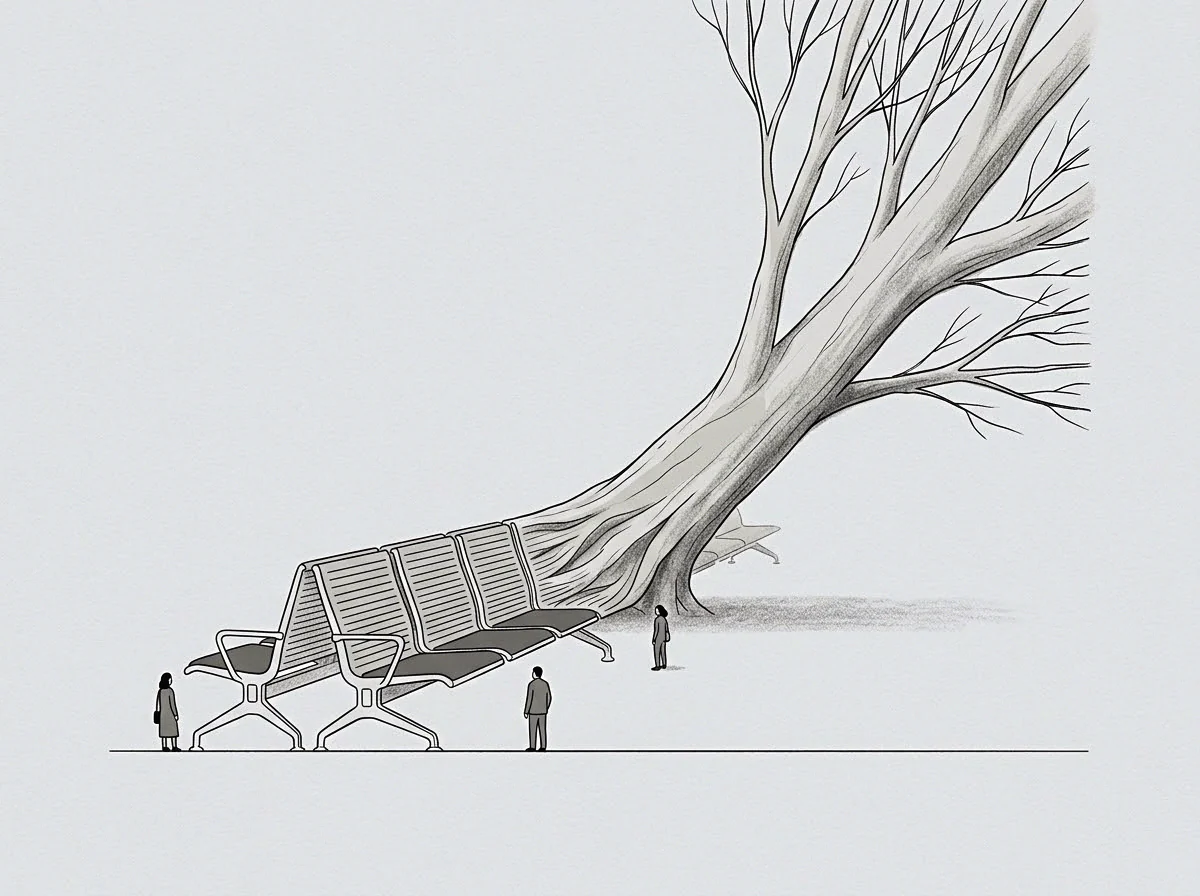
Configuration
It was a bad stretch, and at the end of it I went back over the week and saw that I had given it away in pieces. Several people, each holding one part of it, no two of them holding the same part, not one of them holding the thing whole. Nobody had asked for the whole of it.
Nobody needed it. That was the first time I understood that the arrangement around me was working.
For years before that there was one channel, and everything went down it.
The years when one person holds everything have a texture. That person is the only input, so every hour of state runs through one face. If he is up, the day is workable.
If he is flat, or short with me, or tired in a way that has nothing at all to do with me, the whole day tips over, and I spend it working out what happened and how to bring it back. There is no second input, so there is no comparison available, so a bad evening does not stay a bad evening. It becomes the condition of the world.
The load on him is enormous and almost entirely invisible to him. The load on me is the continuous reading of one person’s face for information I have no other way of getting.
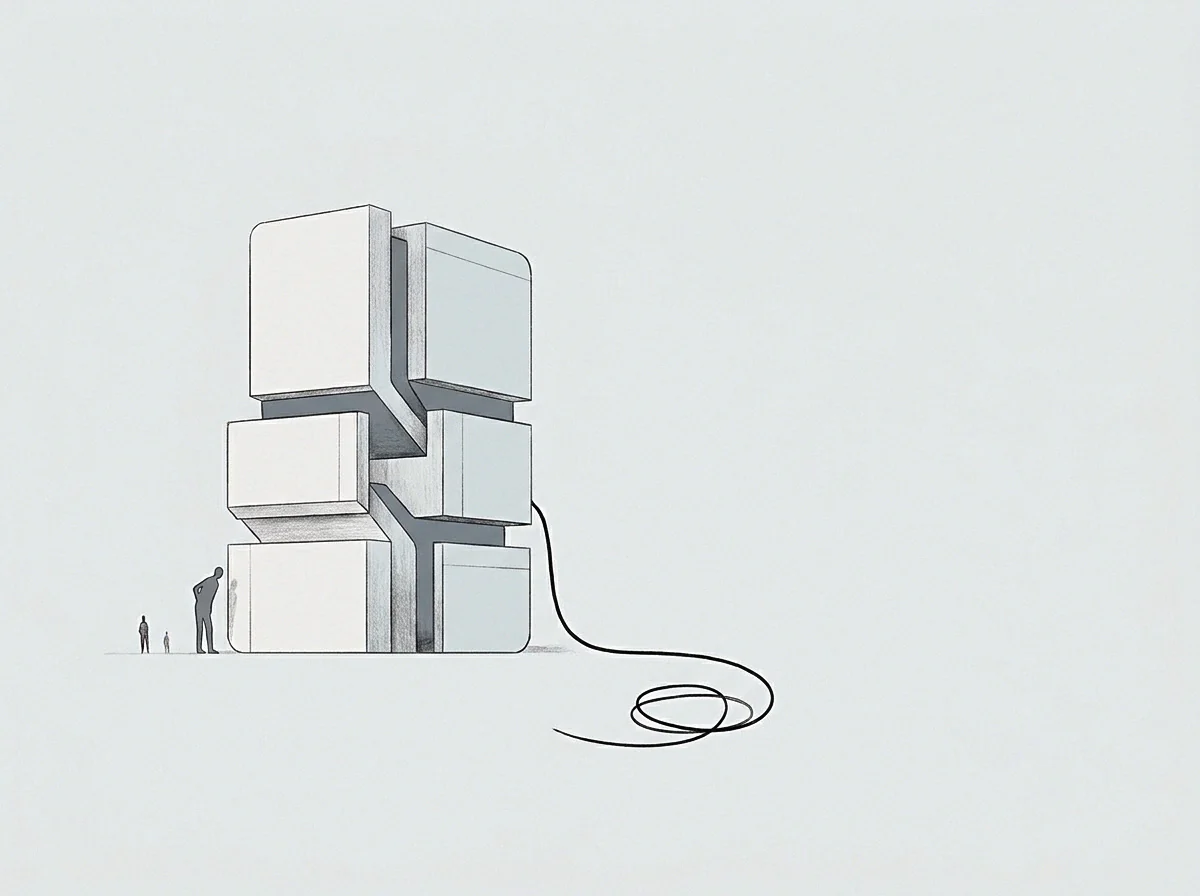
What replaced that is not a larger supply of people. It is a shape. A handful of them, none carrying the whole thing, each holding the part that belongs to them, none of them needing to know what the others hold.
Someone can go quiet for a month and the structure does not move. I did not build it on purpose and I would not know how to tell anyone to build one, but I can say what it looks like from inside, which is boring, and steady, and much less dramatic than the other thing was. If one person going quiet for a week changes what somebody can do at work, that person is holding something load-bearing.
He was not asked, and he does not know.
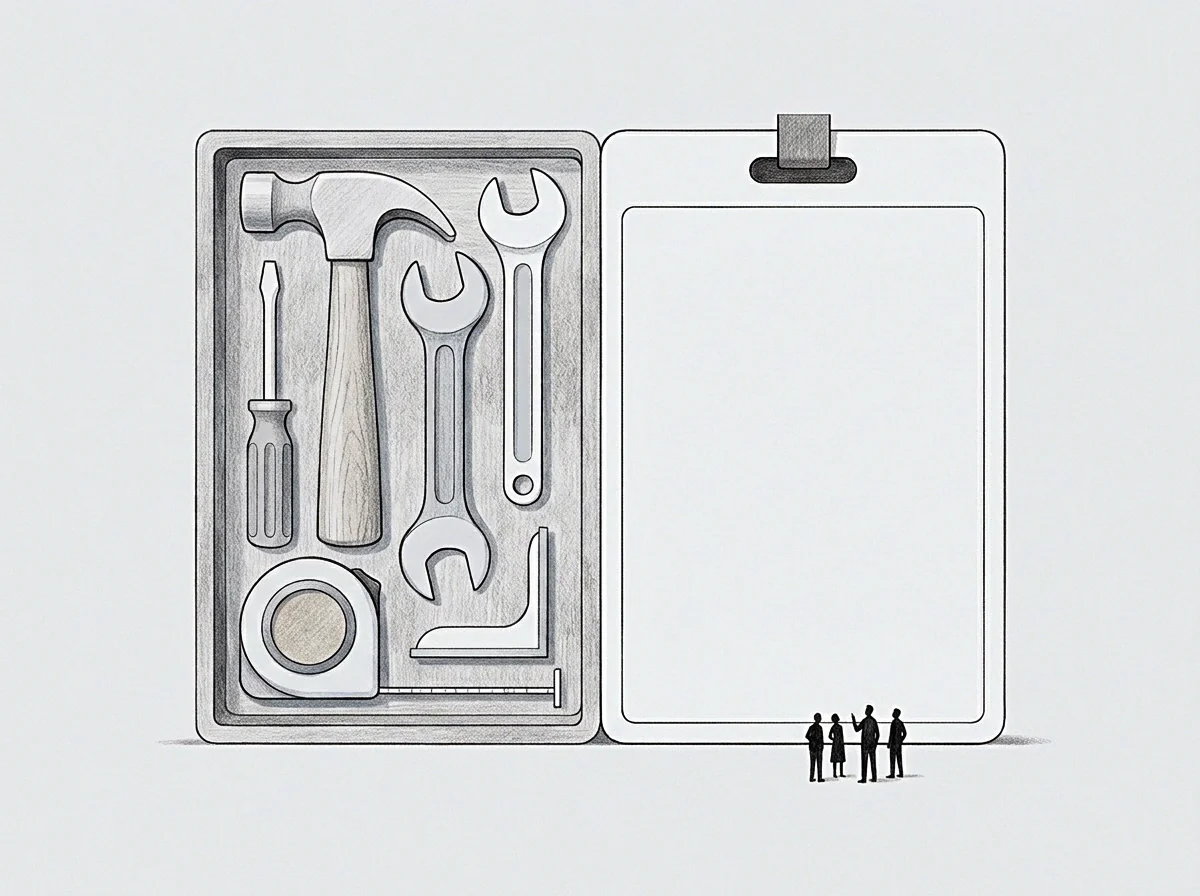
Artifact
I used to think people stayed for what I made. The system, the thing that runs, the artifact anyone can point at on a screen. It is a flattering thought, and it survives contact with almost nothing.
Nobody asks for the artifact by name. They ask whether I have twenty minutes. They ask if I am around this week.
They send something with no work in it at all and wait to see how fast the reply comes. The artifact is why two people are in a room together. It is not why either of them keeps coming back.
The attachment was never to the artifact.
So two vectors run down a single channel, and just one of them carries a name. The first is the held function: what I deliver, which can be described, priced, and in principle handed to somebody else. The second is co-regulation, the steadiness a person borrows by standing near a steady one, which cannot be described, cannot be priced, and cannot be handed anywhere.
What the second term changes is the word need. When someone said he needed me, he was mostly not talking about the function, and neither of us ever had to say so out loud.
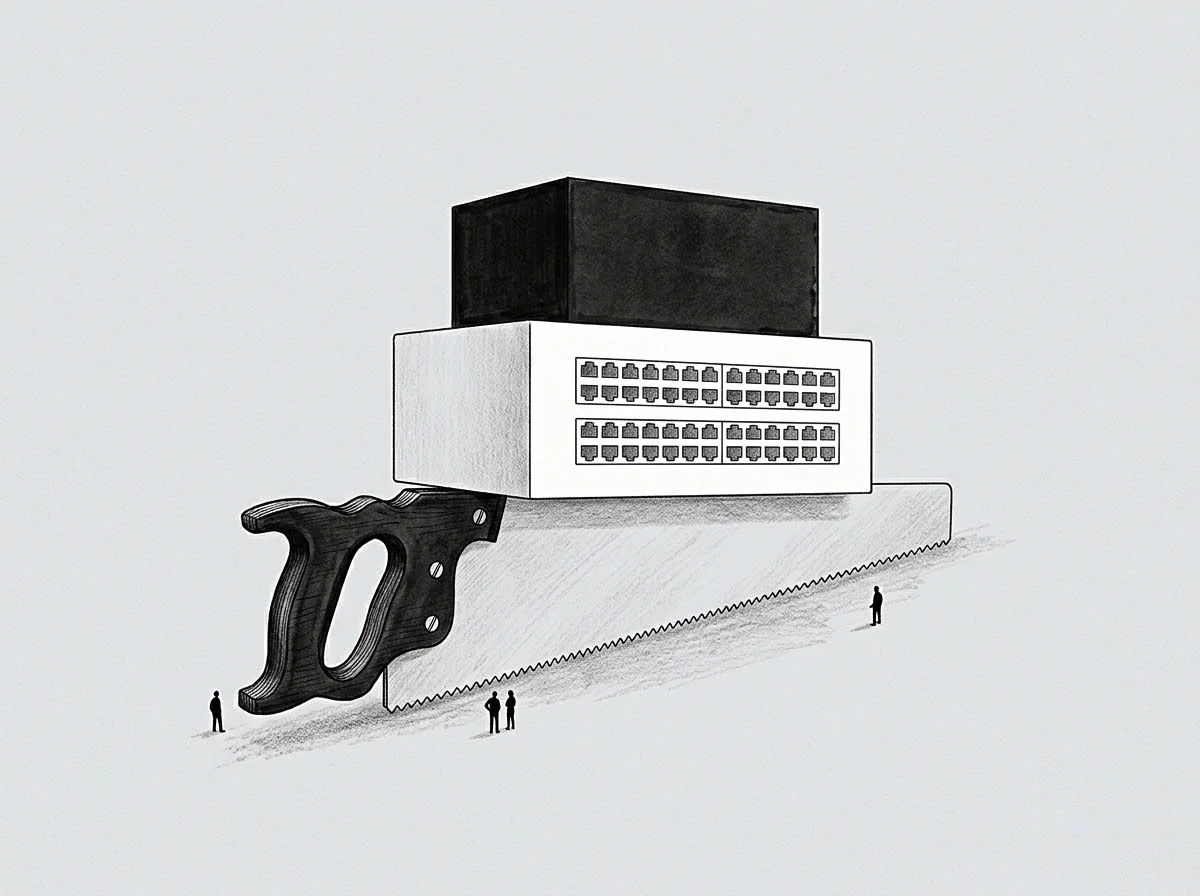
Gate
Every arrangement I have been in broke at the same place, and it took me years to find the place, because I kept looking at the work. The work was fine. It shipped, or it could have shipped.
What moved, every time, was availability.
The flattering version makes a prediction, and that is the useful thing about it. If people are held by the work, the ruptures should land on the work: a delivery pulled back, a build refused, a term stated and then not met. I went back over where they actually landed.
Not one of them landed there. Every one broke at the moment somebody went quiet or changed the terms of contact, with the thing itself sitting there finished.
Somebody became unreachable, sometimes announced in advance and for a reason that was real, sometimes with no announcement and no reason given at all, and the reason was never the thing it turned on. In none of them did the function fail. They could still deliver, I could still deliver, and where the work carried on it carried on at the same quality.
Something else was taken away, and it registered in a part of me that has no vocabulary for calendars.
What went missing was never the work, it was the one who was steady.
One of those arrangements ran on a channel that never separated the work from the person carrying the work, and reading that wrong is the part that cost me. I filed it under poor professional hygiene. It was not hygiene.
There was one channel, there was only ever one channel, and the separation I kept expecting was a convention I had agreed to on my own and then expected the other side to keep.
So the gate is not a calendar. It is the place where the second vector gets cut while the first one keeps running, which is what makes the cut deniable from both ends.
The gate explains a second thing, and it took longer to see because it looks like an accounting error. The function carried a price and I set it, argued it, invoiced it. The other vector had no name on either side, so nobody ever put a figure next to it, and an unpriced supply climbs on its own.
For a long stretch I had the feeling that what was leaving cost more than the work did, and I kept trying to find it on the invoice, and it was never going to be there. Nothing that has no name gets a line.
The mistake is expensive in one particular way. I spent whole ruptures arguing about the thing that had not broken. The other party was busy, and he was busy, and the calendar is on his side completely.
Meanwhile the thing that actually went has no name anywhere in that conversation, so it cannot be asked for. What gets asked for instead is more meetings, which is the wrong good, and then the meetings arrive and there is nothing in them, and the one who asked is now the one who looks unreasonable as well.
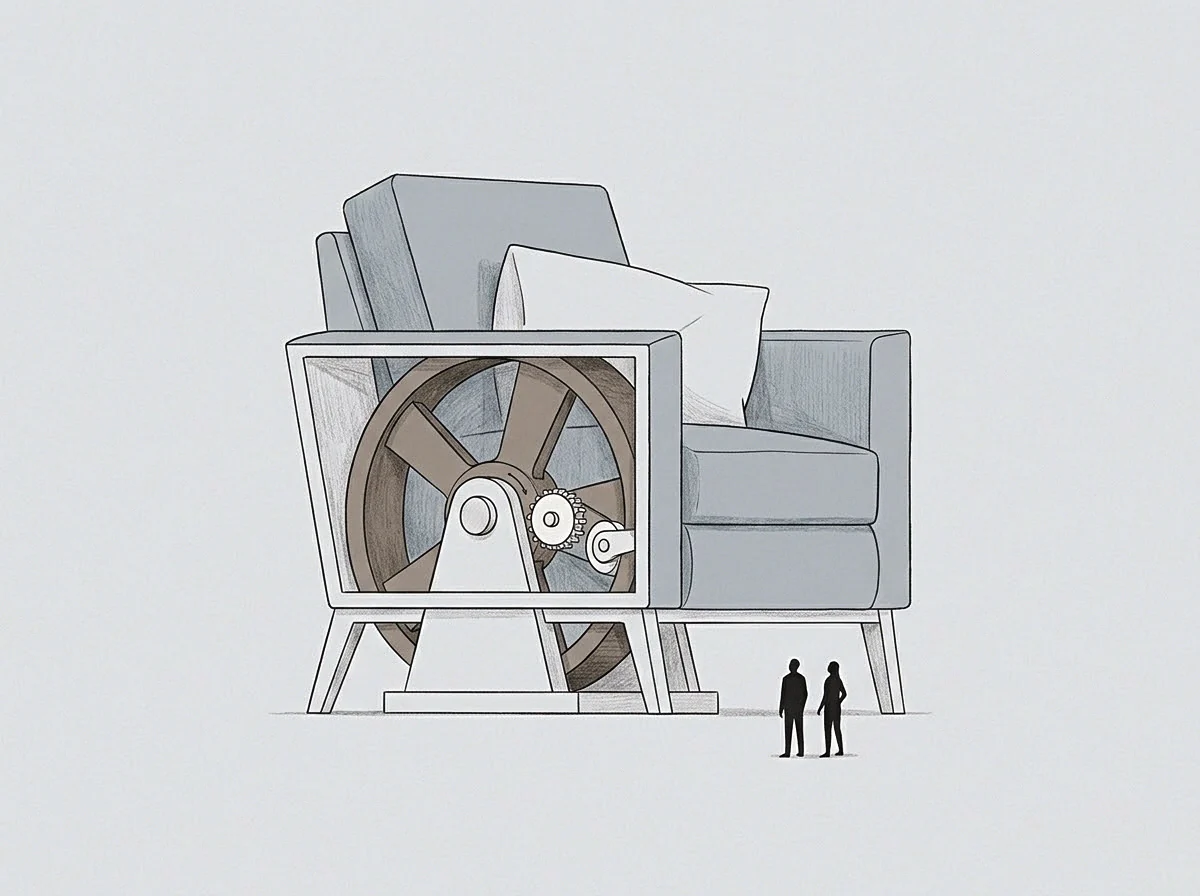
Regulator
I came to this literature late and for the wrong reason, which was to work out what was wrong with the one holding the seat. It reads the seat better than it reads the person sitting in it, and the seat it read best was mine.

The Original Naming
Main and Hesse put a name on the failure case in 1990, and the name carries more than a paragraph of description would. Fright without solution. What they were describing is an arrangement where the same adult is where a child goes for comfort and where the threat is coming from, so there is no workable route to the one that does not run through the other.
The word people reach for here is avoidance, and avoidance is the wrong word. Avoidance is one system. This is two, both live, both aimed at the same person, so every move that settles one of them arms the other.
The field files it under disorganised, and the word earns its place: what it names is a loop with no stable rule inside it. Closeness sets the alarm off, the alarm makes distance, the distance sets off the other alarm, and the whole thing starts again from where it started before. Both people standing in it are reading for a rule that keeps moving under them.
Then the finding that rearranged my reading of my own record, and it is about timing. I had the trigger filed under damage. It is depth.
Somebody steady, present, doing nothing wrong at all reads as more dangerous than somebody difficult, and for a long time I took that as a fault in my character. It is not character. What the system reads is not conduct, it is significance, and significance climbs exactly while the thing is going right.
I have walked out of things that were going well and called it instinct.
What the Brain Budgets For
The second body of work put a floor under all of it. Coan and Sbarra call it social baseline theory. The claim is that a person is not a unit that runs alone and occasionally accepts help.
A person runs on a standing assumption that somebody reliable is within reach, and sets the budget for effort against that assumption before any effort gets spent. The study underneath it is Coan’s, run with Schaefer and Davidson in the middle of the two-thousands: women lying in a scanner, told a shock might come, in three conditions. Alone.
With a stranger holding a hand. With a husband holding a hand. The circuitry that raises vigilance and puts the body on alert, and the front regions doing the effortful work of holding a state together, fired lowest with the husband, and how far it dropped tracked how well the couple rated their marriage.
What the field took from it is load-sharing. Where a person is trusted, the system counts part of that person’s capacity as its own supply, prices the threat lower on the strength of it, and stands down the effort it had reserved for meeting the threat alone.
Everyone reads being alone as the plain setting and company as the extra on top. It is the other way round. Somebody in reach is what the budget assumes before any threat arrives, so a person with nobody in reach pays a surcharge on all of it, in energy and in attention, and pays it in advance.
The one who carries the whole of it alone is not the ordinary setting with more force behind it. He is running the costly one without a break, and it passes for strength because few people hold it long enough to see the bill.
Then the developmental half, which is where the theory named my own position instead of anybody else’s. Nobody is born holding the apparatus. Somebody outside works it first, and what a person later calls self-control is that outside function copied inward, slowly, in pieces, by having it performed on him until he can perform it himself.
Where the adults in the room are the ones who need managing, there is no working function in range to copy. The machinery gets built from the inside instead, early, out of whatever is lying around, and the child ends up performing the function rather than receiving it. What comes out of that is somebody who does not visibly come apart when the outside supports go, because those supports were never doing the work.
From outside it reads as unusual steadiness. It is the costly configuration, installed early, by somebody who never had the cheap one to borrow.
And there is a selection effect inside it that answered a question I had been carrying for a long time, which was why load arrives in the worst stretch instead of backing away from it. A regulator that keeps its state while carrying its own weight has just shown, under the conditions that count, that it holds. Reliability is what the budget selects on, and the selection runs hardest under pressure.
So the load comes toward the steady one exactly in the stretch when the steady one has least to spare. Nobody is behaving badly in that. A system reads what regulates it and goes there.
The Wear on the System
The cost of running that way has a name in the literature, and it is a systems term, not a mood. McEwen and Stellar put allostatic load into the field in the early nineties. Allostasis is stability reached by moving: instead of coming back to one fixed setting, the system shifts the setting to meet what is in front of it.
Allostatic load is what collects in the machinery when that shifting runs under demand for a long time. It is wear on the regulating apparatus, counted against the apparatus and not against the person’s mood, and the field has used it since as a way to measure a system rather than describe a state. Which is the reason I could use it at all.
The word I already had is throttling: too much data comes in while the position has to hold. Throttling is allostatic load at its ceiling.
Against a single channel the arithmetic is not complicated. Holding somebody else’s regulation is their wear added to mine, running one way only, over a stretch when mine was already at the top of its range. No arrangement I have been in had a line for that anywhere.
What Distribution Is For
The same literature describes the working version, and it is a plainer thing than anyone goes in expecting. Two functions, and a person needs both of them present somewhere in the set: something to push off from, something to come back to. The field calls them the secure base and the safe haven, and the pair is worth carrying because one without the other is not a milder version of the thing, it is a different thing that fails differently.
I use the pair as a check on an arrangement now. If I am the one who gets launched from and never the one who gets returned to, half of it is missing, and the arrangement will fail at the half that is missing rather than at the half everybody is watching. In the working configuration closeness and autonomy stop pulling against each other: a person can stay close and keep his own interests, his own friends and his own sense of himself.
Separation stops reading as abandonment, so a quiet week does not have to be interpreted at all. And it runs in both directions, which is the half that named my position for me. Help can be asked for without much shame, and support can be given without resentment collecting underneath it.
That last one is the seat I sat in without knowing it had a name. I gave, and the giving was real, and underneath the giving something was collecting that I never said out loud to anybody, including myself. The giving was never the problem.
It was that I could not read the thing collecting under it, and by the time I could, it had been collecting for years.
Then the finding I keep going back to, and it is structural, not moral. In my own words it is a single point of failure. What the literature says is that the difference does not sit in the quality of one bond, it sits in how many of them there are and whether the load has anywhere else to go.
The one everything runs through is the one who should read that twice. A distributed configuration is not emotional wealth and it is not popularity. It is a structure with nothing in it that everything depends on, and the arrangement I lived in for years had exactly one of those.
What it cost to find that true was reading it as an insult for a long time. A person whose whole template is to hold hears the distribution finding as a demotion. If nobody is load-bearing, then nothing I carried was needed, and if nothing I carried was needed, then the years of carrying were a mistake I had made about my own value.
That reading is wrong. I did not put it down quickly. The set does not make the holding worthless.
It makes the holding survivable, which is a different sentence and a better one.
What I run now, before I agree to anything, starts with saying out loud what I can do and what I cannot, which is the cheap part and the part I already know how to do. Then the held function, the piece that is genuinely mine to deliver, gets managed and managed properly, because it is the one thing in the arrangement I actually control. The rest is where I lose.
The other person’s state comes down the same channel as the work, and I pick it up, and once I have picked it up it is an input to what I make, priced into the hours like a requirement somebody gave me. I have not got good at putting it down. Putting it down is what moves an arrangement from co-regulation toward self-regulation, which sounds colder than it turns out to be and costs more than it sounds like.
One thing in all of this cannot be arranged from my side, and the theory is blunt about why. The whole effect turns on whether the other side is read as reliable, and no volume of supply from one end manufactures that at the other end. It is there or it is not.
I can build the distribution, I can price the function, I can stop picking up the state. The regulation running toward me for once is not a thing I can construct, and I have stopped treating it as a build problem.
I still catch myself building the single channel. Someone new arrives, and inside a month I have made myself the one who knows the whole of it, because that is the position I know how to occupy. It is quick and it is not deliberate.
I notice it now around the third week.