Meaning
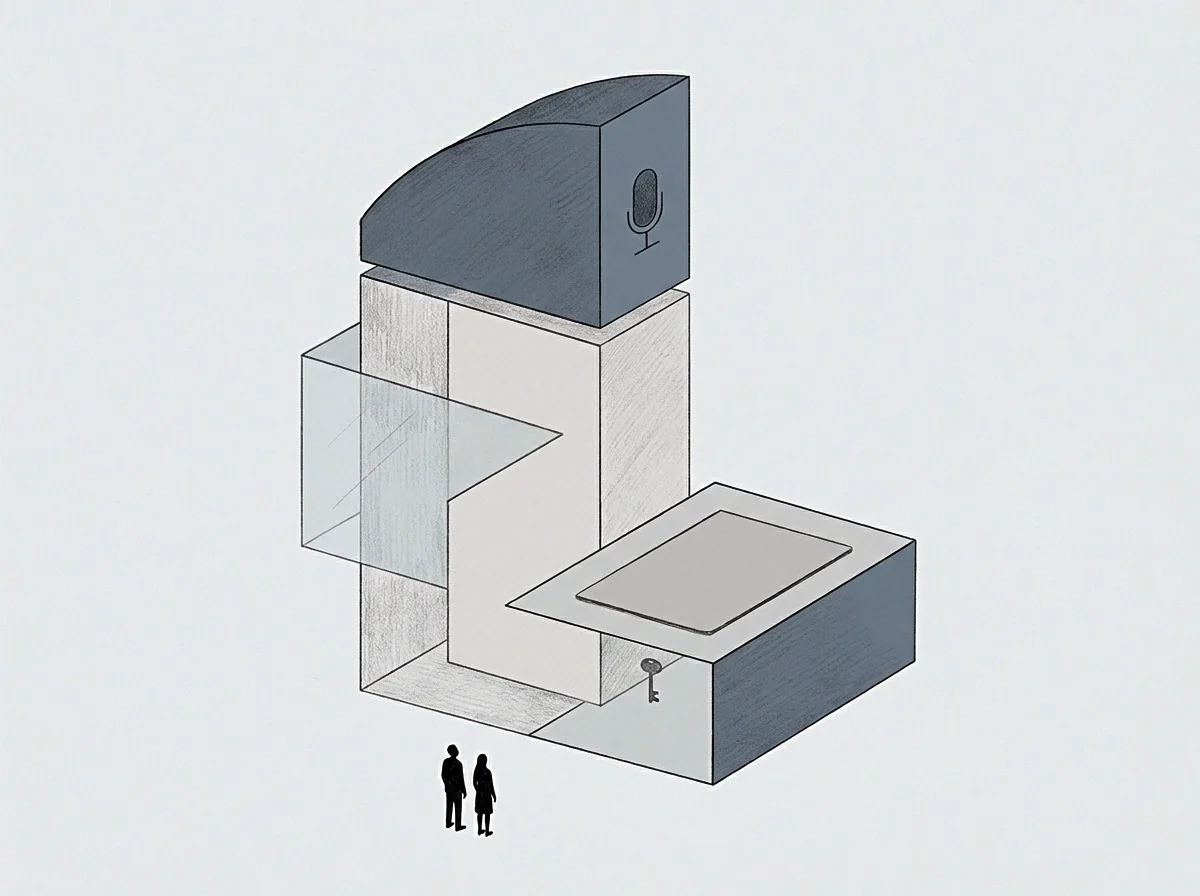
An analytical approach in venture design distinguishes the individual capabilities of a founding team from the structural integration of their business model. By analyzing elements and assembly, an observer can separate subjective metrics like personal resolve from objective practical realities. Subjective certainty does not alter statistical odds.
Structural Composition
Structural design requires isolating the raw inputs of a venture from the mechanisms that bind them. Within this model, elements and assembly represent two distinct layers of venture architecture that must be calibrated independently. The first layer consists of discrete resources, such as initial capital and proprietary technology.
Governing their interaction, the second layer establishes the communication channels. Flawed integration neutralizes high-quality inputs.
Validation Environment
Testing a venture in the open market forces a confrontation between internal confidence and external validation. An observer quickly realizes that the market evaluates elements and assembly through different criteria. While individual elements are judged on their standalone utility, the assembly is tested against industry standards and regulatory baselines.
This verification occurs in a room where work is exposed to unbiased observers, leaving no space for the founder to adjust the output after release. A common error involves relying on the enthusiasm of early adopters to prove the viability of the entire structure. Performance under load must be independent of founder effort.
Objective metrics override confidence.
Capacity Cost
Managing the shift from individual action to structured operations imposes a heavy toll on personal capacity. When the elements and assembly are poorly aligned, the founder must personally bridge the gaps, spending valuable attention and hours on routine coordination. This constant intervention drains the attentional reserves of the operator, who becomes a human substitute for functional systems.
Systems must scale alone. The price of failing to make this shift is measured in lost capacity and diminished focus, as the individual remains trapped in a cycle of manual adjustments.