
Chosen debt and extracted debt
From outside, a person giving his week away and a person having his week taken look the same, and on the day they cost the same. What separates them is whether he set the amount and knows what finished looks like, and that part is visible to nobody but him.
Decision
Two different things get filed under one word, and the word is giving. I decided one of them: this much, for that reason, and I knew what it would take out of me. The other one was being taken.
Nobody decided it, not me and not the person receiving it, it started and then it kept going. From outside the two are one picture, which is hours gone and work done for somebody else, and a man who looks generous or looks used depending on who is telling it.
I saw the difference when I ran the numbers. I had just cut what one thing costs me to run down to a figure one person can carry alone, without asking anybody for it. In the same reckoning sat the time I had promised to the acquaintance who wanted to work together, because that time comes out of the same place the money comes out of, which is capacity.
I put it down next to the rest of it. It did not read as a loss.
It read as a return.
Their commitment is my payback to the good things. That is how it came out of me at the time, in my second language, and I have not improved on it since. There had been weeks of hosting behind me, given without my asking, and nothing was ever asked back for it, then or later.
What went back was the platform work I later gave time to. The evenings were mine to give. I gave them knowing the size of them, which was most of the free hours I had left.
A return I decide is not a debt, however expensive it is.
The condition is one line: the amount is set by me, before the work starts, and it does not move because the other side’s week got worse. Set that way, a run of evenings costs a run of evenings and nothing else. Left unset, it costs the evenings, then it costs the argument about the evenings, and then it costs the arrangement whatever it had before anybody started counting.
That is only half the condition, and I got the other half later. A return that was decided still has to end somewhere. If I set the size and leave the finish open, the thing I chose keeps running past the point where it was a return, and it turns into standing obligation without any moment existing in which anybody agreed to that.
So there is a second line and it stays private: what does paid back look like. The structure built and handed over. A set number of evenings.
The point where what is left is content and not architecture. Nobody has to be told the number, and announcing it would make it a different kind of sentence. I only have to be able to recognise the day I cross it, because a chosen return with no finish on it is the extracted kind arriving by a road I opened myself.
Debt
Clark and Mills worked one distinction for decades, and what came out of it is two grammars for giving, running side by side in ordinary life and almost never said out loud.
The Grammar under the Giving
One side gives because the other one needs it, and nothing is named as owed. That is communal. The other side gives against something specific, already had or expected, and the thing has a name on it.
That is exchange. Nearly every arrangement I have been inside sits in one of those two, or is quietly fighting about which one is running.
The finding that does the work is not the definition, it is what people do about counting. Where both sides take a thing to be communal, no running total is kept, and the research found people going out of their way to keep none, because keeping none is itself the message: a person who does not count is saying he wants this to be the communal kind. Which turns the count into an instrument, and that is the part that reached me.
The onset of the count is the diagnostic. If I have started to count what I put in, I did not turn mercenary that week. Something on the other side stopped running in two directions, and the count started because it was the one instrument I had that could catch it.
I had spent years, before I read that, treating my own counting as the evidence against me.
The Display That Asks for Nothing
Jones and Pittman set out a taxonomy of strategic self-presentation in 1982, five moves a person can make to shape what the people around him do. Self-promotion, ingratiation, intimidation, exemplification, and then the one that belongs here, supplication. A person puts his weakness and his dependence on show, and help arrives, because there is a norm holding the rest of us to help whoever cannot manage alone.
Nothing in the definition requires the weakness to be invented. Emphasising a real inadequacy runs the move perfectly well. So the need is allowed to be true all the way down, the history too, and the showing of it is still doing the work of a move on somebody, and no contradiction sits in that.
I spent a long time trying to settle whether somebody was faking. Faking was never in it. It also explains why my own instrument does not fire.
What I read at high resolution is a claim pointed at me, because that is the traffic I was built against, and a claim is a thing I can answer, or refuse, or put a term on. A display is pointed at nobody. It is a state said out loud into the room, with nothing in it to refuse and nothing for a term to attach to, so it goes past the part of me that checks and into the part that only receives.
There is a second piece in the work and it explains a feeling I could never place. A communal frame can be installed in the first week, by heavy disclosure and by need put at the front, long before anything in the history has earned it. Once it is in, the term will not come out.
Terms are exchange words. A term says what I am giving and what has to stay true for me to keep giving it, which makes it a sentence with a cost sitting inside it, and a frame built out of somebody’s suffering has no slot for a cost. So the sentence does not get said.
And the thing that stops it in my mouth is not a reading of the situation. It is the frame, holding the gate shut from the inside, wearing my own manners so that I take it for decency. Turn it round and it becomes useful: the moment terms will not come out is the moment to look at who set the frame, and how early.
The Check That Is Already Paid For
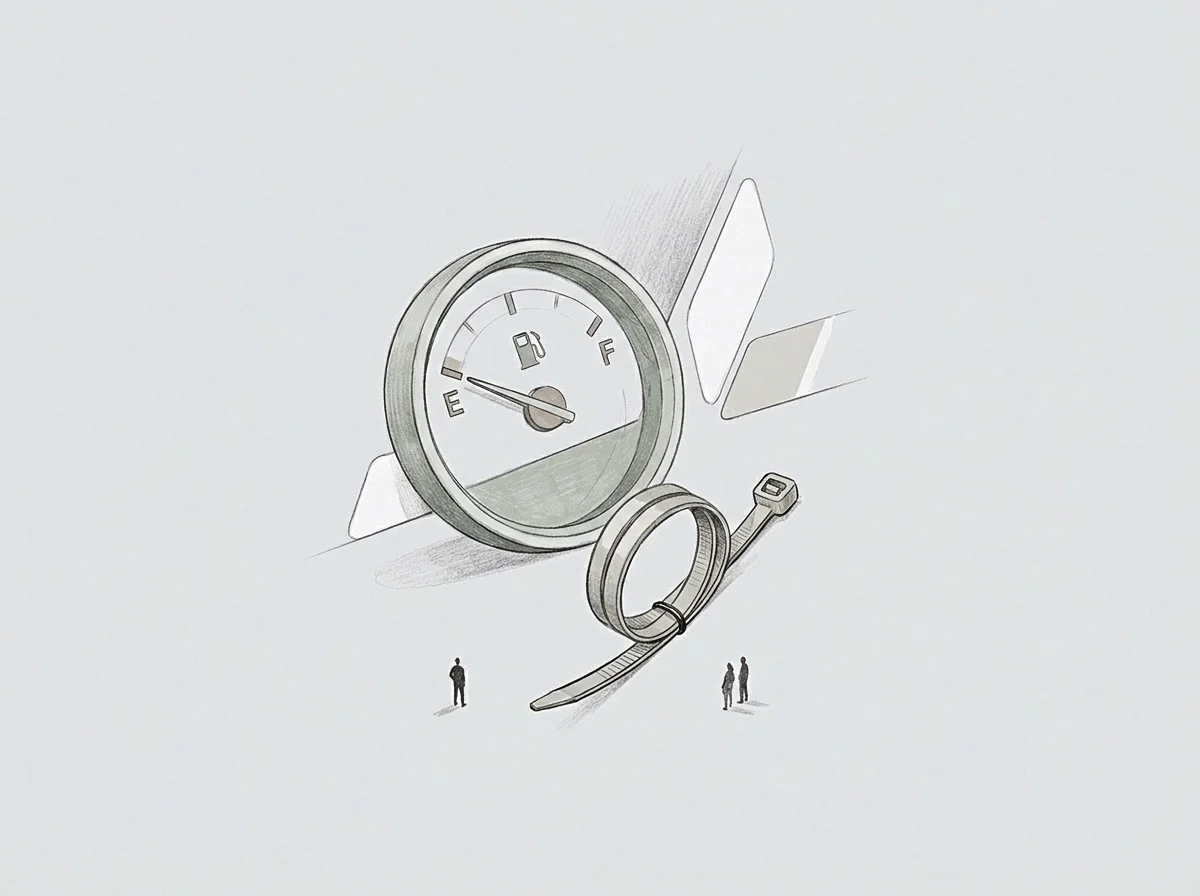
A communal frame is sometimes real and earned, and there is no way to tell that from inside the warmth, because the warmth is present in both cases and is not evidence of anything. The check is structural, and it runs on history that already exists. Go back through what happened and count one thing: the times the traffic ran the other way.
Not warmth, and not agreement. A time when I said nothing about what I needed and something still arrived, because somebody read the state and moved on it without being asked. Across everything I can remember, what is the number.
An earned frame has a number. An installed one sits at zero, and the zero was there from the start.
They have a name for the end state as well. The exploitative relationship: one side drawing what it can out of the other with nothing running back, the communal frame claimed on the way in and the exchange side never honoured on the way out. What the name did was end the argument I had been running with myself about whether I was exaggerating.
What it cost me was holding both halves of that name as true at once, and that took a long time.
Communion with No Self in It
Under both grammars sits an older frame, Bakan’s, 1966. He put two modes into a person: agency, which holds an edge and pushes out from it, and communion, which joins, takes care, sits inside something bigger than one man. His argument was about what each mode does when the other one is missing from it.
Agency by itself goes to domination. Communion by itself dissolves the person carrying it into everybody else. He called the fix mitigation, one mode braking the other, and every measure built after him runs off that word.
Helgeson took the two unmitigated modes and turned them into a scale, in the nineties. The side that concerns me is unmitigated communion: other people’s needs standing ahead of your own as a rule, a call for help that cannot be turned down, their problems carried whether or not anything can be done about them. The items are a flat list and every line on it is mine.
Then the scale went into populations under long treatment, and what it predicted there was self-neglect. Score high and you look after your own condition worse. The same person, in the same data, is the one looking after everybody else on the study.
Two findings sit next to that one, and the first is the one that got me: the support is there and it goes unused. The second is that the scale runs independent of neuroticism, so what it catches is not worry about other people. An orientation with the self left out of the sum.
In the research population that orientation comes packaged with low agency. A person who cannot push on anybody else’s behalf cannot push on his own either. I am the other case, and finding that out was the part I could use.
At the desk my agency is not in question. I originate, I price, I refuse, I close, and I do it with the client’s thinking in front of me the whole time, which is agency with a self in it and a counterpart in it too. In the arrangement with no invoice in it, the same man runs communion with nothing holding it down.
He carries the load, he takes the state in, he keeps supplying, and want, terms and cost never get into the room. Two settings in one person, sorted by which kind of arrangement he is standing in. So the five steps are the missing half said in Bakan’s words: want is agency and so is a term, and putting them into the giving channel is what holds the giving down.
I did not build a capacity I lacked. I moved one I already had at the desk over to the side that had none.
One person cannot run both grammars at once.
If I am giving under the communal rules and the other side is receiving under the exchange rules, nothing is unfair yet, it is only mismatched, and mismatched looks fine from every angle until the day I present something and the other person is genuinely surprised. They are not lying when they are surprised. Finding that true cost me the belief that I could sort the kinds by how the giving felt.
Feeling was the wrong instrument. It reports on me.
So a rule I can run while a thing is still going, not after: if you have started to count, stop arguing with the count and read it.

Default
The other kind has no moment in it. Nobody decided. Nobody sat down with the size of it and said yes.
It accrues the way a setting nobody changed accrues, and default is the accurate word: it was already on when I arrived, I ran it, and running it felt like being myself.
Side by side, the two sort fast, and none of the sorting is about how much moved.
| Question | Chosen | Extracted |
|---|---|---|
| Who set the amount | I did, before the work started | The situation did, while it ran |
| Was the cost known | Priced, and taken on | Found later, by subtraction |
| Is a count running | Ran once, at the decision, then closed | It never closes |
| Where is the finish | Set privately, before anything started | There is none, and none was missed |
| Where is the request | In a sentence somebody said | Nowhere in the record |
| What stopping takes | One line, said flat | A fight, or a disappearance |
The check I run now is the first of the five steps, and it is dull work, and it holds. Something is sitting in my queue with somebody else’s name on it, and before terms, before cost, I go back to want. A want belongs to the person who has it, and it enters the world when they put it into words.
So: did they put it into words. Not was it real, not was it obvious to anybody standing there with eyes.
If they said it, there is a transaction, terms attach to a transaction, and the rest of the steps run the way they were built to run. If nothing was said, the want was mine. I made it out of their situation, wrote their name on it, and handed it back to myself, and because I made it, it arrives in my own handwriting.
So when I go through the record looking for demands that were put on me, it comes back clean. Nobody asked. What waits in the queue got there without anybody saying a word.
A task with nobody’s want behind it never arrives as a demand, it arrives as care.
What goes back the other way now is the making of the request, said flat, once. The caring is not the expensive part, and neither is the seeing, and neither is naming what I see. The expensive part is the one I stopped: turning a state into a task and writing my own name under it.
If the other side can put their own state into a sentence, there is a transaction, and my instrument handles transactions well.
I am not going to pretend the decided one is cheap. It is not. It took the hours I would have spent on my own thing, I knew the size of it when I said yes, and I would say yes again.
The one I did not decide took the same hours, and then something underneath them, and I found out what that was by subtraction, much later, reaching for a capacity that was supposed to be there and learning that the upkeep of my own things had been paying out of the same place the whole time.