Meaning
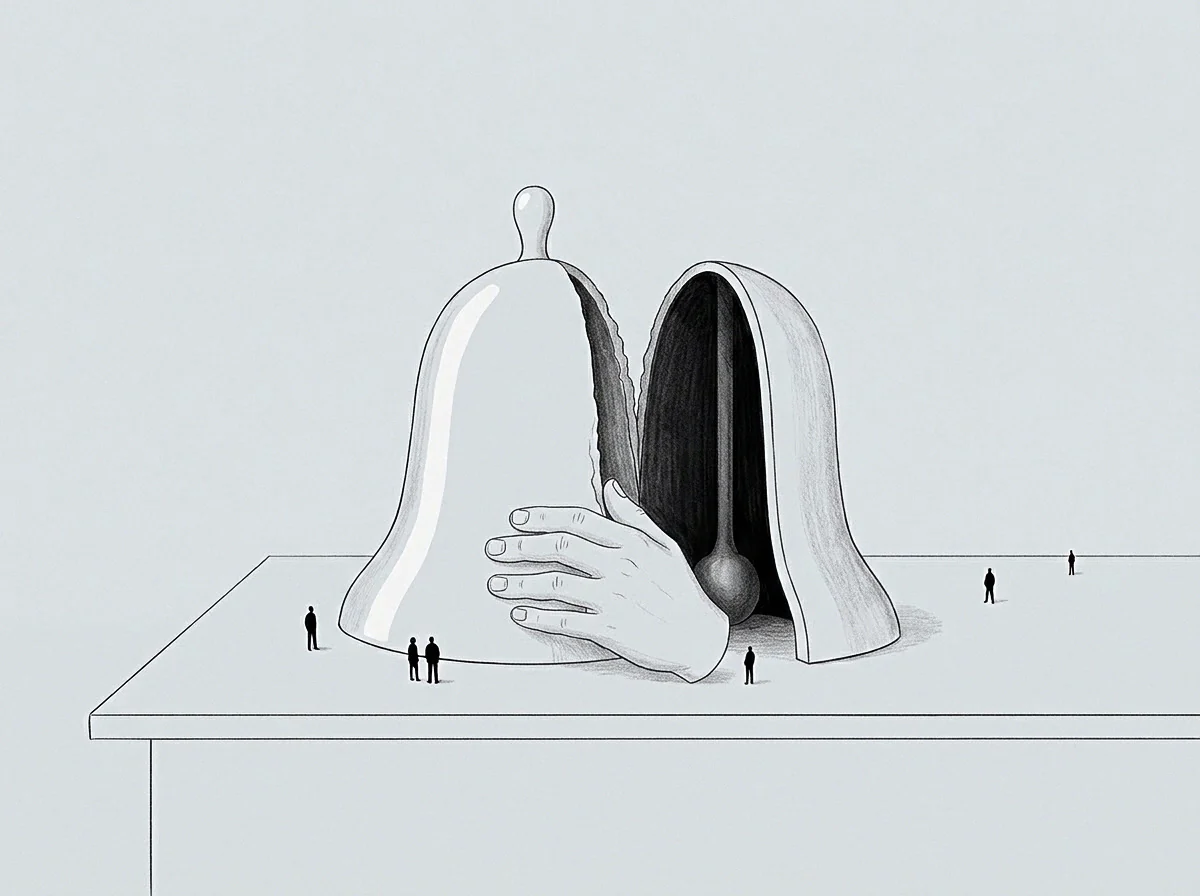
A progressive decline in behavioral response to a repeated stimulus occurs when the surrounding environment remains invariant over extended observation. In physiological and psychological terms, habituation reduces the neurological load required to process predictable inputs by filtering constant signals from conscious appraisal. The mechanism ceases to operate when an incoming stimulus changes in frequency or intensity.
Baseline Decay
Sensory receptors and central neural pathways diminish their transmission rate when an unvarying stimulus produces no actionable hazard. Through habituation, an operator ceases to register the continuous regulatory calm provided by a steady partner in the room. That background stability is absorbed into normal operating conditions and disappears from conscious accounting.
Attention Cost
Neural capacity is conserved by dampening responses to familiar patterns. When a stabilizing presence is removed, the nervous system must suddenly expend enormous metabolic capacity to generate the baseline equilibrium that habituation previously rendered invisible. The sudden cost reappears instantly on individual stamina.
Regulatory Drift
Prolonged exposure to unvarying conditions shifts the reference standard against which all subsequent perturbations are evaluated. Because habituation normalizes any steady state, the recipient of borrowed stability rarely attributes personal endurance to the external regulator sitting across the table. When the stabilizing actor leaves the room, the sudden spike in regulatory demand exposes the true source of past efficiency.
Baseline calm is rarely acknowledged until it departs.