Meaning
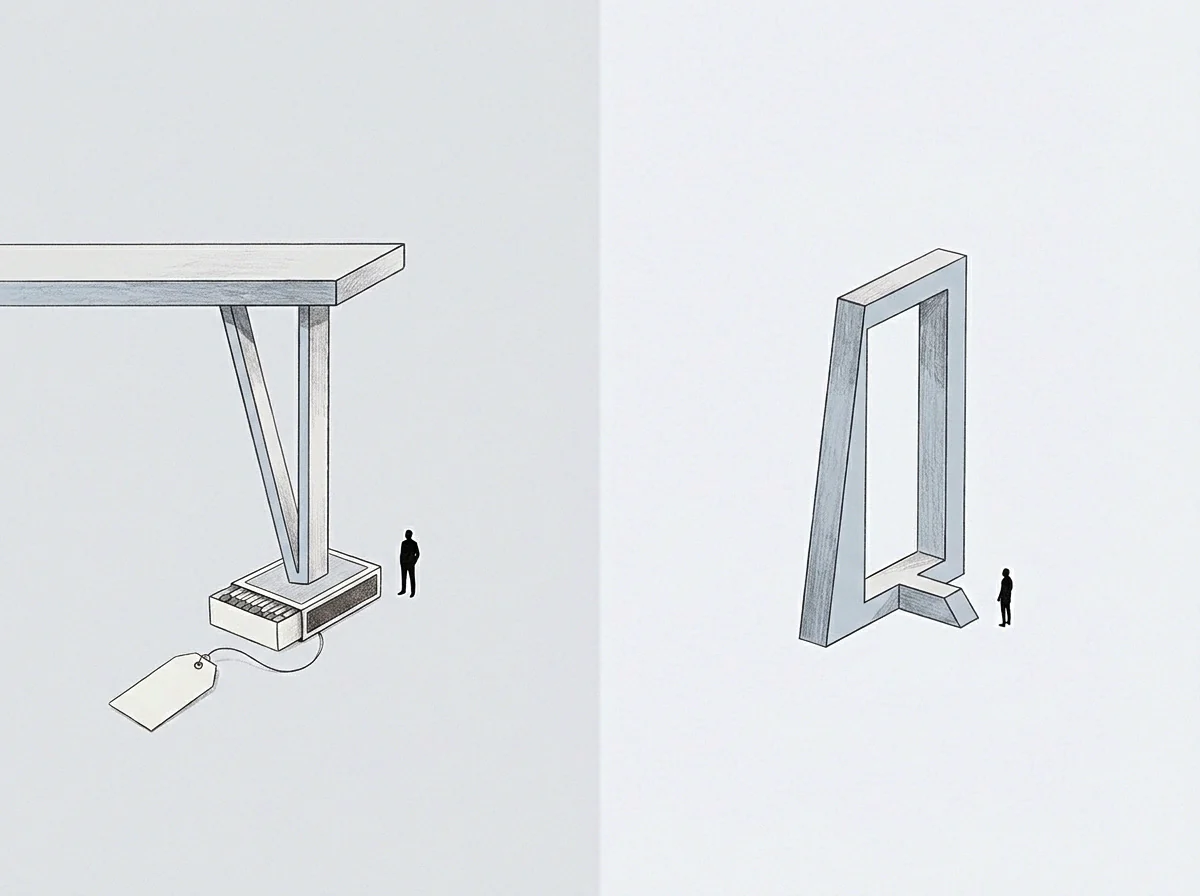
The quantifiable aggregate of foregone revenues, rejected institutional contracts, and unharvested wages incurred by an operator who deliberately declines conventional commercial arrangements to preserve strategic autonomy. The refusal cost measures the direct financial penalty paid for establishing boundaries around clients, investors, or operating methods. The term applies to boutique practices, independent technical operators, and non-conforming enterprise designs.
It ceases to apply when an entity lacks market demand and is rejected by buyers rather than exercising its own veto.
Opportunity Vector
Declining lucrative but misaligned business contracts produces an immediate drop in near-term income. Every time an operator rejects a client who demands custom features, around-the-clock availability, or equity control, a measurable refusal cost is booked against gross revenue. This cost represents the price of keeping the company’s operating core unpolluted by foreign requirements.
While this practice protects long-term focus, it creates acute short-term cash flow strain that requires deep financial discipline.
Capacity Ceiling
Choosing to say no to institutional distribution channels restricts the absolute scale an enterprise can achieve. The operator accepts an explicit upper bound on enterprise valuation in exchange for eliminating bureaucratic overhead, shareholder disputes, and personal exhaustion. The refusal cost reflects this conscious trade-off between total capital accumulation and daily operational independence.
Managing this dynamic requires structuring personal expenses to match the constrained revenue ceiling.
Long Balance
Sustained boundary enforcement protects the operator from catastrophic operational complexity and fatal overhead bloat. The accumulated refusal cost across an operating career represents the total financial insurance premium paid to preserve uncompromised ownership.