
Presence is a cost even unbilled
A session that only runs when I am in the room is spending my capacity whether or not anybody cuts an invoice for it. What gets supplied in a room like that is not help, it is the trigger and the thing the work gets held against, and an arrangement receiving both of those free never builds either one of its own.
Capacity
A build only moved while I was sitting in front of it with the acquaintance who wanted to work together. Between one session and the next it stayed where the session had left it. Not slower.
Still.
I read that for years as the other side’s rhythm. It is not a rhythm. My sitting down was the execution condition, and nothing in the arrangement was going to change that, because having the prerequisites ready was never the price of me arriving.
Hours are the wrong unit for this and they are the only unit anyone quotes. An hour is countable, it goes on an invoice or it does not, and either way it is finished when it is finished. Capacity is what is left after the hour, and it is ordinal: more or less, never how much.
It is what a person spends holding a problem that is not theirs inside a head already holding four others. It does not come back with sleep and it does not appear anywhere in the arrangement. A session in the room, then the rest of the day walking around with someone else’s build half open, noticing which part of it would break next.
Nobody billed that part. Nobody said it out loud either, and it was the part I actually paid.
Five slots. Two of them never move.
- Anchor. Contracted, paying, and quiet enough that I do not think about it on a Sunday.
- Delivery. The engagement with a date on it that I am inside right now.
- Rotating. This one is supposed to change. Live this month, closed by the next.
- Pipeline. Origination, running underneath whatever is in delivery. A quote leaves the desk every week. The week is the trigger, not a request. Permanent.
- Own assets. Mine. Property, courses, a site with my name on it. Permanent.
The last two are not available. Work arriving from outside goes into slot three, or it waits for a start date I set, or it does not come in. Written down it reads like administration.
What it does is fix an allocation. A slot with no allocation goes to whoever is pushing, and nobody is pushing anywhere inside the last two.
Work nobody is waiting for is not late, it is work that never got as far as a slot.
Call it discipline and you get the wrong fix. Work with somebody else’s date on it gets done, and it has been getting done for years. Work with my own date on it can sit finished in my head for years and exist nowhere a person could go and look at it.
Same skill, same week, same desk. What separates them is not effort. One has somebody standing at the end of it and one has nobody, and that is a single mechanism, not two habits.
So my own work does not need more want in it. It needs what an engagement already has, somebody standing at the end. A date said out loud will do it.
Money taken for a thing that does not exist yet does it harder. Intention does not execute. Obligation does.
I put what I had spare each week into a build that was not mine. Slot five is what went, session after session. The cost of that arrives late and it arrives as absence: years on, nothing of my own standing anywhere a person could go and look at it, and no capacity held back in any of those weeks to have built it with.
I was not short of skill for one session of it. I was short of the thing skill runs on, and it had already gone somewhere else.
Presence
Presence gets treated as the free input, and it is the one input that cannot be sent by message.
Put a number on the arrival and the room gets ready for it. A client paying for the hour has the files open before anybody sits down, because the hour runs whether they are ready or not. Where the arrival costs nothing, nothing is prepared, and the session opens by rebuilding where the last one stopped.
The front of every session goes to that, and goes again the next time.

The Condition Nobody Wrote Down
Somebody had to be in the room or the work did not move. Once that is true it is a term of the arrangement whether or not anyone stated it, and nobody stated this one. Nobody argued with it either.
It arrived as a preference, turned into a habit, and then it was the shape of the week.
A term nobody states gets paid by whoever notices it last.
The Reading Nobody Asked For
A second thing gets supplied in a room like that, and it took me years to see it because it does not look like work while it is happening. Where an arrangement has nothing written on it, the person sitting there becomes the thing the work gets held against. Every answer he gives lands as a reading, including the ones he never meant that way.
Silence is a reading. Enthusiasm is a reading, and it raises what the next piece has to clear. A flat technical answer reads back as how much the question was worth.
Nobody put that function into the arrangement and nobody can take it out either, because there is nothing else in that room doing it.
The person in that seat is not doing one task. He is doing the task, plus choosing what to say and in which register so that a reading does not land where it stops the build for a week. That second part carries no name, no unit and no line on anything, and it is the part that walks out of the room with the person who was doing it.

Billed Hours, Spent Capacity
An invoice can carry the hours. It cannot carry the fact that the hours only work when one specific person is sitting there, because that is a condition of the build and there is no line anywhere for a condition. You charge for the hours and the condition stays free.
Stand up, and whatever stops when you do is what you were actually supplying, and a thing supplied that way belongs in the terms instead of in the thanks.
Switch
What I could not account for on my own was the direction. Help is supposed to lower the need for help. In that room the need went up, session by session, with both sides working in good faith and nothing going wrong on any particular day.
I did not read my way to this. The name arrived while I was describing the room to somebody else, and it turned out to have decades of work sitting under it. Shifting the Burden, which is Peter Senge’s word for it in The Fifth Discipline, published in 1990 and built on the system dynamics work Jay Forrester had been running at MIT since the fifties.
Senge’s claim is that a small set of structures keeps producing the stuck situations inside organisations, and this is one of them. A problem has a fast fix that treats the symptom and a slow one that treats the cause, the fast one works, and every time it works it removes the pressure that would have driven the slow one. The slow fix is not turned down.
It is never reached, because the thing that would have forced it keeps getting handled.
There is a variant with its own name, Shifting the Burden to the Intervenor, for the case where the fast fix arrives from outside. The outsider supplies it, the host stops needing to build the capability, and the capability wastes for the ordinary reason that nothing unused stays strong. The better the outsider is at the fix, the faster the wasting runs.
The reading has been put to work since on aid that runs for decades, on a function handed to a supplier and then never rebuilt inside the firm that handed it over, on the adviser kept on retainer for ten years: in each case the outside supply is competent, welcome, and the reason the inside version never appears. Read as a general claim, that is a claim about any supplier who is reliably good at the thing: the reliability is what removes the reason to build the function inside. Read against the room I had been sitting in every week, it is a claim about me.
Taking it cost me the one thing I had liked about that room. Nobody is a villain in the archetype. It still says that the part I had been counting as proof I was useful, work moving because I turned up, was the wasting reported from the other end.
Years of reading that as the good news.
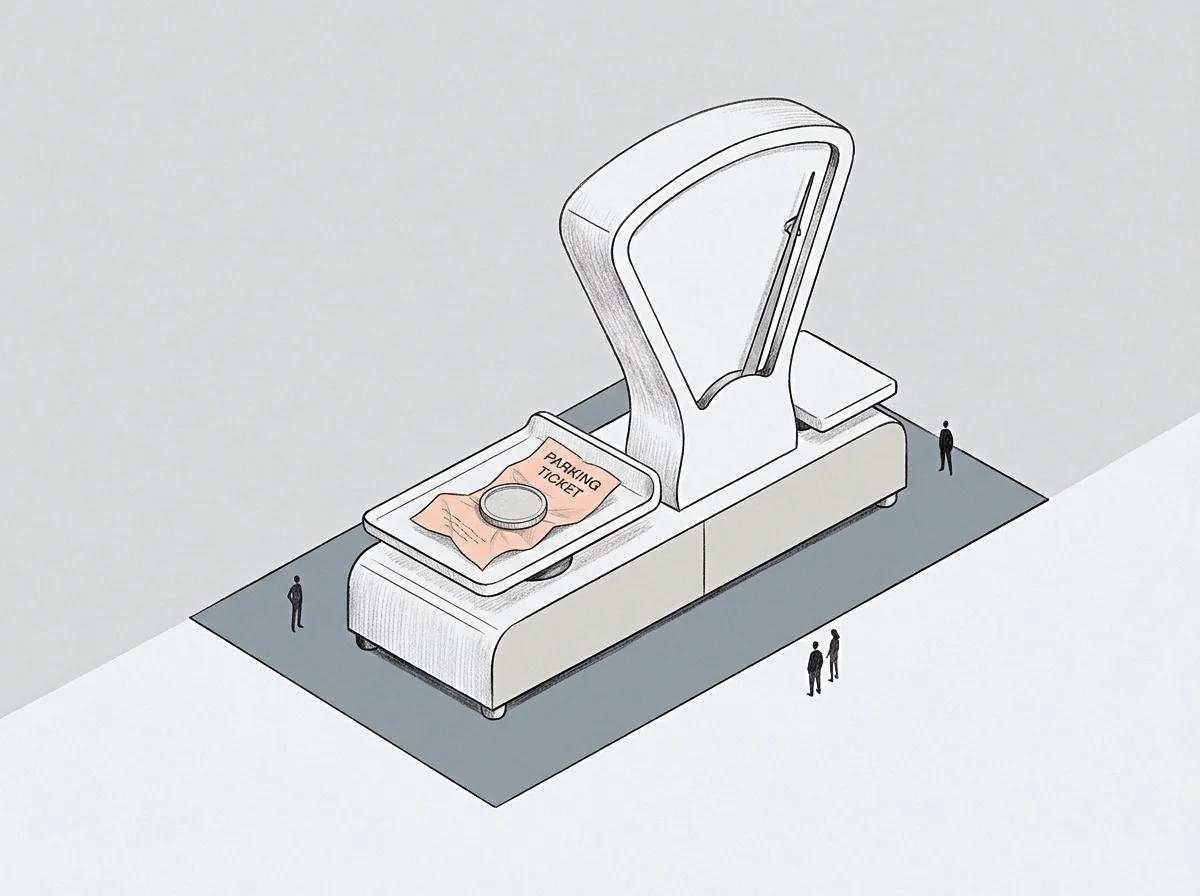
Activation Is Also a Function
The version that applies to a room like mine is narrower and I have not seen it written down anywhere. What gets supplied there is not the answer. Nobody was missing the skill and nobody was sitting there waiting to be told what to build.
What was missing was the start. I was the start. An arrangement can be short of the trigger rather than short of the capability, and whoever reliably supplies the trigger is supplying the one thing that arrangement is never going to build while he keeps turning up.
That is why it deepens instead of easing. Every session is evidence that work happens when the person arrives, and evidence of that kind does not teach a system to start on its own, it teaches it to book the next session. Competence makes it worse on exactly the schedule Senge described.
I am good at getting things moving, and that is the reason nothing in that build ever learned to move without me sitting in front of it.
The thing I was needed for and the thing that never got built are the same thing.
The trigger and the reading are one supply, and it took the whole run of sessions to see that. Starting the work and standing as what the work gets held against are both functions the arrangement needed and had no way of making for itself, and both were running the entire time with nothing written on either of them. That is what came out of capacity every week.
It is also why the hours never described it. An hour is opened and closed and then it is over. A function held open is not.
The person holding it carries it into the next day and into whatever else is in the head that week, and a function that stays open after I have left the room is the cost, not the hour that had my name against it.
Bounded, that same supply has a name and a number on it: a session, a review, a retainer. It opens, it is paid for, it closes, and once it closes nothing further is owed on either side. With no terms on it, it never closes, so it never gets named either, and the word that ends up standing in for it is presence.
That is the difference between an engagement and a room I keep turning up to. Not the skill in it, and not the hours either. Whether anybody wrote down the point at which it is finished.
The instrument that reads this is a gap with terms on it: a start, an end, both said out loud beforehand so that nothing inside it can be read as leaving. Whatever is standing when the gap closes is the reading, and nothing standing is a reading too. Neither side can get that reading while the sessions keep running, because every piece of work either of them can point to was produced with me in the room.
Dependency
A structure built around presence does not produce gratitude. It produces dependency, which is a different thing and harder to see, because on the surface both look like somebody being glad you came. Each session made the next one more necessary.
The structure that came out of the room was mine, so the next piece of structure had to come out of the room too, and the gap between sessions filled with waiting instead of work. I took that for being valued. Being needed and being valued sit close enough that a person can hold one and feel the other for years.
There is a second instrument and it is the older one. Early on I ask what the work actually costs to do, in hours and in who has to be free to do them, and I ask it because until that sits on the table nothing being discussed is real yet. A client answers it with a quote and a date on it.
In that room it produced nothing anybody could use. Nothing was wrong with the question. The answer had nowhere to be spent, and a diagnosis with nowhere to go is a light switched on in a room somebody cannot leave.
That instrument also does not run at all on my own work, because it needs somebody sitting opposite to answer it, and in slot five there has never been anybody in the chair. So the questions I would put to a client in the first meeting have never once been put to the thing with my name on it.
Ideas came out of that arrangement for years and there is nothing at the end of them to go and look at. Ideas are the cheap part. Somebody brings one, most people bring four, and having them costs nothing, so nobody prices them.
The scarce input is execution, and when a person brings an idea and needs somebody in the room for it to become real, execution is the thing being asked for. Two things pay for that with weight of the same kind. Somebody who already has the people who buy, and brings them.
Or somebody putting up money that is their own and can go. Neither was in the room. An idea is not a payment.
It is the thing being paid for.
The slots hold against work, because work states a scope, a price and a start date, and a slot can be told what it is holding. My being there states none of that. I do not know what I do the next time an arrangement turns out to want me in the room more than it wants anything I make in it.
Do I put a price on that, or is it the one input I know how to spend and have never worked out how to sell?