Meaning
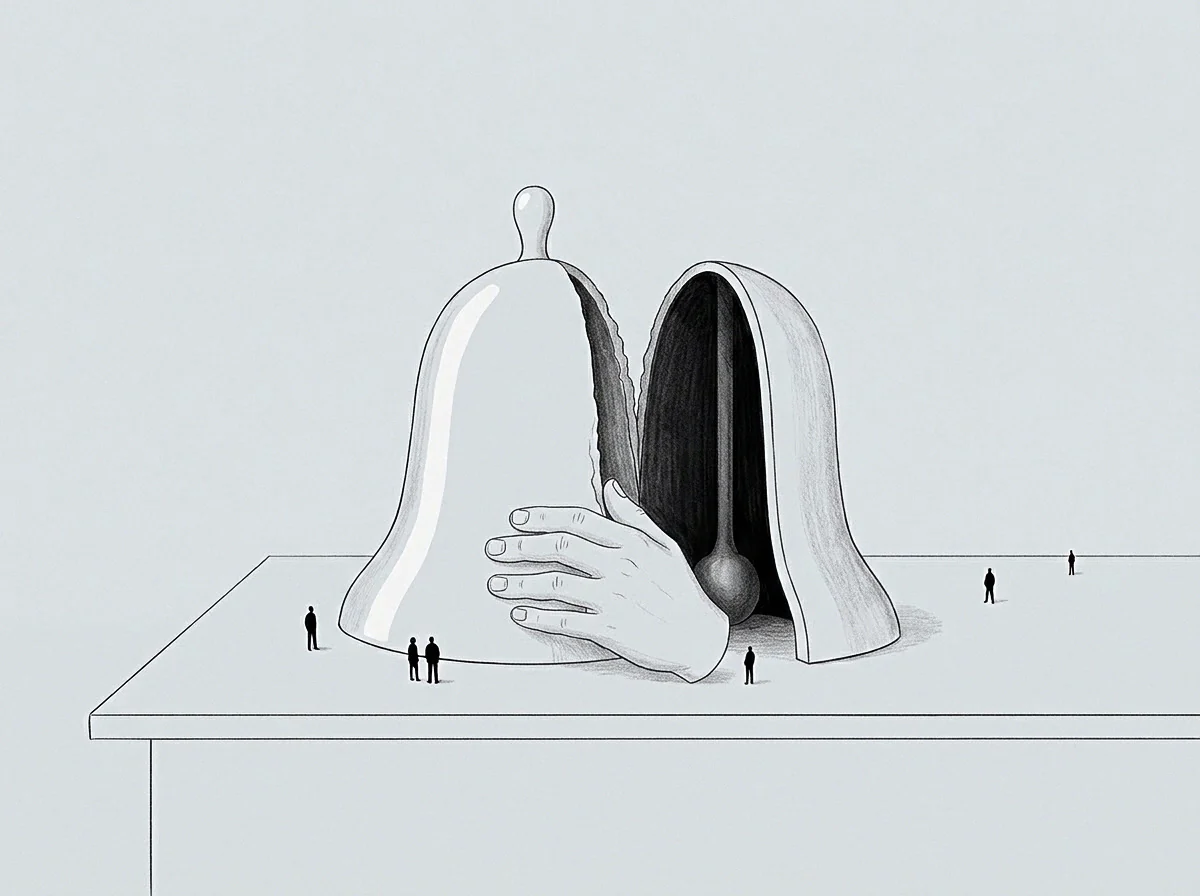
Physiological and behavioral equilibrium in an operating seat provides the predictable baseline against which surrounding individuals stabilize their own effort and affect. A steady state represents the sustained internal balance that allows a founder to absorb daily friction without transmitting acute volatility to the room. It governs the baseline cost of interpersonal coordination and measures the degree to which an individual remains predictable under sustained task load.
The condition ceases to apply when acute pressures permanently exceed restorative sleep or physical reserves, forcing the nervous system into emergency compensation.
Regulatory Baseline
Biological co-regulation ensures that individuals working in proximity continuously read and mirror the autonomic state of the person holding central authority. When that person sustains an unperturbed steady state, surrounding collaborators draw down their own expenditure on vigilance and self-regulation. Stabilization becomes computationally inexpensive for the group because one central reference point absorbs incoming shocks quietly.
Traditional accounting of output routinely omits this stabilizing subsidy. The unbilled baseline functions as an invisible reserve that holds the room together during extended stress.
Absorptive Capacity
Human nervous systems process task ambiguity and interpersonal tension by offloading arousal onto whatever stable reference point is available in the immediate environment. In an operating seat, the maintenance of a visible steady state requires the person to process raw threats without immediate discharge into the room. Incoming variance from broken contracts, delivery delays, cash strain, or interpersonal friction hits the founder first.
Holding that shock without reflexively escalating panic costs real metabolic energy and focused attention. A founder who maintains this quiet posture converts external disorder into structured tasks, effectively dampening oscillation across the entire group. Where this capacity falters, every trivial deviation from expectation ripples outward as an urgent crisis, multiplying the coordination overhead for everyone involved.
The buffer is finite and directly proportional to available rest and financial cushion. When those underlying inputs degrade, the capacity to buffer volatility collapses, exposing the wider room to unchecked autonomic swings.
Depletion Gradient
Prolonged buffering of environmental volatility creates an asymmetrical drain on the person who supplies stability for others without receiving reciprocal regulation. Under continuous overload, an apparent steady state often masks progressive autonomic exhaustion. External stability is sustained through heightened physiological effort, draining attention and physical capacity long before visible failure occurs.
Eventually, the unpriced subsidy depletes the founder, turning what appeared to be an invariant operating baseline into sudden physical or relational collapse.