
The date that keeps a gift a gift
Giving something back is a decision, and a decision has a size and an end. Set the size, leave the end out, and the return converts into a position neither of you chose to take.
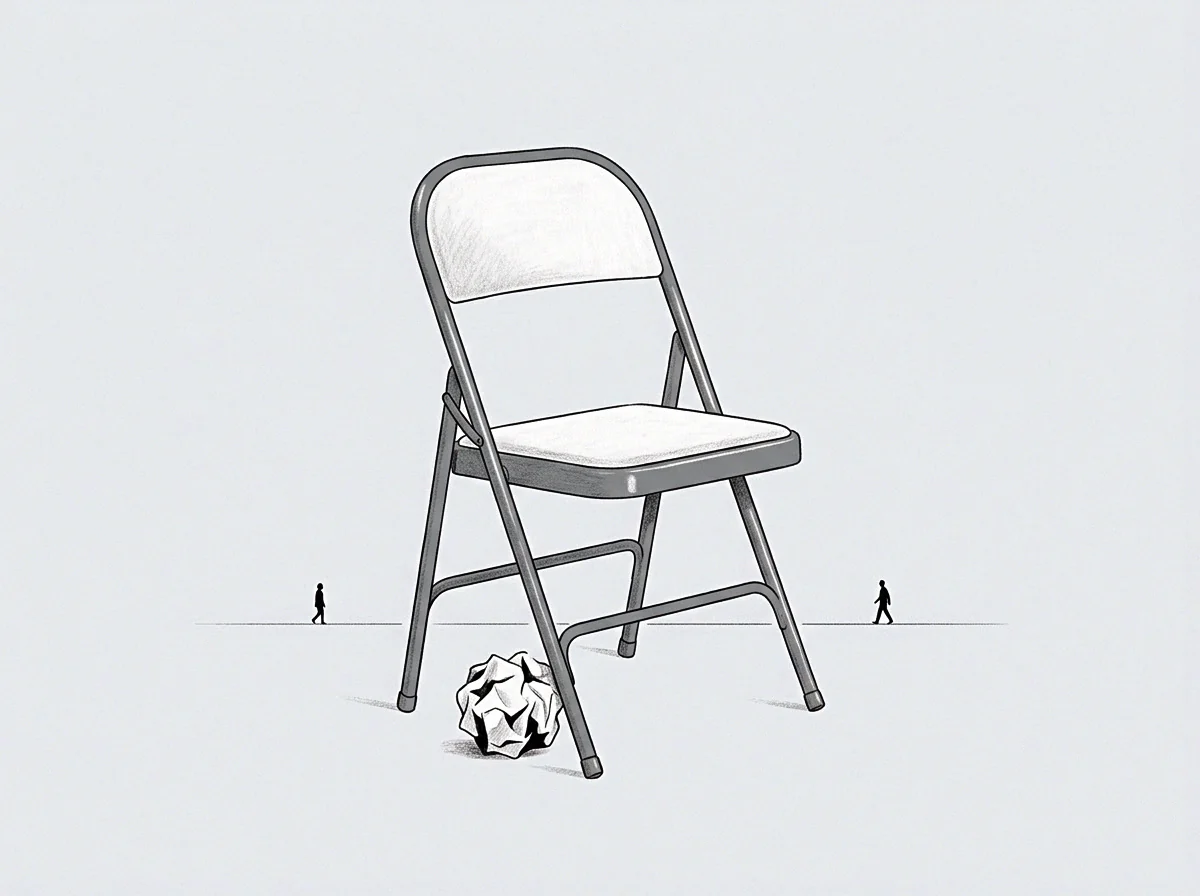
Terminus
Somebody gives you something nobody charged for. You decide to give it back, and the deciding is yours, done once, in your own head, which already makes it a different object from a debt extracted out of you. Then the giving starts.
It runs longer than a favour usually runs, and it goes on running, because stopping partway would feel stranger than going on. Nowhere in it is there a sentence saying what finished looks like.
Without the sentence, the return does not stay a return. Each thing done lands against an amount nobody ever set, so no round of giving brings it down. What was one decision turns into a supply that runs because it has been running.
A return with no end in it becomes standing obligation, and neither side was in the room at the moment it happened.
You have to set two things for a return to stay one, and people set the first. The amount gets fixed, sometimes out loud, more often as a private figure of effort: this much, this long, the size known before the work starts. The end gets fixed almost never, because saying an end out loud feels like putting terms on a gift, and terms on a gift feel worse than paying forever.
So the amount is set and the clock is left running.
I found what that left late, and never as an argument. It arrives as capacity that was supposed to be there in the week I needed it for my own line, and is not there, and cannot be pointed at. I had priced the work.
I had not priced the open end, and the open end is the expensive half.
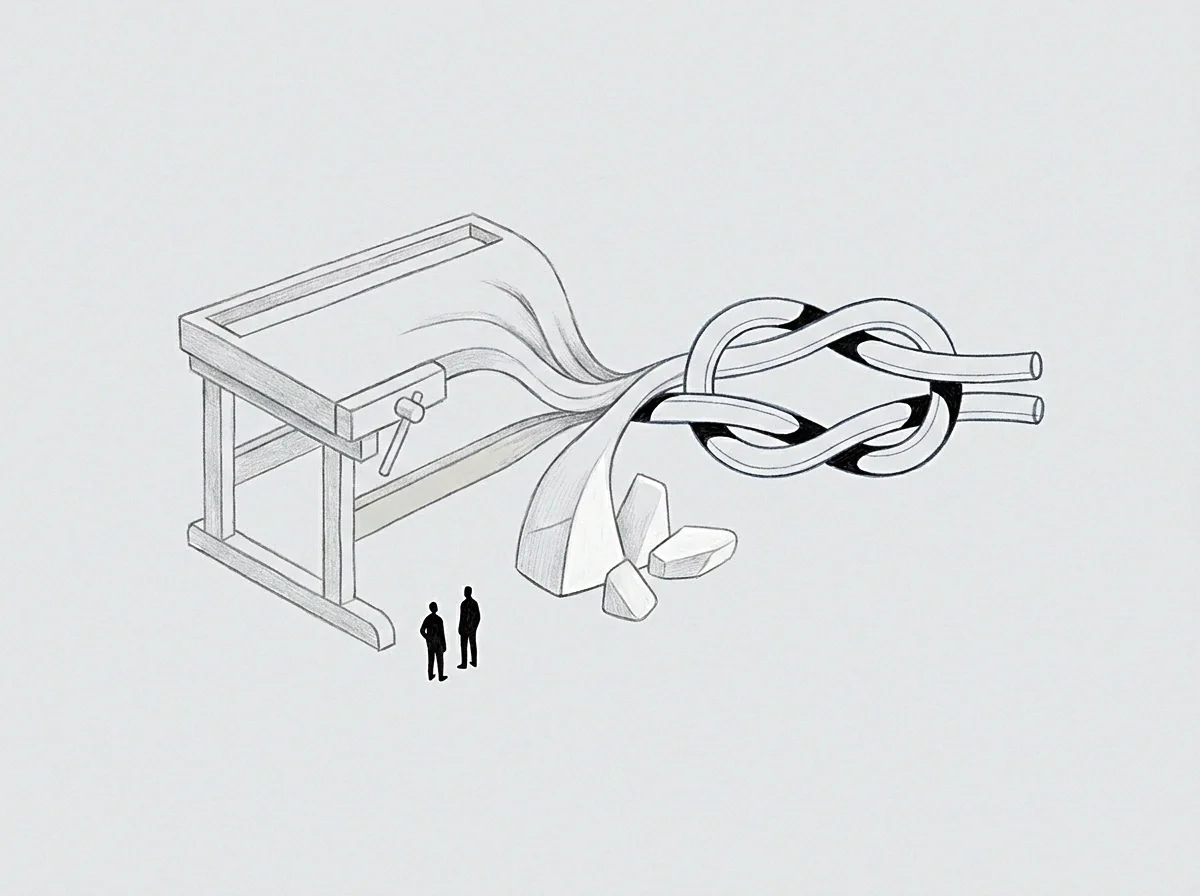
Obligation
Standing obligation does not look like obligation from either side of it. No amount was named at the start, so there was none to be pointed at, and nothing was written down that either side could hold up and read back. It formed.
That is a different event from a person taking.
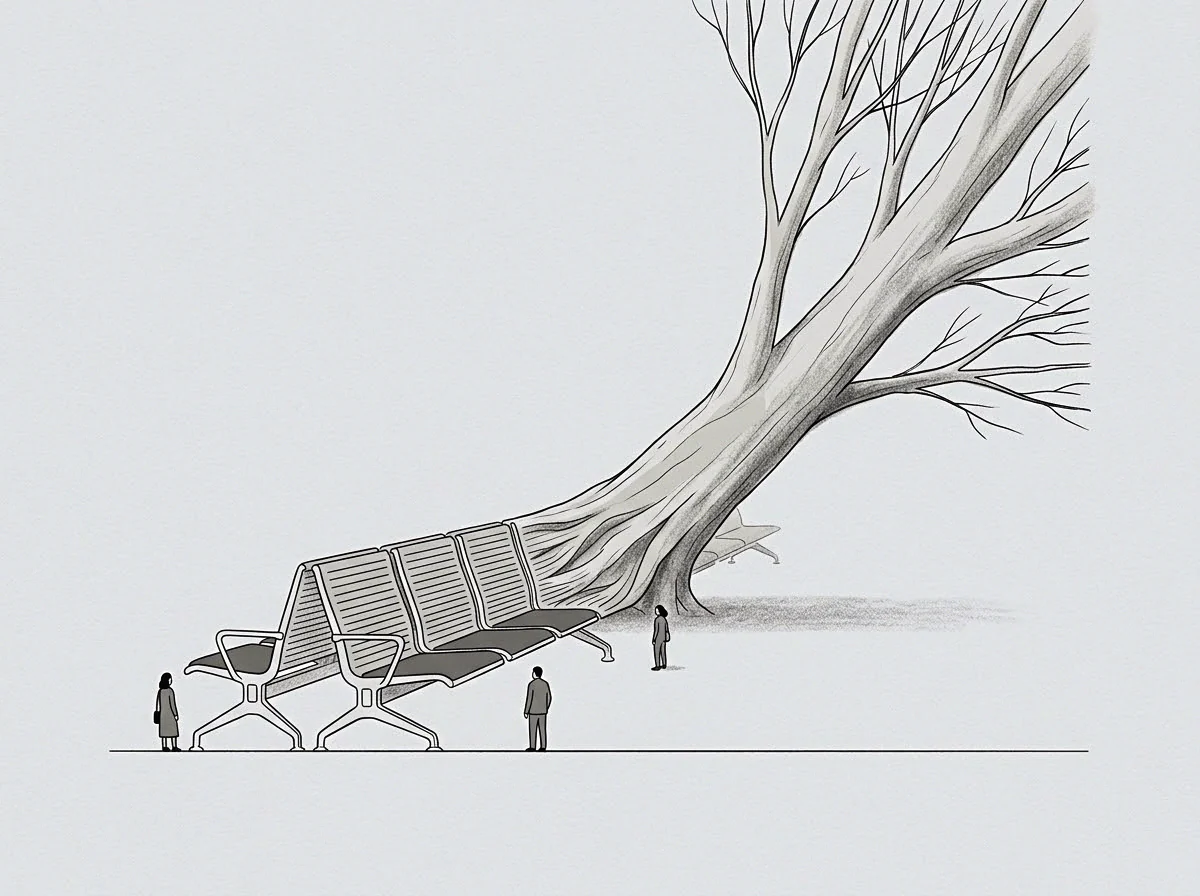
What Counts as Paid Back
The instrument is not a boundary and it is not a conversation. It is holding on your own side a picture of what counts as paid back, drawn tightly enough that the day you cross it is a day you would recognise.
I would know the day I passed it, and nobody else has to.
- Handed over, and running without me in it.
- A count of sessions, finished at the count.
- What is left is work anybody can pick up.
You can take any of the three as a finish line. What makes it one is that it names a state of the world and not a state of feeling between two people. A feeling moves with the week.
A structure is either handed over or it is not, and you can look at the thing and see which. Set the end on a feeling and the end does not arrive, because the same feeling that started the giving is the one that would have to say when it stops, and a feeling does not run out on a date.
The test I put on it now is whether somebody standing outside the arrangement could check it. Handed over and running is checkable. Enough is not.
What the finish line has to carry is a condition for being complete, and the thing missing from an open-ended return is that condition, not the goodwill.
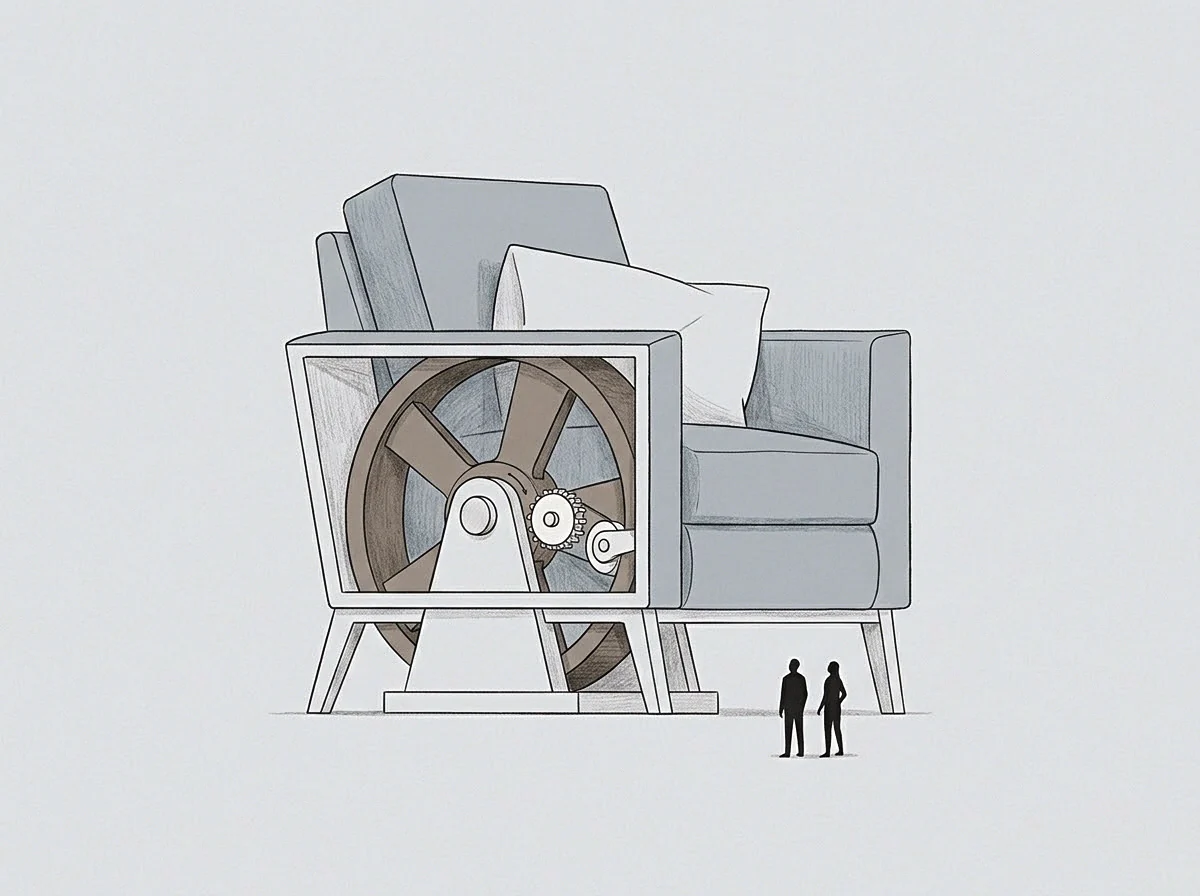
The Thread That Cannot Be Set Down
An arrangement with that condition in it can be set aside between sessions. One without it cannot, and this is where the cost actually comes from. For years I counted projects and read the number as the limit: past three or four open ones I would throttle, and threads would drop.
The number was never the variable. What I was counting badly was threads with nothing bounding them. A thread with a scope, a deliverable and a date sits quiet until the hour I work on it and then goes quiet again, because there is a state of the world I can hold it against.
A thread with no end written anywhere stays live under its own power, in weeks when nobody touches it, and it takes something in every one of those weeks. Seven bounded threads cost me less than four unbounded ones did, and the four were the smaller number. One unbounded thread is enough to run a person at the limit, so the count on the page reports nothing.
The warning sign is not how many are open. It is whether any of them has a finish in it.
The name for that kind of thread is an open loop, and I met the term years after I had started paying for the thing it describes. What the term gets right is that the head does not need the work finished. It needs a condition it can hold the work against.
Every other open thread in a working week can be given one: a scope, a deliverable, a date. A favour being repaid cannot, until somebody sets the end, and setting it is the move that turns it into a thread like the rest.
A return with no finish written for it is the open thread no plan can close.
The Line You Do Not Announce
The line read out at the start breaks the thing it protects. A gift with terms attached is a transaction, and there is nothing wrong with a transaction, but it is not what was happening when somebody gave you something at a point where you had nothing to give back with. So the terminus gets held on one side only, which sounds like exactly the private counting I have written against, and the operation is not the same.
A count that runs unseen is a covert contract: it builds towards a figure the other side was never told, and the day they come in under it is a day they could not have seen coming. A terminus that runs unseen makes sure no such figure ever forms. One accrues, the other expires.
Same privacy, opposite direction, and the test for which one you are running is whether the number in your head is going up or coming down.
The other side keeps what it had. They received something, they thanked you or they did not, and at some point the giving stops and nothing between you has to be renegotiated, because no claim was ever made.
Anything given back for a reason with no end in it stops being a return somewhere along the way, and the day it stops is not marked anywhere. So the end gets set at the front, while setting it is still cheap.
Gate
There is a stage in every arrangement where attachment and investment form. Grip is what I call that stage. Before grip, leaving costs nothing.
After grip, leaving is expensive, and the cost runs from that point, not from the day somebody finally complains.
Terms are early or late against grip, never against the calendar.
Early is a word about the calendar. Grip is a word about what has already gone in. An arrangement can be four days old and well past grip, because the first version of the thing already exists and somebody built it.
Another one can run for months and still sit before grip, if nothing has gone in that would be lost by stopping. The date on the agreement reports nothing about this. What reports it is whether either side would now lose something by walking away tonight.
My own reflex puts grip in the wrong place. I give before terms exist. When I see a thing that needs building I build it, and then the thing exists and I am inside it, and giving first binds me first.
By the time I would state a term I am already in further than the other side is, so the term does not land as a term. It lands as withdrawal, as a person pulling back from something he was doing gladly last month, and nobody hearing withdrawal in it is misreading it, because from where they sit that is what moved.
I used to read that reflex as something I could not help, and the reading was wrong, and holding it was expensive. Wrong because I watched it stop. In an arrangement where terms existed, with somebody waiting on a thing I could see exactly how to supply, I did not supply it, and nothing in me came apart.
So it is not a thing I cannot help. It is a habit with a long run behind it, and what it feeds on is the absence of terms: it fires where nothing was ever set, and it goes quiet where something was. That changes where the work is.
You do not go at the habit. You go at the empty place under it.
The instrument that fixes it is not relational at all. I wrote it into my own pricing years before I understood I was writing it about my life. Somebody sends a client my way.
The introduction is worth something real: a warm lead is not a cold one, and the person who made it put their own name behind mine before there was any evidence. So the term pays them a share of what that client invoices. The share is stated.
It runs from the first invoice and not from the first conversation, so the clock starts on something that either happened or did not. It runs for a stated window and then it stops. And it does not accumulate: work that comes from the same client after the window closes pays nothing, because by then the client is not a warm lead.
They are a client, and a client I would now have to win cold is not priced at the warm rate. That is not how the market values a cold lead, and the term is not going to value one differently because of who was standing there at the beginning.
The window is what keeps the introduction a gift instead of a claim on everything that follows.
Nothing in that term needs anybody to feel generous later, and that is the whole reason it holds. The gratitude is real and the gratitude is not the instrument. What carries it is a start point that can be pointed at and an end point that arrives whether or not either of us is thinking about it that quarter.
They get paid on a date. I stop paying on a date.
I say all of it at the introduction, before either side has spent anything, which is the one moment it is cheap to say. Said then it sits in the arrangement as a condition, and either side can take it or decline it without writing off anything they have put in. Said after the client is signed and the work has run for months, the same words are asking for something back.
The words did not change. The grip did.
Non-accumulating is the condition, and that one word does more work than the rate does. The share can be generous. Left open at the far end, generous is what turns a person who once did you a good turn into a standing position inside a business nobody sat down and agreed to build.