Meaning
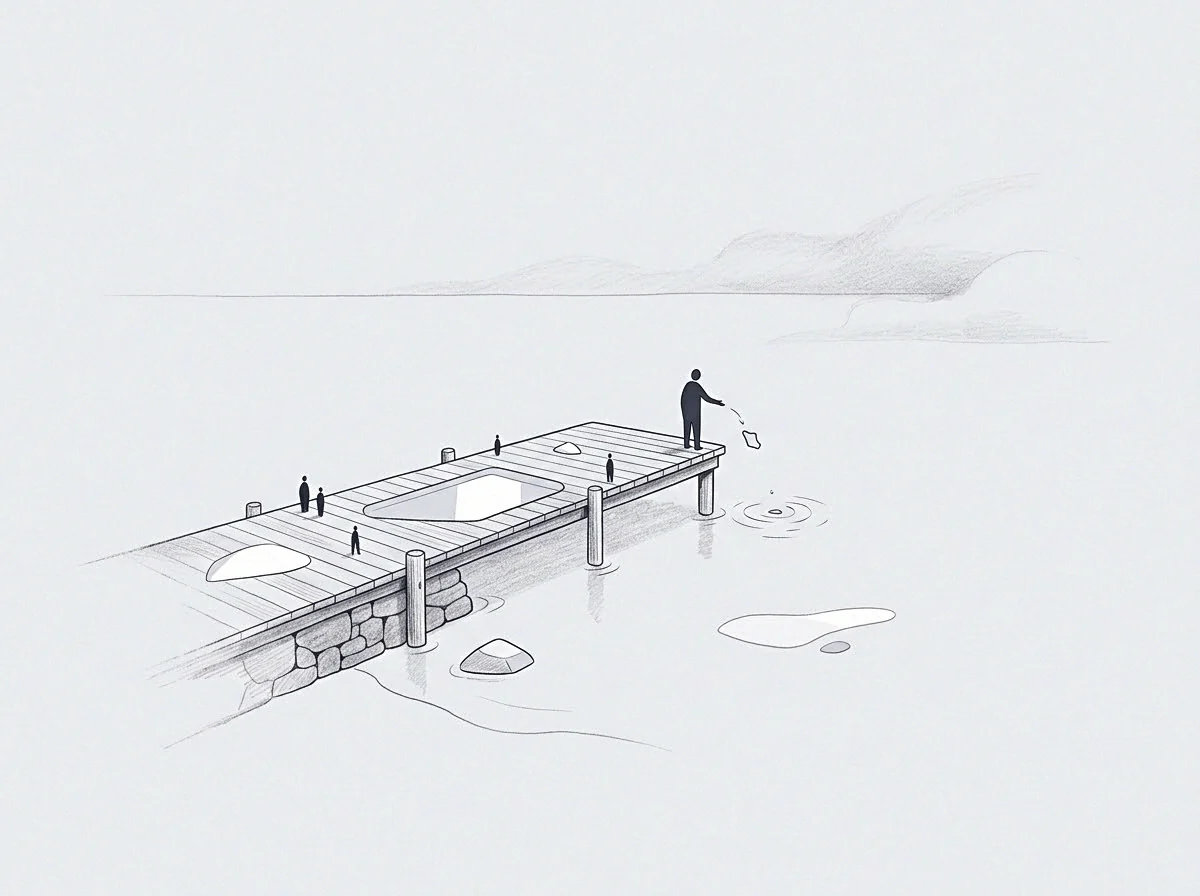
Labor whose value, structure and durability are embedded within a standalone deliverable. In artifact-bound work, the creator pours energy into an object that operates independently once released into the world. The finished piece stands without the presence of the builder, functioning as an unalterable witness to the labor invested in its production.
Its validity is tested entirely on the surface of the finished item.
Object Detachment
Releasing a fixed piece of work breaks the continuous relationship between the creator and the consumer. Once artifact-bound work leaves the desk, the author cannot step in to explain ambiguities or correct flaws in real time. The object must carry its own context, documentation and functional integrity across every transaction.
If the artifact fails to perform, no amount of verbal defense can restore its utility.
Inspection Barrier
Evaluating a finished item requires examining its static properties rather than observing the labor that went into its construction. Observers encounter artifact-bound work as a finished whole, remaining entirely blind to discarded drafts and structural dead ends consumed during fabrication. The audience judges only what survived into the final material form.
This separation between process and product means that immense technical struggle remains invisible if it leaves no tangible mark on the artifact itself. Consequently, the object absorbs immense effort while yielding only its exterior face to scrutiny, forcing the builder to accept that labor unexpressed in the final build is completely lost to the record.
Capacity Cost
Constructing permanent deliverables demands prolonged periods of unbroken attention. Because artifact-bound work cannot be repaired through quick social adjustments after shipment, the person at the desk carries a heavy burden of anticipation during every phase of production. The energy required to foresee edge cases and eliminate defects before release drains reserves far more rapidly than synchronous task execution.