
Tacit work has no invoice line
I described a service I had shaped around one client's way of working and my partner heard a growth plan. The thing that would actually have to move is the part that has not once made it onto a quote.
Tacit
I was describing a service I had shaped around one client, the one who takes what I hand him, pays half up front, and stays out of the process while it runs. It did not get halfway across the table before it was filed. A partner whose business is hours files a thing like that the same way every time, and the filing has one sentence in it.
So you put two more people on it and sell it again.
I put the word bottleneck on the tacit part, and it did not land.
I read that first as a hole in the partner’s model, and it is a hole. More people, more hours, more clients, and the work comes out the far end. In that model the constraint is hours, and hours can be bought, so you add a person and the constraint moves.
True, and still not the whole reason the sentence failed. A capacity model has a step in it for buying hours and no step anywhere for converting what one head holds into something a second head can work from. Craft that is tacit rides along with whoever delivers it, so nothing inside that model ever asks the craft to travel on its own.
Delivering all of it yourself keeps you off the one road where a craft has to be handed over, and the refusal shows up on that road and nowhere before it. The word was correct. There was nothing in the model for it to attach to, which is not the same thing as being turned down.
The service I was describing does not have hours at the front of it. It has a reading. Somebody sends me a brief and a folder of what they have already built, and inside a minute I know the structure is wrong and roughly which of three shapes it wants to be instead.
Everything after that is execution, and execution can be taught, scheduled, hired. The minute cannot.
What sits inside that minute is a fold. Years of work with an outcome attached to every piece of it, client money on the line, a market answering back yes or no, all of it compressed into something that fires before I have any reasons to give for it. I cannot unpack it on request.
I can unpack maybe a third of it if you give me the specific case and an hour, and the third that comes out is real, and the rest stays exactly where it was. That fold is what got heard as a growth plan. A service built around one client’s way of working looks from outside like a product with a price on it, ready to be sold twice and then four times.
The split treats selling as the hard part, and it has no line in it for the part that lives in one head and cannot be delivered by a person who is not standing inside it.
The reading gets given away, and the reason is where it sits on paper. The estimate carries design hours, build hours, a line for managing the thing, a revision round. The reading carries nothing.
It has no row. It is not that it is priced low. Nobody reading the quote is looking at it, and the person who wrote the quote is not looking at it either.
Put a row on the quote called specification, with a price against it and an object handed over at the end, and two things move at once. The client is buying something instead of receiving a favour with a delivery date attached. I then have to produce it, which is the first time anybody, me included, finds out how much of it can be produced.
Bottleneck
What Polanyi Was Studying
Michael Polanyi put down the line the whole field was built on.
We know more than we can tell.
Nothing about how he got there came from firms or from management. He was watching people who judge things for a living, the ones who can separate a good thing from a nearly good one and cannot say what they used to do it. He called that connoisseurship, and the line came out of it rather than out of any office.
His account of how such knowledge gets from one head into the next is the half that usually gets dropped. It does not go by telling. There is no rule to hand over, nothing that survives being put on a page and read later by somebody who was not in the room while the work was done.
It moves one way, and the way is a person standing next to another person while the thing happens, watching the hands, getting corrected on the spot, doing it again wrong, doing it again. Master and apprentice, and he meant that as the actual channel and not as a figure of speech. So when somebody senior calls a thing wrong and cannot produce the reason, nothing has gone missing between the knowing and the saying.
The knowledge came in by that route. It had no sentence in it at the start, and there is none in it now to come out.
The Step Where the Value Is Made
Nonaka and Takeuchi took the line and built something operational out of it. Their model is SECI, four conversions running between tacit and explicit knowledge, and the one that carries the weight is externalisation: taking what sits inside a head and getting it into a form that exists on a page. They call it the hard one, and they call it the move that makes value in a knowledge organisation, and their reason for both is the same.
Knowledge that stays in a head gives nothing back when the work doubles. Knowledge that has been got out keeps paying into every job after the one it came out of.
Gives nothing back is literal. Two clients instead of one does not make the reading faster. Ten does not either.
The reading is capped at the hours of one head, no amount of demand moves that cap, and the growth line on anybody’s plan flattens at the exact point where that head runs out of week.
von Hippel’s finding sits beside it and says why the cap holds. He called it sticky information, and sticky is the right word for what it does. Knowledge of this kind does not travel.
It sits in the place it got made, and getting it out of there is not a conversation over lunch. It is evenings. It is a folder somebody has to sit with, a page written badly and then written again until it says the thing, and then a second person reading that page and coming back with the parts that did not go across.
Priced honestly, that is a project with a number on it. Nobody is withholding anything and nobody is hoarding. It stays because moving it costs more than a business wants to pay in a month where nothing is on fire, and so the person it formed in becomes the ceiling of whatever gets built on top of him.
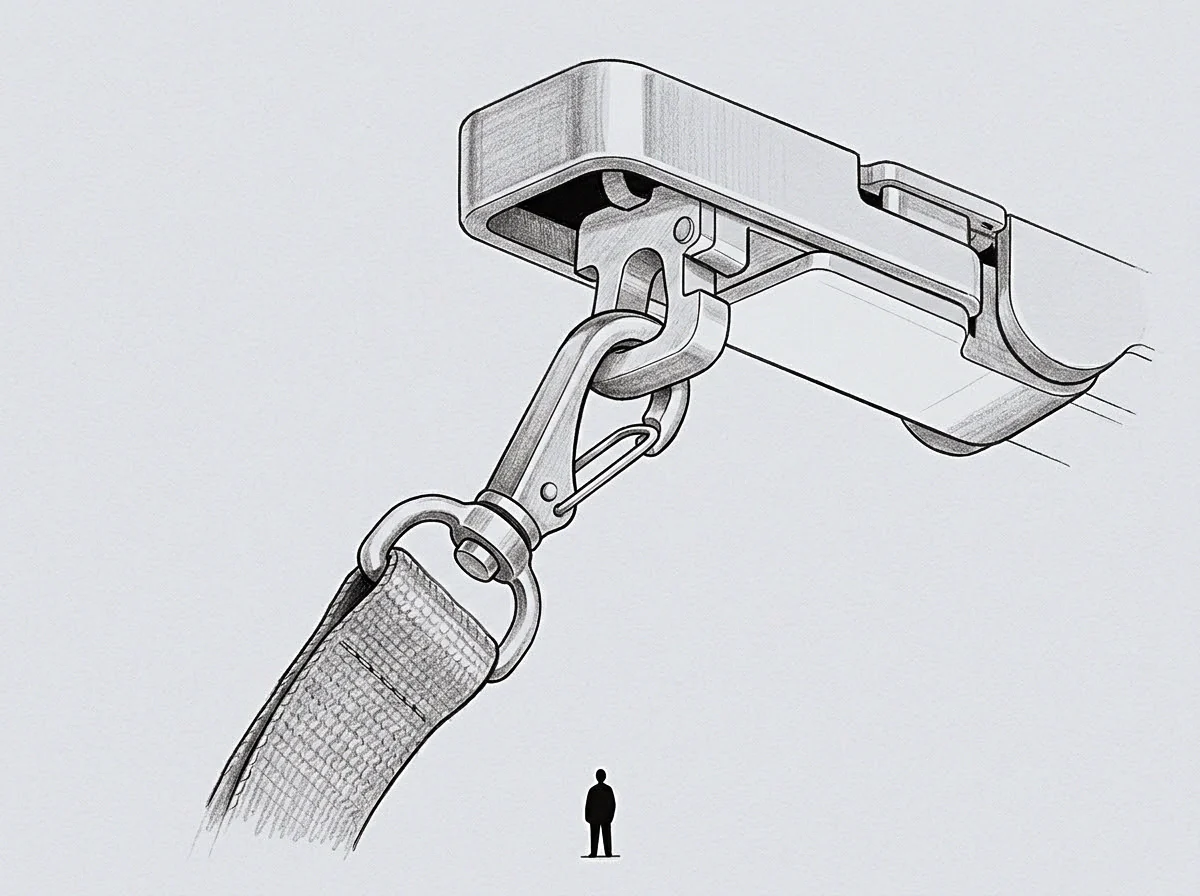
What Cannot Be Converted
The full conversion is not on offer, and Polanyi’s own account is where that comes from. What he was looking at was knowledge going from master to apprentice by example and not by instruction, which means the page was never the channel this stuff travels on. Put it on a page anyway and some of it goes across.
The part that only ever moved by one person standing next to another stays exactly where it was. What is left is partial specification. My master prompt for a writing voice is one of those: it is not the voice, it is as much of the voice as would go into sentences, and the remainder still runs in my head every time I read the output back.
Partial is not failure. Partial is the product.
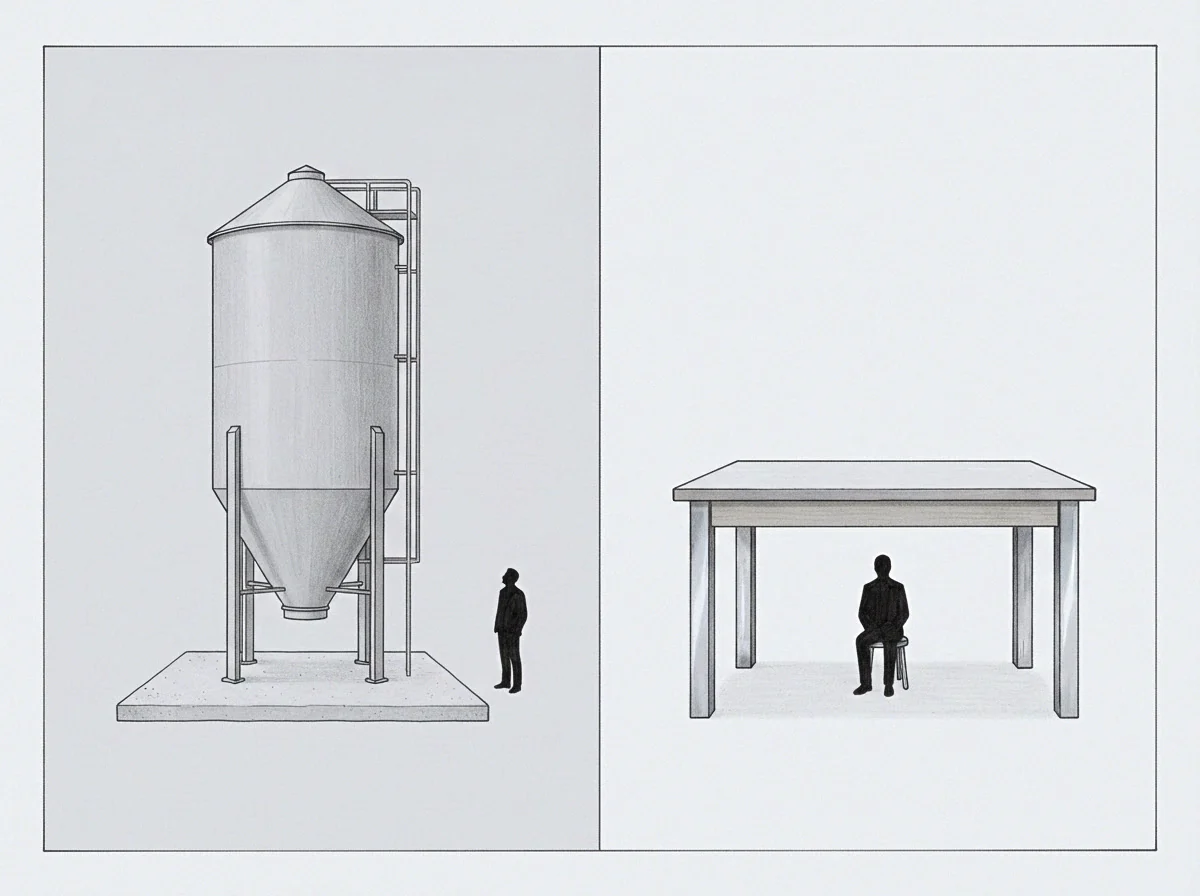
What a Hire Actually Buys
Take the growth plan at face value and put a person on it. Work comes to him, he does it, and then it comes to me, because the last look is where the reading lives and the reading is the thing nobody has written down. The last look does not delegate.
So the person does not free my week, he spends it. The hours that used to go into doing now go into checking, and checking is the part that was already full. A head added in front of an unwritten specification converts into more of my own hours, not fewer.
I have sat inside that arrangement in a company before and I know what it costs to run.
Which puts the steps in an order, and it is not the agency order.
- Write the tacit down into instruments: a specification, a prompt, a script, whatever holds the part that can be held.
- Give the written part to systems, which do not need to be told a second time.
- Keep the last look until the last look has itself been written down.
- Buy the person who manages the thing after that, and not before.
In my own words this is a supply problem and not a demand problem. The business does not sell the file. It sells a reading, there is one supplier of the reading, and every person a growth plan proposes to add sits downstream of that supplier, waiting to be told what the reading found.
The scripts, the master prompts, the written specifications are each one finished conversion, and they are the only parts of the whole thing that go on working in a week when I am not in the room. Everything else stops when the head does.
The cost is what keeps the work from happening. Doing the work is fast and warm and it pays this month. Writing the specification is slow, it is cold, and it pays nothing this month or the next one.
Every hour I have put into a master prompt or a written spec came out of an evening, produced no invoice, and looked from outside like I had stopped working. I did that for years before I could see any of it compounding, on faith in a mechanism whose name I had not read yet.
So, before adding a person: write the page that person would need before they could do the thing without you. If the page cannot be written, the hire buys hours in the part that was never the constraint, and the constraint stays where it was, in the same head, inside the same week.
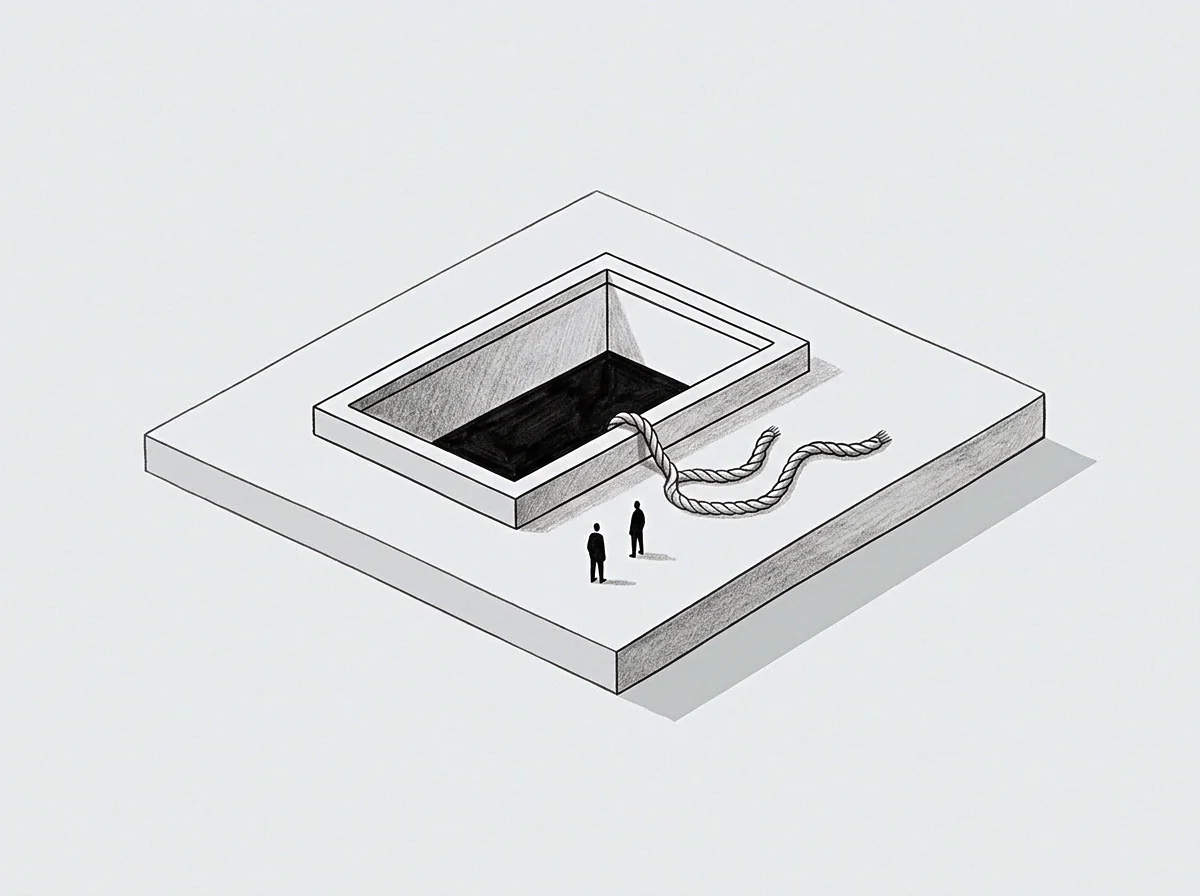
Naming
Naming a thing is not the same labour as doing it, and I did not understand that until I tried to run both inside one week. Doing is downhill. The reading fires and the hands are already moving, and the file goes out before anything has been asked about what the reading used.
Naming runs the other way. You have to stop the reading in the air, hold it still, and ask what it just used, which is the one question the reading is built to skip.
It also has conditions under it. A client who hands over the driving seat and stays out of the process is not simply pleasant to work with.
A process nobody interferes with is a process that holds still long enough to be written down.
Where the terms get renegotiated every week there is no method to write down. There is a run of accommodations, and putting those on a page produces a document about an arrangement rather than a specification of work.
So there were never two growth models on the table, a slow one and a fast one. There are three. The agency model buys hours and sells more of what the same hands already do.
Clean delegation hands the work over and keeps the last look, and it holds only where an explicit structure is already standing for a person to be put inside it. Extraction-first is the third, and its opening move asks nothing of anybody: a file open in the hour after the last delivery has gone out, with nothing in it that somebody else has to supply first. That is also why it loses.
The conversion work has no invoice, no delivery date and nobody asking where it is, so it goes to the bottom of every week against work that has all three.
Which leaves the thing I have not settled. The person who could write the reading down is the same person delivering this week, and I do not know whether work like this can be specified by somebody still doing it, or whether the specifying needs a person who has already stopped, and if it needs that, whether he would still be able to see the thing he was writing about.