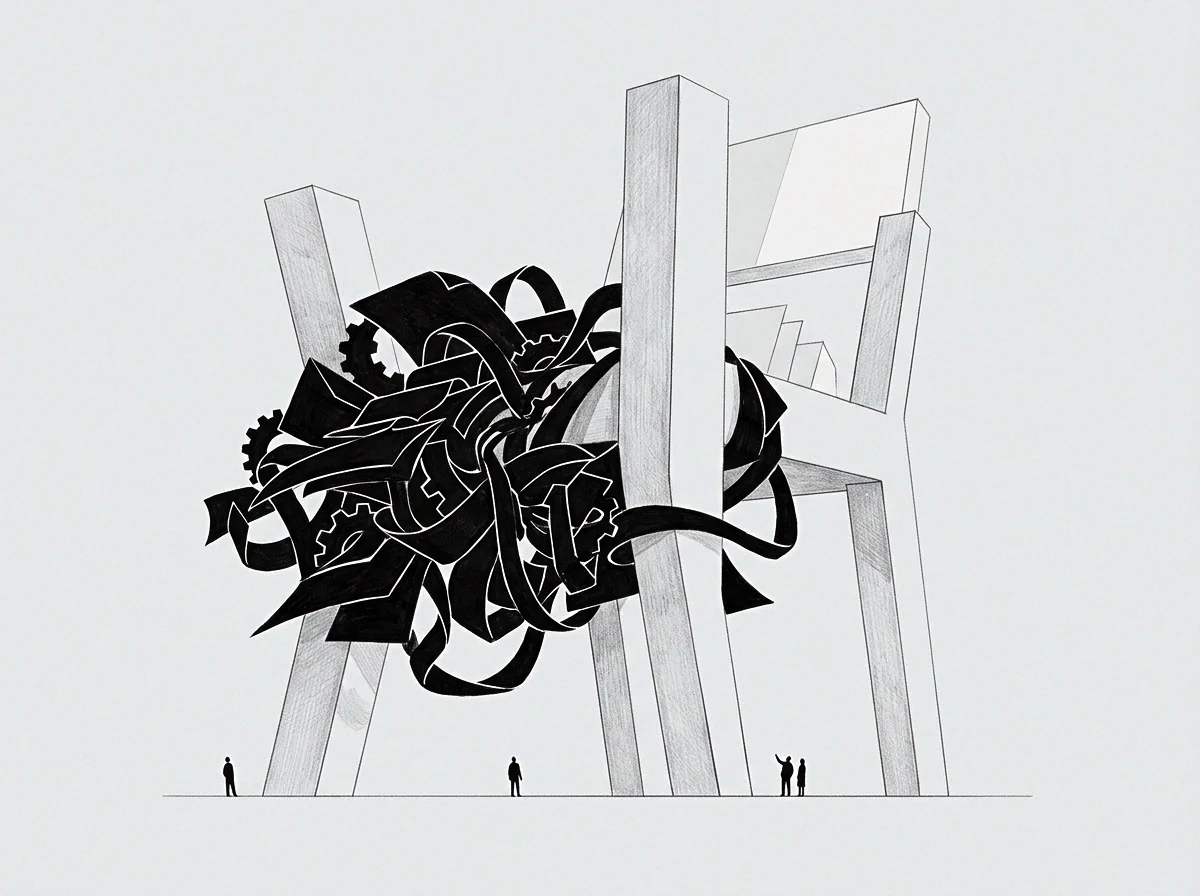
Meaning
A structural arrangement establishes a founder’s official authority and compensation based solely on a legally documented role. Implementing a framing seat allows a founder and a successor to separate the formal power held in a seat from the informal habits of the incumbent. This arrangement defines the precise, enforceable limits of the role to prevent personal influence from distorting the established hierarchy of the office.
It applies strictly to the legal and financial boundaries of the position, ensuring that the compensation structure responds only to the held seat rather than the personal status of the founder.
Structural Boundary
The mechanism operates by creating an objective interface between the transition leader and the incoming director. When a founder vacates the principal seat but remains on the board, a framing seat clarifies the exact oversight powers and voting rights that remain with the seat. This separation prevents the common error of forcing an incoming partner to negotiate with the personal legacy of the founder.
The boundary of this arrangement is reached when the founder attempts to execute tasks directly, bypassing the established reporting lines. At this limit, the legal architecture of the seat must override any historical deference to the individual.
Friction Point
Friction arises when the informal influence of the founder clashes with the formal constraints of the designed role. While the framing seat provides a clear legal template, the daily habits of a long-term operator frequently spill over the designated boundaries. For example, a founder might continue to give direct instructions to staff or access sensitive data without authorization, undermining the authority of the incoming operator.
This spillover creates confusion among employees, who struggle to determine whether to obey the formal chain of command or the informal founder. The cost of this friction is measured in delayed decisions and fractured team alignment, which can persist until the formal rules of the seat are rigidly enforced. This tension highlights the difficulty of separating a founder’s identity from the work itself.
Capacity Cost
Maintaining this structured separation imposes a continuous demand on the attention of both the founder and the partners. The founder must expend energy to suppress the impulse to direct daily work, while the team must devote hours to defending the boundary of the framing seat. This persistent demand reduces the capacity of the team to address external challenges.