Meaning
Sociological analysis demonstrates that novel information and opportunities travel across social networks primarily through distant acquaintances rather than close friends. The researcher Mark Granovetter established this principle by showing that individuals who are strongly connected share the same information pools, whereas weak connections bridge separate social clusters. This insight explains why professional opportunities often come from casual contacts who move in different circles and possess unique resources.
Network Topology
Social structures consist of dense clusters linked by occasional bridges. Most people spend their time within a close group where everyone knows everyone else, which leads to redundant information. Connecting to a different group requires a bridge, which is usually a person with whom one has only a casual relationship.
Information Exchange
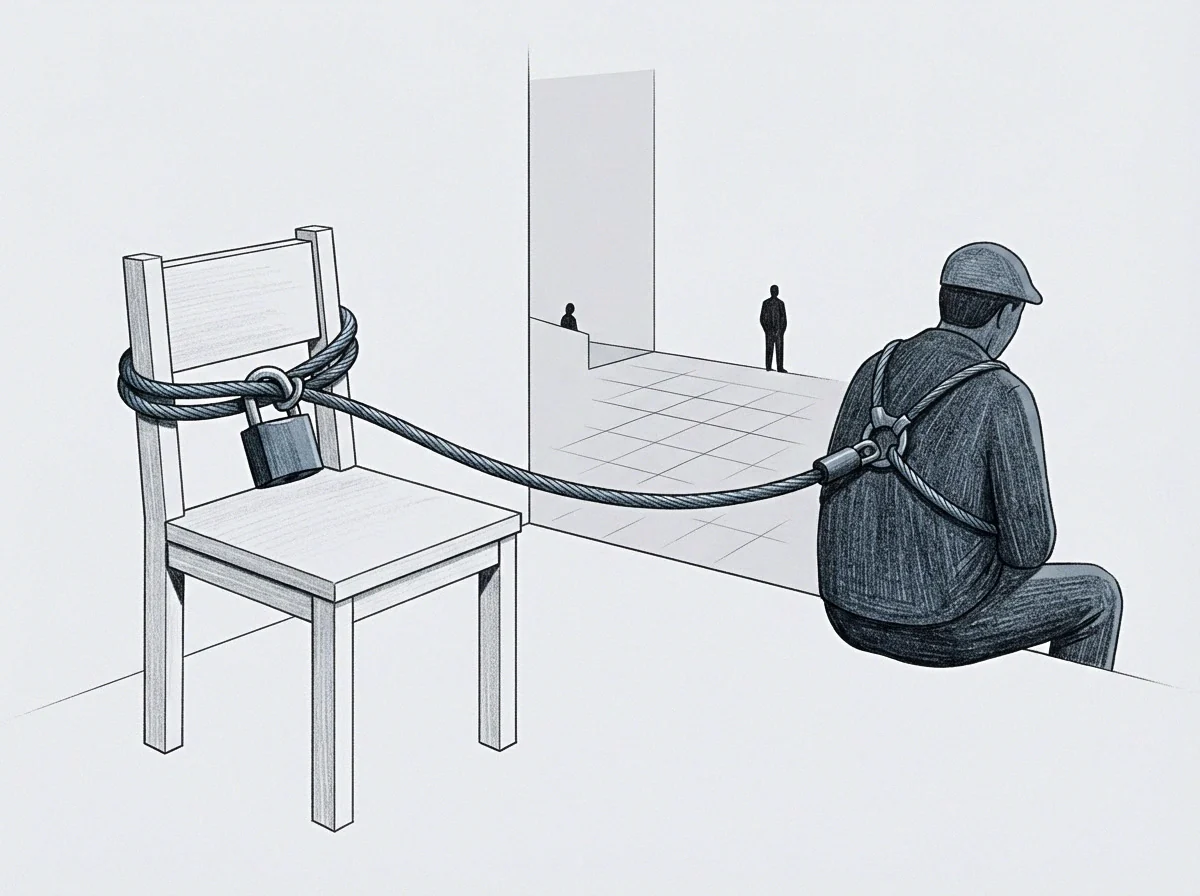
In these bridging channels, the flow of new ideas is much higher. An operator seeking a new seat or a fresh partner will find few leads within their inner circle, as those people already hold the same views and resources. Instead, the breakthrough comes from a casual conversation with a distant contact who operates in a different room.
Strategic Value
Cultivating a wide set of distant contacts provides access to diverse perspectives and resources. It reduces the risk of insularity and exposes the operator to unexpected collaborations. A robust network relies on these light ties to maintain its agility.