
Ungated is the real count
Three projects can throttle me and six can leave me calm, and for a long time I read that as a fault in me. The number that decides the week was never how many things I carry. It is how many of them carry no scope, no date and no term.

Thread
Two things get counted as one. There is the number of projects a person is running, which is the number everybody asks about, and there is the number of threads in that person’s head with no gate on them. They get said in the same breath, as if the first one produced the second.
They do not. For years I ran my capacity on the first number. I set a ceiling on it, four, and I went over the ceiling and under it, and the ceiling told me nothing about how a week was going to feel.
I had a week in the summer with six threads open at once. Six is over the ceiling. By the old count that week should have been the worst of the month.
It was the calmest. The anxiety went down while the count went up. I read a result that runs against my own rule as data, not a mood, so I looked at what was different.
Each of the six had a scope written down. Each had a date on it. Each had a term: what I get, what they get, what happens if the date passes with nothing.
Nothing was floating. Nothing was asking me anything between the times I touched it.
A thread with its scope, its date and its term is work; a thread without them is a question I am carrying.
That is the distinction, and once it was pulled apart the ceiling stopped being a rule about projects. A gated thread sits in the head only while it is being worked on. An ungated thread sits there all the time, because nothing was written that would let it be put down, and it grows while it sits: every week a thread runs with no terms, each side adds a line to a contract nobody has said out loud, and that covert contract has to be carried as well.
Three threads with no boundary on them is over capacity. Seven with a boundary each is not. The ungated thread is not the same object at a smaller size.
It is a different object, and the old ceiling was counting both kinds as one.
So the warning sign moved. The number used to be the sign, and I watched the number. Now it is a single thread with nothing written on it.
It does not take two.
The third line is the term that does the actual work: what each side gets if the date passes with nothing. Write it down and the thread drops out of the count between the times I touch it. Leave it off and the same thread sits in my head all week, whatever the project count says.

Gate

Where the Throttle Fires
I called it overload for a long time, and overload was the wrong name, because I do not throttle under load. Volume does not do it. Deadlines do not do it.
Complexity does not do it. A heavy day of production leaves me tired in the ordinary way, and tired in the ordinary way is a thing sleep fixes.
The throttle fires when a decision I have to make depends on an action somebody else has to take. A signature that has not come. An answer promised for the week and not in the inbox.
That is the input. The seat built for closing loops runs a machine in the head until the loop is closed, and this kind of loop cannot be closed from my side, so the machine runs at full speed on a variable it cannot move. That running is the throttle.
Fatigue is not in it. It is a solver on an input that has no solution on this side of the table.
You can sleep off a deficit. The throttle is not a deficit; it is a process, and a process stops when its input is taken away, not when I sleep.
Mine or Theirs
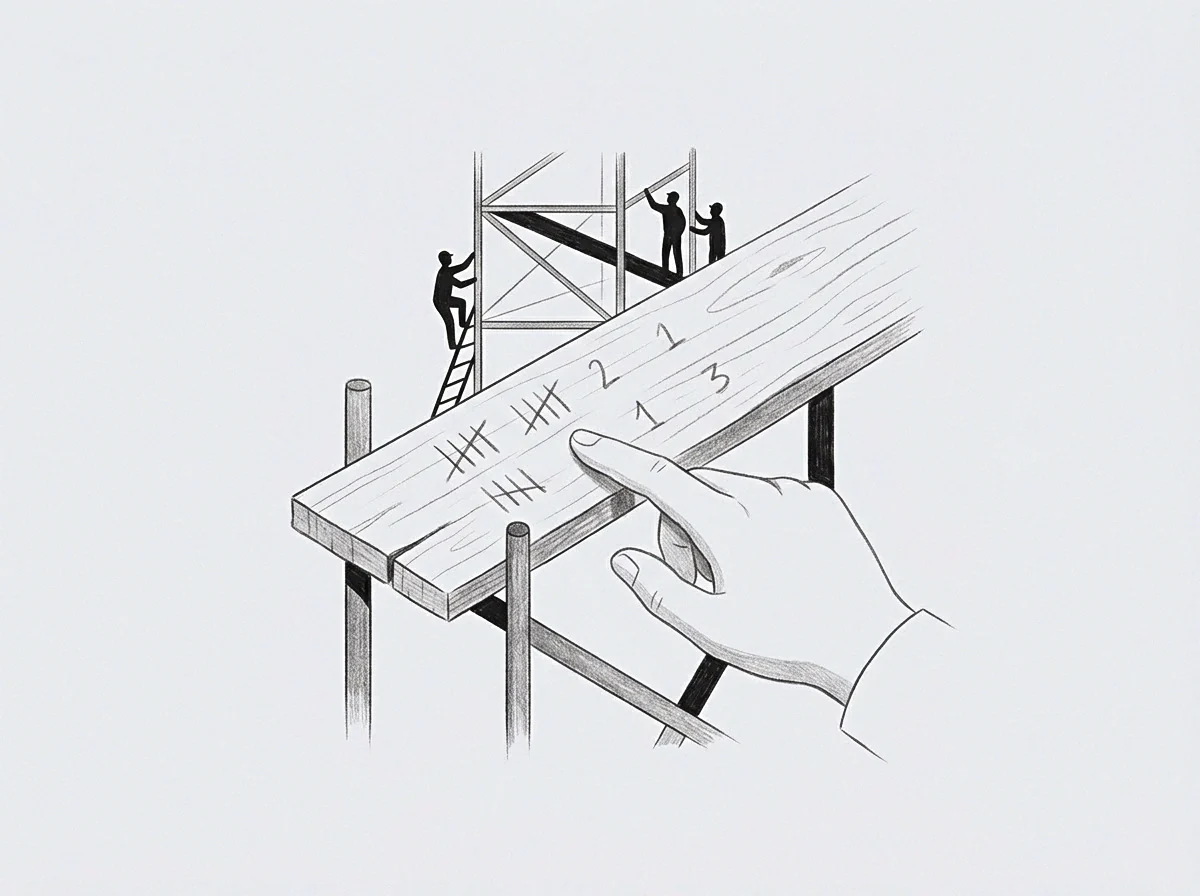
The intervention is a sort. I ask one question at the moment I catch myself locked: the piece that is missing, is it mine or is it theirs. If mine, I do the smallest physical thing that can be done on it, now, and not the plan for the thing, the thing: open the file, send the line, draw the box.
Contact with an action, any action, ends the throttle. I have not found an exception yet.
If theirs, the loop cannot close today, and pretending it can is what keeps the solver running. So the thread gets three things and then it gets shut. A date after which I move whether or not their answer has arrived.
A fallback I can run with nobody’s help. One written line that holds both. Then the thread is shut for the day.
Not resolved. Shut, because nothing left inside it belongs to me.
Shut Is Not Resolved
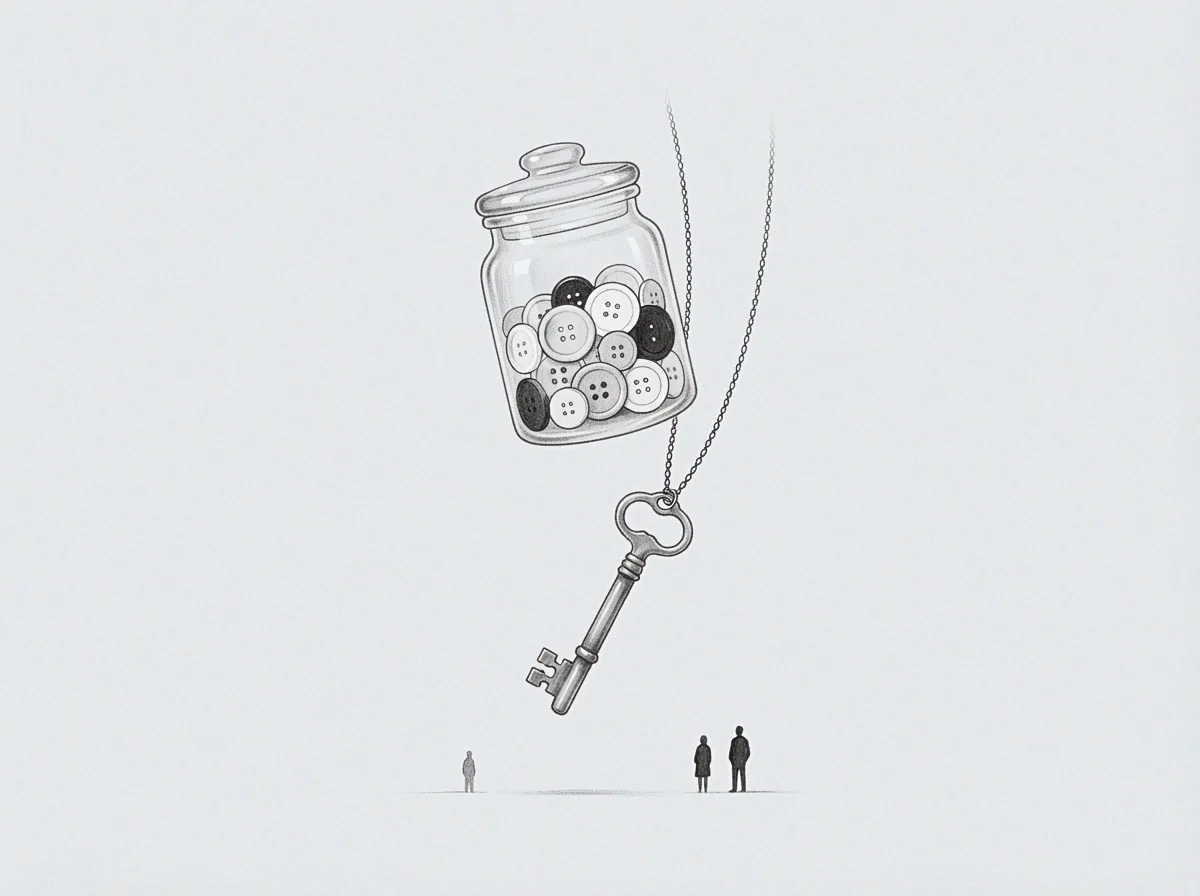
I had used the distinction between those two words before I had the words for it, and it is where the mechanism lives. A question is resolved when the other side moves. A question is shut when my side has nothing left to do in it, and the second does not wait on the first.
The date makes the waiting finite. The fallback makes the worst case a plan instead of a fear. The written line makes both of them true tomorrow morning without my having to hold them overnight.
Whatever the other side does with the question after that, it is closed on mine.
I put those three lines on every open dependency in one week, and the loops I could not close from my side fell to the ones that were mine, and the ones that were mine got a hand on them before lunch.
I hold what fits on the back of a card now. A thread whose next move is mine gets a hand today. A thread whose next move is theirs gets a date, a fallback and a line, and until the date it is not mine.
Line
I had been past the count before I had it right, and I know what past it looks like, because it has one shape. Past the limit nothing degrades on its own. Everything degrades together, since the threads do not sit in separate rooms, they share one head.
I read it at the time as a fault in my character. What I had was a concurrency failure, and those fail in a known way, and knowing the way is what made the refusal of a fifth thing engineering rather than preciousness. Every no I issued that month was maintenance on the structure.
I only had the variable wrong.
The seat responds to visible degradation with withdrawal. Not a decision. A reflex.
Withdrawal is not spread evenly.
It goes to the healthiest lines first, because the line that is fine is the one that can go unanswered without raising its voice. The client whose project is on track gets nothing from me for two weeks. The thread that is on fire gets all of me.
So the lines that had earned the least attention got all of it, and the lines that had earned more got none. From outside that pattern has a name, and the name is unreliable. Inside, it was drowning.
Both descriptions were true of the same month.
A quiet line on my side is not a client who is fine; it is the count being wrong somewhere else.
That is what the fourth item on the card is for. The line that has gone quiet is the overload signal, and it arrives before the tiredness does, because the withdrawing happens before I know I am withdrawing. I learned it the other way round, and the cost was the clients who got the silence, and they were the ones who had done nothing to earn it.

Filter
The Goal With No Finish
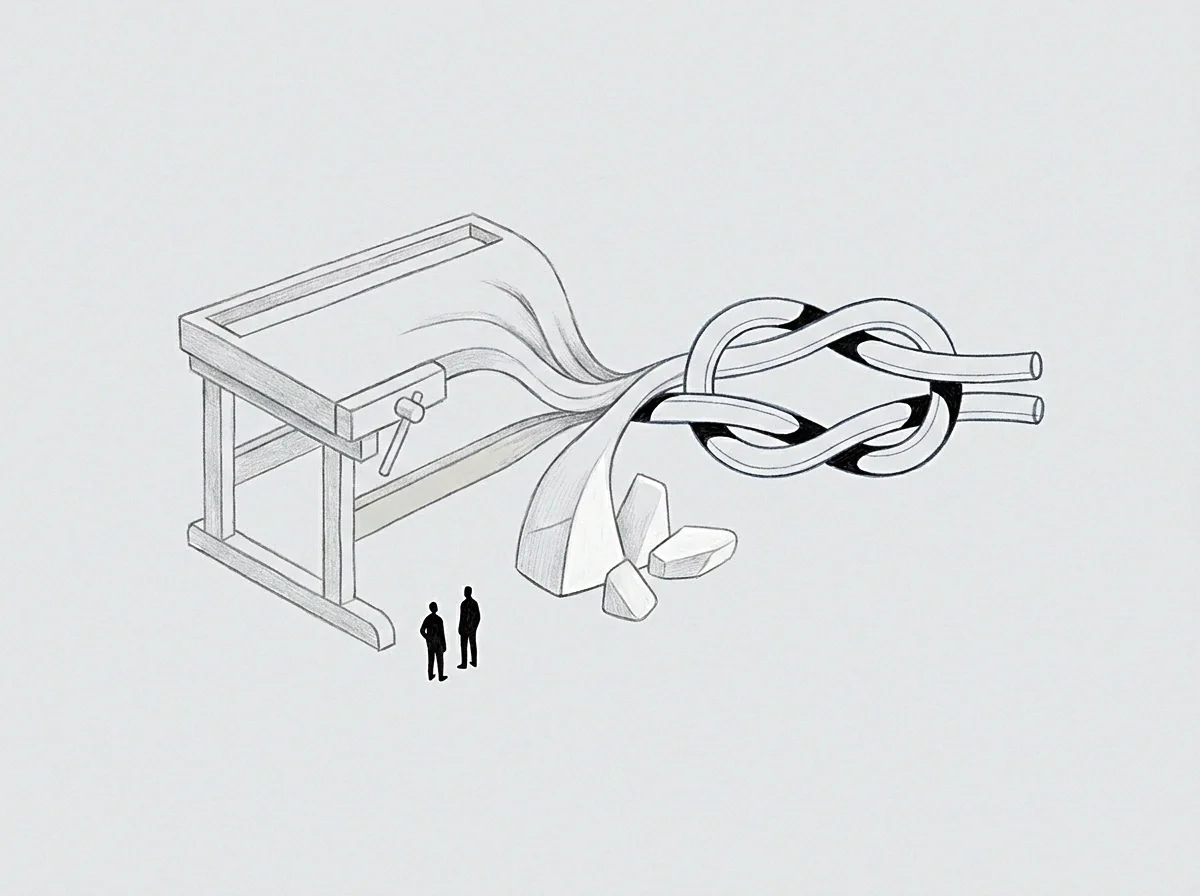
I trust the mechanism under the count because it predicted the summer week before I understood it, and it has a plain statement. A thread with no gate is a goal that is live and has no completion criterion, no written state at which it counts as finished. A goal that has not been completed intrudes: it comes back into the head on its own, without being called, at intervals its owner does not choose.
A thread with its term and its date written down behaves like a goal that has been planned, and the written plan lets the head put the goal down before anything is finished. So the gated thread is in working memory for the hours I am on it and nowhere the rest of the week, and the ungated thread is in working memory all day, and that is the whole difference between six calm and three throttled. The number I was watching measured something real.
It measured it with the wrong unit.
One Supply for Two Jobs
There is research that gives the throttle its second half. Lavie’s perceptual load theory set out to settle an old argument about whether attention filters early or late, and the answer was that it depends on how loaded the task in front of the person is. When that task uses up the available capacity, distractors are not processed at all; there is nothing left to process them with.
The later work in the same programme found the inverse case, and the inverse case is the one that concerns a seat like mine: when the eyes are lightly loaded but working memory is full, distractors get through more, not less, since whatever would have suppressed them is already spent on the holding. The field has used it since to explain why a task that fills the eyes protects concentration and a task that fills the head does not. The handle in my register: the filter and the hold draw on one supply.
An ungated thread is working-memory load of the purest kind, a goal with no criterion held all day, so with three of them open nothing gets filtered, every message lands with the same weight, and the smallest noise reads as signal. That is throttling described mechanically, and it is the reason the throttle has nothing to do with how hard the work is. Hard work fills the eyes.
An open loop fills the head.
A second finding sits next to it, from the imaging work on what is called the brain’s default mode, the system that runs when no task is in front of it: the regions a person uses to model another mind are the same regions that hold their own state, and the two compete for one substrate. Modelling another mind is expensive; the head does not do it for free the way it recognises a face. A loop whose missing piece is theirs is exactly a model of another mind held open: what the counterparty will do, when, and what I do if not.
It is the expensive kind of holding, and while it runs, the reading of my own state is what goes first, which is why I did not notice I was withdrawing until a line had been quiet for weeks. I took one thing from it: the input I cannot process is not a weakness in the solver. The solver is fine.
It is that a loop with another person’s move inside it is the one input that consumes the substrate I run myself on.
Depth
The record went one step further than the count, and the step is the one I would have resisted a year earlier, because it says the limit is not a trait. Not a personality axis, not a preference for fewer things, not the word introversion, which puts it in the wrong place. It is a bandwidth allocation.
The unit that costs is not the thread; it is the resolution the thread is held at. An ungated thread on a counterparty forces the full model: what the person wants, what the person will do, what the silence means, what happens on each branch. A gated thread on the same counterparty is held at three lines.
The number of threads that saturates the head is downstream of the resolution each one is held at, and a person holding each thread at full depth cannot hold five, while a person holding each at three attributes can hold thirty. I was measuring the wrong product: the ceiling was never a count; it was depth multiplied by count, and my depth was fixed.
The literature on ties says the same thing about people, and it is old and it has held. Granovetter’s finding, half a century standing, is that new information reaches a person through weak ties, the acquaintance and the one-off conversation, and not through strong ones, because the strong ties sit inside the same cluster and already hold what the person holds; the more two people’s circles overlap, the more redundant the tie between them. Burt’s work on structural holes turns it round: a position is worth what it bridges between clusters, not how tightly it is tied inside one.
The handle: depth costs the capacity that breadth needs. A small number of channels held at full resolution returns high-quality data about those few and almost none about the world beyond them, and the universe such an instrument can see gets smaller as the reads get deeper.
Resolution turns the same counterparty into a channel at three lines and a load at full depth.
I took from it that the gate is a resolution setting, and that it is the only one my instrument has by default. Writing the scope, the date and the term is how I hold a counterparty at three lines instead of at full depth, and that is what the calm summer week was: not fewer people, the same people at lower resolution. The record also names what a seat like mine needs that more people cannot give it, since more people at full depth is more throttle: data about the population that costs no holding per person.
Many clients through one productised offer, aggregate behaviour with nobody in it to model, the market as witness.
I have not answered whether the instrument can hold a channel open at all and not run the full read, and the answer decides whether breadth is available to me anywhere outside the aggregate.
Scope
A gate is enforced by whatever is written on it. If nothing is written on the gate, the gate is my mood that morning, and my mood that morning is not an instrument I trust.
First, the scope: one line before the work starts, what counts as delivered. It is one line, not a spec.
Without it I move the finish while I am running, and a finish that moves is an ungated thread wearing a project’s name.
Then a second test, and it cost me to learn to run it second. Is there a deliverable in this thing at all. If there is none, design cannot reach it, and I can build all the structure I like.
I catch it with a question about relief: has a structure already gone up against this gap and returned nothing. A paper drafted clean, every clause where it should be, the loop closed perfectly, and the relief zero: that is the signature of a gap that was not a paper gap, and the processing line is refilled by closed loops and by sleep, nothing else. A loop that was never the open one refills nothing.
Building a better structure against a gap that is not structural is avoidance dressed as work, and from the inside it looks exactly like work. I was at my desk. I was producing.
The stuff even came out well.
Run the sequence out of order, structure before the deliverable test, and it goes up anyway: on time, on brief, and useless, because the gap it was answering was never structural to begin with.
Date
Threads that have a date get done and threads without one get postponed, and I had years of evidence of that before I read it as a mechanism. The dates clients set, the invoices, the deadlines that belong to other people: those I meet. My own site, my own work: postponed, for years, while I was fully able to do every one of them.
I wasted time treating it as a discipline problem, and it is not one. The seat runs on loops that have somebody at the other end. A loop with somebody at the other end makes pressure, and pressure is what pushes a thread into a slot.
A loop with nobody at the other end makes no pressure at all, so it reaches no slot, gets no week, and slips, and it does not slip to next month. It slips for good. Which means the slots were not allocated by me at all.
They were filled by whoever was pushing, and whatever had nobody pushing it lost, every week, for years, without my having decided anything. The fix is not discipline and it is not a partner. It is a counterparty for my own work, somebody or something at the other end of the loop, and they come in a ladder by strength: a date said out loud where people will remember it, a collaborator waiting for the thing, a person who has paid before it exists, a client who pays for the first version.
Somebody who has paid for early access turns a project from an intention into an obligation, and obligation is the one category this machine reliably executes. I run five slots now, three of them for client work at its stages and two permanent: the pipeline, and my own assets. The two permanent ones are not given up when new work comes in.
A new client takes the rotating slot, or starts later, or is refused, and because that is structural I do not have to decide it tired. When something trips the throttle, in any engagement, I go through the card in order.
A project with nobody on the other end and no date is not late; it is not on the calendar at all.
- Whose is the missing piece. Mine: the smallest thing my hands can do, now. Theirs: a date, a fallback, a written line, and shut for the day.
- Will tomorrow look different for it. Mostly it will not, and then it is information and nothing more.
- Does it sit in one of the five slots. If it sits in none, it is not worked on.
- Where has my side gone quiet. That is the overload signal, and it arrives before the fatigue.
- Is there a deliverable in it at all. If there is none, I stop designing.
The number I watch now is not projects. It is ungated threads, and the week is good when that number is zero, whatever the other number says. That summer week it was six and zero.
I slept.