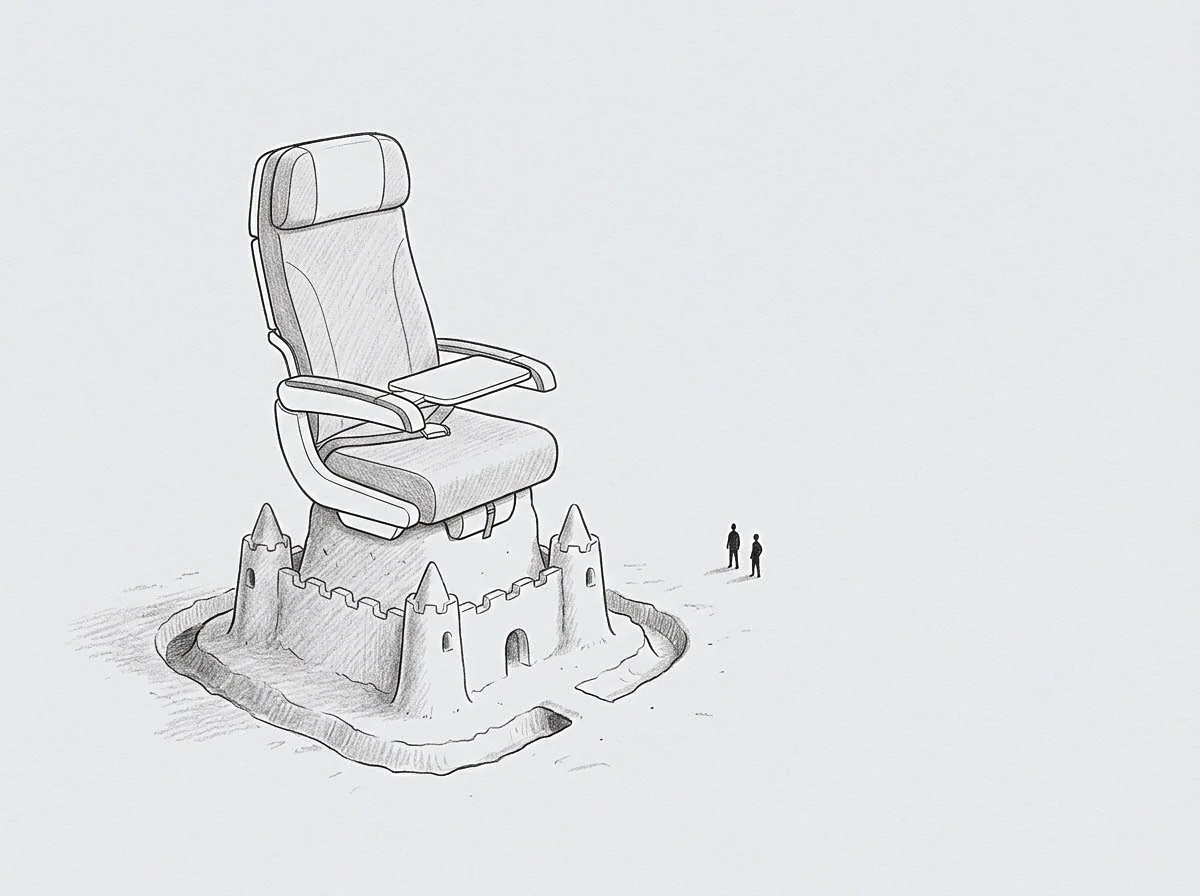
Meaning
A position of proprietary accountability within a commercial arrangement governs the terms under which productive capacity is deployed and conserved. The owner seat establishes the formal perimeter around an operation, pricing capital consumption and setting non-negotiable boundaries on commitments. Daily production roles answer to incoming demand, while the occupant of this position enforces constraints that protect long-term solvency and baseline headroom.
When active, it introduces an external counterweight to the immediate pressures of delivery, requiring every operational commitment to justify its consumption of attention and money. This designation ceases to apply when an individual acts solely as a functionary fulfilling tasks without authority to reject work or renegotiate basic terms.
Operating Asymmetry
Production tasks routinely capture attention because inbound orders arrive with immediate client deadlines and direct scrutiny. When a single person fills the operator role while attempting to hold the owner seat, an acute functional imbalance develops. Incoming deliverables carry hard edges provided by counterparties who enforce schedules and exact commercial costs for delays.
Internal assets, particularly founder energy and unpriced personal hours, lack any such external protector. Without a distinct presence in the owner seat to state hard limits to the operation itself, the person absorbs all residual friction through personal exhaustion. Unscheduled demands take precedence over structural maintenance simply because no outside agent penalizes the steady depletion of uncommitted headroom.
The operational queue remains full while the capacity to sustain it erodes in silence.
Stated Boundary
Control over operating commitments requires a mechanism that prices internal capacity before work enters the room. An active owner seat establishes this barrier by treating personal hours and liquid reserves as finite assets with fixed hurdle rates. It sets explicit caps on intake while enforcing the rule that an operation must decline depleting contracts.
Where this discipline is absent, internal labor is treated as an infinite resource that expands to absorb incoming volume.
Terminal Exposure
Delegation routines for daily duties often fail when proprietary accountability cannot be transferred alongside task execution. Vacating the owner seat requires surrendering the ultimate right to set risk parameters and accept unhedged loss. A builder who steps back from production while retaining this post remains tied to every structural deficit the operation incurs.
Complete exit occurs only when another party assumes both the title to the assets and the burden of ultimate liability.