
Headroom without introspection
Headroom is not a mood. It is a state variable with a value at every hour, readable off a month without looking inward at all, because when it runs low the tracked deliveries still go out on time and the thing nobody is waiting for is the thing that quietly stops.
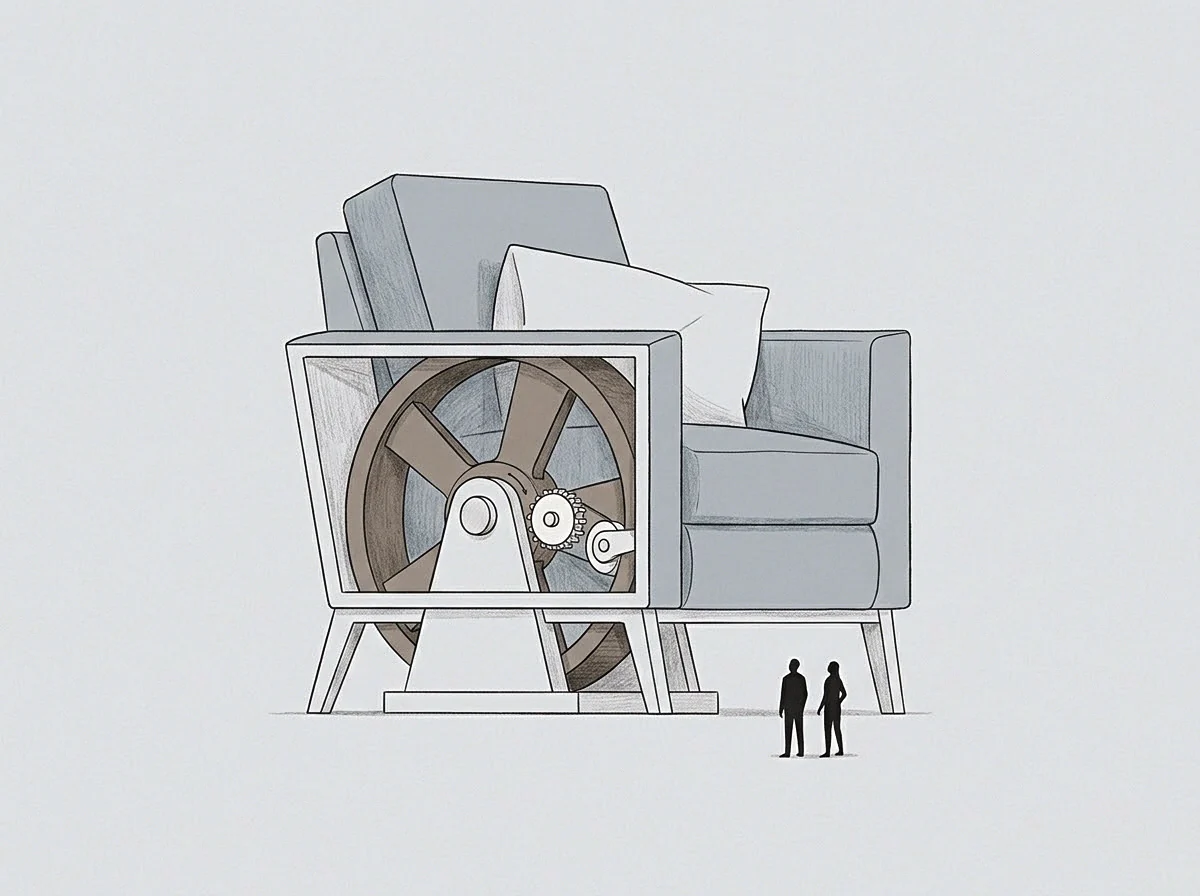
Headroom
Something arrives and takes room in the head. It keeps that room until it can be closed from one side, without waiting on anybody else to move. Whatever is left after all the held things have taken theirs is what the next arrival gets.
Then the next thing arrives and takes from that. Load in, room out, and the order is the point: the room is a leftover, never a starting amount.
A mood is what comes out. The state is what an arrival passes through before anything comes out of it, and those are two different objects even when they happen in the same hour. The person is the same and the message is the same, and two different weeks produce two different things done with it.
Engineers have a name for the thing sitting in the middle of that, the transfer function, meaning whatever turns an input into an output, and that is what the state is. The mood is the reading on the dial. It also flattens a month into one figure, good or bad, and the flattening throws out the structure a person needs to see.
Six things can be read off a person’s month without asking him a single question about how he is doing.
- Headroom, the room left over after the held things have taken theirs.
- Open loop count, how many things are running that he cannot finish alone.
- Position clarity, whether he knows where he stands when the terms are not met.
- Incoming load, how much arrives in a week that he did not go looking for.
- Allocation direction, where the hours actually went, not where he meant to send them.
- Substrate, what the body underneath is running on.
Not one of the six is a feeling. Each is a count, a direction or a leftover, and each has a value right now whether or not anyone has gone looking for it. The whole reading takes about a minute and a half.
A feeling takes longer than that, because a feeling has to be found before it can be reported, and the finding is itself work, and inward work is early in the queue of things that stop running when there is nothing left to run them with. The person who has no room left is the one without the equipment to check. Ask him how he is and he answers out of whatever the last hour left behind.
He is not lying. The instrument stopped working some time back. Nothing signalled that, and nothing was going to.
The operator reads a counterpart’s state at a resolution the inward channel does not reach, and that is not modesty, it is where the return was. Reading the other side of an arrangement pays: he sees the term about to be missed a week before it is missed, and he moves first. Reading himself pays nothing, in a setup where nobody on the other side does anything with the report.
An inward reading only develops where somebody asks and then acts on the answer. So the outward instrument gets built and the inward one does not, and what develops instead is a person with a precise reading on everything he handed over and none at all on what he is running on. He holds a full client room on an afternoon when a plain hour of his own does not get started.
The reading gets done from the outside, off the month, by anybody holding the same evidence. A mood is reported by the one who has it, late and coloured by the hour of the report. A state variable sits in what the month already did: what opened, what closed, where the hours went, which easy hour never got started.
A person does not have to trust his own report on himself, and good, because that report is the first thing to go. Treat the thing as a mood and the report never files. So the condition sits on the reading and not on the person: the six get read off the month on a stated day, whether or not anything feels wrong that day.
Nobody has to be in a particular state to count six things off a month that has already happened, and that is what the stated day changes. The person who sets that day catches a low month while it is still running, instead of reading it back months later, once the room to look has returned.
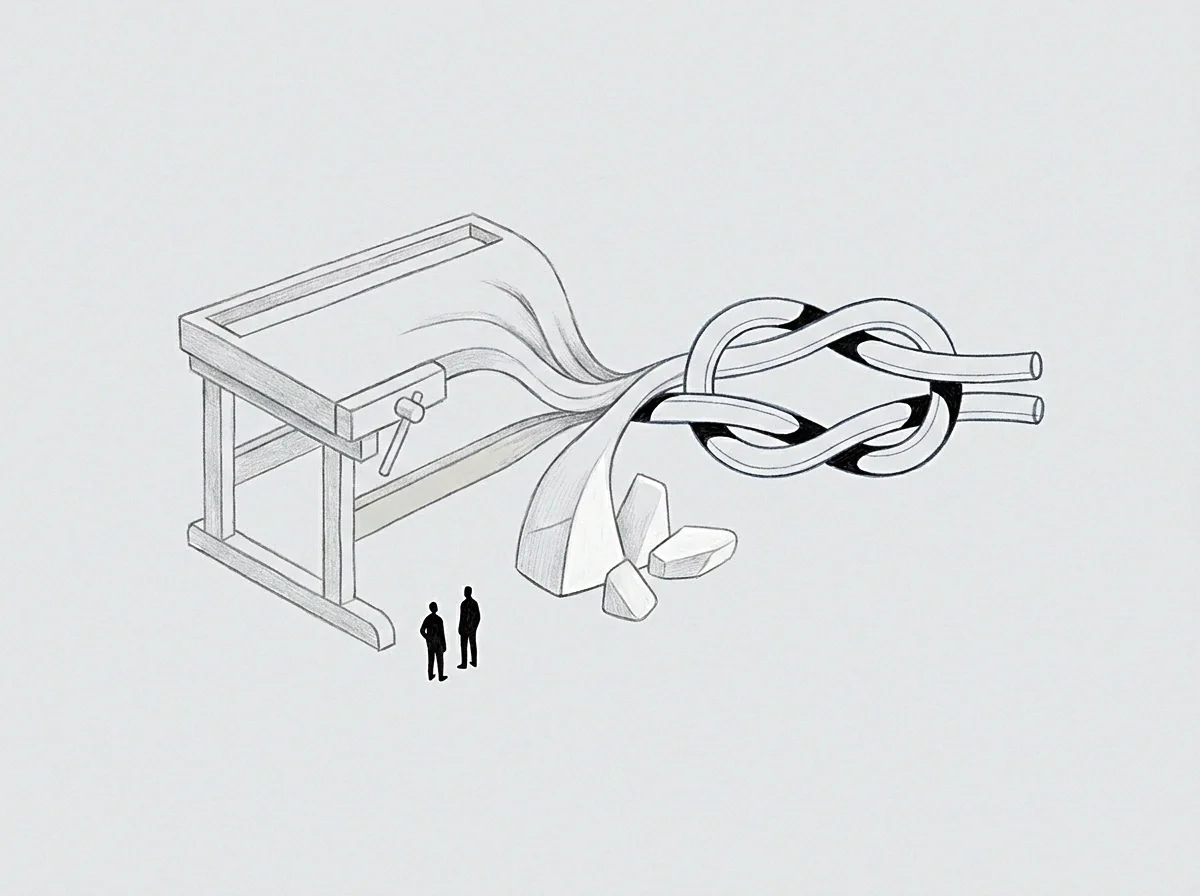
Loop
An open loop is not an unfinished task. A task that is only unfinished sits on a list and costs nothing until the hour somebody does it. A loop is open when the finish depends on a move that is not yours: an answer, a signature, a decision another person makes in a week you have no say over.
Until that move lands, part of the head keeps a live copy of it running, updating on every scrap that comes in, because it has to be current when the move finally arrives. The charge starts the hour the thing arrives, not the hour it is answered. Reply or leave it sitting, that copy runs either way.
Loops do not add up by size. A trivial one and a serious one take about the same room, because a running copy costs the same whatever it is holding, and the running is what is being paid for.
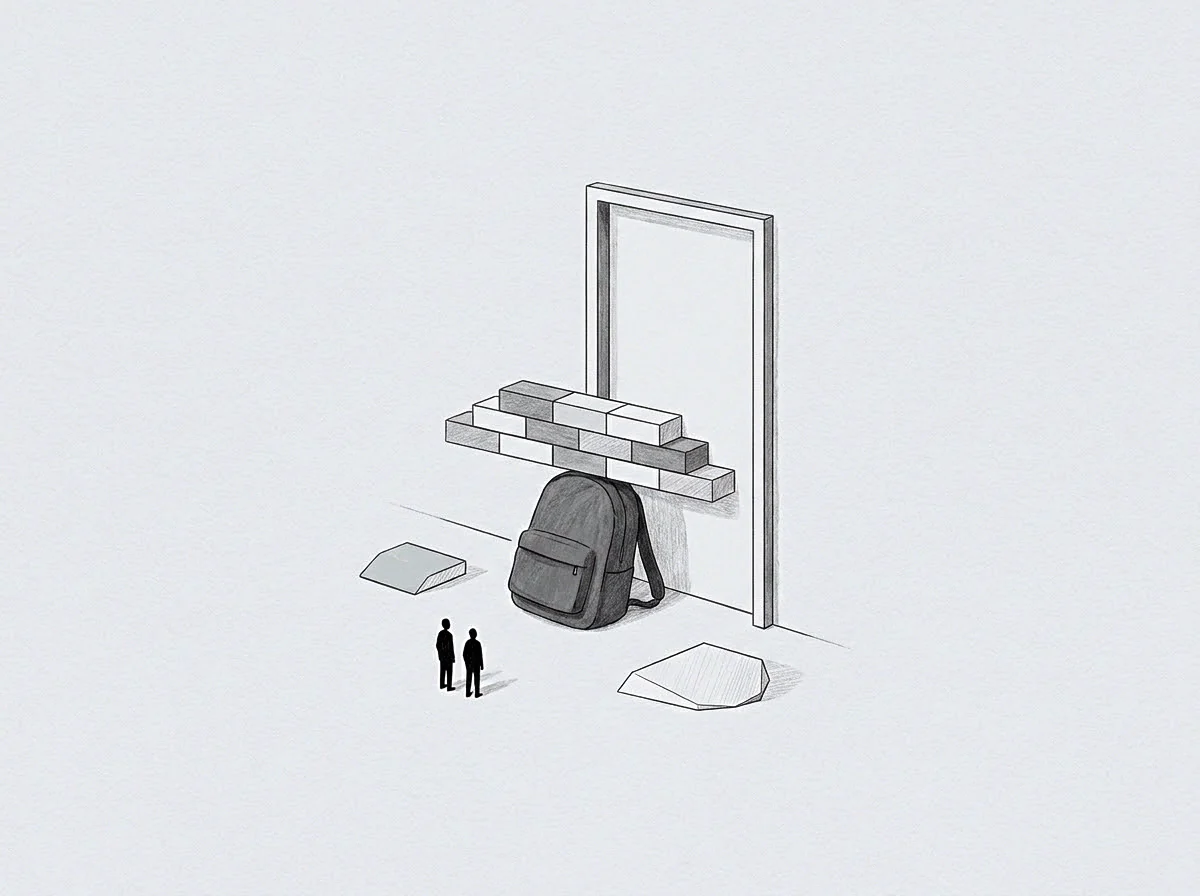
What Keeps A Loop Open
Finishing the work is not the same event as closing the loop. Done is about the work. Closed is about the dependency.
A loop closes when the last move belongs to you.
The difference shows when the items sit side by side on one list. A dated delivery to a counterpart goes out, because it is tracked and because somebody on the other side will notice the hour it is late. The payment behind it closes clean: money moves, the thing is finished, nothing is left that has to be kept current.
What stays open is the item with no date on it and no other side committed to a day, and whether that one ends is not in my hands. And a thing not in my hands, I carry it until it lands. Counted as work, a list like that reads light.
Counted as loops, the light-looking item is the one still running at the weekend, updating on whatever comes in, holding the room a serious thing would hold.
One kind of loop is held open by my own rule and not by the other side. The body points first and the record has to prove it, so a thing I can feel about an arrangement and cannot show stays open. It runs cheap in the background, taking in whatever comes, and it does not close on the strength of a feeling.
It closes when something arrives that the record can hold, and then it closes fast, whatever length it ran. That thing is an artifact, and the loop was waiting on an artifact the whole time. Nothing in the person changes on the day.
The evidence lands, and an act that was not available becomes available.
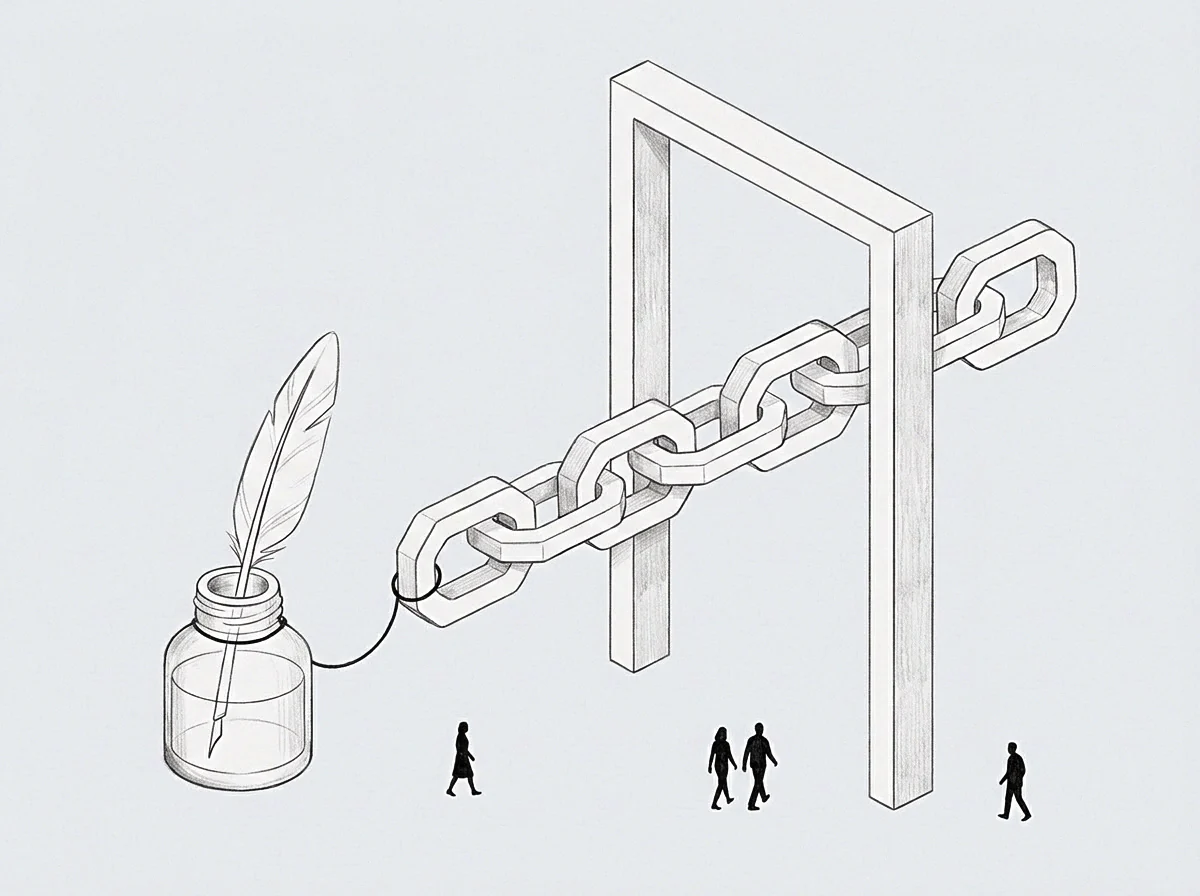
Moving The State
Nobody decides his way into a different state. There is no evening on which a person chooses to have room and then has it, and every attempt to do it that way fails in the same place, because the thing being aimed at is not a decision variable. It is a state variable.
What can be done is one move down: state a term that has been sitting unstated, close a loop, put a load back on the side it came from. Room comes back as a consequence, not as an intention. Say the term out loud to the party who has to hear it and a loop closes that evening; the head stops running its copy; the room that copy was holding returns, and it returns whether or not the person feels any different that night.
Counting From The Outside
The count is a list anyone could make, including the person making it about himself in a bad month. Everything running goes down. Everything that could be finished tonight, alone, by deciding to, comes off again.
What is left is the number.
Nobody has to feel anything to arrive at it.
In a light month the two lists come out much the same, so the rule buys nothing. In a heavy month the undone list gets long and the count does not.
Register
The second reading is already written down, so it costs nothing. The person with room writes differently from the same person without it, and the difference is on the page before it is anywhere else. With room, the sentences reach: they take the detour, they try the word that might not work, they state a position and stand next to it.
Without it, the same person hedges, or writes to deliver, short and closed. The information arrives and nothing else does. I can read my own month off the sentences I wrote in it, and I trust that more than any answer I would give if somebody asked me straight out.
A third reading sits on the body and is just as external. The hours drift off whatever shape they had. What a person puts on before he shows up somewhere stops being decided and becomes whatever was nearest to hand.
Neither of those needs a question asked about it, and neither of them is available to the person carrying it, which is the ordinary condition and not a special failure.
Asked how bad things are, a person grades a mood against a scale he invents on the spot, and the answer moves with the weather and the hour. The other question does not go inward: bad is a colour, impossible is a fact about what is available.
What used to happen without effort and now does not happen at all.
Nobody grades that against anything. It is a class of action with a before and an after, and none of it was ever inside the person to be found. What the reading shows is the set of available actions getting smaller while everything tracked keeps going out untouched, and a set is countable.
It shows on the outside first, and it usually arrives from somebody else, in a flat sentence with no complaint in it.
Your messages got short.
Defer
Low headroom does not slow everything at the same rate. It sorts, in one direction, the same way every time.
The tracked deliveries keep executing. A dated thing with a person waiting on it goes out, and it goes out at something near full quality, because the loop around it closes on delivery and the cost of missing it is immediate and in public. What stops is the self-initiated kind, the action into uncertainty: no date on it, no other party, no consequence for skipping it, and no way to know in advance whether the evening will have been worth spending.
That is the first line cut, and it gets cut without a decision being taken anywhere. Nobody chooses it. There is simply no version of the evening in which it happens, and the absence of a moment of choosing is exactly why it goes unnoticed for months.
The sorting is not about who matters more. It is about the shape the two kinds of work arrive in. The client asks for a thing, and the ask has an edge on it: a thing named, a state in which it is answered, somebody who can tell you it is done.
What a person needs for himself arrives as a state, and a state has no finish in it anywhere. There is no hour at which work time and life time come apart from each other, no other party to accept the thing, nothing that turns from open to closed. Set the two next to each other in the same tired evening and the one with the edge wins every time, not because it was chosen but because it is the only one of the pair that can be finished.
The edge is not a property of the work. Somebody outside put it there, and that somebody sits in a seat. In the operation I run, the operator seat is filled every hour of the week: things come in, things are built, things go out on the day.
The owner seat is not filled by anybody. Nobody outside states a term to me, nobody collects, nobody prices an hour that is mine, so nothing of my own ever arrives with an edge already on it and every item has to be given one by the same person who is already tired at the point of giving it. That reading is outside too, and it is not a delicate one: years of running an operation, and nothing standing in the open with my own name on the front of it.
Years, and a thing that is not there. No feeling required to see either.
So the repair, if there is one, is not a better intention on a Sunday. Give my own work what a request comes with: an hour with a start and a stop in it, a thing small enough to be handed in, somebody told the day it is due. Build the edge, since the seat that would have supplied it is empty.
The client sees the delivery land on time and reads a person who is fine.
I was much more observant before. I gathered the stuff: places, people, whatever was in front of me I had not looked at yet. Not a hobby standing next to the work.
It was the supply the work ran on. Then it went, and it went quiet, one evening at a time, until what was left was a routine pattern that was shrinking me as a person. I stopped going out.
My interests reduced to the ones that fit between deliveries.
A small task with a visible end goes undone for no reason anyone can name. Nothing about it is hard. It is an hour of plain work with a finish in it and no dependency in it, and it does not get done, while every dated thing standing next to it goes out on time.
It stays on the list, which is the one reason it can be counted at all. The cheap version of the same reading: with room, nothing that takes ten minutes waits until tomorrow.
Past a certain number of live threads the sorting stops being quiet and starts costing lines. The ceiling sits at about four, and it does not move because somebody wants it to. Under it, every thread stays current and the sorting takes only the untracked things.
Over it, too much comes in while the position still has to hold, and that is throttling. The cost is ordinal and it is spent in that order: capacity goes first, so a dated thing goes out late; then attention, so the writing shortens and then the answering stops; then the lines themselves, and a line that closes there is not one that opens again. The client on the other end of that never saw a limit, only the silence, and that is a cost the ceiling has already charged.
Not discipline. A limit, passed, and above a limit a thing does what it does.
The move that helps is not on the limit. A ceiling does not lift because a person wants it lifted, and I have spent years testing that. What moves is the count.
Four separate things running for four counterparts is four threads, four copies kept current, four sets of terms held in the head at once. Four instances of one system running is not four of anything: it is one set of terms with duplicates hanging off it, and a duplicate does not run one of its own. Same ceiling, different arithmetic, and the arithmetic is the part that was ever in my hands.
That is structural rather than a promise, and it is the only change of the kind I have made that held for more than a month.
What loads the count up is the work nobody outside is waiting on. A stretch with no clock outside it, where I set every item on the list, I set the day it is due, and no hour of it is owed to anybody, is the setup in which the sorting has nothing to push against. It is also the setup I am walking into on purpose, which means the reading has to be done during it rather than after.
I want work time and life time to be two separate things. Naming the state variable does not build it, and I am not going to pretend otherwise. What the naming does is smaller and still worth having: I know what to look at, and I know where it is kept.
The reading still comes late, because the instrument was built pointing outward and nothing ever paid for turning it round.