Meaning
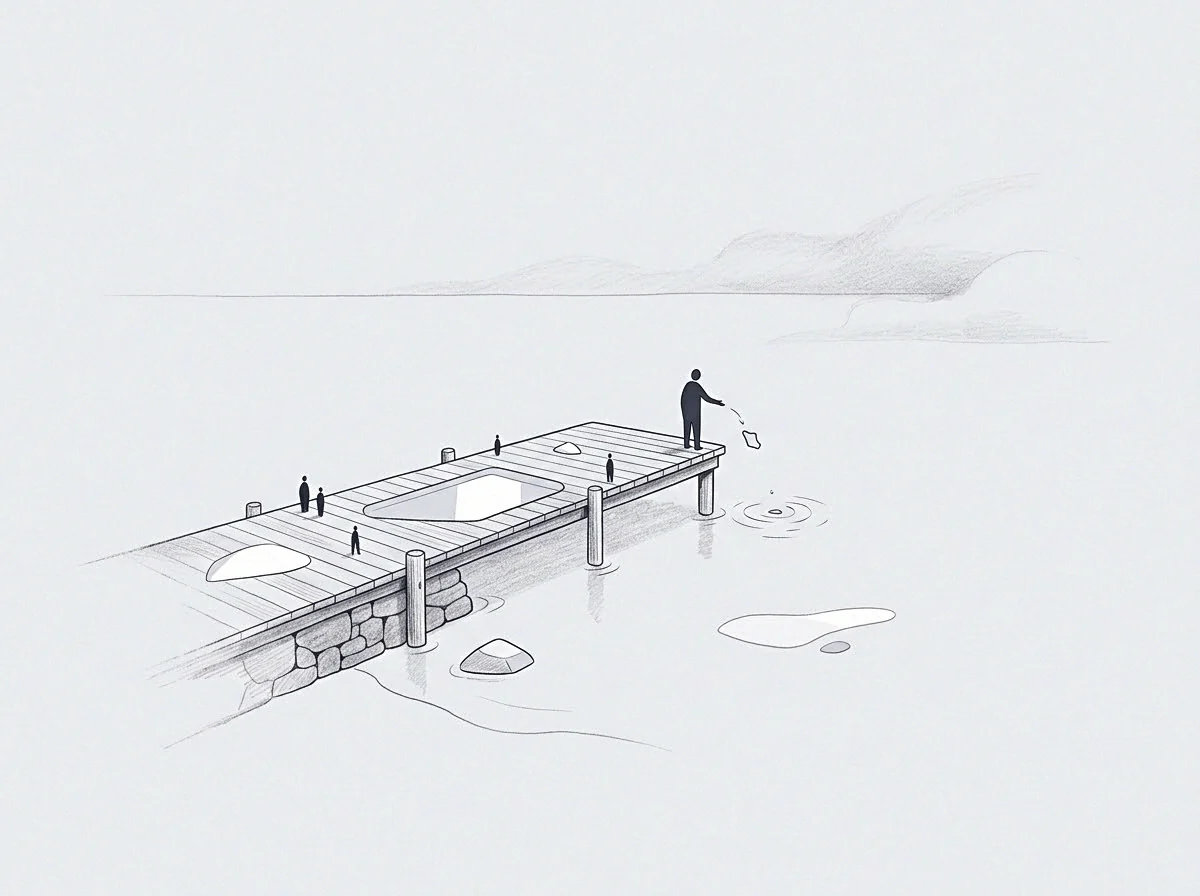
Labor whose execution and value are strictly tied to real-time presence and synchronous participation within a specific temporal window. In time-bound work, the operator exchanges finite hours for immediate compensation, performing tasks that cannot be stored or detached from the moment of delivery. The practitioner must be physically or digitally available to produce value.
Once the designated time expires, the opportunity to generate output during that block is permanently lost.
Synchronous Presence
Delivering value in real time requires continuous active engagement and immediate responsiveness. In time-bound work, the professional cannot rely on pre-built assets or automated systems to carry the load, as every outcome depends on live effort. This model forces the operator to structure their life around client schedules and fixed deadlines.
The necessity of synchronous availability fragments attention, making deep, uninterrupted creative focus virtually impossible.
Capacity Exhaustion
Relying exclusively on synchronous labor creates a direct and unforgiving link between hours worked and personal fatigue. Because time-bound work cannot expand without proportional increases in personal effort, expanding output requires sacrificing rest and personal boundaries. The operator faces relentless scheduling pressure, knowing that any pause in live delivery instantly halts revenue and operational momentum.
This perpetual treadmill of synchronous performance leads to physical exhaustion and an inability to build durable assets that generate value independently.
Growth Ceiling
Structuring an operational practice around live hourly delivery imposes a hard mathematical ceiling on financial and professional growth. An individual possesses only a finite number of workable hours each day, capping potential output regardless of skill. Sustainable freedom requires shifting toward artifact-bound work that compounds over time without requiring continuous synchronous labor.