
Only two things transfer difficulty
For years I described what my work costs to people who had nothing in their heads for the description to land on. They nodded and kept nothing. Nothing moved until I stopped describing and put the work in someone's hands, and it took me longer still to learn why that is the type of the knowledge and not a failure of my words.
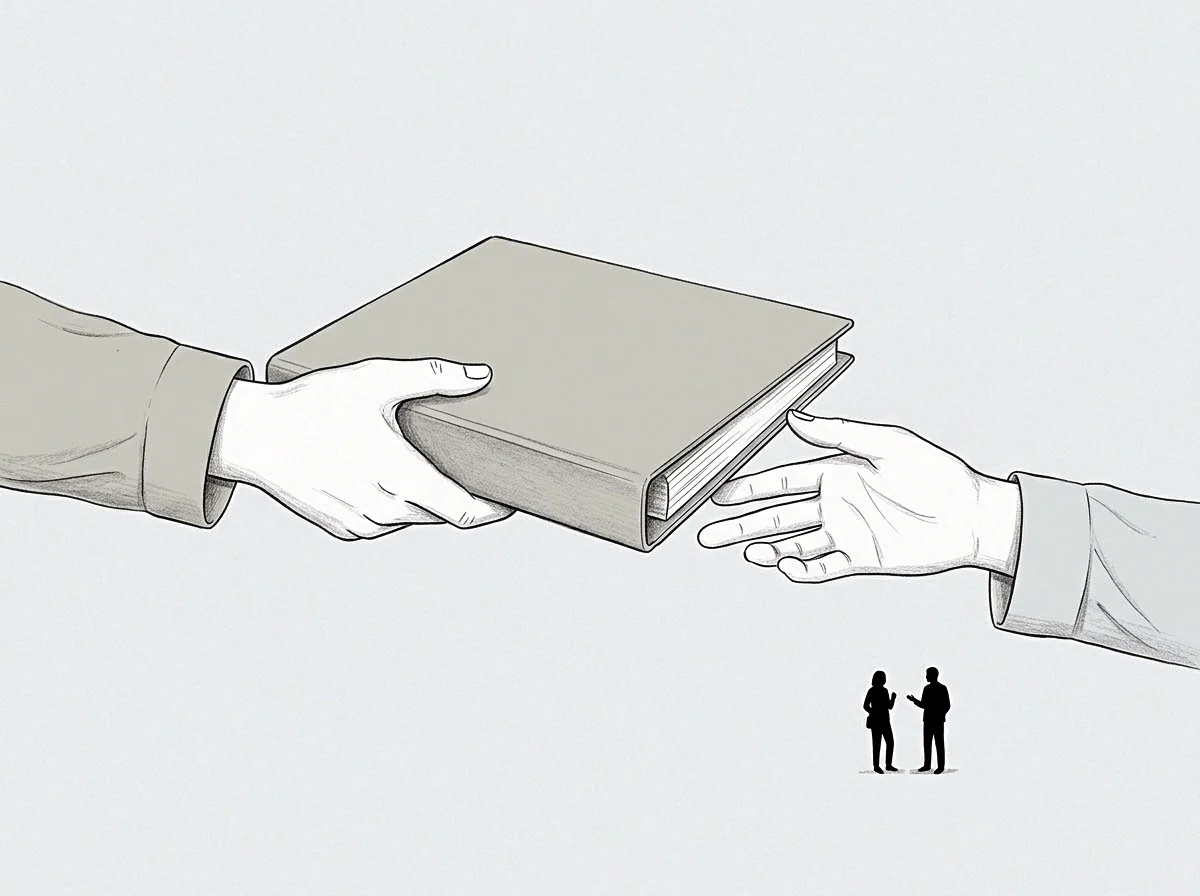
Explaining
A person without the frame looks at unfinished work and reads it as slowness. The fix offered comes in one line, and it is kind.
Put it through the machine. It is a five-minute job.
The friend means the fix, and there is nothing else on offer because there is nothing else the friend can see. What that person cannot see is the hours that were not typing: the hours spent checking whether what came out was true. The friend would need to already know what checking is to see those hours, what it catches, what it costs when it is skipped.
The friend does not, so what stands there is a man producing very little, and the fix for a man producing very little is speed.
That is not one friend being careless. It is the general case, and I got to it slowly, because for a long time I thought it was a failure of my own words. I can describe difficulty to a person who has no frame for it.
I can do it carefully, with an example, in order, in short sentences, in writing so the listener can take it away. They nod. They keep nothing, and they are not pretending: there is nowhere in them to put it, so it goes in as sound and comes out as sound.
A description is not a thing on its own. It is a pointer to something the listener already holds. Point at an empty spot and the sentence is correct and carries nothing.
And what comes back, the nod, the warm word, the praise, is not a reading of the work either, because a person who cannot sort good work from mediocre work says the same warm word to both. A reading that does not move when the thing it reads moves is not a reading. I was collecting a constant for years and treating it as data.
The person produces instead the reading anyone makes when the object is all there is, and those readings are short. A large body of work gets one sentence. A fast build gets another.
The sentence names the size of the thing or the speed of it and stops there, because size and speed are the two properties anyone can take off an object without knowing anything about how it was made. Both readings are accurate. Neither has any difficulty inside it, and difficulty is the part of the work that cannot be copied.
I have run it in the other direction too, on the part of the work that is closest to how I actually think. When I try to explain the topology, the shape of the system and the order I hold it in, people look at me like I am a weirdo. Not hostile.
It is the look a person gives when a sentence is clearly meaningful and clearly not meaningful to them, and the face has to do something in the meantime.
So I stopped calling it explaining and started calling it a channel, and a channel gets judged by what it carries, not by how well it is used. Speech carries description. It does not carry difficulty, the way a photograph of a heavy thing does not carry the weight.
That one word changed what I do in a room. I stopped rewriting the explanation, and I stopped grading myself on how well I had said it. The question became which channel is open, and to a person without the frame, speech is shut.
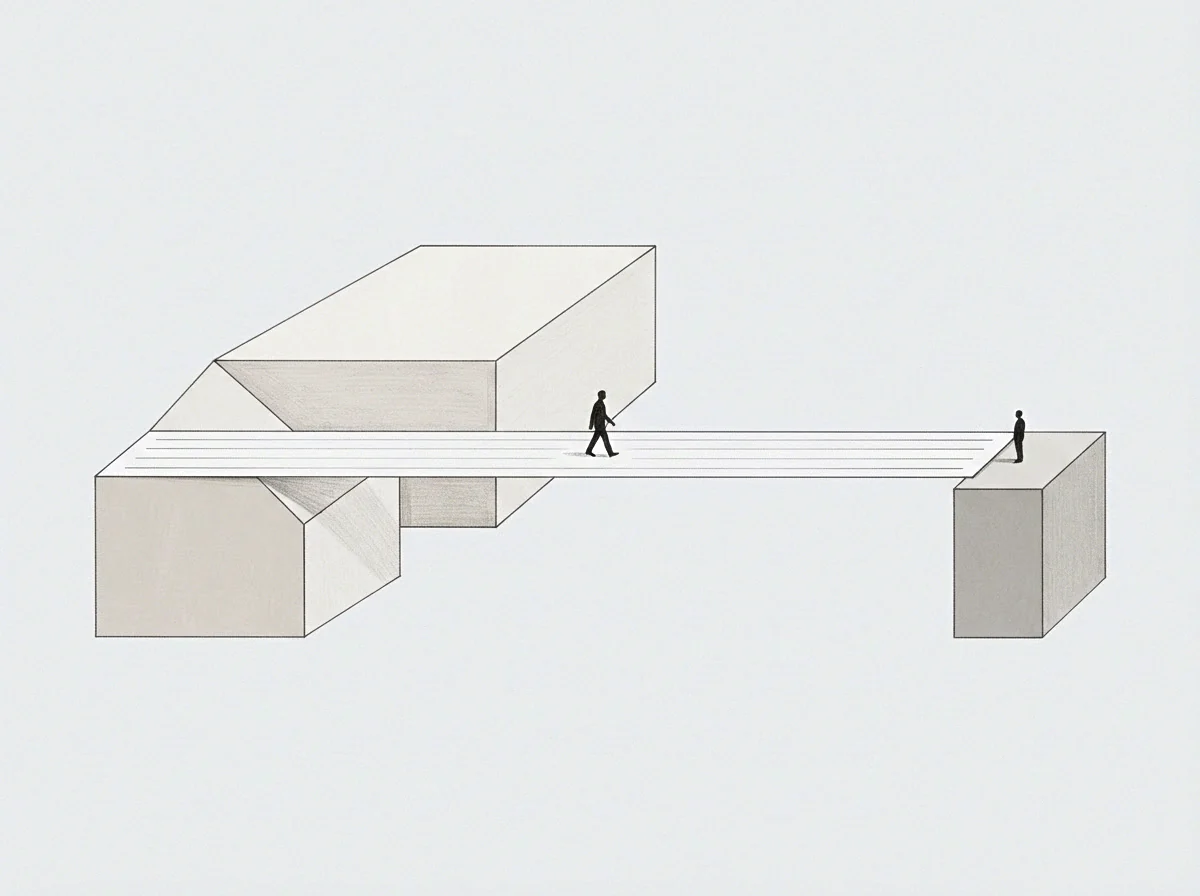
Doing
In one arrangement the seat that fronts had heard the operation described for years, and the description moved nothing. What came back was agreement, and agreement is what a sentence gets when the one hearing it has no way to check it. It costs nothing to give, and it moves nothing when given.
Then I stopped describing the thing and put the whole of it in front of the fronting seat as work instead of as a number.
- I stopped summarising and handed over the material itself, in the state it is actually in.
- I handed over a piece of it to move through by hand, not to approve.
- I said nothing about how long any of it takes.
- I let the seat find the bottom of it on its own time.
It moved in a day.
Years of the first channel had moved nothing and one pass through the work moved it, and that is not somebody finally listening. Nothing had changed in the room except what I handed over. The work did the transfer, because doing is the pathway that reaches a person who is not a peer.
The hands report the cost, and the report cannot be argued with, because the person holding the material wrote it.
Which leaves a plain rule for anybody standing where I was standing: when the listener cannot check what you tell them, tell them less and hand them more, and hand them the part that cannot be got through quickly.
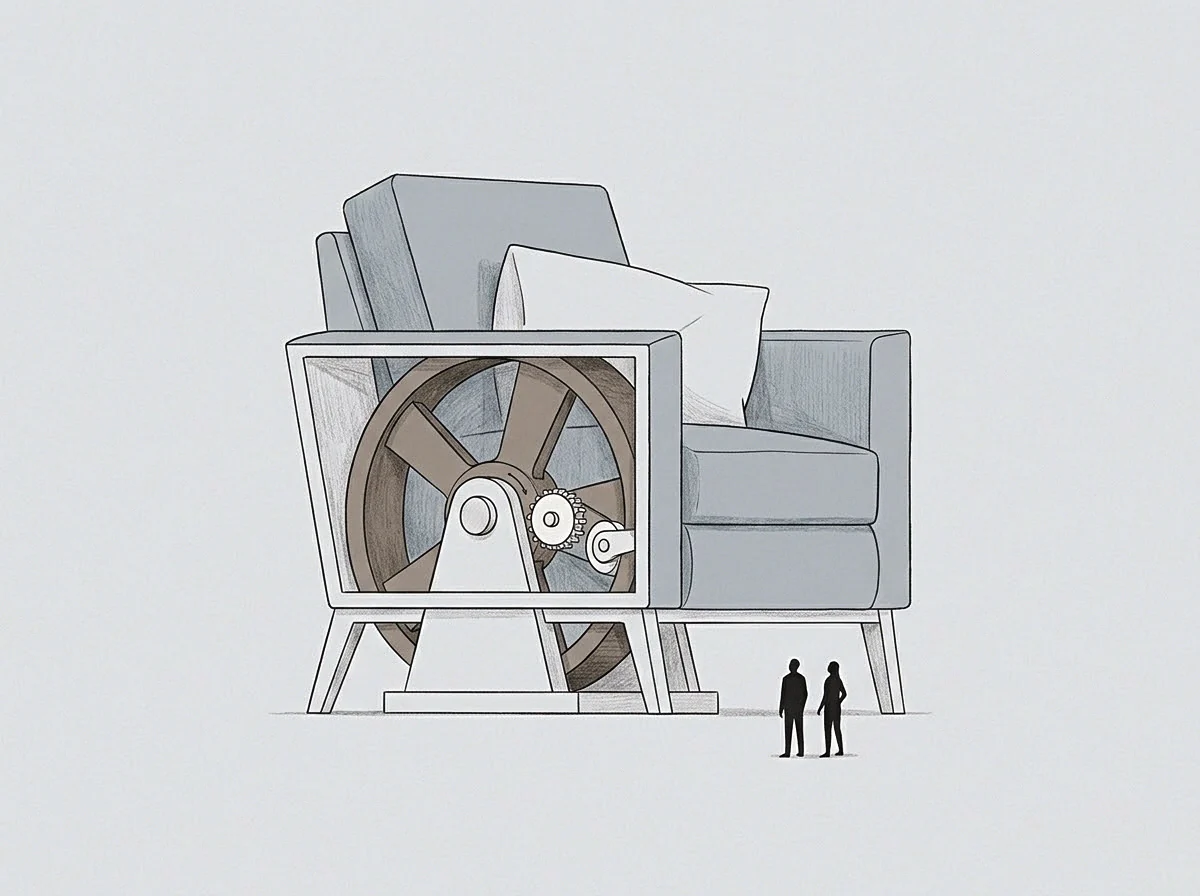
Loop
Michael Polanyi was a chemist who moved into philosophy, and in the sixties, in a short book called The Tacit Dimension, made the argument that a person knows more than that person can tell. The examples are ordinary: riding a bicycle, recognising a face in a crowd, a doctor reading an X-ray. The rider cannot state the rule for staying upright and stays upright anyway.
The doctor cannot list what the eye is doing, and the eye does it. Polanyi called this tacit knowledge, and the part of the argument that matters here is not that it exists but how it moves between people. It does not move by instruction.
It moves by one person doing the thing under the eye of another who already can, by apprenticeship, by imitation, by the learner getting it wrong in front of the master until it comes right. Management writing has used the idea for decades to explain why a procedure written down does not replace the person who left, and why the manual comes out thinner than the job every time.
The second piece is a handle from control engineering rather than a named finding: a loop is closed when the output comes back to the input and corrects it, and open when nothing comes back. The language was built for two operators sharing one system, one steering and one correcting, and it gets used for anything with a controller and a plant: a loop only holds if the correction actually returns. A thermostat is closed.
A heater with no thermostat is open: the room can do what it likes and the heater does what it does. A description sent to a person who cannot check it is an open loop. The person sends something back, but it does not vary with what was sent.
Agreement is the same value for every input, so it corrects nothing. Doing closes the loop, and closes it without either party trying, because the return is built into the act: the person’s own hands report how long it took and where it got hard, and that report cannot be faked, because nobody was asked to give it.
What I took from the two together is that difficulty is tacit by construction. The part of a piece of work that cannot be told is exactly the part that made it hard, and that is exactly the part that makes it worth paying for, because it is the part nobody else can reproduce from the description. So the failure of explaining was not a failure of my English or my patience or my examples.
It was the type of the knowledge. I paid for finding that out in years of rewriting the same explanation, each version clearer than the last, each landing on the same empty spot.
Each rewrite made the sentence better and changed nothing else.
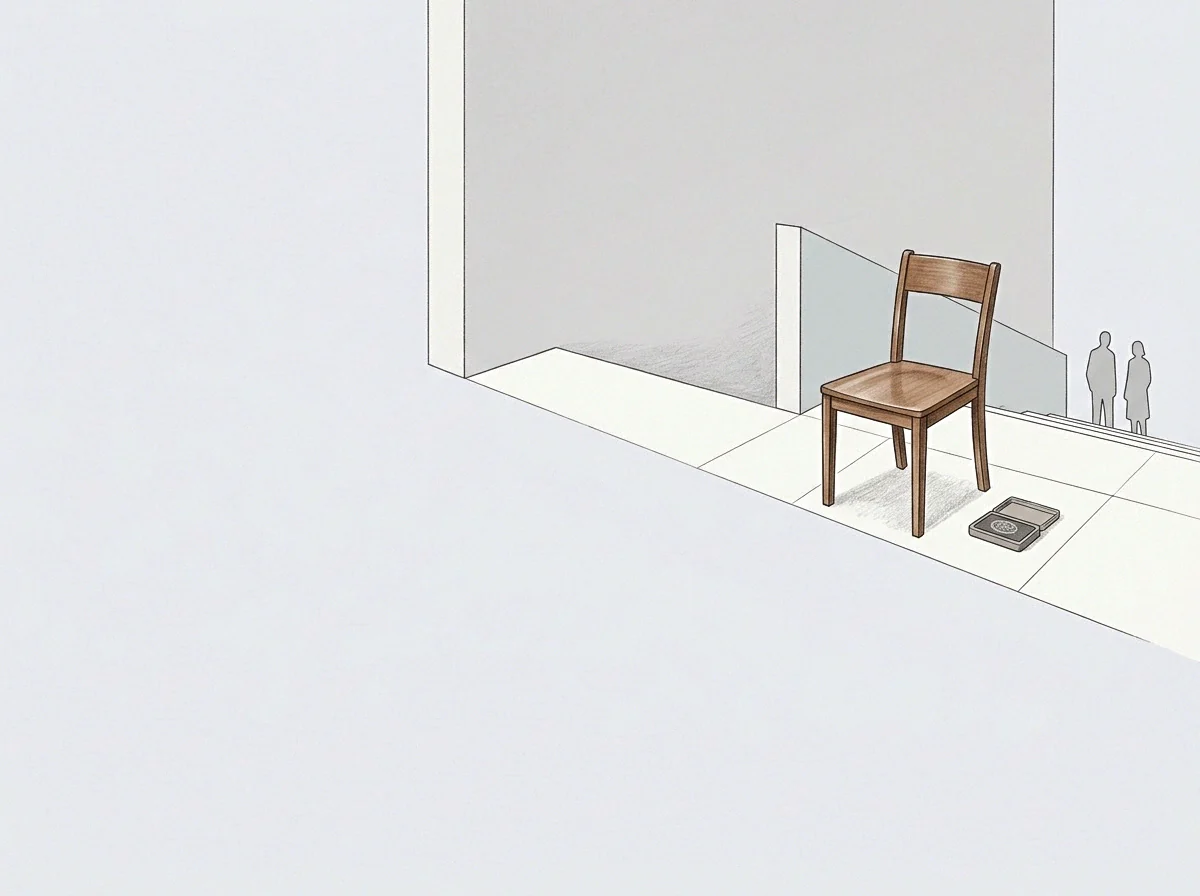
Frame
Frame is the word I use for the structure a description needs in order to land, and it is worth being exact about it, because it is not the same as knowing about a thing. A frame is what a person has after doing work of that kind and having it go wrong. The person knows where the hours go.
The person knows which part looks finished and is not, which decision taken at the start costs a week in the middle, which of the two obvious routes is the one that fails quietly and late. Someone carrying that structure hears a short sentence about a job and unpacks it into all of that without being asked, because the sentence is a handle on something already sitting in the head. Someone without it hears the same sentence and gets the sentence.
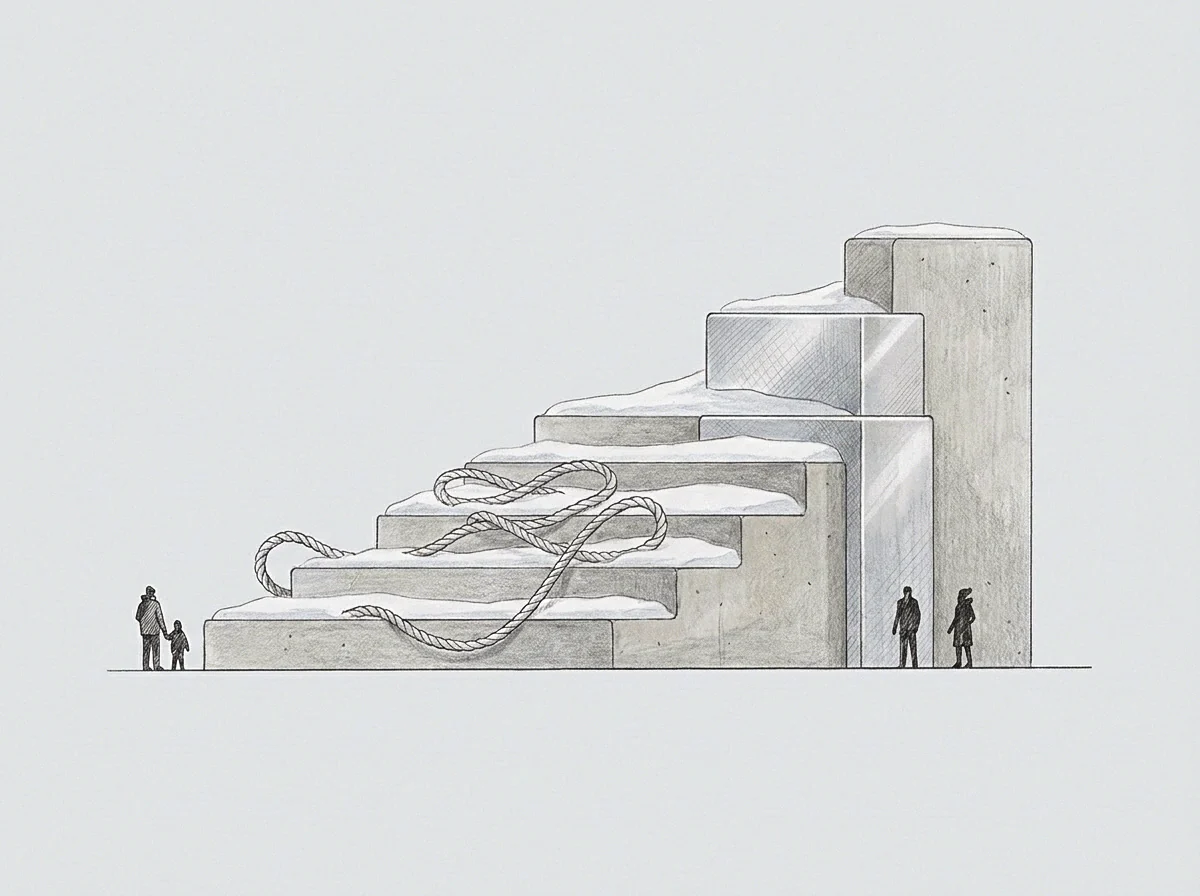
Where a Frame Comes From
It gets built, and I have found no way to hand it over. The person who reads about a kind of work gets the vocabulary of it, which is enough to talk and not enough to see. A frame comes from standing inside the work while it was still uncertain, choosing wrong, and paying for the choice.
Time in the work is not a proxy for the frame. It is the thing itself.
So a peer is not a person who is impressed. A peer is a person who already carries the structure, and carrying it is what lets that person look at an object and tell one part of it from another. A peer reads the work at its own resolution and reads it back, and the reading back is the whole function: it varies with the work, so it is the one response that carries information.
Peers are thin on the ground, and the thinness is not personal. Build the kind of thing that few people build and the count of those who can read it is small by construction, so the people available to work with you are the complements: the ones who want the output and have no use for how it was made. That is a supply problem.
No amount of explaining turns a complement into a peer.
I should say the other half of that, because the record does. The supply is thin, and I have also not gone looking. A supply problem that has not been tested is partly a story I tell about a supply problem.
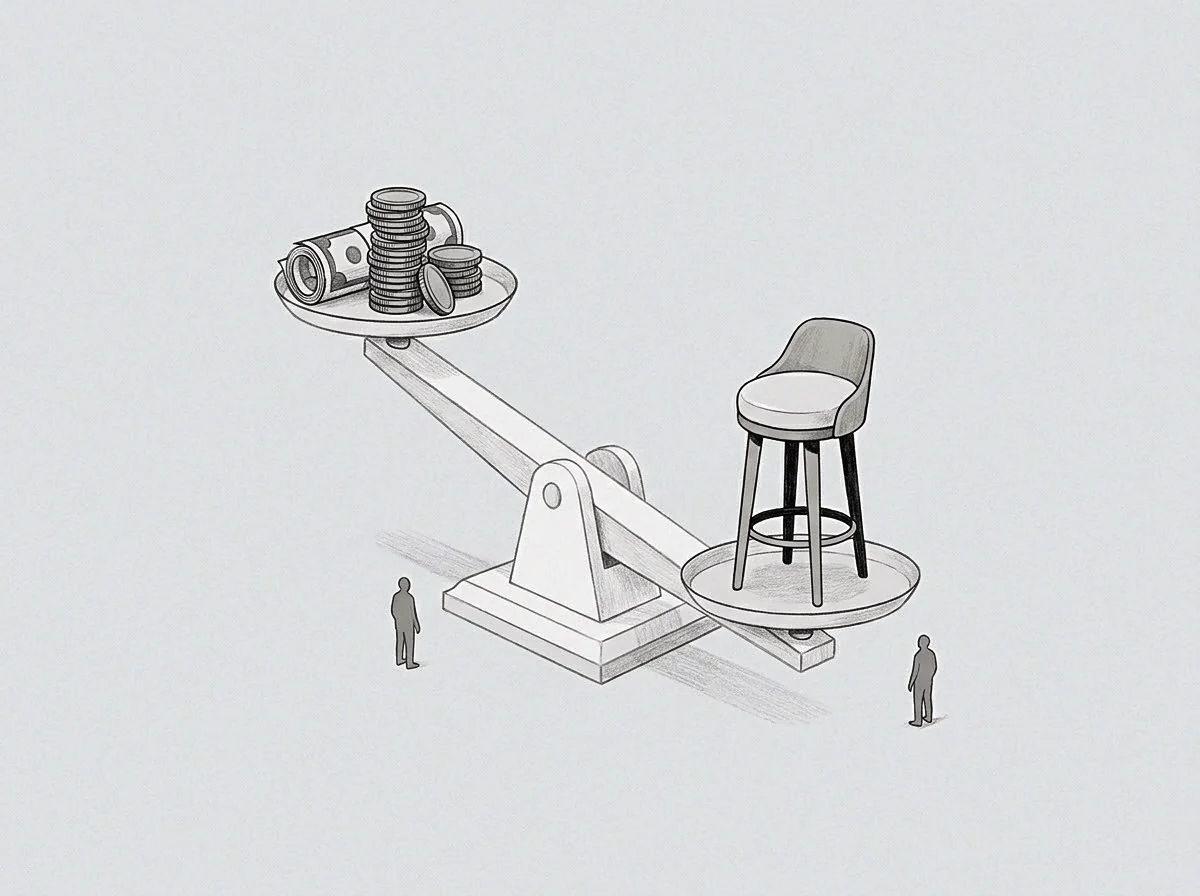
The Two Channels and No Third
With a peer there is nothing to transfer. The peer knows how hard it was already; the difficulty arrives with the object, before anybody opens a mouth. With everyone else there is one channel and it is doing.
Those are the two, and the thing people reach for in between is talking.
Talking is cheap and it is there at every hour, and those two facts are why it stays the default long after it has stopped working.
Getting this straight fixed something about price as well. I used to hold the problem as being undervalued, and undervalued is a thing you correct by stating terms, holding a figure, walking. But a person with no frame is not putting a low figure on the work.
The person has no object in front of them to put a figure on. The work is not cheap in those hands, it is absent, and you cannot negotiate over a thing the other party cannot perceive. The difficulty has to arrive first.
The terms come after. And the same absence runs the other way: with no peer there is no reference class, nobody doing the same work whose figure I could stand mine next to, so part of what I called not knowing my worth was simply not knowing the going rate for a thing that few people make.
Get this backwards and you spend years making better and better work in front of people who have no way to receive it, waiting for the response to change shape. It does not change shape. You read the flat response as a fact about the work instead of a fact about the pathway, so you go quieter, and the work goes further out of sight rather than closer, and the hours spent proving it are hours not spent building the one thing that would put it where somebody who can read it would find it.
I paid that in years. The cheap channel is cheap only at the moment you use it, and what it costs shows up long after, as a stack of good work nobody in the room could read.
State
There is a correction to all of this, and I owe it to the record because the record caught me in it. Explaining does land, sometimes, and when it lands it lands at once. What it lands on is not a reader in general but a person standing at the edge of using the thing, a day or an hour or a room away from needing it, carrying a frame built not by years in the work but by the occasion waiting at the end of it.
Nobody in that state was a peer. The one thing any of them had was a slot: a use so close that the description has nowhere to be filed but under the thing itself.
Used it the next morning, in the order it came in.
Speech is not shut, then. Speech aimed at nobody in particular is shut. Speech aimed at the state a person is actually in is a demonstration with the hands removed and the occasion kept, and the occasion does most of the work the hands would have done.
So the two channels stand, and there is a narrow third that lives inside the first: not explaining better, but explaining to a state instead of to a person. How much of what I spent years calling a shut channel was in fact speech aimed at nobody, at a person in general rather than a person about to do something, I cannot say from here, and the arrangement that would have let me test it has ended.