
The market was the witness
For years the thing that confirmed my work was money, and money has no mood, no history with me and nothing it needs back. When the income went, the reading went with it, and what was left was people, who do the same job while consuming the capacity they are supposed to be measuring.

Market
An invoice clearing was never about the amount. I knew the amount. What I was reading in it was that it had happened, and once it had happened I could work again.
Money answers with no relationship attached to it. Nobody has to know you. Nobody has to be in a decent mood, or hold the frame long enough to see what you built, or remember to say the thing out loud on a day when you can hear it.
The client pays or the client does not pay, and the answer comes without a person choosing to hand it over. In a good year it came often enough that I never had to ask anybody for it. I built a story about myself on top of that.
I don’t need people, I make my own calls, I run on my own reading of my own work.
The story was never that I needed no confirmation, it was that mine came from a source with nothing to want from me.
Money is a blunt thing and it is worth setting down what it actually reads, because it is not admiration.
- It costs the payer something, so nobody produces it out of politeness.
- It moves with the work. Different clients pay different sums, renew or don’t, send other people or don’t.
- It can be checked later, by me, by anyone, without going back to the person who gave it.
- It settles.
The invoice clears, the work is answered, and nothing is asked of you after that.
There is one property sitting under all four and it took me years to say it plainly. A market carries no state. It has no bad day, no thing it needs from you, no history with you that colours what comes back.
It reads what you made and it does not read you. You cannot charm it, and you cannot adjust it by managing the room, and those two are exactly what I am good at, and up to then they had always been the price of being read at all. Where the people around a person answer according to how they are doing rather than according to what he put in front of them, a thing that cannot have a state is the one place he gets measured accurately.
I used to file that under symptom. A man hiding in his work. It runs the other way.
The work was the one place the reading instrument could be switched off, and that makes it the way out of the room rather than something the room produced.
A confirmation that closes and a confirmation that has to be kept alive are not two grades of one thing. Put a man on the first kind for long enough and he will arrange his week, his pricing and his sleep around keeping it coming, and he will call the arrangement independence.

Collapse
The year the bookings stopped, I lost the income. That was the obvious thing, and it was not the thing that took me apart.
From outside it read as a confidence problem. A man who had been sure of his work stopped being sure of it, and the reasonable story is that a setback shook him. The story is wrong.
I had not lost the belief. I had lost the thing that produced the belief, and there is no amount of talking yourself up that stands in for a gauge.
What a Sign Has to Cost
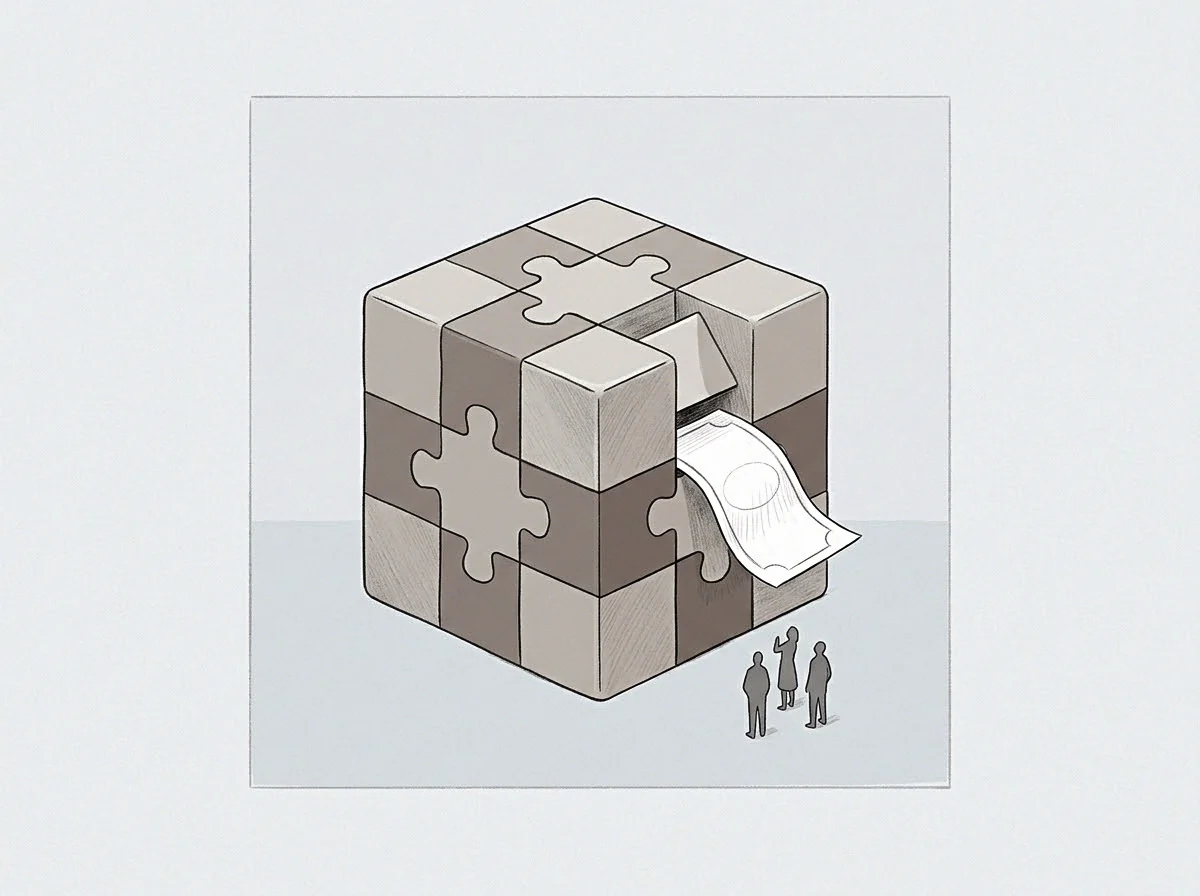
The condition is Spence’s, out of the study of signals: a sign tells you something only when it is dearer to fake than to earn. Praise is free at both ends. A payment is not, and that gap is the whole reason a bank notification could do work that a warm sentence could not.
Which felt cruel at the time and was not cruelty. Nothing said to me in that first year reached the place the money used to reach, and the reason sits in the price of the sign, not in the people.
Calibration Against Constitution
Crocker’s contingencies of self-worth move the question sideways. Not how much a person is worth, which is what everybody asks, but what the worth is staked on, because the staking decides what a thin month does to him. Mine is staked on competence.
Somebody staked there has no way to say out loud that he has reached the end of what he can carry, because the saying shuts the one line through which he gets read, so the load never comes down. Not when he is tired. Not when the work is finished.
And the people watching read the refusal as appetite.
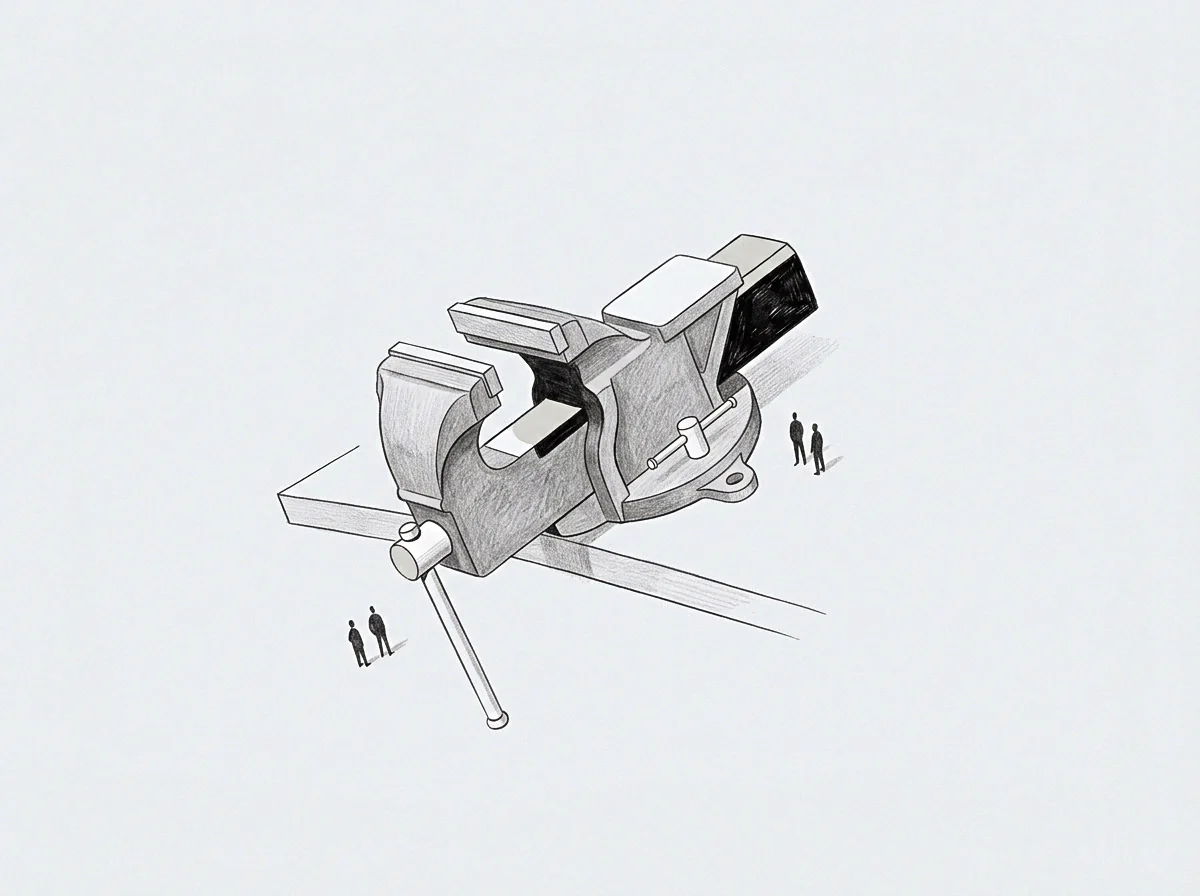
The research splits the reading in two, and the split decides whether any of it is healthy. Calibration is taking a result and using it to correct an assessment you had already made. Every competent person in every trade runs it, on outcomes, on failures, on whether anyone reads the thing, and nobody gets good sitting alone with his own opinion of himself.
Constitution is the other one, where the result settles the question of whether you amount to anything, and it breaks in three places. A thin month stops being conditions and becomes what you are. The line turns load-bearing, and then its loss is not an inconvenience.
And it pays for volume: more clients, more of the answer, more work taken on, less left to do it with, and that is the loop that ended where it ended.
The trouble was never that I looked outside for the reading.
There is a test for which one you are running, and I could not run it. The test is what a bad outcome leaves behind. A project that goes wrong and hands you something you did not have before is the first kind.
A project that goes wrong and leaves you worth nothing is the second. To run it you need an assessment held in advance, and mine was switched off, so there was nothing sitting there for the result to correct. That is what it cost me to find this true: years of taking raw data as a finding about my worth, because nothing at the receiving end could turn it into an update.
Prior is the word for what was missing, and it carries the change. A prior is a line put down before the result comes in: what I think the work is worth, and why I think so. With the line there, whatever comes back has something to argue with, and it moves me some amount off a position I already took.
That amount is the delta, and a delta is a size a person can live with. With no line, the result walks in and takes the position over, because nothing is holding one.
Load
There is a line of work in psychology about what another person costs you, and it starts from the opposite of what I would have guessed. James Coan and his colleagues, in a study published in 2006, put women in a scanner and told them a shock might come. When somebody held their hand, the threat response in the brain came down, and it came down further when the hand belonged to a spouse than when it belonged to a stranger.
Coan and Beckes built social baseline theory on that: the brain assumes other people are near, and it budgets its effort on that assumption, so company is not comfort, it is a cheaper way of doing the same amount of living. Two years later Schnall and Proffitt had people stand at the bottom of a slope and judge how steep it was. With a friend beside them, the slope read as less steep.
Same hill, less work.
The price side has its own name and its own paper. Bruce McEwen and Eliot Stellar set it down in 1993: allostasis is holding yourself steady by changing, and allostatic load is what the changing costs when the response is mounted again and again and never switched off. Not the price of one bad week.
The price of adapting, charged over years. The field has measured it since by stacking several readings of a body into one index, and the finding that keeps coming back is that the wear tracks how many times the response ran, not the size of any single event.
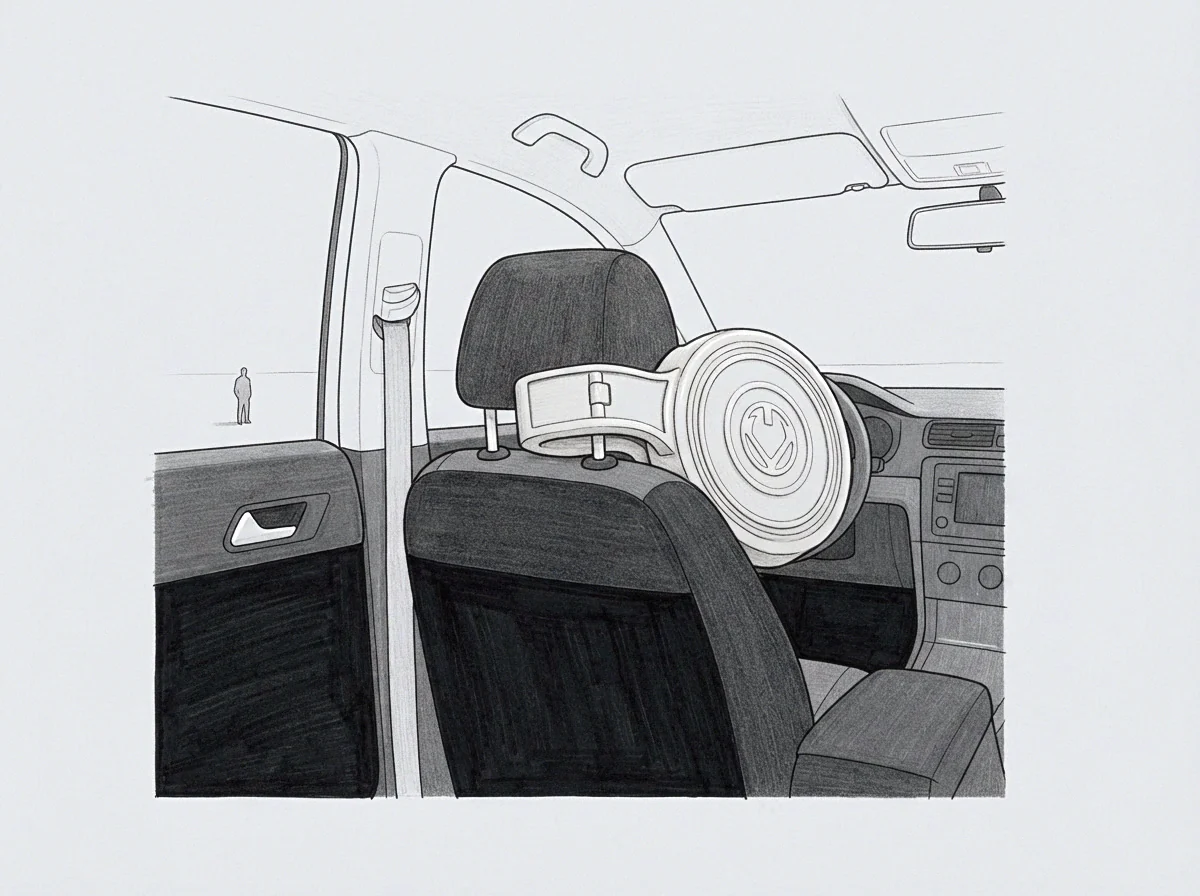
Both of those describe a witness as a regulator. Somebody present lowers what the work costs you, which is why people go and find one, and for most people that is exactly what happens. It is not what happens to me, and it took a long time to admit.
A person standing in a room brings a state with them, I read states, and once I have read one I hold it and I work around it. So a presence that is supposed to lower the cost raises it instead. A witness is a load.
Which puts the market where it actually sat: not the thing I needed to be seen by, but the one witness that carried nothing for me to hold.
It measured, and it never had to be managed.
What it cost to get to that sentence was the years spent shopping for the wrong replacement. When the income went I went looking for people who could do the job the market had been doing, and every one of them arrived with a state attached, and I paid for each reading in the currency I had least of. I did not know I was paying.
I thought I was bad at people. I was running a witness that cost more than the reading it returned, over and over, and calling the shortfall a personal failing.
Relationship
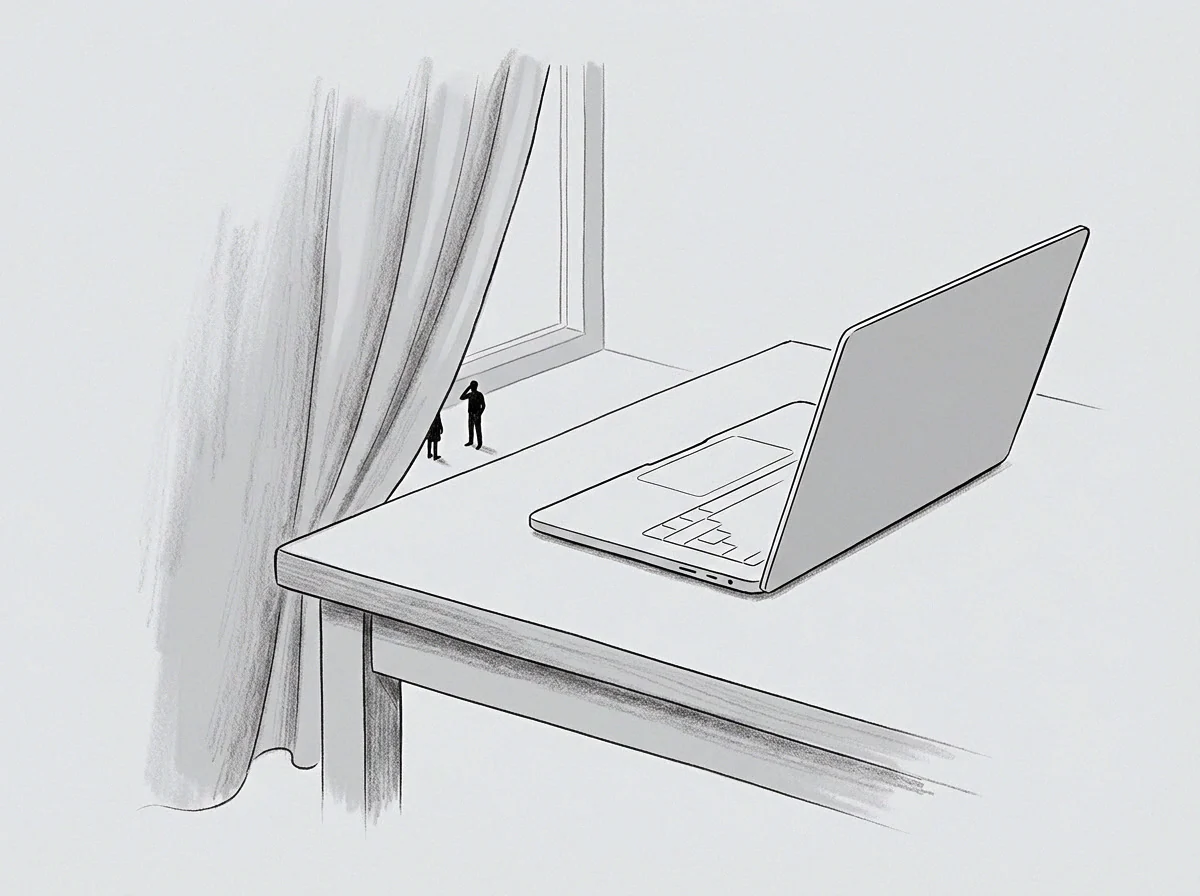
So what was left was people, and people charge. There is a sharper version of it underneath, and that one took me years to see. Being attached to the function and not to the man who runs it is its own injury, because the confirmation lands on the output and, in landing there, says the output is what counts.
You get read accurately and partially in the same movement.
That is the mechanism under a move I used to explain as a career decision. I stopped originating and started realising other people’s ventures. The story I told was about opportunity.
The duller version is that in somebody else’s venture the founder seat is already filled, so a person can build the whole thing without ever standing in the position that has to ask, quote, price the time, state a want. Delivery was all that was required of me. The confirmation had moved and I followed it, and the arrangement that carried it also spared me the one act I could not perform.
So which is it. Is the accuracy paid for by the closeness, so that a reading with nothing at stake is a reading with no frame behind it, or did I meet the wrong people in the wrong order. I do not know.
What I know is that the years with a source that wanted nothing from me were the years I could work, and I have not settled whether that makes them the healthy stretch or the strange one.
Cost
The loneliness in all of this is not social. I have people. Some of them would sit with me for as long as it took, and a few of them have done exactly that.
What is missing is a peer, and that difference decides everything downstream, because goodwill is common and matching capability is not.
The requirement is not attention and it is not patience. A peer has to hold the whole thing at the size it actually is. Anything that comes back smaller than the thing it describes is a reading of the fold, not a reading of the thing.
That sounds like vanity from outside and it is not vanity. I lose the part that needed a second person on it, which is the part I could not finish alone, and I get back the part I already had. So the failure is not disagreement.
The failure is the fold.
A peer is somebody who can carry the whole of it without shrinking it to fit.
So this one does not solve the way the other one solved. If goodwill were the requirement, that is available, and I could go and ask for it this evening. The requirement is somebody who can hold the same load and read the result, and there are few of those, and the ones there are have their own work and their own supply to keep running.
You do not recruit a peer. You are lucky, or you are not.
And then it turns, which I did not see coming. If a market can read with no person in it, so can a launch. Put the work out and the answer comes back the way it always came back, on the work, from nobody.
So the function a person was ever attached to is finished, and the arrangements built to carry it are standing on a condition that has gone. That is why terms I lived with for years stopped being liveable inside a single week.
There is one piece of this that will not come off, and it points backwards rather than forwards: the wish to prove it to the same people. That aims the demonstration at the arrangements it was meant to get away from, and that is the old function still running after its retirement. Run it the way I ran it and here is where you land.
Years on a source that answered without knowing you, then no source, then a search for a person who can do the same job, and the finding that being read at all now depends on staying excellent. So you stay excellent past the point where you can. Going unread is not a real alternative.
It comes out of capacity, and nothing puts capacity back except stopping.