
The longer component sets the direction
A cost arrives with several components at once and only one of them has a currency in front of it. Direction comes off the whole vector, the countable component is a reading and not a direction, and for years I steered by a component I had never taken a size on.
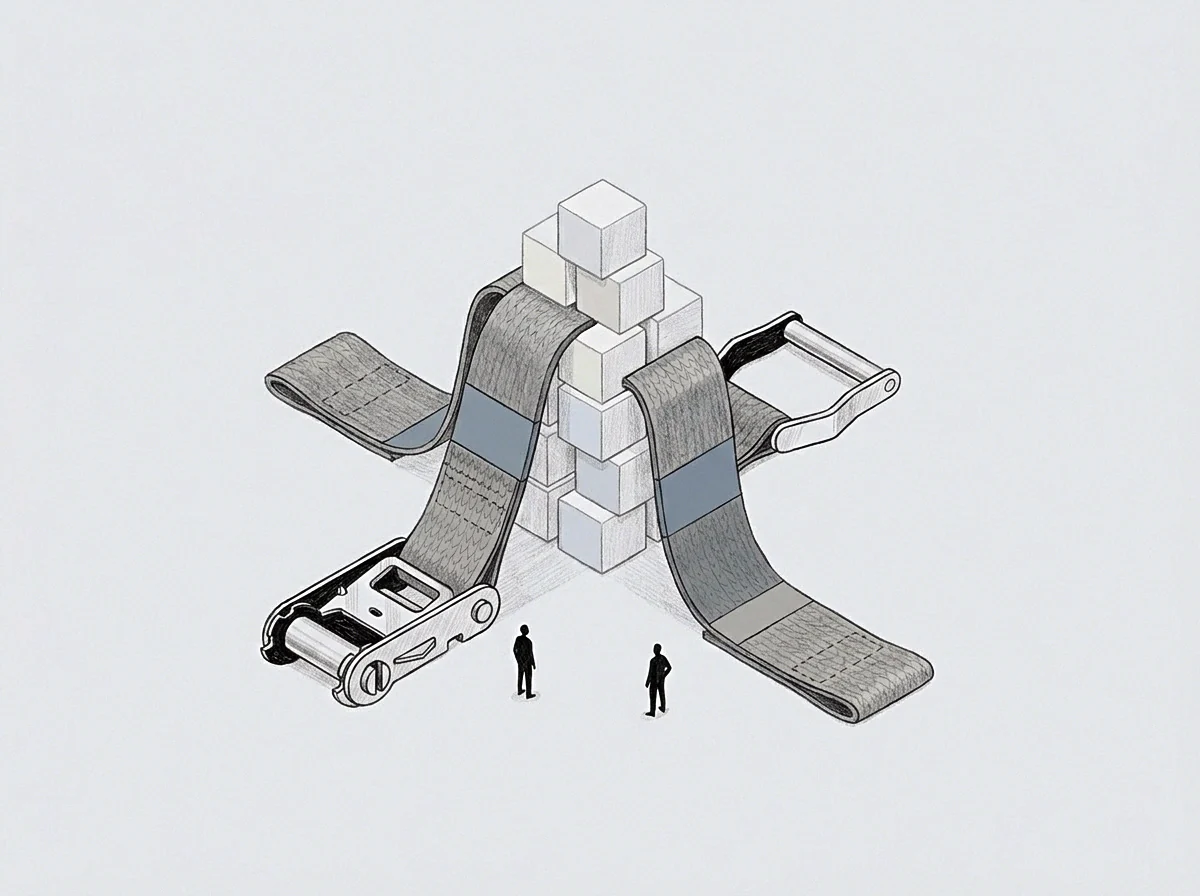
Vector
A cost does not arrive as one quantity. It arrives as several at the same moment, and they are not in the same unit. A function turns up that the operation did not have before, money moves in while other money moves out, hours go in the room and keep running after the room has emptied, and somewhere inside all of it a person ends up able to do a thing he could not do going in.
Several things, several sizes, and no exchange rate between them.
Put one engagement through it.
- New function. Something the operation can do now that it could not do last month.
- Money made. What landed, not what was quoted.
- Hours spent. The ones in the room, and the ones spent carrying the thing around after.
- Capability gained. What I can do the next time without anyone beside me.
They each carry a magnitude and the magnitudes are not equal. If the capability component runs longer than the hours component, capability decides and the hours lose, though the hours are real and were spent by a person who had them once. Nobody agrees to this.
It is what a sum does when the parts pull with different strength.
You can split the thing into ten properties and argue each one against the others. I do not, and it is not discipline. That kind of arbitration would eat the processing power the work itself runs on, and I have watched it happen: ten properties, ten cases for and ten against, and while the arguing runs the clock makes the decision instead.
The components get summed, not ranked, and the sum is the only thing anybody reads.
So what I take off it is the delta. I keep going while the delta points up, I stop when it stops, and no single component gets talked out of the sum on its own.
A component can also be absent, and absent is not the same as small. The vector I ran for years carried no line for what an arrangement does to the person running the operation, and the line was not weighted low, it was missing. I had no unit for the thing, so there was nothing to enter, and a component with no unit does not sit in the sum reading zero.
It sits outside the sum, taking capacity and giving back no figure, which is how a cost stays live for years without ever coming due. Putting a name on it settles nothing down and I am not going to pretend otherwise. What a name does is hand the thing a position, and a thing with a position can be put on the vector with the rest of them.
When that line finally went in, nothing arrived from outside. No new event, no fact I had not already lived through, nobody telling me anything I did not have. One axis got added, and every position I had ever worked out came out at a different angle, because that is what an added dimension does to a resultant: it does not correct the last reading, it recomputes all of them in one go.
I got the whole file back in one pass instead of item by item, and it came back as load, not as conclusions. The layers did not collapse into each other while that happened. I read the business layer where the business runs, and the human layer where a person is carrying it, separately, the way I always did.
What took the extra axis was the vector, and the resultant is the one place those two ever meet.
Cost is not a second axis. It is a property of value, the negative part of the one measure. Put it on an axis of its own and there are two lines to reconcile, and the reconciling never finishes.
Keep it inside the one line and the cost sits where it belongs, as the part that pulls down.
Which measure that one line is took me longer than the components did, and I had it wrong for most of the time I was running the model. Two kinds of quantity get used on a working life and they do not behave alike. One measures a shortfall.
Its floor is zero, a person sits somewhere above the floor, and the only movement on it that means anything runs toward the bottom, so every step worth taking gets called a descent, and the word comes out of the scale rather than out of anything that happened. The other measures value. No ceiling, it goes below zero, and both directions carry meaning.
A shortfall scale needs something to fall short of. Where a correct answer is already written down, the distance to it can be measured, the whole of the method is the shrinking of that distance, and every move worth making is a move down. Where nothing is written down there is no distance to shrink.
All that comes back is a return, running positive or negative with no ceiling at either end, and the only thing to do with a return is climb it. A scale with its floor at zero has no gain on it, and the verb a person reaches for comes off the scale and not off the movement. A working life has no answer key in it.
Nobody hands a person the correct version of his own next years, so there was never a distance there for me to be descending toward. Shortfall keeps a small local job after that, inside one step, telling me whether the last thing I did came back better or worse than the one before it.
I did not meet this in a paper. It came out of an argument I was having in writing about my own vocabulary, where descent kept coming out of me for things that were plainly gains. There was nothing wrong with the model I was running.
I had it filed against the wrong kind of scale, and every word I took off it came out backwards.
I had a value thing in my hands the whole time and kept reading it against a shortfall. Every year came out as a distance from a number that was never there, and it was never there because nobody had written it. It was not one decision that went wrong.
It was the register I made all of them in: a good stretch read as less far behind, a bad one read as further behind, and both readings pointed at a target nobody had set.
What I did not see coming was the reach of it, and it is the reason a month of this did more than years of going through things one at a time. Working a file item by item touches one item per pass, and every other point stays where it was put. A distinction added to the measure is not one more item.
It sharpens every point on the map in a single pass, each one settling into a finer reading, and nothing placed before has to be pulled out and done again. Cost as a vector, ordinal against cardinal, shortfall against value: not one of them added a fact. Each made the file readable at a resolution it did not have the day before.
That is the difference between a file that compounds and a file that only gets longer.
The line all of it gets read against has a name now, and the name is the value axis: no ceiling above it, open below zero, cost riding on it as the negative part instead of sitting on a second line of its own. Naming it added no fact to the file. It changed the sign on the whole of it.
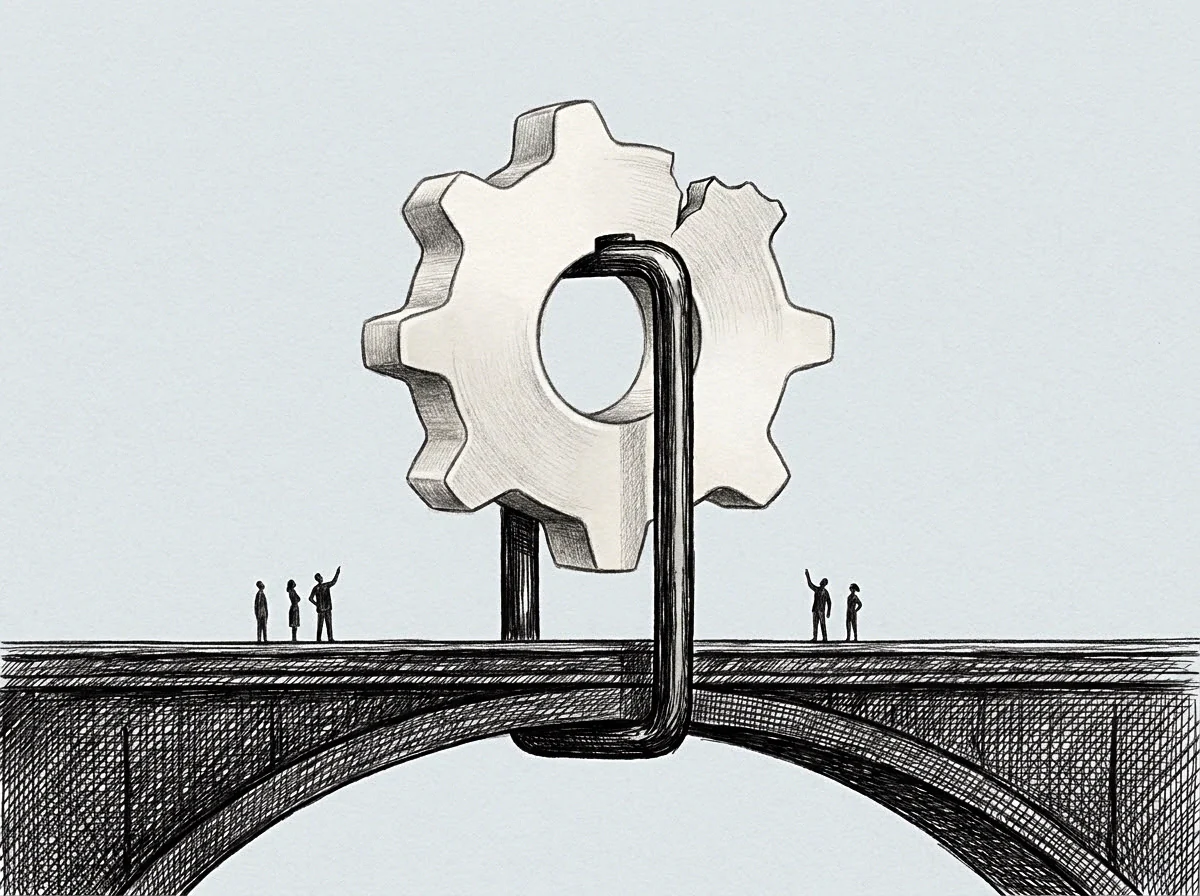
Money
The value axis is ordinal: it says which of two positions sits higher, and the direction comes out of that comparison and out of nothing else. Money is cardinal: it says how much, exactly, and it says it about one component. It cannot aim a thing that has four parts, because aiming needs all four and a figure is only ever holding one.
A person who says money moves him is running a single axis, where the figure he reads is also the instruction. That model is coherent. It is not the one I run.
A figure tells you the size of one part and nothing at all about where the whole thing is pointed.
The rule did not skip the component with a currency in front of it. If capability runs longer than hours, capability takes it, and that stays true when the shorter component is the one on the invoice. Something I funded myself ran for years with money made sitting in the negative and capability gained well above it, the sum went on pointing up, and the thing kept running.
That was not carelessness about money. It was a short component losing to a long one, and a sum does not care which one carries the currency.
I paid out to the partner a sum that would have been a decent living if it had come the other way. It went in pieces, month after month, over years, and behind it sat a split with nearly all of the labour on one side and nearly all of the taking on the other. That component anybody can count.
It has a currency in front of it and the spreadsheet was right, and it did not move me for a single week of all that time, because the component I was steering by was one nobody can count: a standing on the arrangement, which I had assumed I was buying and had never once priced. I had put a size on that component without ever taking a reading off it. An assumed magnitude behaves exactly like a measured one inside the sum, right up to the day somebody checks it.
Get the size wrong on a component nobody can count and the model runs just as smoothly and takes you somewhere else.
The terms had run that way from the start and nothing in them was hidden: the operation on one side, the standing on the other, called equal on paper. Nobody had to say it out loud, and I had been carrying the unsaid half at a size it never had. The bill for that comes late and it comes in two kinds.
I went on paying both long after the reading was there to take. The money came back later. The years spent steering by a size I had written myself did not, and that is the part of the bill still standing open.
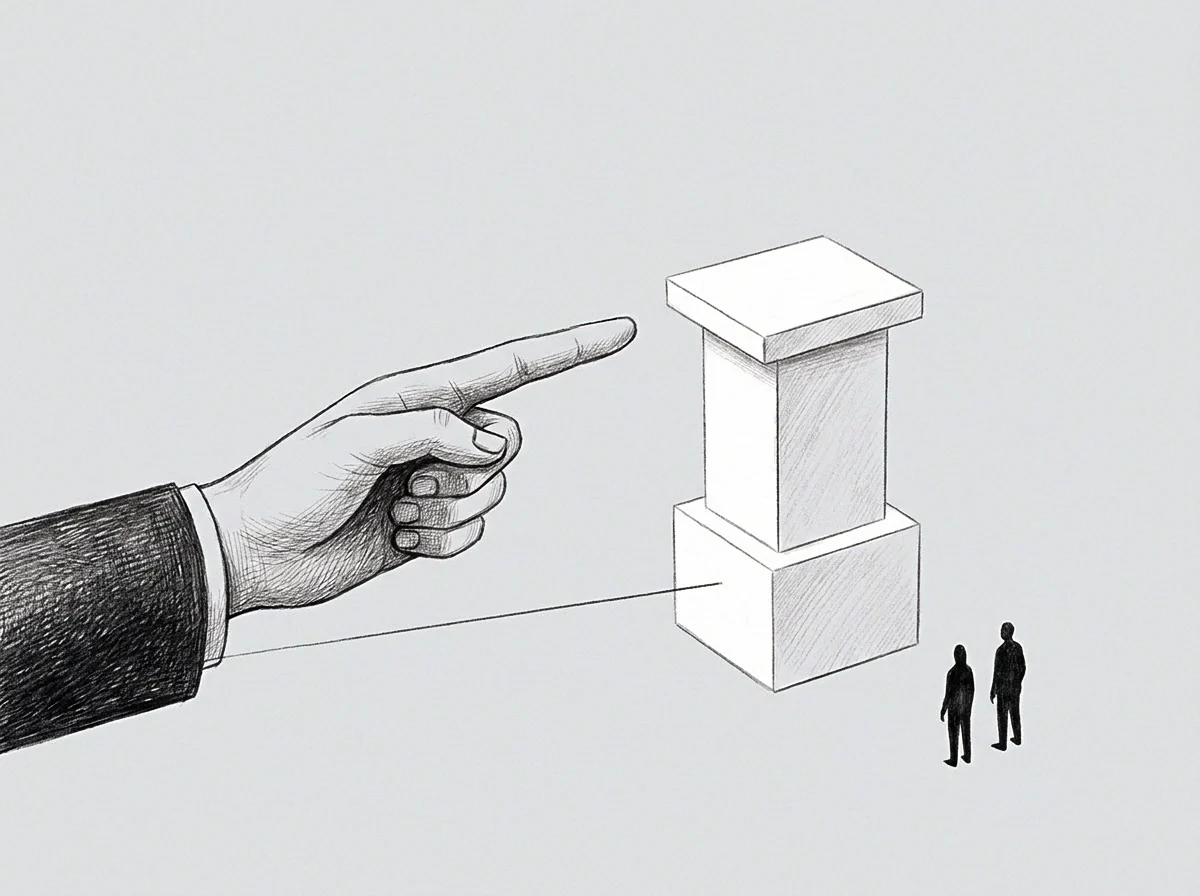
Direction
Nobody picks a direction. It falls out of whichever component has magnitude at the moment the decision gets made, and a person can be honest about his reasons and still be wrong about which one that was.

Which Component Is Doing the Steering
You can find it afterwards, and only afterwards. Take the decision as it was actually made and ask which quantity would have had to change for it to flip. The one it names was steering.
It is rarely the one that was given as the reason at the time, and it is rarely the one a person would want to say out loud.
Mine was not the money.
I asked, for years, to be held as a partner and not as the labour the arrangement ran on. What I had put in front of the partner for signature stayed unsigned the whole time I was asking, and I went on asking anyway, which is the part I have to own. I was feeding a component I had never measured, and all that feeding produced no motion in it at all.
A component fed that long with nothing coming back does not have a small magnitude. It has none, and none multiplied by whatever weight you like is still none.
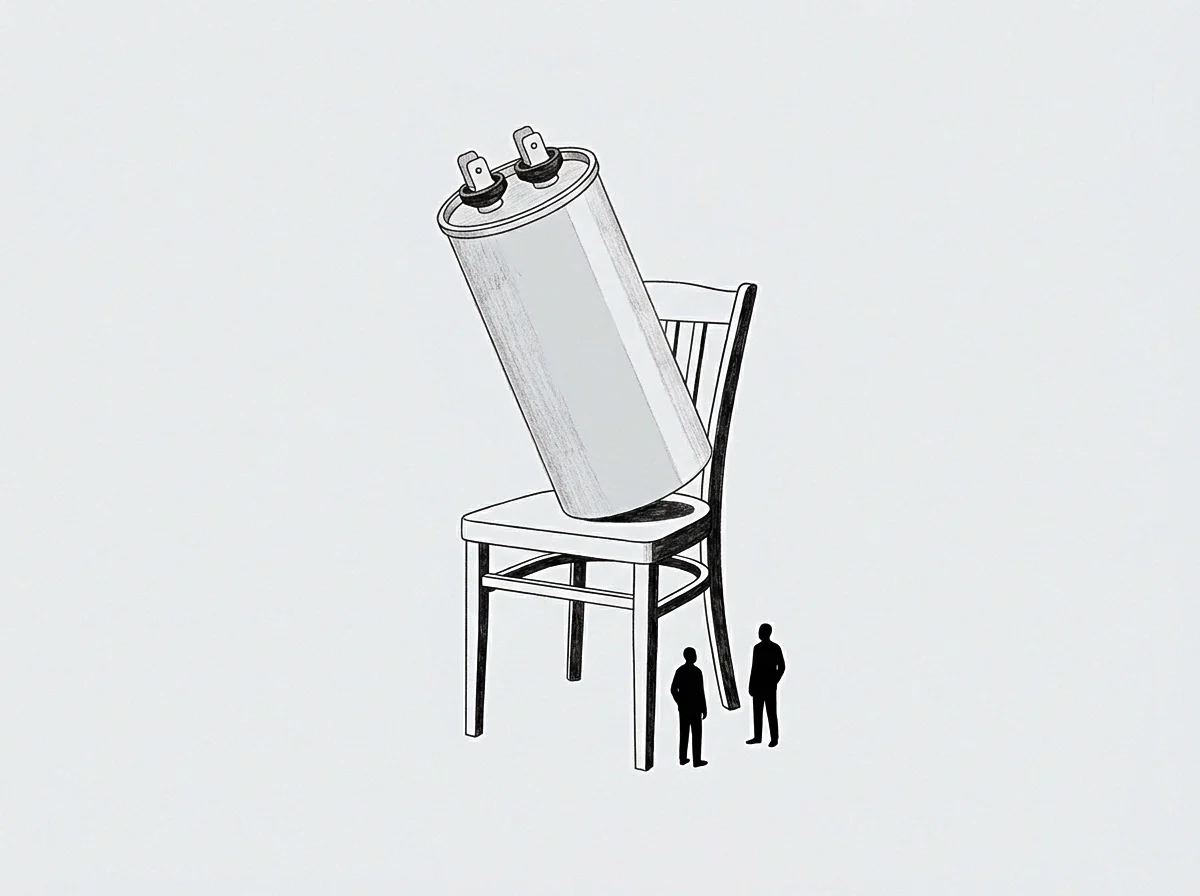
What a Signature Actually Needs
I had been asking with one sentence for two different things. One was to be held as a partner. The other was the document signed, and that one has its own terms, which are nothing like the terms of the first.
The first was never on offer, and nothing in the way the arrangement had run said otherwise. The second needs no hearing at all. It needs a date fixed and a signature on it.
An appeal has to be granted by the other side. A close only has to be scheduled. So I stopped asking and started booking: a time set, and a date the whole thing had to be finished by.
Nothing in that sequence required the partner to have decided what I was worth first, and that is the reason it could move at all when nothing else had. What I had left to work with was not a partner. It was a counterparty, and a counterparty runs on dates instead of on being convinced.
Something under all of it made the asking feel low. That was a real cost and I am not going to call it anything else, but it was ordinal, and the thing in front of me needed a cardinal object: a slot in the week, a length of time, a signature. Wrong unit, so it stayed out of the room.
A cost in the wrong unit cannot fix a date, and a date was the whole of what that meeting was for.
Once that component was read at the size it actually had, the flow to it came down on its own, and it came down without a speech attached. What goes to that side now is a fraction of what went before. The component had been reading low for a long time and the supply was simply late catching up with the reading.
The Floor Is Made of Capability
A cut like that is only available to somebody whose floor is not made of money, and mine is not. It moves when what I can do extends, and it sits still when income moves. A good year and a year at nothing did not move what I did next by much.
Both of those are the same part of the vector going up and down. What I hold sits on the gradient. It does not sit on a reading taken off one component.
Take the money away and the floor holds. Take the capability and there is no floor left to stand on. So capability does two jobs at once: it is what keeps me standing when nothing is coming in, and it is what there is to sell when something is.
Nothing has to be traded off between those two, because extending it does both at the same time, and that is the reason the components go on paper now, before anything gets decided, in two columns, measured and assumed.
Where the Number Lands
Cost stays ordinal while it is inside the operation, and it converts toward cardinal at the moment it has to leave, because a figure is the only form of it that reaches another person intact. So money is not the layer where anything gets decided. It is the shape value takes on the way out.
And which side the conversion lands on is set by whose boundary the thing has to cross, which across most of the work I have done was not mine. Lift the value of what another party is holding and the figure appears on their side, on the position or the platform that carries their name. The ordinal work was mine in each one.
The number was theirs.
The conversion I have never run is the one that points at me. Every other one I run without thinking, out it goes with a figure attached. Advisory has gone out the whole time I have been doing it wrapped inside an artifact that already carried a price, so it never needed a figure of its own and never got one.
I can tell whether a thing is good. What it goes for I cannot tell, and those two sit together the way reading a room at high resolution sits next to reading myself at low. The instrument was pointed outward when it was built, and the pricing part of it was pointed the same way.
The size of a detour reports the size of what it is going around.
Nothing crosses from the assumed column into the measured one because I fed it, or wanted it, or waited long enough for it. It crosses when it comes back with a size on it. The working rule that came out of all of it: feed what you like, and steer only by the components that have come back with a size on them.