
Said once, then refused
A term said before the grip forms takes nothing from anybody, and it sorts a person in the first weeks instead of years later. Said a second time, it is not persistence. It is me declining to read an answer I already had.
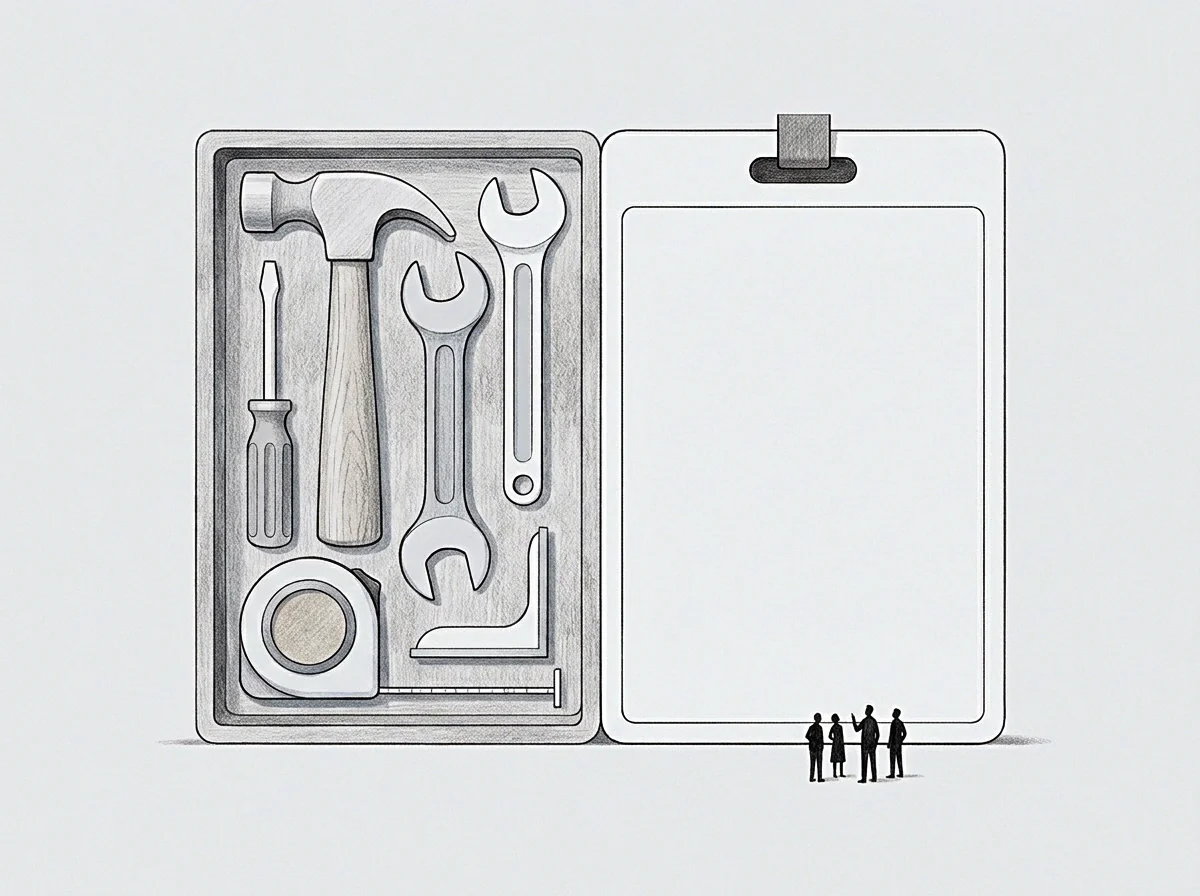
Grip
A term gets built. A want does not. A want turns up in you already made, and your work on it is reading, not choosing.
The term is the second operation: you take that want and work out what would answer it, with this person, inside this arrangement. That part is design, done by hand, and the hand is what made it look optional. It sits after the want and before the cost: want, terms, cost, position, action.
The placement is the whole function.
Before the grip forms, a term costs nobody anything. No one has arranged themselves around a different assumption yet. There is no permission sitting there to be withdrawn, no behaviour anybody has settled into.
Nothing is being taken, so there is nothing to feel bad about. The grip is the point where what I have built pays inside this one arrangement and much less anywhere else, and it forms early, quietly, usually before anybody has said the word partner out loud.
Later the same sentence does different work. By then the other person has had something, and has had it long enough to stop asking for it. Say it now and you are not setting a condition.
You are removing a thing somebody already holds, and that is where the fight comes from, and the guilt with it. I carried that guilt for years and read it wrong the whole time. I thought it was about having requirements at all, about being a person who needs something stated, which would make it a fault in me and nothing anybody could fix.
It was not. The guilt was correct and it was pointing at the removal. The moment is the only part of this that was ever mine to move, and I moved it late every time.
Same content, two positions in time. Early, it points at what is coming and asks for nothing back, and the person on the other side can meet it or not.
I got very little in me today. Let’s go for a coffee and talk about life.
After the fact, once the time has already been counted on, the same words land as a restriction, and that is honestly what they are.
Don’t bring the project to me tonight. I can’t take it in.
So what the late statement costs is not in the sentence. You end up arguing for something that would have been free, against a person who is right to feel that something got taken off them, because something did. The condition can still be got.
What is gone is the version of the arrangement where nobody had to be taken from.
Repetition
You say it once, and the reply is data you did not have a minute before. Met, or negotiated in the open: carry on. Ignored, or talked past: you have the answer in the first weeks instead of years in.
So a term is a filter before it is a protection, and the filter is the part I had never credited it with. Without one there is no early test, and then a person gets learned the other way, by paying, and the paying comes in instalments.
I counted restatement as persistence. It is not persistence. For years I said what I needed, in the same arrangement, more times than I can count, and every one of those sentences after the first was me arguing with data already in my hand.
Under all of that sits one line I got to years too late: a term goes out once, and what comes back is the answer. Say it again and you are not asking harder, you are refusing what you were told.
The second saying carries nothing the first did not. What came back after the first is the reply, and it counts when it is a yes, it counts when it is an argument, and it counts when it is silence, because silence is what a person does with a term they are not going to meet. Say it once, read what comes back, treat that as the answer.
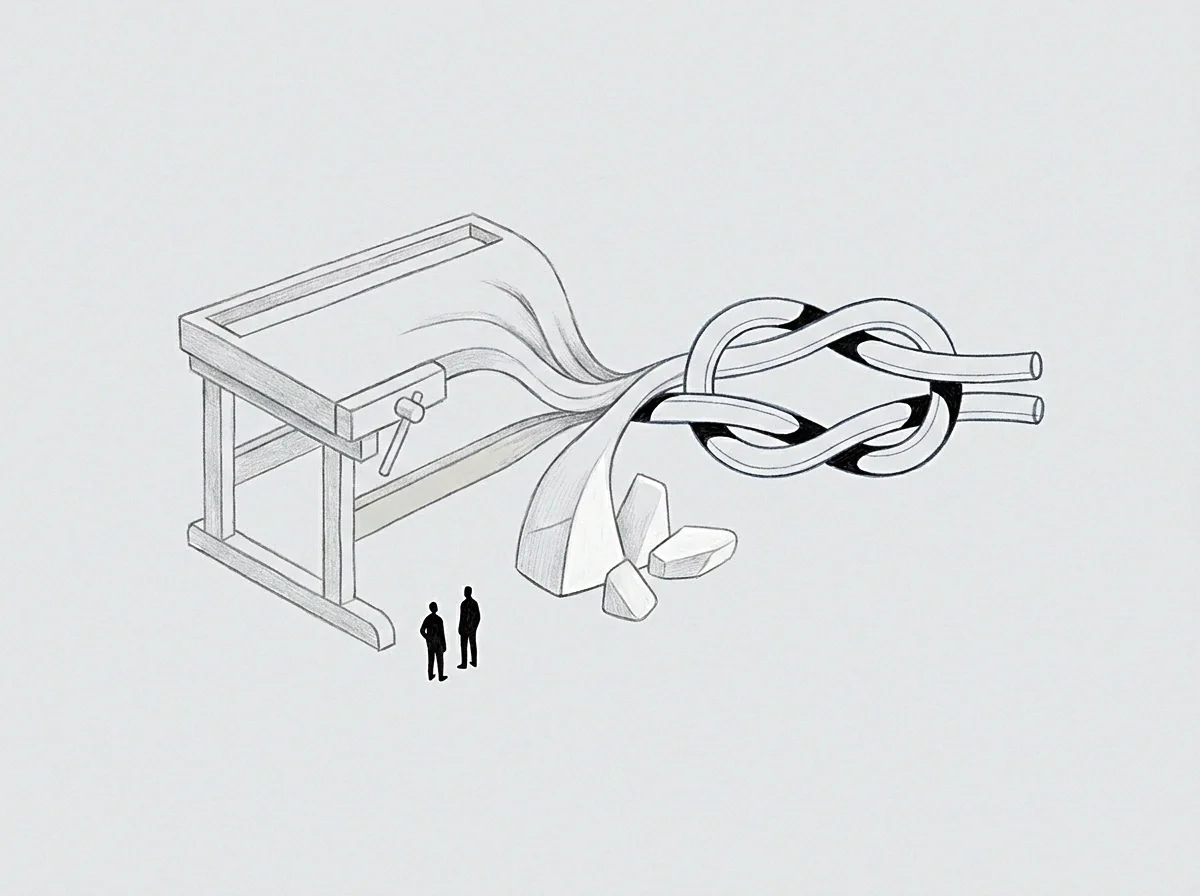
Safeguard
I did not invent the timing rule and I did not find it in anything written about people. It sits in economics, worked out on contracts between firms by men with no interest in how two people arrange themselves. Start where they started: using a market is not free.
Somebody has to find the other side, argue the price, put it in writing and then make the writing hold, and all of that gets paid before a single thing is delivered. Coase set that in front of his own field in 1937, as a question it had not thought to ask itself: if the open market works, why does anybody build a firm at all. Because past a certain point the finding and the arguing and the enforcing cost more than pulling the work in under one roof.
Williamson turned that into something you can hold a live arrangement against, and the Nobel came for it in 2009. In his model three properties of an exchange tell you what form it should take:
- how much of what you put in pays only inside this one arrangement, and is worth less carried anywhere else;
- how much of what can happen could not have been written down in advance;
- how often the same exchange comes round again.
Under all three sits what he called hold-up. The side that has put in something which pays only here cannot leave without writing it off, and the other side knows that, so it can take, and go on taking, at no price to itself. Williamson has a name for the moment it flips: the fundamental transformation.
Before it, the seat could have been filled by anybody. After it, there is one holder of that seat and no second buyer for what you made. His instruction follows straight from that, and it is a timing instruction, not a drafting one.
Write the safeguards before the specific work starts, the exit terms, the commitment that costs something to break, because afterwards there is nothing left to withhold and so nothing to ask with.
That is the grip, said by an economist. Before the specific work is done, a term is a condition, and a condition can be taken or left at no loss to anybody. After the work is done, the same sentence is a request.
A request gets declined and the declining is free, and that is why the late statement gets argued with and the early one does not. What I had been reading as a failure of wording was a failure of position.
The other half has its own body of work. Brehm on reactance describes what a person does when they feel pushed: not weigh the push, but move to get the freedom back, and the harder the push the harder the move. So the first statement of a term is information and the second is pressure, and the pressure is what gets answered.
You do not raise the chance of a term being met by saying it again. You lower it.
Neither body of work gives the order, and the order is the part I had to build. Each step is dead without the one in front of it. A want you have not read leaves you no term to set.
A term you never set leaves you nothing afterwards but the boundary. Skip one and the whole thing falls over, which is what mine did, every time. What it cost me to find that true is the plainest part of it.
I wrote drafts for years, each one better made than the last, and every one of them was late by construction. The instrument was never the problem. I had had no purchase in that arrangement since the first weeks, and I could not see it until the work I was making had somewhere else to go.

Answer
A term said out loud is a test the other person is allowed to see.

The Test Nobody Was Told About
I ran the other kind for years without having a word for it. You put an obstacle in front of somebody, you push them at it a little, you watch what survives, and if they survive they get closer. The testing itself is correct.
Everybody does it and everybody should.
The fault sits in the covert part. Nobody told the person a test was on. So there is no passing it on purpose, only by luck, which means what gets through is whoever was already the right shape, and not one of them ever agreed to that shape.
A covert test has a second cost. When somebody fails one they did not know existed, it does not reach them as a failure. It reaches them as a rupture.
Nothing was happening on their side of it, and then everything was. They get the consequence without having seen the condition.
Why I ran it that way is not a mystery. Asking straight out had not worked for me before, so I stopped asking and started building obstacles instead. That is a reason and it is true in my case.
It does not improve the instrument. Saying the term out loud is the overt form of that same instrument, same filtering power, and what differs is that the other person gets a real chance at it, and that whoever comes through has chosen me rather than fitted me by chance.
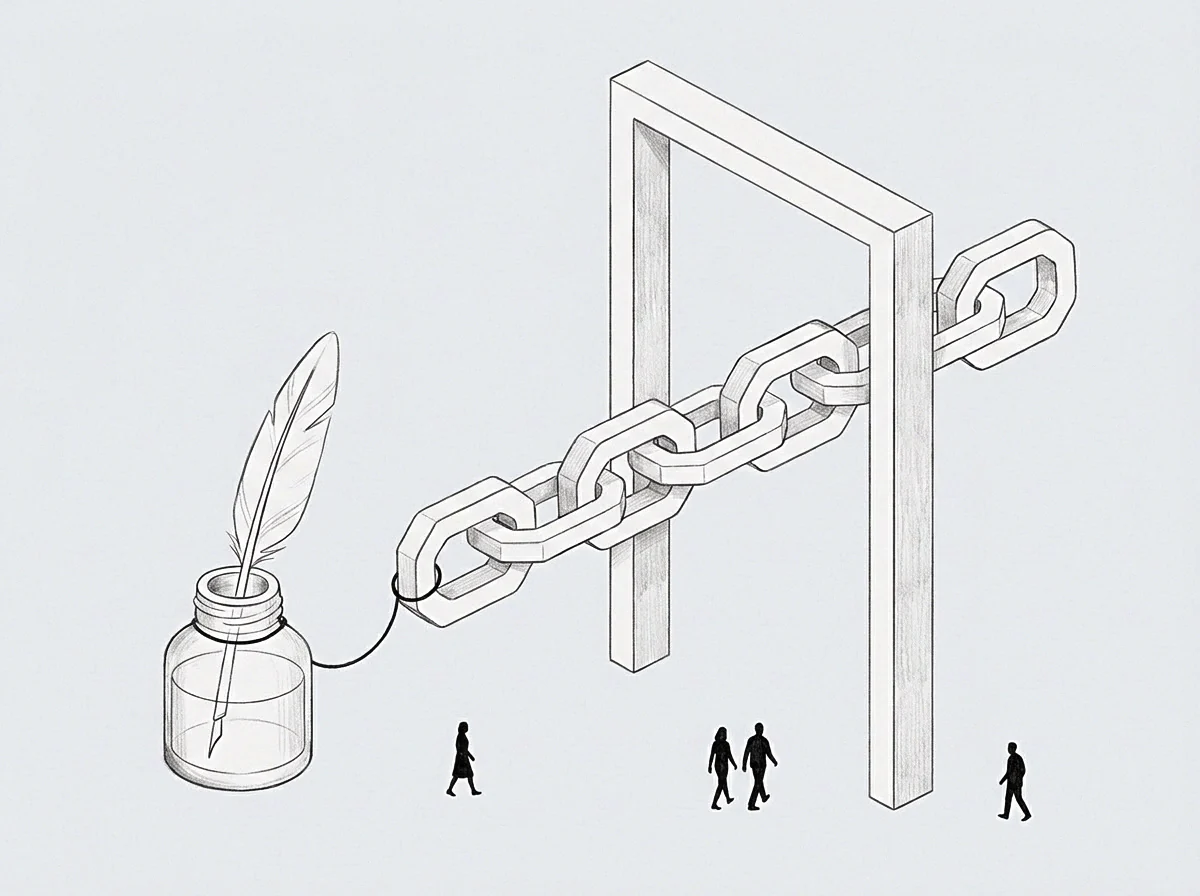
What Is Left When Nothing Was Said
A boundary is what is left over when the term was never said. It asks somebody to stop something they have already been doing, so it needs enforcing, and enforcing again, and each round of it revokes a permission they have been operating under in good faith. That is where the conflict comes from, every time.
A term does not get reinforced, because it is a condition of entry. Unmet, it puts the person at a different distance and that is the end of it. No argument, and nothing there to escalate.
So a boundary inside an arrangement is not a skill to get better at. It is remediation, the mark of a step that got skipped, and it only turns up once cost has accrued. I got very good at the remedial instrument.
The preventive one I was not using at all.
Different Terms for Different People
The faculty that sets terms is the same one that reads people, and it only produces terms if it has a want to calibrate against. Give it a want and what comes out is a requirement, different for each case:
- With this one, paper before I build anything.
- With this one, a written quote is enough and I start that week.
- With this one, I turn up unasked and want nothing back.
Take the want away and there is nothing to calibrate against, so the same faculty does the only thing left to it and describes the person instead of the requirement. That output is static and backward-looking, and it cannot be acted on, because nothing in it says what I would need. One question sorts them.
Is the thing that came out a statement of what I need, or a description of who they are?
The condition I hold now is one sentence long and it goes in the first week or not at all: I need the shape of it in writing before I build. Said then, it takes nothing off anybody, because nothing is built yet and nobody has arranged their month around me. What it changes is who is standing there a month later, and that the ones standing there chose it with the condition in plain sight.
One sentence, said in the first week, and the sorting is done at nobody’s expense.