
The apology nobody is placed to give
A shared past is not kept anywhere. A few points are stored, everything between them is built again each time somebody asks, and the self that happens to be awake that hour does the building. An apology the size of the injury would need one person running both builds at once, and nobody who was inside those years is placed to do that.
Points
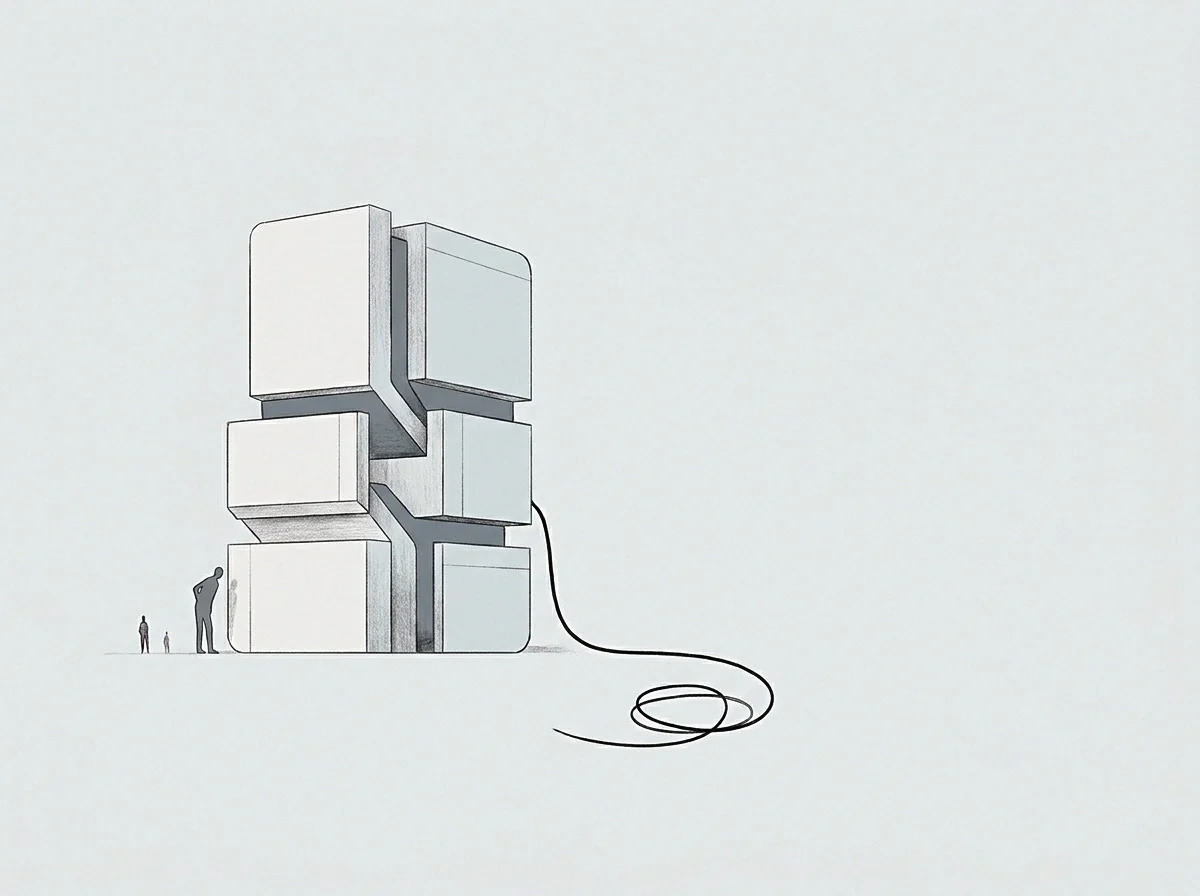
A person does not keep the past. The person keeps a few points from it, the ones loud enough to be stored while they were happening: a sentence said across a table, a message that came at the wrong hour, a sum, the look of a room on the day something ended. Everything between the points is left out, because there is far too much of it and it is cheap while it is going on.
Then something opens the past. A question, a smell, a name on a screen. The mind does not fetch the years.
It builds them, fast and under the sentence, filling the space between the stored points with what it knows of how things usually go, and what comes out arrives with the texture of something remembered. Nothing on the output marks which part was stored and which part was built. The person reading it back cannot see the seam, and so the build gets defended as if it were the file.
Which self does the building decides what gets built. The self that is awake on a bad evening sorts the points by cost and fills the gaps with more cost. The self that is awake on a clear morning sorts the same points by what was given and fills the gaps with warmth.
Each build is complete, runs in order and closes. One person on two settings is two narrators sharing one voice, and neither of them knows the other is there.
I learned this from my own files before anybody else’s. I went back to messages written at the time and found the stored points there, and the build I had been carrying around nowhere. Sentences I remembered as cold were plain.
A stretch I remembered as empty had help in it. Nothing had been invented, and nearly everything had been moved.
Two people who lived the same years do not hold the same years.
Each of them stored what was loud for that seat, at that time, on whatever setting was up then. When the two of them sit down to compare, nobody is comparing files. They are comparing two builds that have no shared source, each one correct to its own points, and the argument about what happened goes nowhere because neither party is reading anything.
Both are computing, live, off a handful of stored things and a great deal of gap.
Ghosts
The Story That Changed in the Retelling
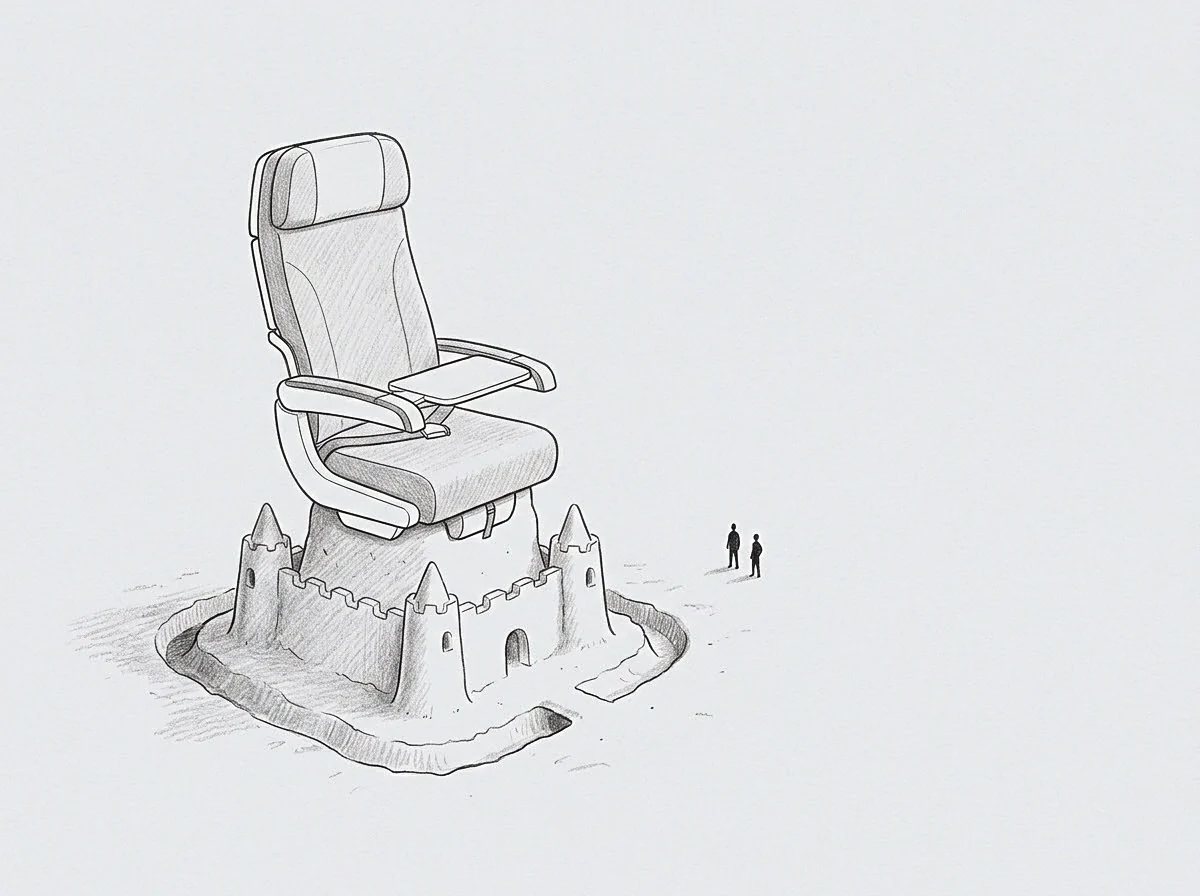
Frederic Bartlett, working in Cambridge, published Remembering in 1932, and the book rests on a folk tale. Bartlett chose a story from the Pacific Northwest, collected by the anthropologist Franz Boas, called The War of the Ghosts: two young men are pulled into a war party on a river, one of them learns the warriors are ghosts, and the story ends at sunrise with a death that the text does not explain. Bartlett picked it because it was strange to English readers.
The causes run in an order they did not expect, and the supernatural turn arrives without any warning. Participants read it, then wrote it out from memory after a short gap, and then again after hours, days, months, and in a few cases years. In a second method, one person’s version was handed to the next person to remember, and so on down a chain, the way a rumour travels.
The retellings moved in one direction. They got shorter. The parts that made no sense to the reader dropped out, or turned into something that did: canoes became boats, the hunting turned into fishing, the ghosts were explained away or lost altogether, and some versions picked up a moral the original never had.
Nobody in the study was lying. They were remembering, and remembering meant making the story fit what they already knew of how stories go. Bartlett called the organising structures schemata, and Bartlett called the drive behind them an effort after meaning.
Bartlett’s conclusion, which the field took decades to catch up with, was that remembering is not the replay of a fixed trace. It is a reconstruction, built from a general attitude towards the past and a small number of details that stand out.
One Verb in a Question
Elizabeth Loftus and John Palmer put a number on the building in 1974. Students watched short films of car crashes and were then asked how fast the cars were going when they hit each other. The question was the same for everyone except one verb: smashed, collided, bumped, hit, contacted.
The estimates rose with the force of the word, and the gap between smashed and contacted came to close to nine miles an hour, for the same film. In a second experiment, a week later, the students were asked whether they had seen broken glass. There was no broken glass in the film.
The students who had heard smashed said yes more than twice as often as those who had heard hit. One word in a question had put glass into the past. Loftus spent the following decades on what is now called the misinformation effect, and the work changed how police interviews and line-ups are run.
Every time the past is opened, it is written again by whoever opened it.
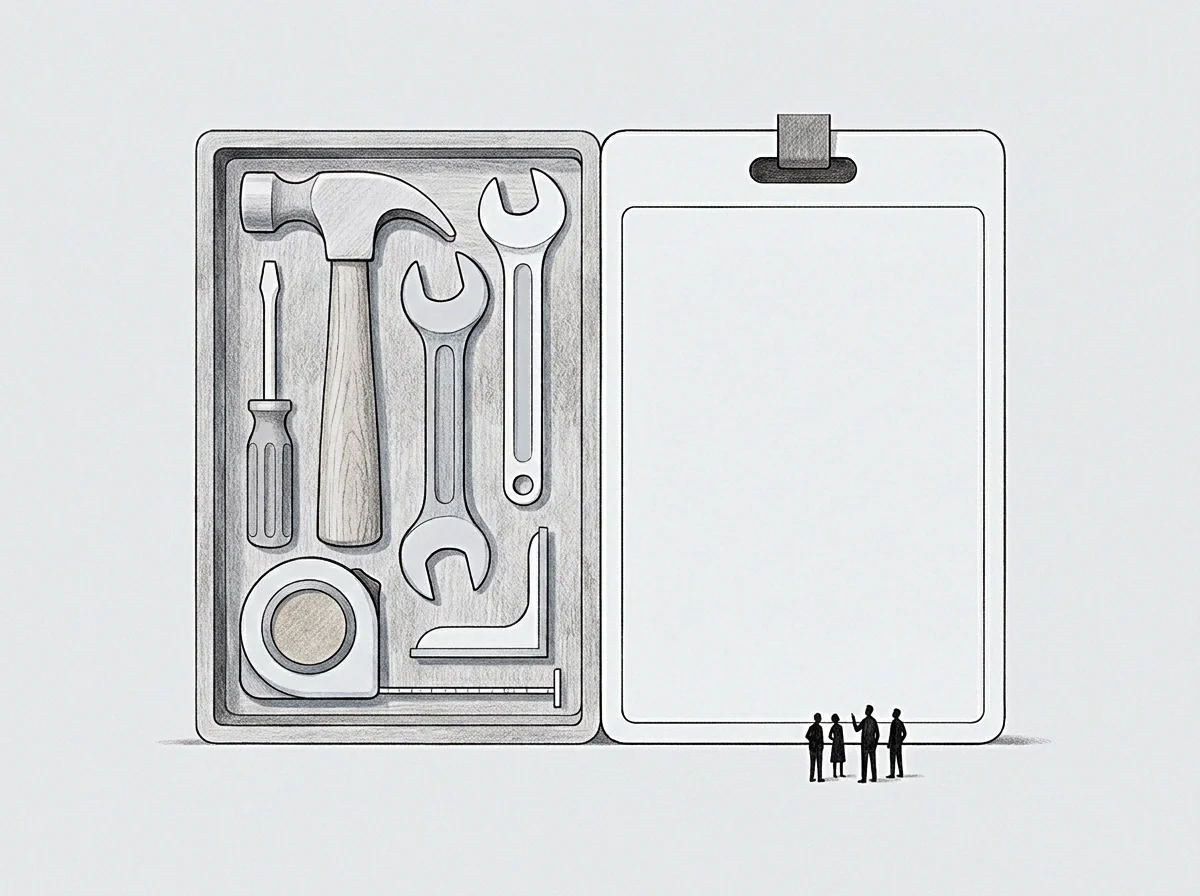
Stored Again Each Time
The last piece came from a laboratory in New York. Karim Nader, Glenn Schafe and Joseph LeDoux published it in Nature in 2000. Rats learned that a tone came before a mild shock, and learned it well.
A day later the tone was played once, so the memory was called up, and straight after that a drug that blocks the making of new proteins was put into the amygdala. When the rats were tested again, the ones who had recalled under the drug showed little fear of the tone. The ones who got the same drug without recalling first kept the memory whole.
Calling the memory up had made it changeable again, and it then had to be stored a second time; block the storing and the memory went. The field calls this reconsolidation. An older finding from the late 1960s had pointed the same way and had mostly been set aside, because it contradicted the picture of memory as something written once and then kept.
I took one order from the three of them. The points are stored. The space between them is built from expectation, in Bartlett’s study, from the question, in Loftus’s, and every time the build happens the result can be stored back over what was there, in Nader’s.
The condition that changes everything is the hour of opening. A past opened on a bad hour is stored back with that hour inside it, and the next opening starts from there.
Drift
Michael Ross, at the University of Waterloo, gave the build a direction. In a paper in Psychological Review in 1989, Ross argued that people rebuild their past from two inputs: where they stand now, and an implicit theory of whether they are the kind of thing that changes. If they believe they have stayed the same, they draw the past to look like the present.
If they believe they have changed, they push the past away from the present so that the change shows. The theory does the work quietly. Nobody consults it on purpose, and the result reads as plain memory either way.
Two studies carried the argument.
- Michael Conway and Michael Ross, in 1984, ran students through a study-skills course that did not improve their grades. Afterwards the students remembered their skills before the course as worse than they had rated them at the time. The improvement was real only in the remembered starting point, which had moved down to make room for it. The paper’s title says the rest: getting what you want by revising what you had.
- Cathy McFarland and Michael Ross, in 1987, asked people in couples to rate themselves, the other person and the relationship, and then asked again two months later, along with what they remembered having said the first time. The remembered ratings had moved towards the current ones. People who now felt warmer recalled having felt warmer then. People who now felt cooler recalled having felt cooler.
A second Conway, unrelated and working in Britain with Christopher Pleydell-Pearce, gave the mechanism a structure in 2000 and called it the self-memory system. In it there is a store of knowledge about a life, arranged from life periods down to general events down to single details, and there is a working self: the goals that are live right now. The working self decides which parts of the store get reached and how they are put together, and it makes material that contradicts its current goals harder to reach.
A memory, on this reading, is a construction that lasts as long as the remembering and is then taken down.
What I took from Ross cost me a comfortable belief. I had treated my bad-evening build as the honest one, because it hurt, and hurt reads as evidence. It is evidence of the setting and of nothing else.
The students on the study-skills course were not stupid and they were not lying; they held a theory that they had changed, and the theory moved their starting point for them. I hold a theory too: that I have learned, that I see the years clearly now. That theory has every reason to push the earlier years further down than they were, so that the distance travelled shows.
Nobody gets out of this by trying harder to remember, because trying harder is more building. The correction available is to go back to what was written at the time, the messages and the drafts, and read the points before the build reaches them.
The self that remembers is also the one that edits.
“I must have been worse at it than I thought.”
Channel
Long after the separation, a channel stayed open between two seats and was kept passive.
I answered less. Then I stopped answering. Then I closed it.
That is what registered. The separation had not done it, and the years had not done it. The closing did.
I cannot read the other seat’s points, and I will not try. What I can read is what registered, and what registers is decent evidence of what was load-bearing in the arrangement. While a line stays open, nothing has ended on it, whatever has happened elsewhere.
The line was the arrangement. The flow on it was the thing being held.
My own points are easier to name and harder to trust. I stored the needs I said out loud that did not enter anywhere, over a long stretch, and the moment I stopped saying them. I also stored the times something went wrong and help arrived, large and fast, and then went back to quiet.
On a bad evening my build is made of the first set and nothing else. On a clear morning the same points produce years with warmth in them. Both builds are mine.
Both arrive finished. Ross would say the second one is not more honest than the first; it is only running on a different theory of whether I have changed.
Muting a channel stops what comes in. It does not close what is open in the head.
A line kept open has a cost, whether or not anything travels on it.
I checked it anyway, on a channel I had closed myself.
The check is not weakness, and it is not a wish to go back. It is an open line asking to be closed, by a system that checks open lines because that is what it was built to do.
Got wrong, it costs twice: once in the years themselves, and once in every evening spent building them again on the setting that hurts, and storing the result back over the points.
Apology
A plain sentence would go further than anything long. I am sorry, said once, meant, with nothing hung on the back of it. At the size this one would have to be, it is not coming, and I have stopped standing where it would arrive.
An acknowledgment at the size of an injury needs the injury in the room at that size, and that means one head carrying, in the same moment:
- the build in which that seat did what it could with what it had, and it ended where it ended;
- the build in which the cost ran for years and had a shape that seat was never shown;
- both of them open, neither one defended, while the sentence is said.
Put that list against Ross and against the self-memory system and the problem is plain. The build is drawn towards the self doing the remembering, and the working self makes whatever contradicts its present goals hard to reach. The one narrator who could hold both builds at once is exactly what the system does not produce, in anybody.
Nobody is withholding the sentence from me. It cannot be made by the thing required to make it. And an apology that did arrive would come from whichever self was awake that hour, built off that self’s points, confirming that self’s version.
It would be self-confirmation wearing the clothes of repair, and even if it came, it would repair nothing. The same holds on my side. The size I am owed is computed too, by my build, on whatever setting is up in me tonight.
Two computed sizes, from two working selves, would not match even with goodwill on both ends.
An apology is built by the same machinery that built the past it apologises for.
What would it take for an apology to be sized to the points both seats stored, and not to either build?
Box
When a thread will not close, I build a box for it: name the mechanism, put the thread inside, retire it. It has worked before. With this thread I waited for the other end to stop producing new material, so that the shape could finish by itself, and it did not finish.
A shape does not complete by running out. A system that keeps producing will keep producing, and each new arrival comes in as fresh data that reopens the build.
When Arrivals Become Instances
The box closes from my end. It closes when the rule that generates the arrivals is written down well enough that the next one lands as an instance of something already named, and not as news. That makes it a test.
Write the specification down, then wait for the next arrival and check it against what is written. If it falls in a class already named, the box holds, and the other end can keep sending into a sealed container without reopening anything. If it falls outside, the specification was wrong, and it is the specification that gets rewritten.
The person stays where they are.
The specification is short when it is good. It names what the other end still holds, the routes it still has, and the classes its next arrivals will fall into. Once it is on a page, I can check it on a bad evening as easily as on a clear morning.
The self that is awake on the bad evening cannot argue with a page written on the clear one. It can only hold the arrival up against it and see whether it fits.
Assessment and Sentence
Two different operations can run on the same points. An assessment says this seat does not follow through, so I build the arrangement so that nothing depends on its following through. That produces a design, and the design can be used tomorrow.
The other operation says this seat is worth nothing, and that needing it was a contemptible thing for me to do. That produces a sentence, and a sentence runs with no end date and nobody assigned to lift it. The same machinery passes both of them, outwards and inwards, and it does not check who is standing in front of it.
The drive that closes a project is the drive that closes a person, and it does not care which it is pointed at. Aimed at somebody who will not resolve, it reaches for the sentence, because a sentence closes faster than a design. The work is to catch it reaching and hand it the assessment instead.
I gave up control over things I should not have given up. That is my part in it, and my grief to pay.
A specification can be corrected when it turns out wrong. A sentence can only be served.