
The agreement nobody stated
A covert contract is an agreement about what is owed that nobody ever stated. It is built from what was given, not from what was said, and it can be broken only because it was never spoken. Organisational psychology has had a name for the second contract for decades; the finding underneath it is the part that costs.
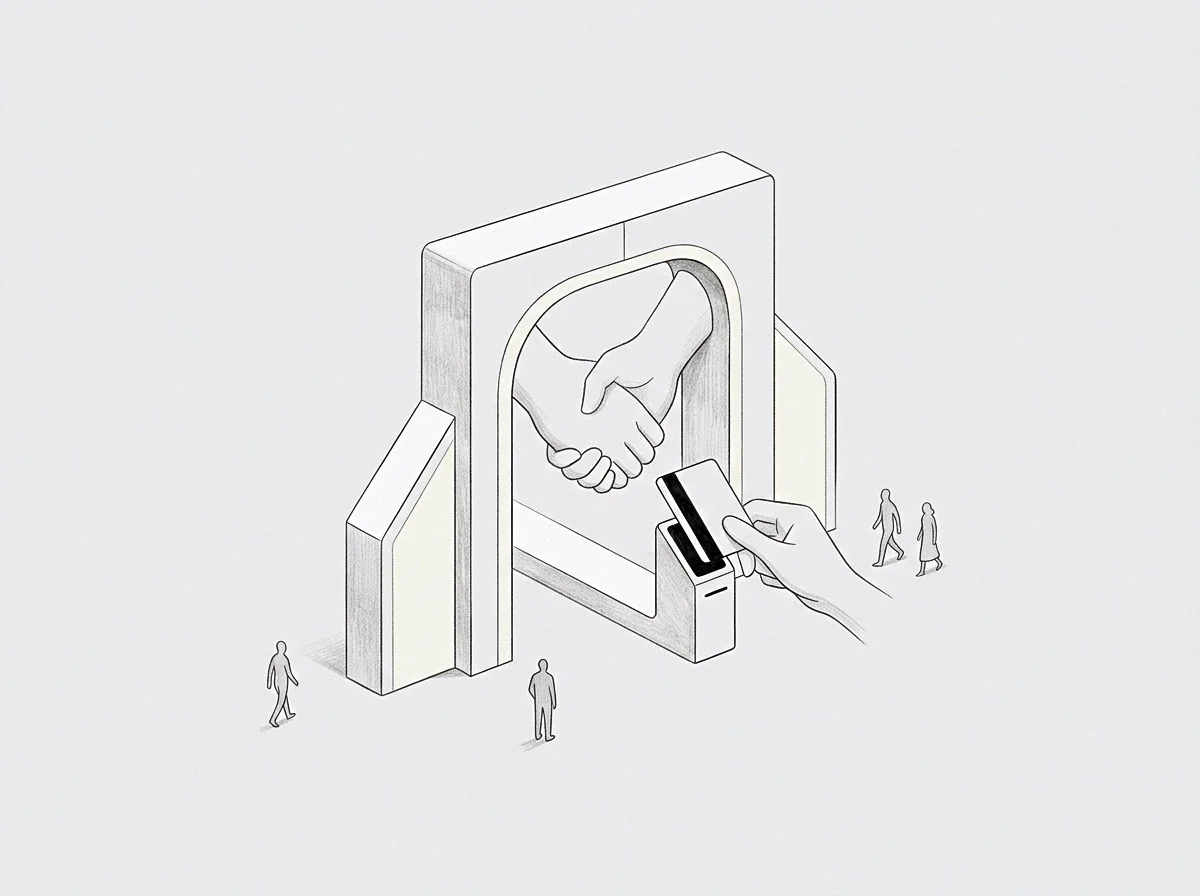
Given
There are two contracts in every arrangement and only one of them is written down.
The written one says what each party will provide and receive. It has terms. Somebody can point at it.
The other one is built from a different material. It is built from what was given. Every time one person gives more than the terms require, a small expectation forms on their side about what that giving is for, and the expectation never gets stated, because stating it would turn the gift into a price.
So it stays quiet, and it grows, and it becomes a set of terms that one party is holding the other to without the other ever having heard them.
That is the covert contract: the unstated terms one party expects the other to meet. The phrase comes from the counselling literature, and the description there is exact enough to be uncomfortable. Unspoken agreements held in one person’s head about what they expect from another, based on what they are giving, without ever telling them.
They run silently over long periods while the person keeps giving and accommodating, keeping a private count of what they believe they are owed, and when the return never arrives the accumulated weight produces resentment and withdrawal, while the other party is shocked by the intensity, because they never knew the contract existed. The workplace form has the same shape: if I work hard, stay late and never complain, I should be recognised, unspoken, and then experienced as exploitation when it does not come.
In my own case the terms were about care. I expected to be met halfway, I had given in a way that assumed halfway was understood, and halfway had never been said by anyone.
The word to hold onto is covert. Not secret, nobody is hiding it. Covert because it was never brought into the open where it could be agreed to or refused.
Owed
Organisational psychology has studied the second contract for decades under the name of the psychological contract, and it is worth knowing where that work comes from, because the finding underneath it is what makes covert contracts dangerous.
The term was coined by Chris Argyris, a Harvard organisational psychologist who spent forty years on one question: why do intelligent, well-intentioned professionals systematically fail to learn. Denise Rousseau built the field around it. A psychological contract is the set of unwritten mutual expectations each party believes exists between them: what I think you owe me, what I think I owe you, none of it on paper.
It is subjective, it is usually never articulated, and both parties assume it is shared. The central finding of that field is not that these contracts exist, which anyone could have guessed. It is that a perceived breach of the psychological contract produces a stronger reaction than a breach of the formal one, and that people react to breach even when no written term was violated.
People will forgive a broken clause. They do not forgive a broken expectation they never stated, and the reaction is stronger precisely because it cannot be pointed at.
Argyris has a second idea that explains how two people can hold two contracts in good faith. He drew a line between a person’s espoused theory, what they say they believe, and their theory-in-use, the beliefs actually implied by how they behave, and he insisted the gap between them is not hypocrisy. It is a structural feature of how nearly everyone operates.
Trained reflexes are invisible from inside. So the second contract in any arrangement is never read from what the other party says. It is read from what they do, over months, and it can differ completely from what they would tell you if asked.
I found this true the expensive way. My contract with a partner, never written, read: I make the thing, he finds the people, what I make stays mine, and the structure gets formalised when it matters. His, read from his behaviour rather than from anything he ever said: we are building something together, he is the face of it, and what we make belongs to the venture.
Each of us kept our own contract to the letter, for years. Neither of us had seen the other one. What I took from Argyris and Rousseau was the handle: two contracts, and the one that governs the room is the one nobody signed.
The written terms can be met exactly and the arrangement can still come apart, because the breach is happening in the other contract, the one made of what was given.
One rule follows, and it is a plain one. If you are angry and you cannot find the clause, you are inside a covert contract, and you wrote it.
Break
A covert contract can be broken only because it was never stated. That is the mechanism and it is the whole of the mechanism.
A stated term can be refused. The other party hears it, says no, and both of you now know where you stand. Nothing breaks, because nothing was ever assumed.
A covert term cannot be refused, because it was never offered. It can only be violated, by a person who did not know it existed, at a moment they will not recognise, producing a resentment they will not understand.
The reason people substitute the covert form is not stupidity. Where asking directly has once registered as dangerous, the private version feels safer, because it cannot be turned down. It is private, one-sided, and never tested against reality, and that is exactly the problem: a term that stays in your head is not a term, and it produces the identical outcome to never having formed one.
There is a diagnostic in that. If cost is accumulating in an arrangement, ask one question: did I ever state the want and the terms. If the answer is no, that is the whole diagnosis, and the correction is available now, while the cost is still small enough that stating a term is not yet a withdrawal.
Two conditions on the stating. A term is said once, early, before anything has taken hold. And a term stated twice has already been answered; if you are repeating it, you have read the reply and refused it.
The loss is not the thing you wanted. It is the relationship the giving was building, spent in one move on an agreement the other party never made. And the person who pays is the one who wrote the contract in silence, because the silence was theirs.