
What a signature costs
A spoken promise costs the same whether it is kept or not, so it cannot tell you which of the two you are looking at. Economics settled that in 1973, and in the same year it settled the other half: where the work itself cannot be checked, only what was costly to produce carries anything at all. I paid years and a stack of drafts to arrive at the same place from the other side.
Word
Somebody says they will do a thing. The saying takes a second, and producing it costs nothing. It costs that same nothing whether the person will do the thing or will not.
So the sentence cannot separate the two cases. Whatever it is doing in the room, it is not telling you which of the two you are sitting with.
Sincerity does not change this. The person can mean it completely at the moment of saying it. The meaning stays inside him and does not attach to the words on the way out.
The sentence comes out the same either way, because it was the same price to make either way, and the price is the only part of it a listener can read.
This is a claim about what a sentence is able to carry. Honesty is a different question and it gets answered somewhere else.
A written commitment behaves differently, and the reason is not that a document is more sincere than a voice. A document is a hostage. It is a thing the party who signs it stands to lose if he does not do what it says, and the loss is available to people who were not there when he said it.
That is the part a spoken sentence has no version of. Two people who both fully mean it still need paper, because paper is what makes a promise mean something to everyone who was not in the room.
Nothing arrives with a sentence. A room can feel different after one, and the feeling is the entire delivery. The terms stand where they stood before anybody spoke.
A claim standing in that condition has a word in this record. Unfounded: resting on nothing that cost the person anything to produce. It does not mean false.
An unfounded claim comes true about as often as the man saying it meant it, and nothing underneath the claim tells a listener which time this one is. The word sits on the claim and not on the man holding it.
Cost
Michael Spence published the paper in 1973 and called it Job Market Signalling. He took up a puzzle that was awkward for the economists of the time: employers pay more for education even in jobs where nothing that was studied ever gets used. The schooling does not raise what a worker can do, and it raises what a worker is paid, and both of those hold at the same time.
His answer was that the education is not producing the ability. It is reporting it.
The reason that report can be believed is the part worth carrying out of the paper. His condition on a signal is that it be differentially costly. Take two people, one who has the quality and one who does not, put the same signal in front of both, and the price has to come out different: the one who has it pays less to produce it.
A degree is the case he worked. The able person spends years he can spend, the other spends years he has not got and mostly does not finish, and that difference in price is the whole of what the certificate says about the man holding it. The difference is what the employer is paying for, not the syllabus.
The expense is what the signal is made of.
What costs nothing to get is got by everybody, and a thing everybody holds sorts nobody.
The work took the Nobel in economics in 2001. The test that comes out of it puts one question to a signal, and clarity and feeling both fall outside it: what did the thing cost to produce, and did it cost more for the party who does not mean it.
Put a spoken promise through that test and it fails at the first step. A promise to produce the document costs the man who will produce it exactly what it costs the man who will not: one sentence, no exposure, nothing anybody can point at afterwards. Equal price, so no separation.
Now put a signature through the same test. What it costs a man is his deniability, which is the dear one, and a failure that the people who were told the thing was happening get to watch. Both of those are expensive for a man who does not intend to deliver and ordinary for a man who does, which is Spence’s condition met exactly.
The signature is not the formality at the end of an agreement. It is the only part of the agreement carrying data.
Years of it, and not one of those sentences was carrying anything.
The field did not leave the finding in the labour market, and the extension is the half I was slowest to see. In the same year Spence published, Darby and Karni put a name to the goods a buyer cannot check: credence goods. Some things you inspect before you pay.
Some you cannot inspect, and you find out once you have used them. A credence good is the third kind. The buyer pays, takes delivery, uses the thing, and is still not in a position to say whether he got the right thing at the right price, because the version of the world where he bought something else was never run.
That is the class the work I sell sits in, and it is why a client of mine can look at what came out and have nothing to hold it against.
Put the two papers side by side and the consequence is flat. Where the work itself cannot be evaluated, a price cannot rest on the buyer’s evaluation of the work, so it rests on what stands around the work and is expensive to fake, which is a record of what was delivered and paid for before, and built stock that visibly took a long time to build. None of that is the work.
Every part of it is expensive for anyone who does not have the quality and ordinary for anyone who does, which is Spence’s condition again, standing on the other side of the table. What a person accumulates that cannot be faked in a week is his signal stock, and the stock is what lets a number stand later without an argument under it.
Finding all of that true cost me a long time and a stack of drafts. Nobody had to lie to me for it to work out that way. I was standing in front of a thing that reports nothing and waiting for it to report, and the waiting felt like patience, which is what let it run so long.
What I was asking to be signed kept changing form, and each new form was lighter than the one before it. Not one of them arrived. The form moved and the arrival did not, and every time the form moved I read it as the thing getting closer.
The mistake was not the partner. The mistake was accepting a class of evidence that cannot be wrong, because it cannot be right either. So the rule I hold now runs on evidence and not on anybody’s character: what is cheap for a man who does not mean it is not evidence, and warmth about a project comes free in any room.
Signature
The Offer That Came Back
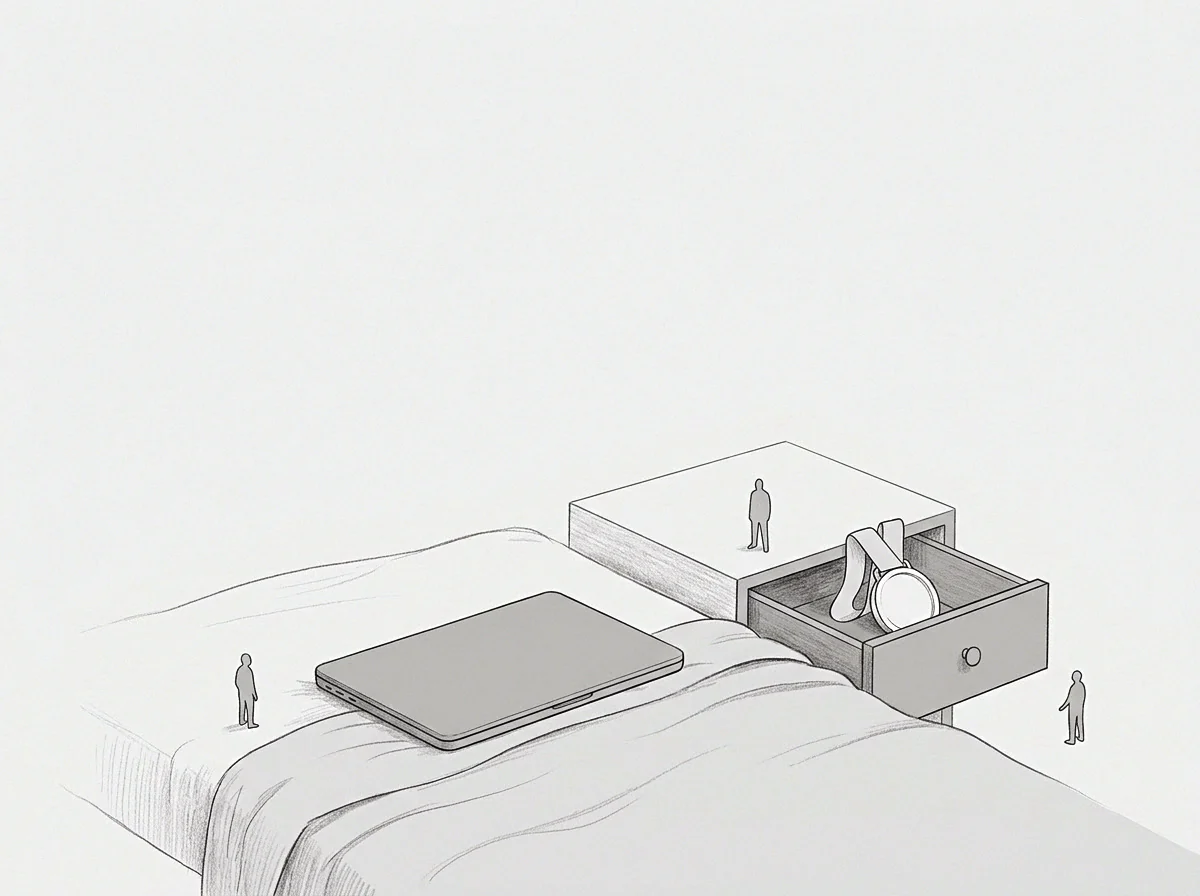
I wrote the contract myself months earlier, the whole of it, and handed it over. It sat. Then the partner said he would sit down in the next few days and sign it, and what he was offering to sign was my own draft, come back to me as the thing he was about to do.
Nothing moved except a sentence.
I said nothing in the moment. There was nothing to say to it. Earlier in the arrangement I would have felt the relief and moved on it as though something had arrived, which is the whole error in one motion: acting on a signal that cost the man producing it nothing.
This time the test ran instead. The partner may sit down and sign. He may not.
At the moment he said it, both of those were exactly as likely as they had been the hour before.
What Counts as Evidence Now
I keep a list now, short enough to hold, written down so a thing gets checked against it rather than against how the thing felt:
- a signed document
- a payment received
- a card attached
- access granted
Nothing else goes on the list. Enthusiasm stays off it, and so do an apology, a meeting, a plan, a stated priority. They are disqualified because they are free to produce, and a free thing reports nothing about the man producing it.
That is not a low opinion of the partner; it is the same finding applied evenly.
The Same Test Pointed at Me
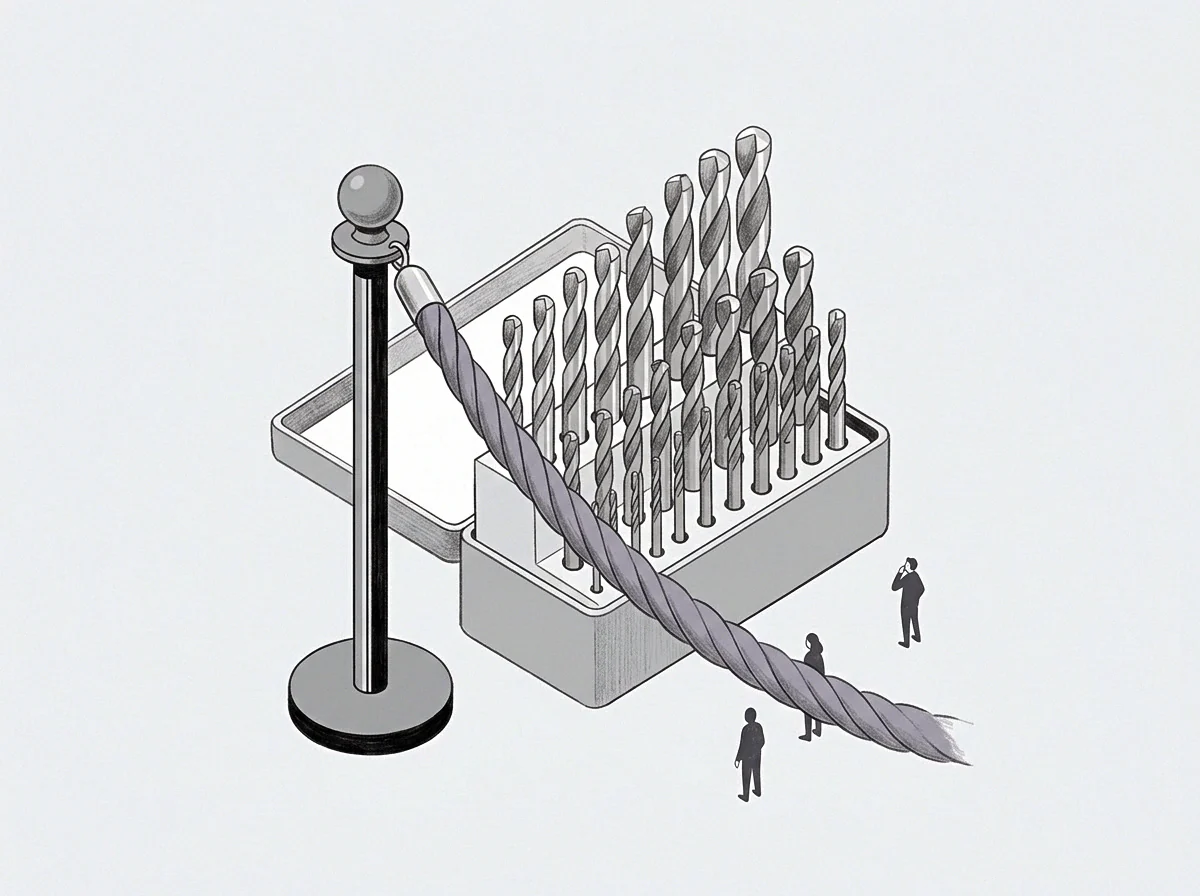
It applies to me when I am the one talking, and it applies harder in the work I sell, because a client cannot audit that work either before or after. The client is standing where I was standing with the promise: in front of a thing he cannot check, holding whatever came with it. So the question I put to my own side is the one I put to the partner’s, and it has stopped being about how well I explain myself.
What I have produced that would be expensive for somebody without the capability to produce it is the stock: the years standing inside a thing that got built, and a client who paid and then stayed. That is the part of my own side a stranger can read without taking my word for any of it.
The draft is where it has been since. It is a good draft. It is still unsigned.