
Availability is a derivative
Nobody announces how available they are. The other party derives it from the position that was stated and the action that followed, which is why a cost said out loud can sit in a room for months and move nothing while the same information, arriving as a change in access, gets answered inside a few days. Then it gets read as punishment, because a derivative arrives with its cause missing.

Position
It does not start with a calendar. A person holds a position. He wants something, he has said what the terms are, and he knows what holding those terms costs him.
Out of the position comes action, because action is a property of the position and not a fresh choice made every morning. Out of the action comes availability. Third in the line, already decided by the time it shows, and nobody announced it.
A second line runs into the same place, from the cost. You say the cost out loud and you have told the other party something about capacity, because a cost named is a claim about what is left. A person knows his own capacity from the inside, as what there is to carry before the day stops working, and he is standing in the only place where that can be felt.
The other party never gets that side of it. What reaches him is availability, the same quantity turned to face out, read off an hour he asked for and did not get. One thing, two faces, pointing opposite directions, moving together.
Nothing lowers what a person can carry without also lowering what he can be reached for, and nothing raises it quietly either.
The word for that is ordinal, and it does more work than it looks. There is no available and unavailable, only more or less, ranked against whatever else is holding the same person in the same hour. What the word changes is who can be asked.
Availability is not a thing anybody is holding out in front of him, so a request aimed at it lands on nobody at all. Aim at the cost instead. Somebody is standing next to that one, and a second party can pick up part of it and carry it.

Action
Nobody reads a position. The other party reads the action, and he reads it accurately, often faster than the person doing it. A reply that used to come back inside the hour now comes back on the second day.
Work that used to get done unasked now gets done when there is room for it. He does not need an explanation attached to any of that stuff. What he is reading is the position, arriving late and in a translation he does not know he is making, and the translation is good enough that he will act on it.
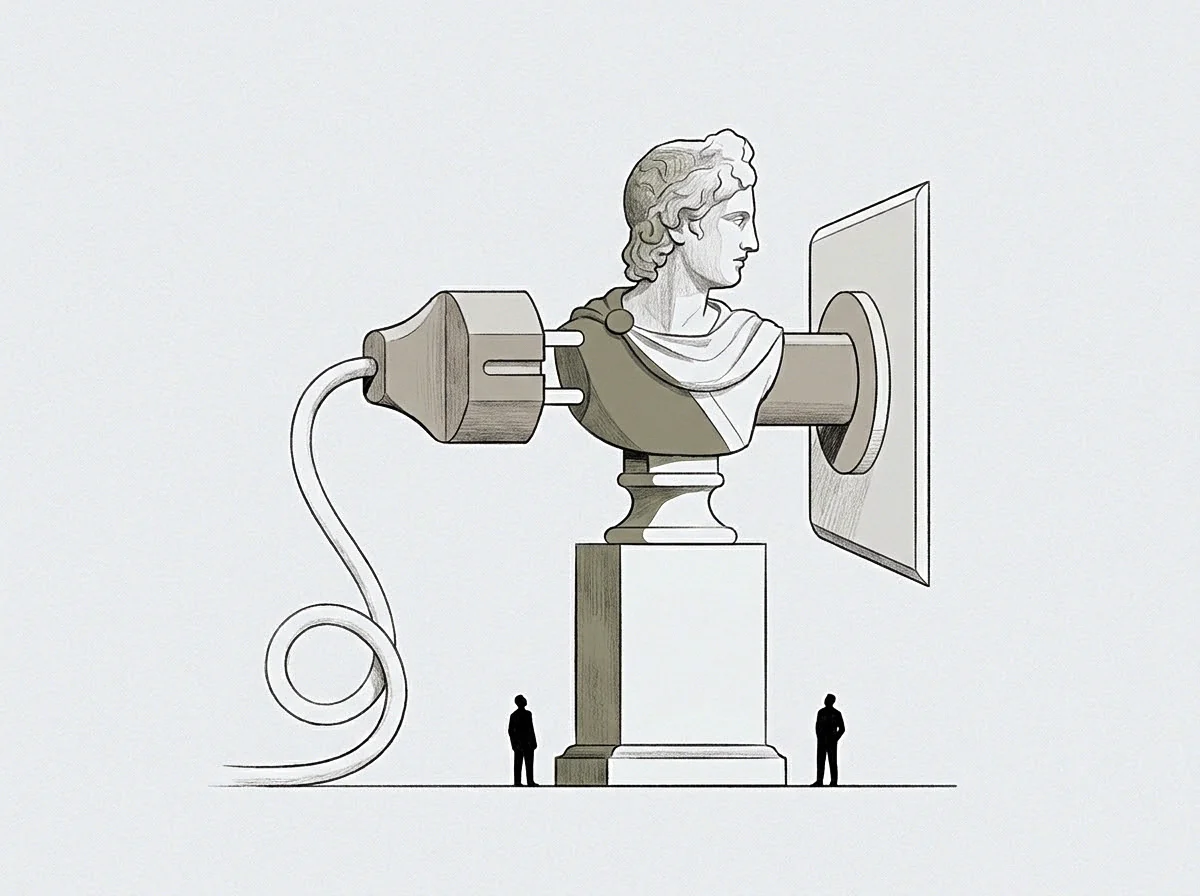
What Gets Said Out Loud
What gets stated is short, it is the same short list every time, and availability is not on it. The terms come first in the way that matters, because a term is a condition, and a condition is a thing the other party can walk over and meet. He can look at it, agree with it, refuse it, or do it, and whatever he chooses, the choosing happens outside anyone’s head.
Under the terms sits the cost, said ordinal, as energy or attention or capacity, and as money only where money actually moved. A cost is weaker than a term, because it can be doubted and often is. It still sits on the table in a form the other party can pick up and turn over.
Leaving availability off that list is deliberate.
You can meet a term. You cannot meet an availability. Said straight out it is none of these things: not a condition, not a claim about what is left, nothing anyone can hold against what happens next.
It is a report on a state that will have moved by the end of the week, and the moment it is said it stops being a consequence of anything and becomes a claim about the person standing in front of you. Above all of it sits the want, said plainly so nobody has to guess at the motive, and the want is the part nobody argues with, because a want only becomes a demand once the terms arrive under it.

The Sentence I Will Not Use
There is one sentence I have heard in rooms like mine, and it does not come out of my mouth.
I’m not available for you.
That is rupture vocabulary, and I do not subscribe to it. Look at what the sentence does. It says nothing about the terms and everything about the person it lands on.
No condition in it. Nothing anybody could walk over and meet, so nothing that could turn out later to have been met or not met, and nothing to check it against next week either. It cannot be worked with, because the only reply left is a negotiation about the limit itself, which is a conversation about whether the other party deserves more of you, and that conversation has no floor under it.
It also makes a fixed category out of a thing that moves week to week. A person who cannot act on what he was told will act on what he can see instead.
So the working rule, and the stopping is the hard part: say the terms, say the cost, and stop before the thing that cannot be met. The silence where availability should go is exactly where a person wants to explain himself. If you find yourself announcing how available you are, the position underneath was never said out loud, and the announcement is doing work the position should have done.

Derivative
The other party does the arithmetic whether or not you help him. He has the action in front of him, he has some memory of the terms, and out of the two he works out how much of you is reachable and for what. Nobody decides to run that arithmetic.
It is what a person does with the evidence in a room, in the background, continuously, the way anyone keeps a rough count of who picks up the phone.
Here is where it gets expensive. A derivative arrives without its cause attached to it. The cost gets stated once, quietly, in the third week of something, and the change in access shows up a month later as a reply that took four days.
What the other party sees is the four days. He does not see the sentence, and even if he heard it at the time there is nothing in the four days pointing backwards to it, so he supplies a cause of his own. Nearest cause to hand is intent, and intent aimed at him.
The result gets read as a message. It was only ever a result.
Availability that arrives as a consequence reads as punishment.
That reading is the correct reading of the only data on the table. The person doing the deriving is usually right about the size of the change and wrong about what produced it, and being right about the size is enough to make him sure of the rest. Arguing with it is not available to you.
Nothing you say about the cost lands once the reading is made, because now it sounds like a reason assembled afterwards to cover something you had already done.
So I am being punished, and nobody will say what for.

Railway
The mechanism has a literature and it starts with freight. Albert Hirschman published Exit, Voice, and Loyalty in 1970, and the case he opens with is a national railway losing its traffic to the trucks. What he noticed was the part nobody expected.
The railway kept getting worse while the leaving went on, because the losses were covered out of public money, so the traffic walking away never arrived anywhere as pressure. Worse than that, the shippers who left were the same ones who would have complained if they had stayed. The leaving drained the complaining.
An organisation can be told what is wrong with it for years, by the people who see it from the inside, and go on exactly as it was, as long as the telling never costs it anything.
Hirschman built two responses out of that, and a condition on them. Voice is staying and saying the thing is wrong. Exit is taking the traffic somewhere else.
Loyalty is the third piece and it is the one that hurts to read: loyalty raises the price of leaving, so it keeps a member using voice long past the point where voice has stopped working, and the member who holds the loyalty is the last one out, having spent everything he had on words. He puts the condition in one line. Voice has force in proportion to how credible exit is.
A complaint from someone who cannot leave is a report, and a report gets filed.
The field took it up and kept it. Political scientists read it onto citizens and parties, economists onto firms and customers, and the pair holds wherever a member can either say the thing or go. Where leaving is cheap and hearing is free, the hearing changes nothing.
Where leaving is expensive to the party being left, the same words land with weight the words themselves never had.
In my own register it is two lines. Stating the cost is voice. A drop in availability is exit, in the only size I had, which is a fraction of it, unannounced, read off the action instead of declared.
I said the terms. I said the cost, in better words each time, and each version was free to the party hearing it, which is the only reason it sat there. Then supply moved by a small amount and the arrangement answered inside a few days.
Not because the other party got serious. Because the second thing had a price attached to it and the first one never did.
The volume of a voice is not its force, and turning the volume up is the one adjustment that cannot work on a mechanism running on price. The loyalty condition is the part that costs to read. It raises the price of leaving for whoever holds it, so every word from that seat arrives free, and free words get filed.
Nobody does that to a person. It is a property of the seat, and anybody sitting in it says free words. What it cost me to find that true was every hour I spent making the sentence better instead of making it expensive.
Better words. Free every time. Fuck me.
Hold it as an explanation and not as a tool, because of what the other version costs. You drop supply deliberately, so that it will be read, and you have converted a consequence into a lever. Then the punishment read is not a misreading any more.
It is accurate, the other party is right, and you have spent the one thing your position had, which was that it was not aimed at anybody. There is no way back from that inside the same arrangement. A position that has been used once as an instrument gets read as an instrument every time it moves after that, and the reading is fair.

Access
A cost stated as a cost can sit in a room for months and move nothing. The same information, arriving as a change in access, gets an answer inside a few days. Not because the other party was hard and then stopped being hard.
Because a cost is a claim about the inside of a person, and a claim about the inside of a person costs nothing to doubt, filed under tiredness, or mood, or a bad stretch. Access is not inside anyone. It shows up in the other party’s own operation: the thing that does not get done, the answer that is not there in the hour he needs it.
Nothing in that asks him to believe anything; it hands him a shape he has to work around.
I got the fix handed to me early, before there was anything yet to derive, in a rule the partner set for the channel we ran the work through. If the channel doesn’t ping, it isn’t a priority for either of us. What that does is put the derivation on the table before it runs.
It names what the quiet will be read off, it puts it on both sides, and it hangs the reading on the channel instead of on a person, so when the channel goes cold neither party has to invent a reason for the other.
A derivation named in advance stops arriving as a message.
A derivative cannot be argued with. It can only be replaced, and what replaces it is a stated quantity standing where the derived one was.
- A price on the thing that used to arrive for free.
- A term on the thing that was assumed.
- A window with an end said out loud at the start, so the end is a date and not a mood.
I am not the manager of anybody else’s capacity, and I cannot be the party who holds a line open until the other one gets to it, and both of those stop being complaints the moment they are conditions instead. The price does one more thing, and it is the part I was slow to arrive at. Priced supply does not read as a message, because a price is aimed at the work and not at the person carrying it, and a person can pay a price without having to first agree with it.
So what looks like a withdrawal is the arrangement showing its actual terms, and those terms were there the whole time with nothing written on the part that was free.
I had that rule in front of me in the first weeks and I still spent years explaining myself out of habit. Read it. Agreed with it.
Kept talking anyway.