
Earned, not given
What a person came from does not decide how he works in a room. What decides it is whether he can give an account of that history without going flat and without coming apart, and the account gets built later, out of different material than the history was made of.

History
A history and the account of a history get read as one object. If what a person came from was bad, he is taken to be carrying the damage, and whatever he manages after that is filed as coping. If he works well, the history is taken to have been not so bad, or he is taken to be hiding it.
Both readings look at the same place, which is behind him. The thing that predicts how he behaves in a room sits somewhere else and is a separate object, built out of different material, with its own working parts. He built it later.
Nobody handed it to him.
I spent years on the wrong one. You cannot work on a history. It is finished, it does not accept edits, and every hour spent wishing the material had arrived differently goes into the one part of the system that will not move.
The part that does move sits there untouched, because nobody says it is a part. That is the flat cost of the confusion, and it is paid in the only currency I actually have, which is time and capacity. I did not know there were two objects.
I thought there was a damaged thing and a wish.
What happened is fixed; how it gets told is not.
The word for the second object exists, and having it is worth something, because a name puts the work in a place a person can reach. Earned secure: someone whose early history was insecure or difficult, who nonetheless operates the way a person operates whose history was not. What the term changes is where the problem lives.
Not a person waiting to be repaired at the source, which cannot be done. A person building an account of the source that holds together, which can be done in an evening, and then again the next evening.
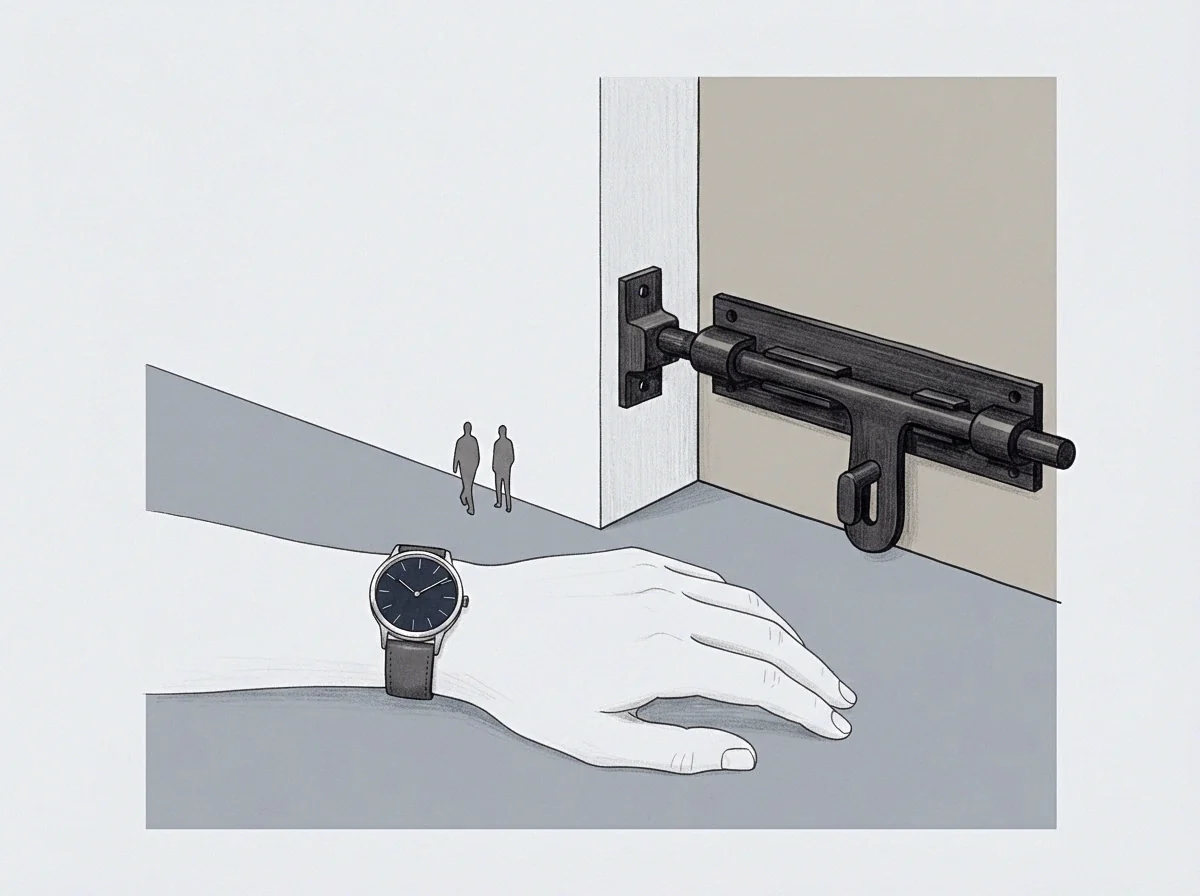
Narrative
The classification comes out of an interview, and the interview is the whole trick. Mary Main’s Adult Attachment Interview asks adults about their early experiences at length, with questions that push, and then files not what the adult reported but how the reporting went. Nobody measures the childhood.
What gets measured is whether the account stays organised while it is being produced, live, under pressure. Main and Hesse put the name earned security on the group that comes out secure with a hard history sitting behind it. Roisman’s work carried it into outcomes, which is where it stopped being a label and started being a claim about how people run.
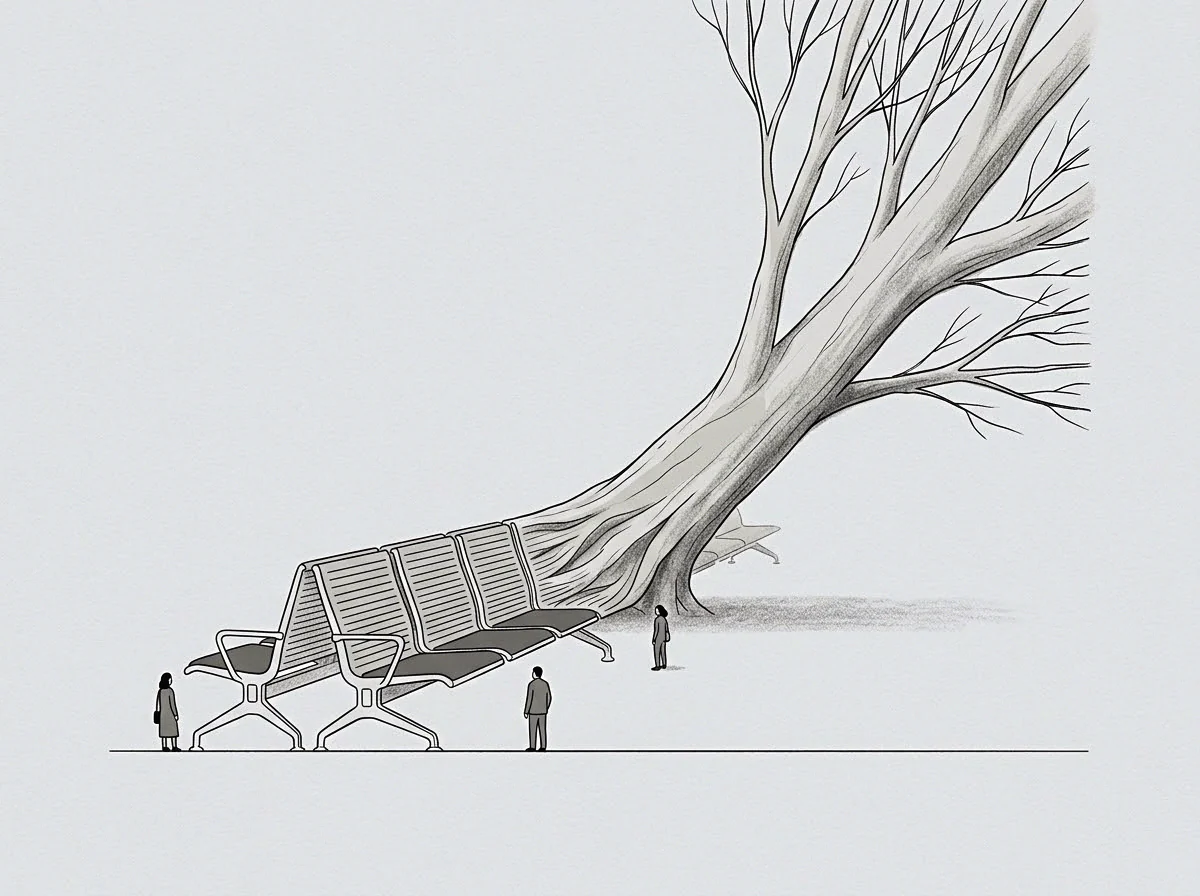
What the Interview Classifies
Coherent has a narrow meaning here and it is not fluency, and it is not having made peace with anything. An account counts as coherent when it holds the good parts and the bad parts at the same time, does not wave away how much the difficult ones mattered, is not swamped by them while being told, and shows real reflection on the ways they shaped the person doing the telling. Neither idealisation nor dismissal.
Both of those are ways of not having the material in your hands: the first drops half of it, the second drops the teller. What is left when both are refused is an account that keeps the material intact and can still say how the material worked, which sounds modest. You can try producing one out loud about your own early years, in front of somebody, and watch your voice do something strange in the middle.
The classification is made on the telling, not on the childhood.
The share is larger than I expected, and that moved me more than the definition did. Something like a fifth of the adults who come out secure on that interview report early histories that were not, and by some counts nearer a quarter. The literature also lists what tends to be present in them, and it is not one good quality.
It comes apart into capacities that can be worked at separately. Going back over what happened, and then over what it meant. Tolerating a primary emotion when it arrives, without the immediate move to get away from it.
The third is the account itself, organised, not run by idealisation and not run by resentment. All three a person can do alone, at a desk, at any hour. The fourth is experience of other people that contradicts the old model, and it cannot be done at a desk, at any hour, by anybody.
Then the outcome work, which is the part that decides whether any of this is worth an evening. Roisman, Sroufe and others set earned secure adults against adults who had been secure the whole way through, and the two groups come out level: on the quality of the arrangements they hold, on regulation, on how they parent, on mental health. Where a difference does show is in the body under hard load, where the earned group runs a little hotter, and that reads as a trace left behind after the account was rebuilt.
It runs as the thing itself, not as a lesser issue of it handed to somebody who could not get the real one. The person who arrived late runs the way the person who was there all along runs.
And then the line the whole field rests on, which took me a long time to actually believe rather than just agree with. A coherent account is not evidence that the repair happened somewhere else. It is the operation that produces the repair.
Marker and mechanism in one object, which means the account is not preparation, and not analysis standing in place of the work. Under this research the account is the intervention.
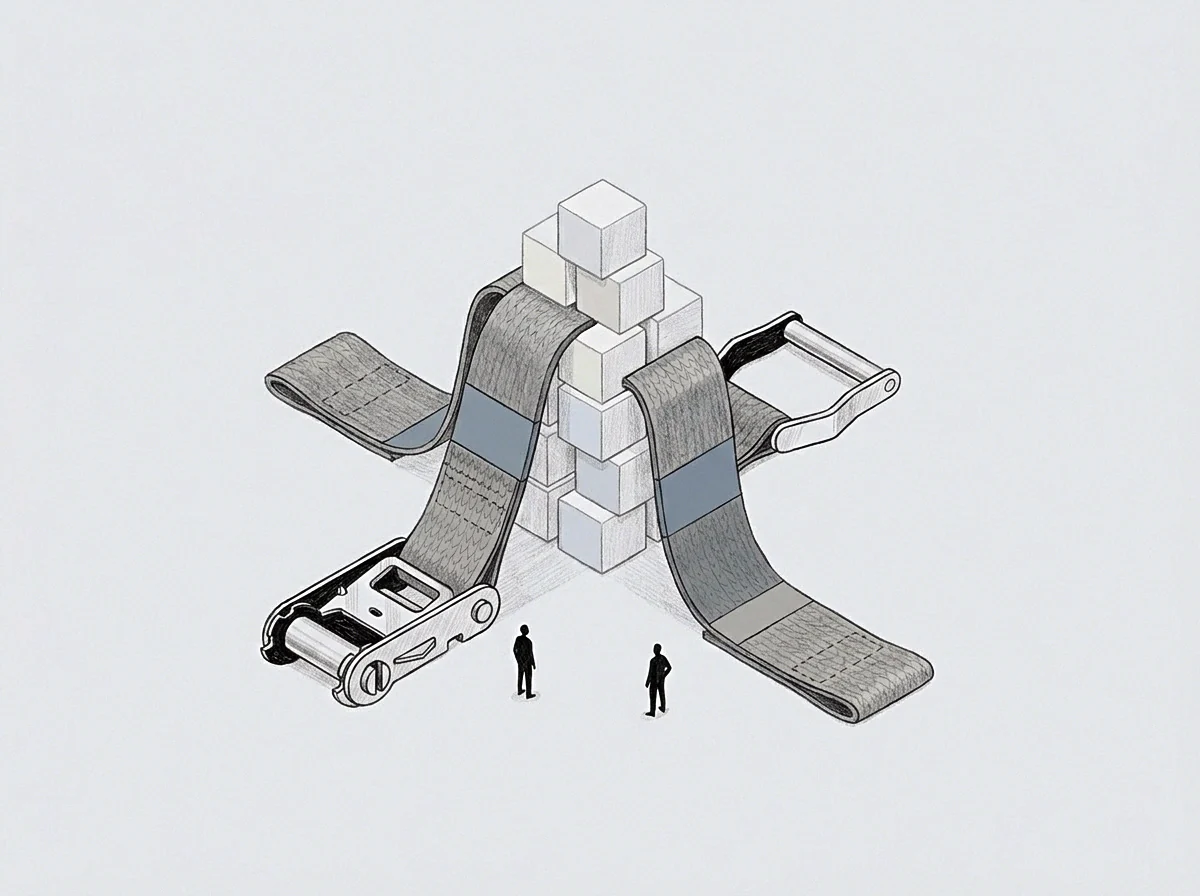
The Second Line in the Same Literature
Reflective functioning is Fonagy’s construct, and the work built on it finds that mentalizing capacity predicts earned security better than the content of the history does. What it names is precise and it is not what people assume when they hear it: keeping your own state in view while holding, at the same time, that your read of the thing is not the only account of it. Two models running at once, yours and somebody else’s, neither one cancelled by the other.
It is not intelligence. Clever people can run it badly, and being quick has no bearing on whether a person can hold his own state next to a model of someone else’s. It is not insight either, which is a different operation and a cheaper one.
The literature says it develops through therapy, through journaling, through contemplative practice, or through any steady practice of self-examination that goes at attachment directly instead of around it.
Therapy is the documented route, and specific approaches have evidence under them. In one trial EMDR moved both measures at once, coherence and reflective functioning, on interviews taken before the treatment and after it. I read that in a month when the money for a therapist was not there and was not going to be.
So I did the parts that do not require one. Months of it: an account of my own history and my own mechanisms, assembled until the parts stopped contradicting each other, run against live cases, fixed where a case broke it, spoken out loud into something that kept the recording. A coherence project, and at the time I had no better name for it.
That is not a substitute and I am not going to sell it as one.

Where the Standard Map Fails
The map most people are handed has two axes. Anxiety, which is fear of being left, the need for reassurance, the watch kept on whether the other one is going. Avoidance, which is discomfort with closeness and a preference for handling everything alone.
The four labels everybody knows are the corners of those two axes, and for some people they do not land anywhere near the spot, because avoidance bundles two things that come apart under load: discomfort at closeness arriving, and discomfort at closeness being given. A person can hold the first in full and none of the second. He can invest enormously, want closeness and have written down exactly what he wants from it, grieve an arrangement when it ends, and still be unable to take the smallest thing offered to him.
The two-axis map has no square for that, so it files him wrong, and he reads the file and concludes the material does not apply to him.
Bowlby has the category, in the third volume of Attachment and Loss, and almost nobody reaches for it. He called the two patterns compulsive caregiving and compulsive self-reliance, and he was explicit that they grow from the same ground: care that runs upward, a child whose own needs go unattended because the adult in the arrangement is the one being attended to. What gets learned there is one route to closeness, and it runs through being necessary rather than through wanting, and one way of holding a state, which is alone, because nobody is holding yours.
Bowlby was also explicit that this is insecure attachment and not a form of security, which matters, because from outside it reads as strength. The person is capable, warm, dependable, hard to worry about. He picks people who need care.
He is uneasy when nobody needs him. He cannot take. And the category does not say how to fix that.
It says what the corrective signal will look like on arrival, so a person recognises it instead of converting it into something owed.
The same literature carries its limits, and I would not trust it without them. An organised account and a finished one are not the same object: a very accurate telling can sit on top of a great deal that is not done, and the interview measures the organisation, not the peace. And the body runs behind.
People with a coherent version of a hard history still react physically under relational stress, the tightening in the gut, the clamp that lands before a hard room. The account settles first. The body takes longer, works only by repetition, and does not accept an argument.
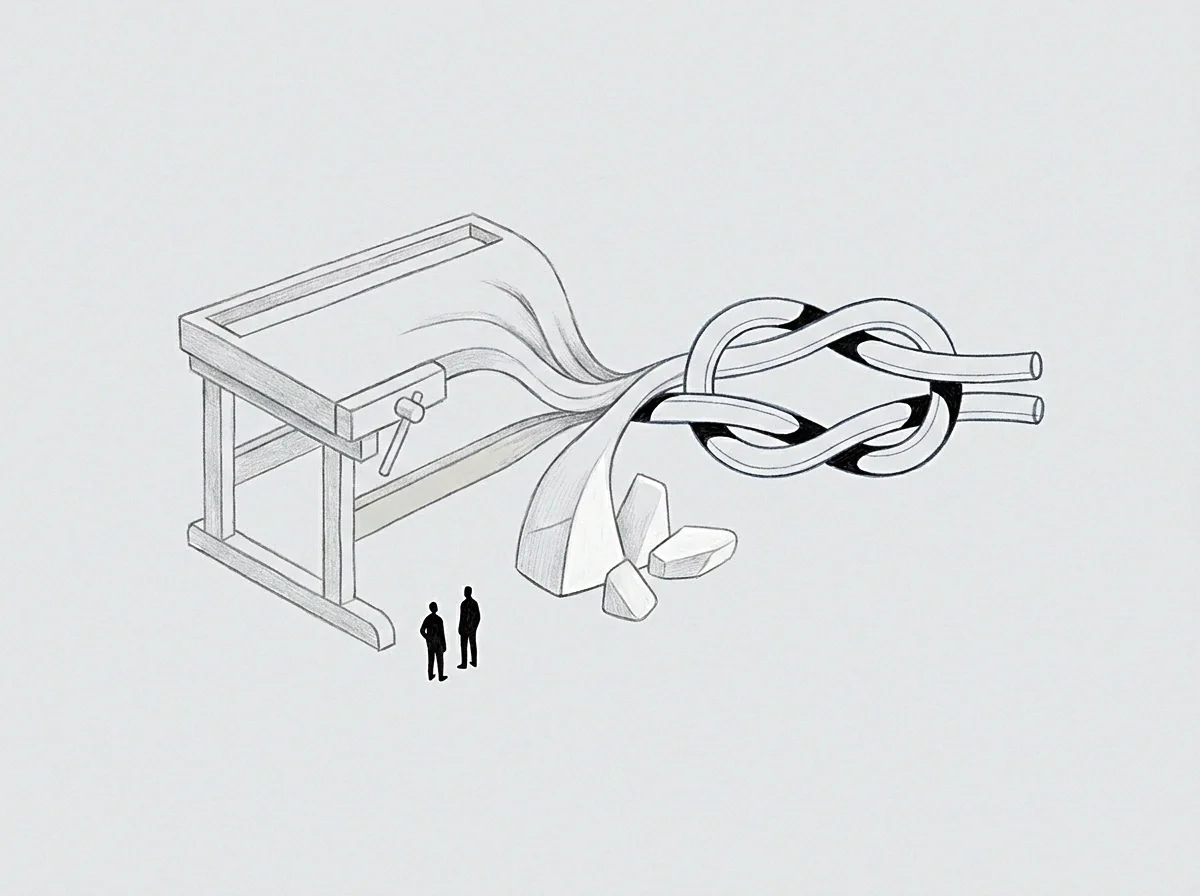
Anticipation
The third mechanism is the slow one, because it needs other people in the room and cannot be self-administered. Corrective relational experience is the name in the literature, and the plain version is that it forms when what actually happens, again and then again after that, reports that the old strategy is no longer needed. Repeatedly is the load-bearing word in that sentence.
Behaviour is not the thing that moves first. Anticipation is: the forecast that arrives before anything has happened, the read on what will come back when a person opens up, states a term, or disagrees. The example the research gives is somebody tuned to every shift in tone or distance who, after a long run of another person being steadily there, finds the same signals stop pulling as hard as they used to.
He does not decide this. It happens under him, at the level where the forecast is made, and it happens before he has any way of noticing. That is why the change is invisible from inside, and why people conclude nothing is moving: there is no morning where a person wakes up repaired, because what moved was a prediction, and a prediction is not something you can watch.
Softening arrives before the noticing does.
And the signal that does the contradicting is not a general one. Where the pattern is care running outward by default, being told you are valued does nothing, because it lands on the function and gets filed there with everything else. What contradicts is being allowed to take and not pay it back.
Somebody covers a cost, or stays without a reason, or gives an hour that has no deliverable at the end of it, and nothing is owed afterwards, and then it happens again. The person on the receiving end does not learn to need. Needing is not the capacity that was missing.
What gets built is tolerance for the arrival, until something arriving stops reading as a mistake.
I have it running in more than one arrangement, at more than one distance, and in one of them it broke and came back before it held. That is the version the literature puts the weight on: a rupture with a return inside it does work that an unbroken run does not. And it wants somebody reliably present over time, which is the point where it stops being something I can arrange for myself.
Where the presence exists at low frequency, what is missing is distance and not the person. That is a smaller problem than having to find somebody new, and it is the actual gap.
It does not require a good relationship.
What it requires is the contradiction, repeated.
A person can operate securely in one arrangement and sit there insecure in another, under stress, in the same week. That is not inconsistency and it is not evidence that the functioning ones do not count. The system is still sorting which cues report real danger and which are old conditioning, and that sorting takes as long as it takes, on material that has a lot of years in it.
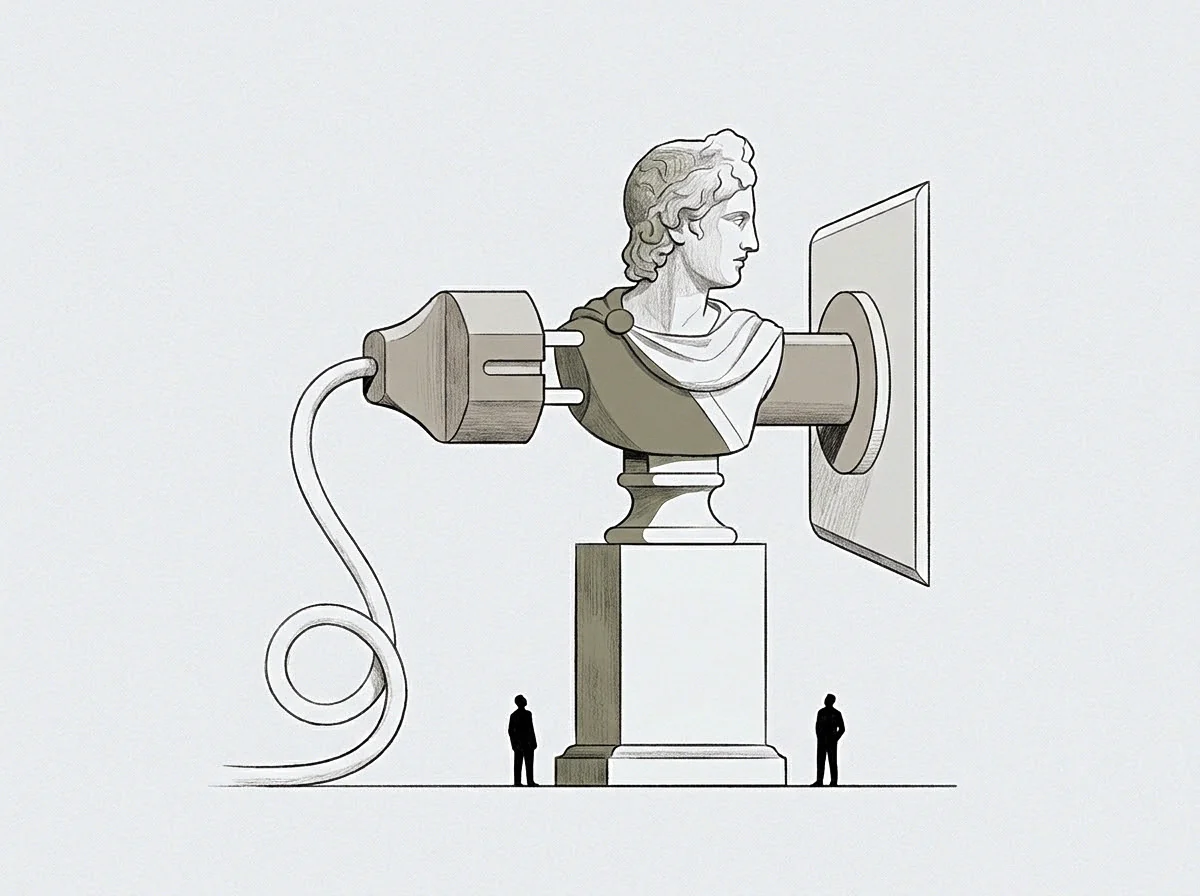
Which leaves the question I still cannot answer from the inside: when the gut goes in a room, is it reporting the room, or is it reporting everything that came before the room?
Boundary
A stated term is where all of it gets tested, because a term is the moment the old forecast has something to say. A person says what the arrangement is and what it is not, and before the other party has opened their mouth the whole prediction arrives: withdrawal, or a rejection heard where a condition was stated, or a cost taken back slowly over the weeks that follow. That forecast was built out of a history and it runs on old material.
The only thing that edits it is what actually happens next, and then what happens the time after that.
Selection matters more than technique here. I used to sort people by whether they were extractive, and that is a real question, and it is not the one this literature puts the weight on. The variable it weights is whether repair runs in both directions.
Rupture happening is not the reading. What is read is whether a return is available after one, from either side, and whether it costs anybody their dignity to make it. The instruction that comes with it is unusually direct for this kind of work: catch a rupture while it is still happening and go into it, say the thing, clarify the thing, and then let the forgiving land.
Repair is not the tidying up after the mechanism. It is the mechanism.
And there is a term most people never state, which the second half of that map makes the hard one. Not the term that keeps something out. The term that lets something in: I will take this, and I am not going to pay it back, and that is the arrangement.
Stating that cost me more than any refusal I have ever written, because a refusal protects the position and this one puts it down.
Then the smaller thing, available the same day, which is the one I use when nothing else is. Explicit knowledge of the pattern, the triggers, the old defences and where the fear came from lets a person respond on purpose instead of reacting on rails. Put a name on the pattern and the automatic response turns into a decision point, something a person picks up or puts down.
The mute that happens to a person and the mute he executes are the same silence. What separates them is the choosing.