
Buying the front, not the labor
I paid half of everything for years and told myself I was paying for a partner's work. What the half bought was a name standing where I would not stand, inside a form that carries nothing for measuring what either side put in.
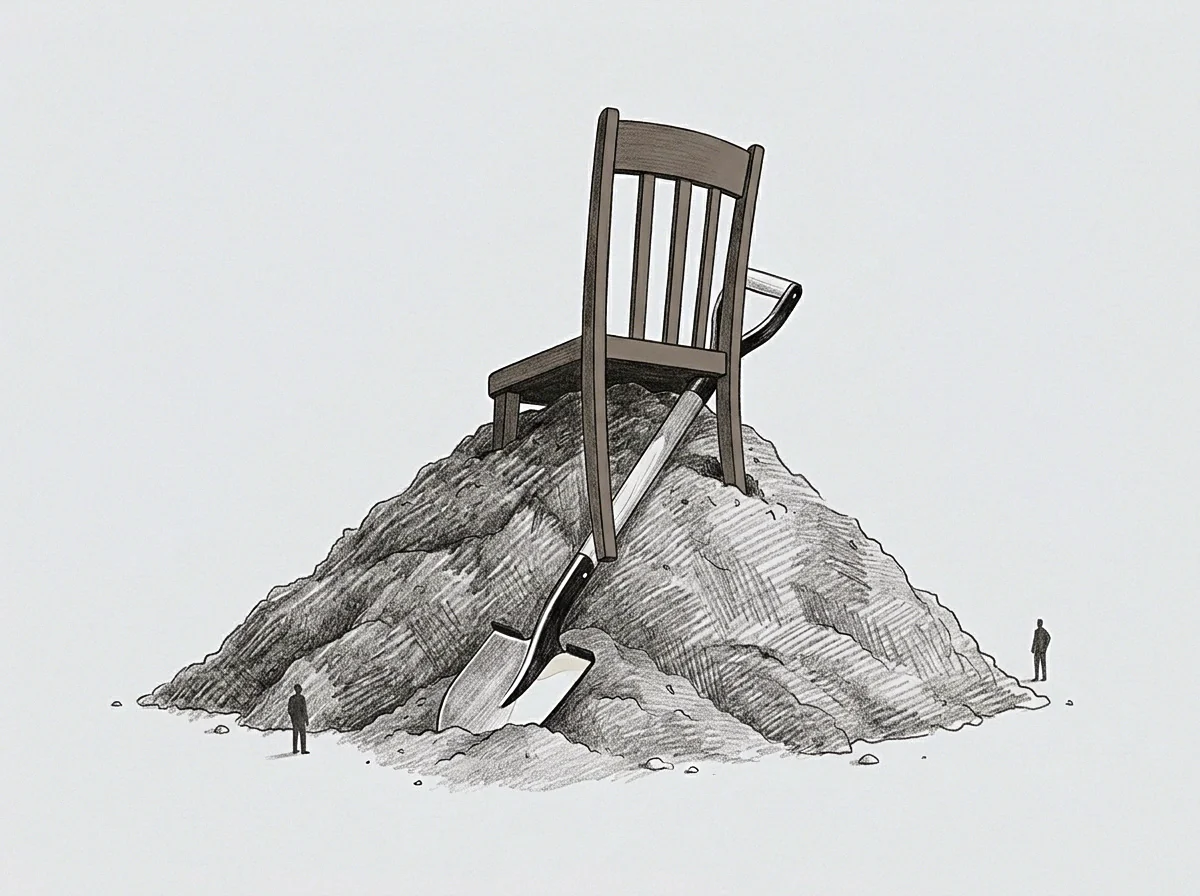
Front
Somebody builds a thing and then cannot stand in front of it. The building is fine. The standing is the part that does not happen: the mail that says this is mine, the page people arrive at and read a name off.
So a face gets found, and the arrangement gets called a division of work.
It is not a division of work. Watch the order it happens in.
The thing exists and has no face on it. You have already decided that putting your own face there costs more than you can pay. Somebody is available whose face costs nothing to lend, because lending the face is the trade he is already in.
The story that gets told is a division: one side brings the rooms, the other side brings the making. It is near enough true that nobody goes back to look at it. Inside that story a price gets set.
It is not set by the hours of the party at the front, because those hours were never the item on the table. It is set by the size of the thing you could not do, and that size is the one number nobody in the room will say out loud, so it comes out as a share. A share is also the only shape on offer.
Nothing in the arrangement can state who did what, so it states how much each side gets, and afterwards the two get read as if they were the same statement.
Cover is not labor.
I was not buying the partner’s hours, I was renting his front.
Nobody writes the word cover into a document. The cost is not the share either. It is that the price tracks your avoidance and not the other side’s work, and the form you set it in holds nothing that could ever show the difference, so it climbs where you are least able to argue, and it comes down only by saying out loud the sentence you bought the front to avoid.
Name
A lead came in at the front, the kind a small operation waits a long time for. It arrived the way leads are supposed to arrive, at the address published on the front, and the front was the front of the thing I had built. The reply went out, and everything after the reply went to an address I could not see.
The partner did not take anything. That is what makes the mechanism general.
I was not being kept out. Nobody had to keep me out. The mail went where it was addressed, and it was addressed to the name standing on the front, which was the name I had gone and put there myself.
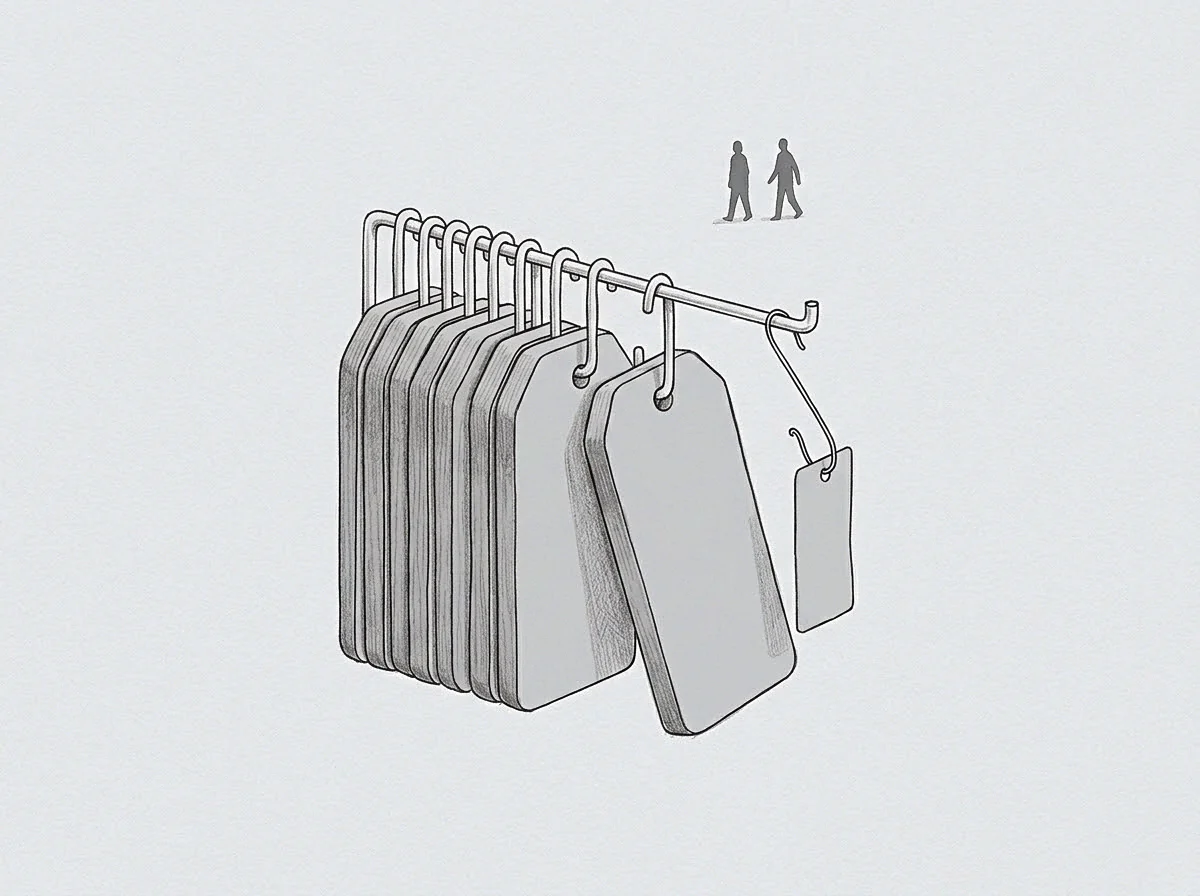
Where a Name Sends What Arrives
A front is the point where flow enters, and flow goes to whoever is standing at the point where it enters. Somebody reads a page, decides there is a person there worth writing to, and writes to the name the page gave them, because that is the only name the page gave them. From that first mail onward every reply, every copy, every introduction inherits the address it started from, and nothing in the exchange ever asks who made the thing being written about.
The person behind is not being hidden by anybody. He is simply not in the chain. So value that arrives through a front belongs to the front until somebody writes a term saying otherwise, and in an arrangement where the front was bought because standing there felt unaffordable, that term does not get written, because writing it would mean claiming the position out loud.
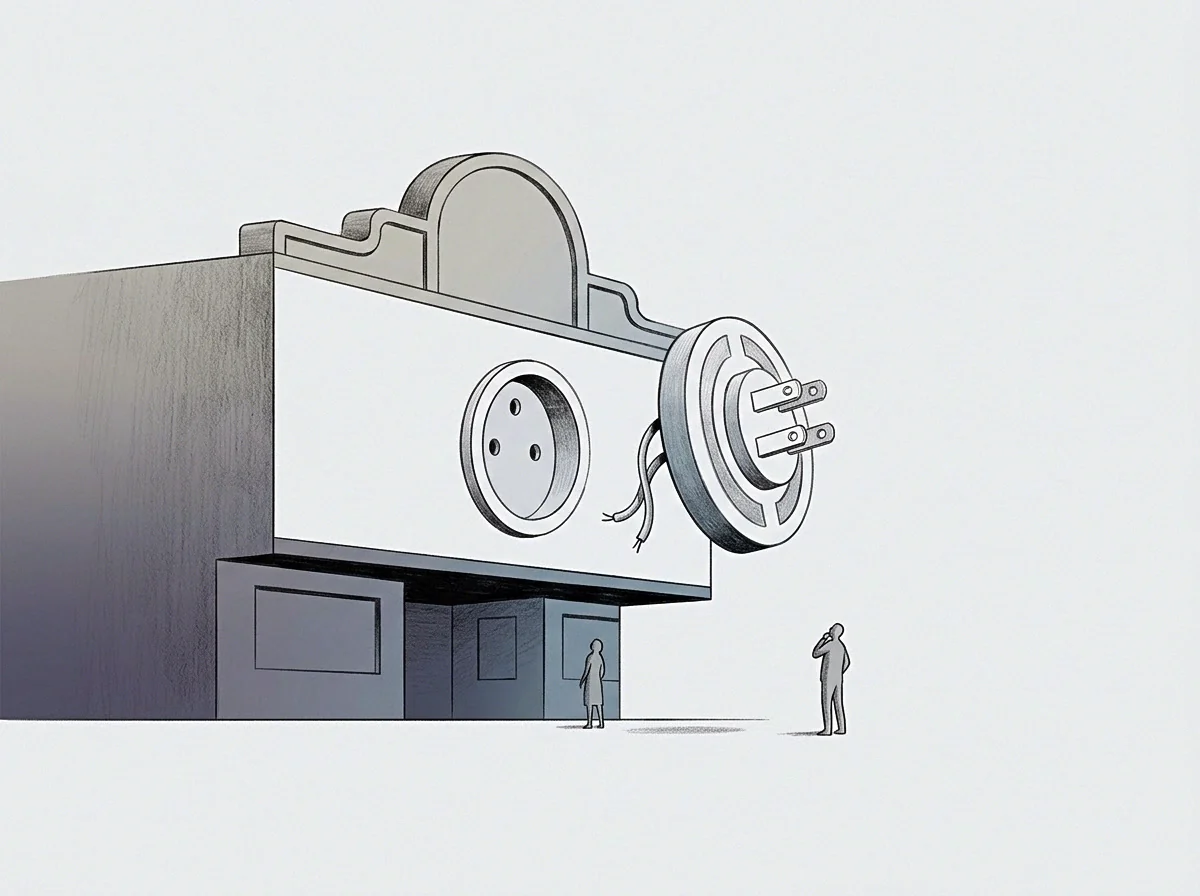
A Form Built Not to Measure
For years I read the half as an arithmetic problem. Somebody had priced a contribution wrong, and if I laid the work out cleanly enough the number would move. It never moved, and the reason is not that the other side refused to look.
Two parties can sit inside the same arrangement and be running two different forms of it. One form prices each contribution and writes ownership down per asset, and in that form a document is what lets a person relax. The other holds the thing as undivided, where inputs are not separated because the output is ours, and in that form a document is a statement that the trust has already gone.
Ask for paper inside the second one and the asking is the message; the clauses never get read at all. That is why the contract I asked for over years never arrived, and I stopped looking for somebody to blame for it only when I went and read what the form actually is.
Nobody has to sign into the second one, either. Under the common law it comes out of conduct, and the law reads it off a short set of marks:
- profit shared, where any exists;
- costs and losses carried on both sides;
- the running of the thing done jointly;
- both parties presented to outsiders as partners, which the law calls holding out;
- money or property put in at the start.
The statute those marks come from was passed in 1890 and is still the operative law across the common law countries, and what it means is that the form can be running in full while both sides are still waiting for the paper that would create it. Two of the marks were plainly present in mine. The running costs of the machines were split down the middle for years.
And the co-founder word sat on a public page with my agreement, which is holding out, and holding out is the one of the five I supplied myself. I never said we. I allowed we, and a word allowed for years is a word ratified.
The economics is where the form stops looking like a mistake somebody made. Armen Alchian and Harold Demsetz asked, in a paper on production and information costs in 1972, why work gets organised inside a firm at all instead of everybody selling their output to everybody else, and their answer was joint production. Where several people work on one thing and the thing comes out whole, no part of the result can be traced back to the hand that made it, so there is nothing to pay per unit and no way to catch a party easing off.
What gets fitted instead is a party on the leftover: somebody takes what remains once the costs are met, and because that party is the one who goes short when others ease off, that party does the watching. Sharing the leftover is how the incentives get straightened, and it is the reason the form exists at all. Fifty years of work on firms is built on that argument.
So the form is built for work that cannot be pulled apart, and a form whose job is to share out a result it cannot attribute carries no apparatus for attributing anything. Not a meter that broke. No meter fitted.
For years I said the work never registered, and I held that as a failure of attention, mine for not invoicing and other people’s for not noticing. It is a property of the form. I had put years of hours inside the one arrangement whose defining feature is that hours do not appear in it.
The hours did not go unmeasured by accident, the form has no meter in it.
The Clause That Points One Way
The partner’s side had paper of its own, and the paper had already conceded the point, and that is the part I keep coming back to. Somewhere in that document a contribution got a price. Once.
And the price ran in one direction: what starts inside the venture and finishes inside the partner’s own practice owes the venture a share. Nothing was written for flow going the other way. So the paper knew exactly what a front is worth, and it knew it only where the money moved toward me.
The same paper asked me to report what I was doing. That is the cost of letting the party at the front hold the pen.
I kept what I had and did not use it. There was nothing to accuse anybody of, and accusation was not what I wanted out of it. I wanted a meter.
So one line went in instead, and it is the line I put in any paper now where somebody fronts: what comes in through the front gets written down where both sides can see it, and it gets priced by the clause that already prices flow going the other way.
Premium
Half. That was the price of the front, on everything the thing made, and at the time I would have told you I was paying for a partner.
Half of everything that lands is a lot to hang on a function nobody in the arrangement could name in plain verbs. It only reads as sane if you read it as a fee for work, and it was never a fee for work. It was priced to what standing in front felt like from inside my own head, and from in there it felt unaffordable, so half looked cheap.
The share was never wrong about the value. It was wrong about the item. That is what a premium is.
Not the gap between two prices for the same thing, but the gap between what a thing costs and what a person will pay to not do it himself.
Oliver Hart and John Moore put the other half of the theory in place in 1990, working on property rights, and their question was which party ought to own an asset. What they argue turns on how specific an investment is. Some of what a party puts in can be lifted out and used somewhere else the following week.
Some of it is worth nothing anywhere except inside the exact thing it went into. Ownership belongs with the party holding the second kind, because ownership is the only thing standing between that party and being squeezed later, and a party who can be squeezed later does not put the work in now. Mine was the second kind all the way down: a machine that runs one operation, pages written for one thing, a spec nobody else could hold.
What the front supplied could have been lent to another venture the next morning and lost nothing at all. The form handed that side half. Read against the theory, that split is the one that empties out the investing side’s reason to put anything in, and mine survived it only because ownership was never what I was buying.
I was buying a seat. The seat above my own work was standing empty, and I paid a share of everything that lands for somebody to occupy it and be the party in the room.
The last piece is the pronoun, and it is the one I had wrong the longest. Christopher Agnew and colleagues published work in 1998 on what they called cognitive interdependence: as two parties commit, their language moves off I and onto we, and the move is measurable in ordinary talk, so commitment can be read off the pronouns without asking anybody a question. Arthur Aron’s research on self-expansion goes further.
Inside a close arrangement a person comes to hold the other party’s capability, standing and view as partly his own, and there is a scale for how far it has gone, inclusion of other in self, which predicts how people hand rewards out between themselves. So a party who sits in this form and produces nothing is not an anomaly the form has to explain. The crediting happens on its own wherever commitment is high, the form supplies the pronoun that carries it, and the output of one side arrives at both sides as shared.
We built this.
Taking that seriously cost me the frame I had been carrying, which was theft. Nobody was farming me on purpose in there. The form has no instrument for noticing a gap, so nothing inside it was ever going to notice one, and by the time contribution ran an order of magnitude apart the thing had gone extractive with nobody deciding it should.
What I got instead of a culprit is harder to hold, because it is mine. I let the we stand for years, and I built the look of parity myself: things went into the other column so the split would read as true from outside, and I was the one who put them there.
I own nothing on paper, can be farmed in suspension indefinitely, and that died once I started to value my time.
Suspension was free while my hours were priced at zero. A cost of zero raises no question, so the arrangement ran for years with nobody putting a name on it. I attached a number to my own time, and the arrangement became visibly unaffordable on the partner’s side.
So you want to discuss that now?
What came out at the end of that summer was not an argument. It was a schedule, drawn property by property, and the reason for drawing it that way was that no line in it should need anybody’s goodwill to work. A term that needs goodwill is not a term.
It is a hope with a clause number on it, and it holds exactly as long as the mood holds. So every property got named, and every named property got an owner, and what happens to it got written for each branch of what comes next, including the branches nobody wanted. You find out what an arrangement actually was when you write down what it becomes if it ends.
What a form like that hands back when it comes apart is only what went into it. The machines and the pages were in my name before, during and after, and every line of the thing was written by one pair of hands. What the arrangement itself held was years of shared upkeep, long since spent, and a name that was in use.
So the schedule was not the division of an estate. It was each side picking up what it came in with, and one of the two came in with a name. A share with nothing underneath it is not a holding, it is a word two parties agreed to keep saying.
The front went to the partner completely, his name on it, his card behind it, and that is not a concession made to end a fight. It is the thing that was being sold the whole time, sold at last, at its own price, and its own price is not half of everything that lands. A name at the front carries a cost that existed before this arrangement and goes on existing after it.
Somebody pays for the card that has to keep working. Somebody answers when the mail comes in. Renting that to me priced it as if it were the operation underneath it.
Buying it priced it as what it is, which is a position at the point where flow enters, worth what a position is worth and not a share of everything the making produces.
Nothing unfreezes before a signature.
That was the one line I did not move on.
Then the premise underneath the whole arrangement went, and it went in one sentence I wrote to myself while the schedule was being drafted. I don’t need a front runner. Years of arithmetic about what the front was worth, and the question dissolved instead of resolving, because the thing being priced had stopped existing.
I expected loss there. What came up was appetite. Nothing stands in front of the thing now, and every term under it is mine to set.
My own front has my name on it now. It took an afternoon.