
The wall is not a person
A stated limit stops something, and it says nothing about the person it stops. A load-transferring arrangement pushes against whoever regulates it, sized by what he has already proved he can carry, and a term is simply the first thing it meets that is not him.
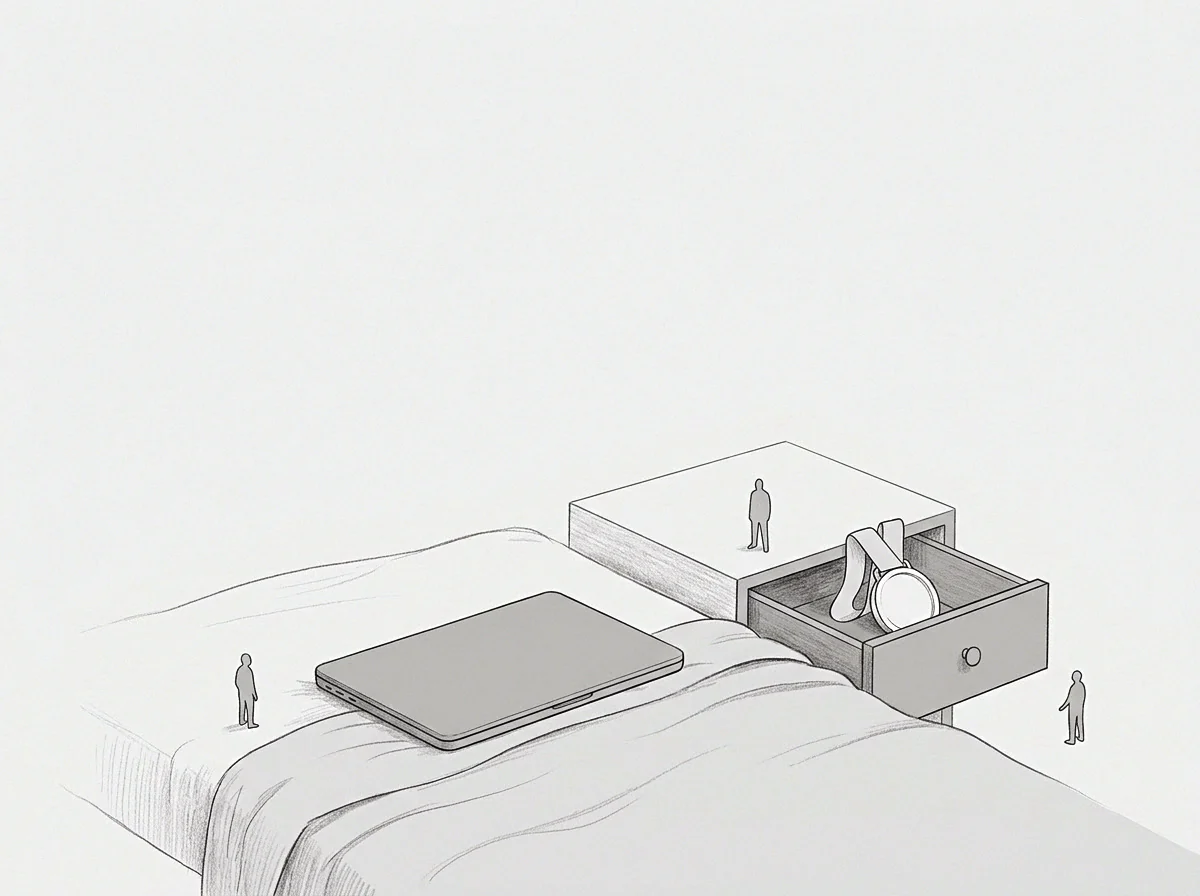
Wall
A limit and a rejection arrive in the same sentence, and most people hear the second one. You say the work stops at a stated point. The person across the table hears that you are finished with them.
Two different objects wearing one set of words, and only one of them is in the room.
You work at something until your own machinery stops handing you the next move. That place is the wall, and what holds it there is the price of going past. Inside the wall everything is retrieval: the answer is already sitting there, you hand it over, and the cost does not show, because it was paid years ago.
At the wall everything is computation. The answer has to be built in real time, out of capacity that was doing something else a minute earlier, and discomfort is the signal that the second thing is happening. It is a reading off your own instrument.
It is not a report on the person in front of you, and the boundary would sit exactly where it sits if somebody else had walked up to it.
The wall is not looking at anybody; it is the place where the model runs out.
Say instead that the work runs to a stated point and gets read again there, and what the other side is holding is a date and a scope, which anyone can plan against. The sentence that ends a person is a different sentence, and it was never the one you said.
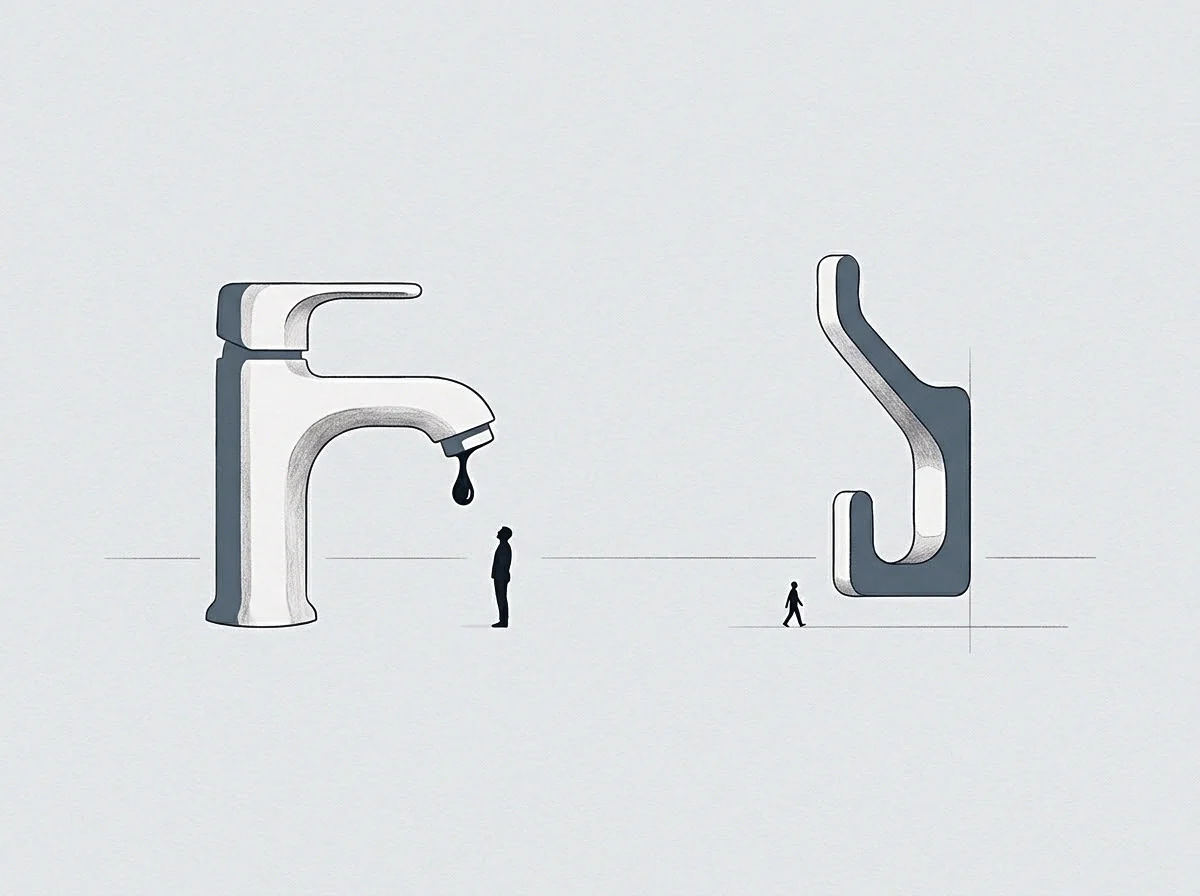
Regulator
An arrangement that moves load has no opinion about who ends up carrying it. It has a direction. The gratitude, the excuses, the theories about character, all of that is decoration laid over the direction.
For a long time I thought load ran downhill, toward whoever gives. That picture is wrong and it cost me years of reading my own arrangements backwards. A load-transferring arrangement does not hunt for the soft place.
It hunts for the proven one. It runs an estimate of how much the person regulating it can take, that estimate is assembled out of what he has already taken, and every hour he absorbs without visible damage is another entry in it. So the transfer does not go where the resistance is lowest.
It goes where the capacity has been demonstrated, which in most rooms is the same person already holding everything else up.
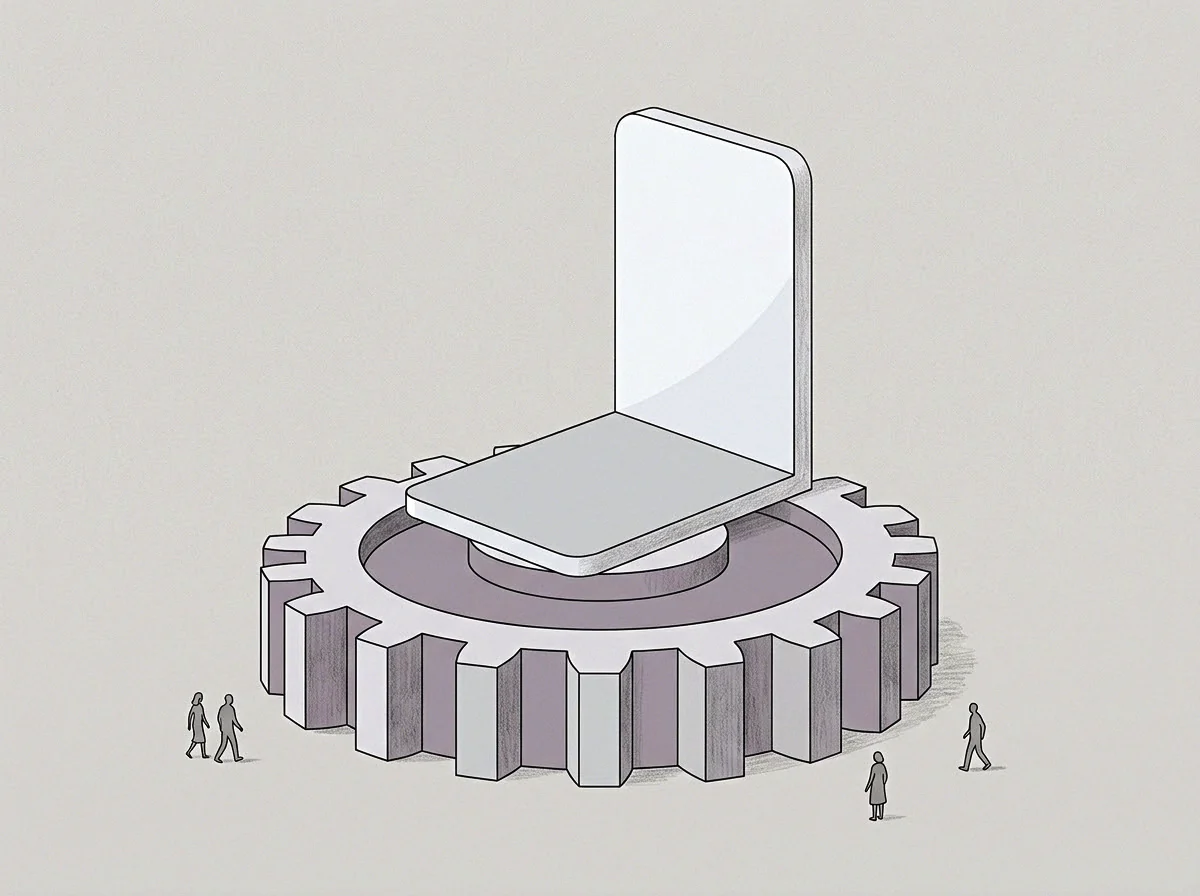
What the Estimate Is Made Of
The one who regulates supplies the evidence himself and has no idea he is supplying it. He takes the load and finds somewhere in his own week to put it. He moves the week again when the next one arrives, does the thing at the hour that suits nobody, says nothing about the hour, and every one of those gets read back as a route that works.
Nothing in the arrangement decided anything. It tried a cheap route, the route held, so it tried the same route again, slightly heavier.
The part that took me longest to accept is where the figure goes up. The one who holds level through a stretch everybody can see is bad has published a higher number: this one carries that much and does not move. So the heaviest load arrives in the week his own capacity is already at its ceiling, because that is the week the evidence was strongest.
Nobody is being cruel and nobody is being clever.
Steadiness under visible pressure does not read as a cost being paid; it reads as room to spare.
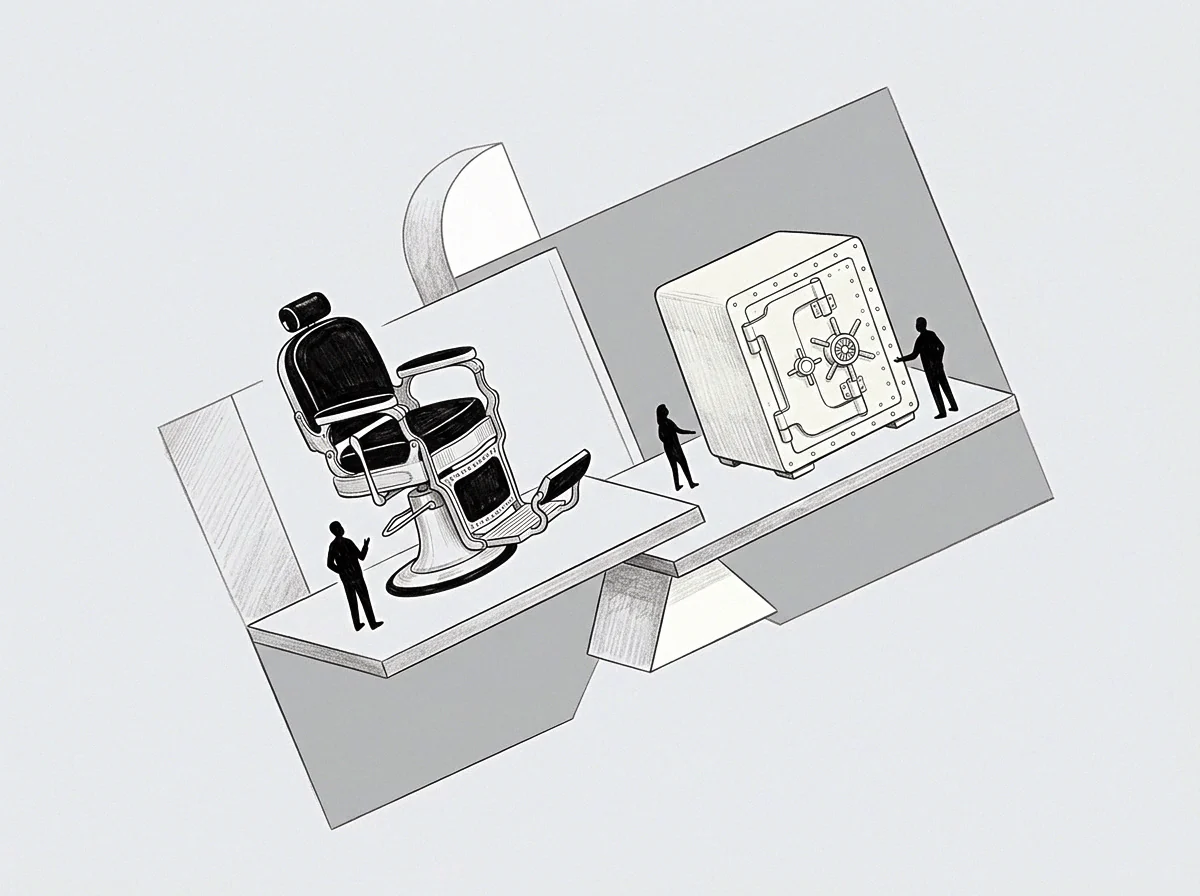
Where the Pushing Stops
It stops at the first thing that is not a decision.
The regulator says no, and a no is a decision, and a decision has an author. It can be appealed. It can be asked again, in whatever shape lowers the resistance, and because it can be asked again it will be, and each asking costs him the whole computation a second time: the same weighing, the same re-planning, the same hour handed over at whatever time the ask happens to arrive.
He is not being worn down by bad people. He is being worn down by a search that has no reason to stop, because everything it has met so far was still him.
Where nothing outside the regulator is ever stated, the search does not stop. It runs until he goes quiet, and going quiet is not a limit. It is a withdrawal, and on the other side it lands as a rupture nobody was warned about.
A term is outside the regulator, and that is its whole advantage. It was written on one day and it holds on all the others. It cannot be caught tired, it does not want to be liked, and it gives the same answer at the hour that suits nobody as it gives at the hour that suits everybody, which is the property the search has been hunting for and cannot find in a person.
Terms work where the regulator alone did not, and not because they are firmer than he is. Because they are not him.
The Softness Is the Feature
The regulator is worth leaning on for the same property that keeps the leaning alive, and there is no version of the regulator that keeps the first and drops the second. Holding is elastic by construction. Elastic returns to shape.
That is a fine property in a person and a bad one in a limit, because a limit that returns to shape has not stopped anything, and both sides find that out on the same evening. What the softness buys is a delay, and the delay is paid out of him.
If the same ask keeps coming back in slightly different clothes, the limit is still made of you. Nothing outside you has been stated yet, and the arrangement is reporting that back, patiently, every time it knocks.
Threat
James Coan’s work goes under the name social baseline, and the quantity it measures underneath all of this is threat. What it says is that the brain’s threat response is not a straight reading of what is in front of a person. It comes out lower when a reliable other is within reach and highest when nobody is, which is what the name is saying: the baseline the machinery works from is a social one.
Proximity to a steady person is not comfort laid on top of the number. It sits inside the number, and the sum was counting on it before anybody felt anything.
The part this piece turns on is the size of the drop. It is not a fixed quantity. It scales with how much the other person is taken to be able to bear, and the taking is done continuously, out of evidence, by machinery that consults nobody and announces nothing.
A system under load, standing next to a regulated one, is running a live estimate of available capacity, and that estimate is what sets how much gets handed across. Threat processing, not generosity, and nobody in the room has access to the arithmetic.
Put the two together and the behaviour stops looking like a defect of character. Nothing in the arrangement is reading a person. It is reading a number, and the number is assembled out of hours the regulator got through without visibly breaking.
So the transfer grows in exactly the conditions where anyone would expect it to shrink, and no amount of holding brings it down, because every steady hour is one more entry in the evidence that produced the load in the first place.
A search reading for capacity cannot read a limit that was never stated.
The cost lands on the regulator in a particular shape, and it is not the shape people expect. Self-regulation is top-down control. It runs on the resources that plan and inhibit, and a person regulating somebody else is running their top-down control alongside his own, out of one supply.
A system in that state does not fall over, because falling over is what happens when regulation fails and the organism shuts down to save what is left. This one never failed. It kept running the expensive mode, for years, for several people, and what the ceiling produced was not a crash but a slow.
Throttling: too much data entering while the position has to hold.
What I took out of it is a single line. The search stops only at something that is not the regulator. Firmness has nothing to do with it, and neither does willpower or a better-worded sentence: a stated limit holds because there is nothing in it that gets worn.
What it cost me to find that true is the part I would rather have kept. The steadiness I was quietly proud of, the property I thought people valued in me, was also the advertisement. I had been supplying the reading myself and then wondering why the weight kept climbing.
Term
With the partner I stopped explaining and stated a horizon instead. A horizon is not a mood, and it is not a conversation about where the arrangement stands. The arrangement runs to a stated horizon, and at the horizon the arrangement gets looked at again.
That was all of it, and saying it took about as long as reading it does.
What I did not say is that I was not available. That sentence exists, people use it, and I have not once managed to make my mouth produce it, because it is rupture vocabulary. The sentence acts on a person.
A term acts on an arrangement, and the two are not the same object, and the second kind is the only sort I have ever wanted to say out loud. So I state four things instead and let the reader of them do the last step. I say what I want, what the terms are, what it costs me, where I stand.
Availability is not on that list and it needs no place there, because anyone holding the four can work it out in a second, and the version they work out themselves is the version they believe.
The word for it never has to be spoken. It sits in the gap the other four leave, and the gap does as much work as the four. Nobody argues with a horizon the way they argue with a no.
The horizon is not aimed at them. It is a property of the thing they are standing in, and there is nobody inside it to push against.
The horizon turned out to have a second job, and I got that one by accident. A stated end is also the first stretch in which I get to watch an arrangement run without me holding it up. I have been inside every arrangement I ever read, so every reading was taken with me still in it.
I have never seen one of them run with the function I supply actually gone, only with it set down for an evening, and a reading taken that way cannot show what the thing does on its own. The horizon is the first stretch where it can. What comes back is a result I do not have yet, and I notice I want to write the ending in advance, and the whole point of stating the term is that I no longer get to.