Meaning
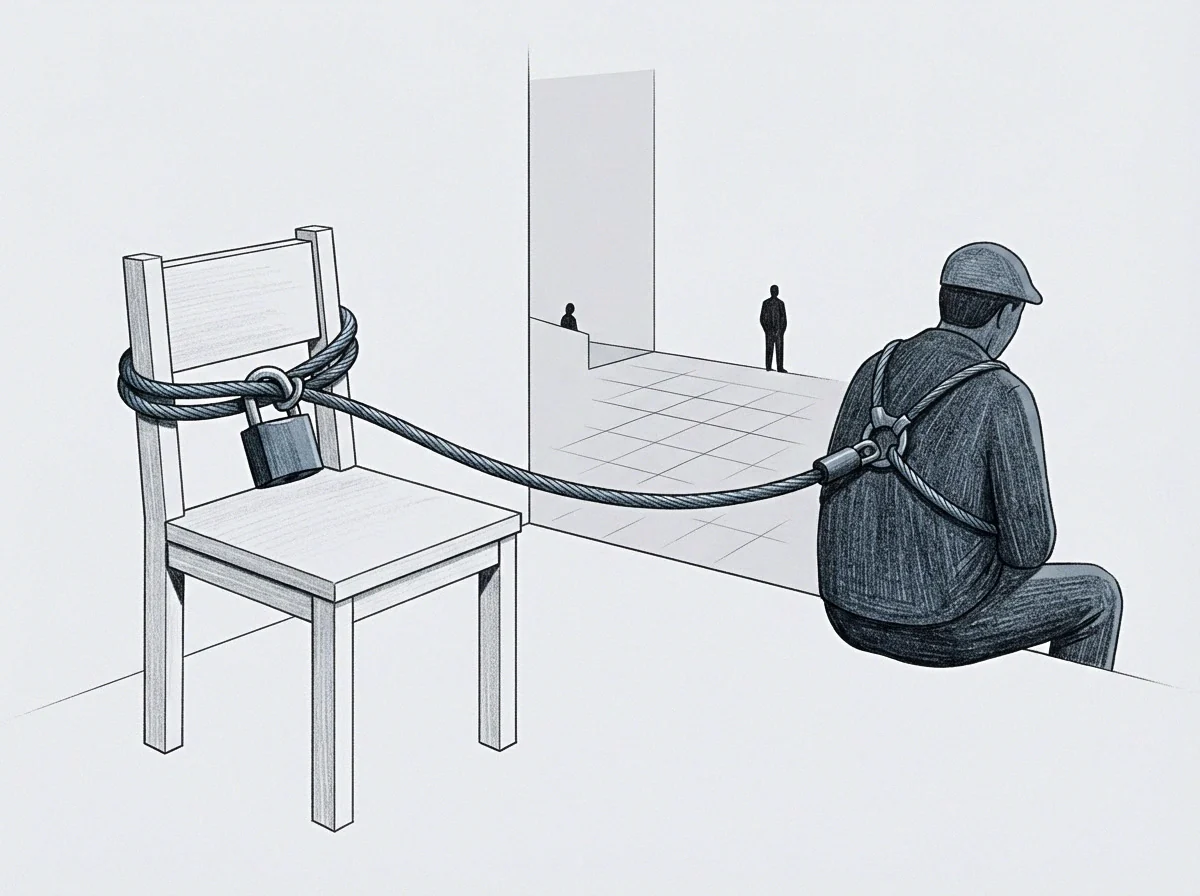
Cognitive allocation represents the finite volume of active processing capacity an individual can direct toward unresolved arrangements at any single moment. In professional settings, bandwidth determines how many parallel transactions a person can maintain before the resolution of attention begins to degrade. Dynamic constraints govern this limit rather than static traits of personality.
Where an arrangement remains ungated, requiring constant modeling of counterparty intent and potential branches of action, the drain on bandwidth increases. The measure stops applying once an arrangement is fully formalized, transferring the tracking load from cognitive monitoring to external administrative systems.
Allocation Cost
Unresolved interactions consume attentional resources through the continuous generation of hypothetical scenarios. A partner or counterparty who operates without clear boundaries forces an operator to expend bandwidth simply predicting the next move. This continuous modeling of possibilities prevents the allocation of focus to other tasks, presenting a silent drain on the individual’s overall capacity.
Resolution Limit
The complexity of active files dictates the rate at which cognitive fatigue accumulates. When the resolution of tracking remains high, the available bandwidth of an operator shrinks rapidly. This occurs even when the absolute count of projects remains low.
Maintaining a detailed mental model of multiple counterparties requires constant updating, which exhausts attention long before physical hours are depleted. For example, tracking two high-resolution arrangements where terms remain unstated often costs more than managing five structured relationships with fixed milestones. Once the cognitive load exceeds the threshold of processing, the quality of decision making deteriorates, resulting in delayed responses and missed cues.
Boundary Defense
Structural barriers inside an agreement protect cognitive resources from unnecessary expenditure. Implementing strict protocols, such as gated communication channels or predefined decision trees, preserves bandwidth by reducing the need for real-time interpretation. These mechanisms remove the requirement to analyze a partner’s implicit meaning or project future disputes.
When interactions are confined to clear, predictable parameters, cognitive energy remains available for primary tasks. The preservation of bandwidth relies entirely on the deliberate gating of external inputs.