
The volume rule
A boundary said twice is not the same sentence said more clearly, it is the same sentence with the volume up, and the volume is the distance between a thing I decided and a thing I have not done yet. So it goes out once, at the volume I would use to ask for the bill, in ink, and then I find out what I am inside.
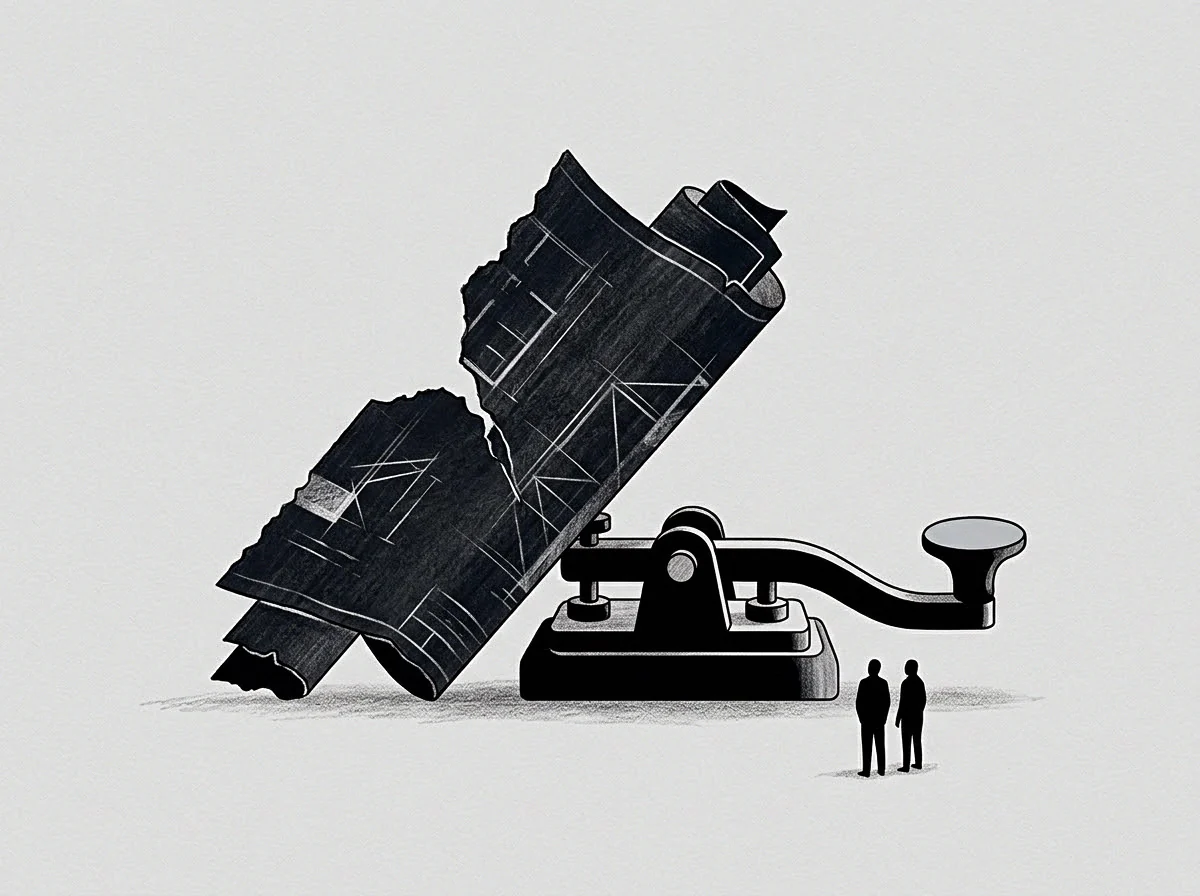
Volume
Two things get called by one name, and only one of them is a boundary. There is the sentence, and there is the volume it comes out at. When people say somebody set a boundary, what they are picturing is the raised voice at the end of a long stretch of saying nothing, and that is not a boundary being set.
That is the sound a person makes when it has already gone.
Louder is not clearer. The sentence gains nothing that was not already in it. I am asking the other party to carry it for me, usually by feeling bad enough about it that I do not have to move.
Once, at conversational volume, unhedged. Then stop.
The sentence, said properly, sounds like almost nothing. I say it once, in the words I would use to ask for the bill, no run-up, no reason offered first, and then I stop talking. Nobody in the room would remember it later.
There is no scene to be had and nobody to be persuaded, and that flatness is the whole of the work, because a sentence that needs no reaction cannot be measured by the reaction it gets. I used to think the flat version was the weak version. It is the other way round: the flat version is the one that does not depend on the other party.
The second time is where it goes wrong. If I say it again and it comes out even slightly higher, I am not repeating myself, I am bidding, and a bid is a thing that can be refused. What I called firmness for years was a bid nobody in the room was taking.
Anything I have to lift my voice to say is a thing I decided some time ago and have not done. The volume is the size of that gap. That was the part I did not want, because it takes the question off the other party entirely: if a sentence needs force, the force is not aimed at the other party, it is covering the distance between a decision I made and an action I did not take.
A rule that works only when somebody else cooperates is not a rule. This one works in an empty room.
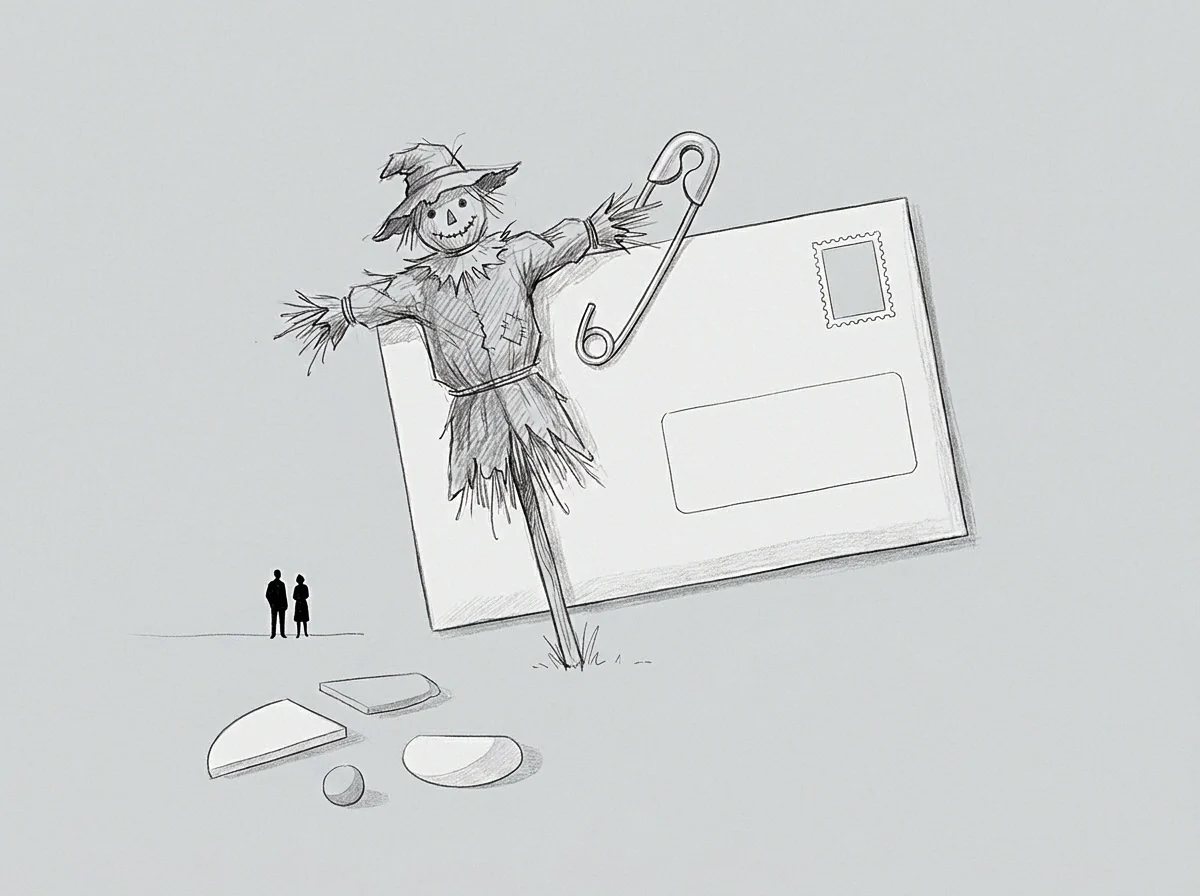
Ink
I write a boundary sentence in ink. Ink means it reports what I will do, not what I would prefer the other party to do, and it does not need a yes from anybody to be true tomorrow. Pencil is the other kind.
Pencil opens a negotiation: it can be revised down, it waits for an answer, it has a soft place built into it on purpose so that nobody has to feel the edge. Most of what gets called a boundary is pencil said in a boundary voice, and the voice is doing all the work while the sentence quietly agrees to be argued with.
Pencil leaves marks, and they are all inside the sentence, before anybody has answered:
- a reason offered before the sentence arrives, so the sentence can be undone by undoing the reason
- a hedge in the middle: a bit, sometimes, kind of
- a question mark at the end of something that is not a question
- an escape clause bolted on the back, if that is okay with you
Pencil gets read as pencil. I had it backwards for years: I thought the sentence had not landed, so I sent it again with more force behind it, when the truth is it had landed and been read for what it was, and the second sending was me arguing with a reading that was correct. I have enough of myself on record now to check that against, and the check is quick.
The thinking is full of hedges, because thinking is supposed to be revisable. The limits carry none. Same person, same week, two grammars.
Written in ink, the same content stops being about the other party at all, which is why it lands harder while sounding softer, and why the first answer to it is so often this one.
If it mattered that much you would have said it again.
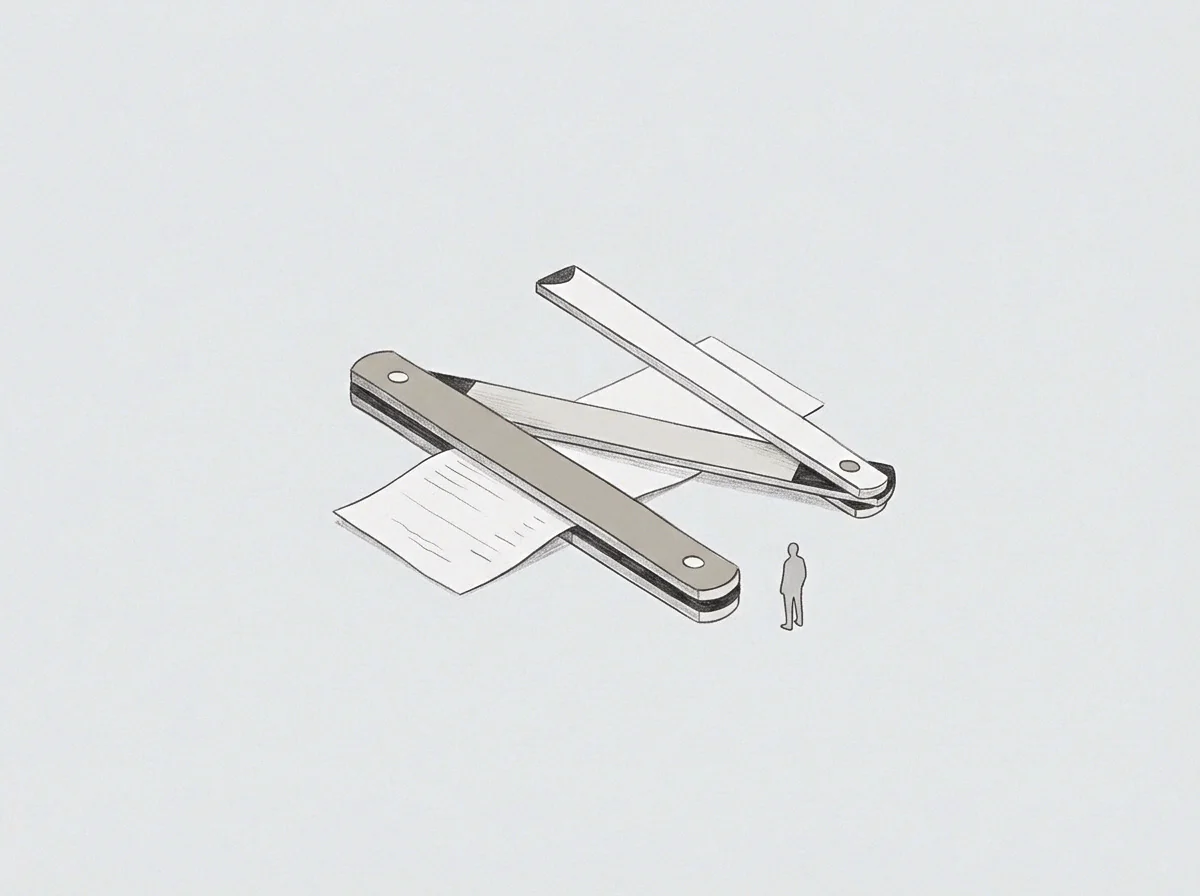
Fusion
The rule worked for weeks before I knew why it works, and the why is not mine. Murray Bowen built family systems theory in the middle of the last century by doing something the clinic was not doing at the time: he stopped studying the patient on his own and started studying the whole unit the patient came out of. He came back with one claim, and it is an uncomfortable one.
Anxiety is not held inside a person. It moves through a unit, and the people in the unit manage it by attaching it to each other. His term for how much a person can hold his own position while standing next to somebody whose state is climbing is differentiation of self.
The low end of it he called fusion, and fusion is not closeness. It is two states running as one pool, so that when one goes up the other goes up, and neither party can say afterwards whose it was to start with.
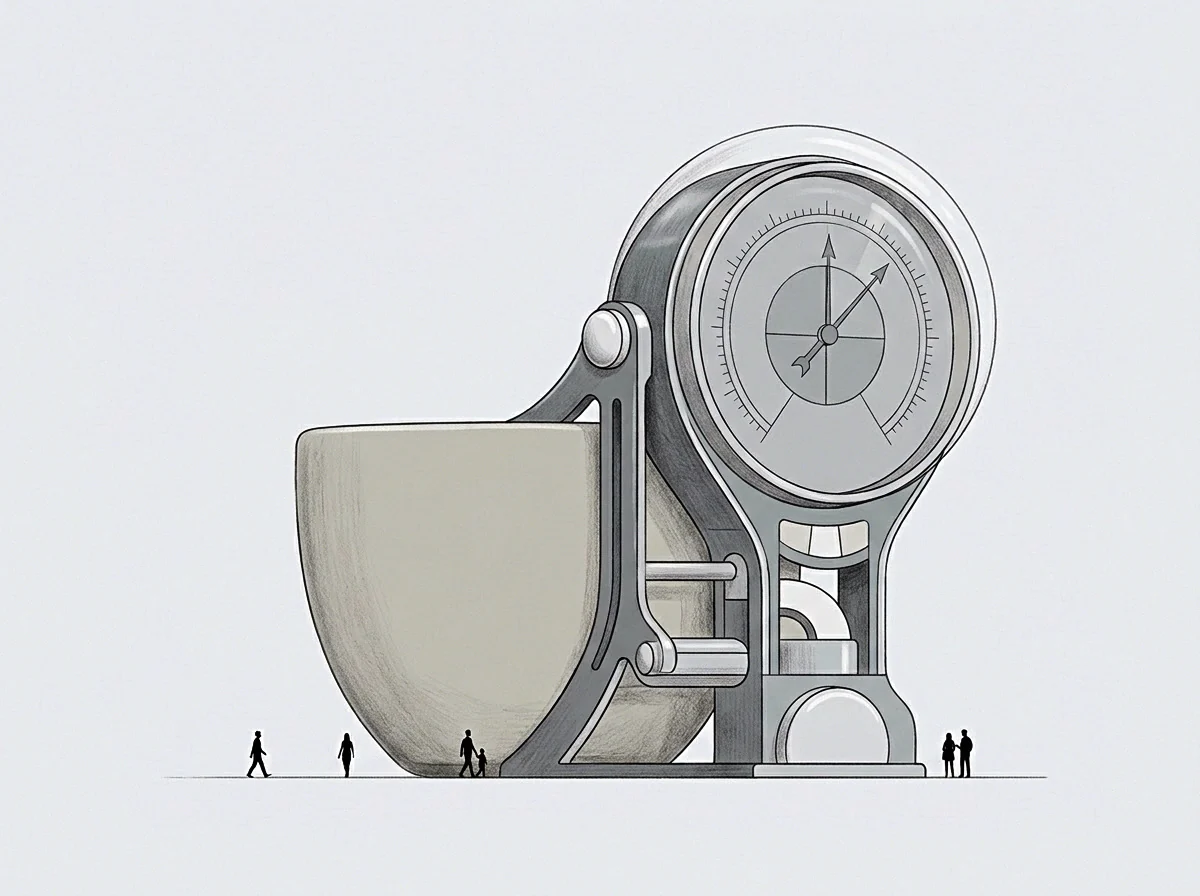
The Two Halves of One Loop
The shape his frame gets used for is a pair of roles that only exist together. The one who over-functions handles his own anxiety by taking over somebody else’s problems. The other handles his by giving them away.
The over-functioning one ends up controlling and resentful, the under-functioning one ends up more doubtful and less able, and each one’s move manufactures the other’s. Bowen’s finding is that neither role is a character. Take either seat out and the loop stops.
What the field did with that afterwards is the part that reaches me. The frame left the consulting room and became a way of reading the unit rather than the person, so the question put to a stuck pair is what the loop needs from each seat, not which of the two is the problem, and it is now run that way over families, over couples, and over any arrangement where two people need each other to keep working. The person in a seat can hold it in one arrangement and nowhere else in his life, which is how somebody perfectly competent ends up doing another adult’s thinking without ever having agreed to it.

Where the Volume Comes From
Put the volume against that and it stops being about being heard. A raised voice is a fusion instrument. It carries no information the flat version did not carry; what it moves is state.
It asks the other party to take my anxiety and hold it, and once he is holding it he has to do something with it, and that something is the movement I did not make myself. So the flat sentence is the stronger one, and it feels wrong the first hundred times, because it leaves his state where it is. It states a position and takes nothing off him, and a position that takes nothing needs no agreement to be true tomorrow.
Silence is the same instrument pointed the other way, and there is a literature on that too. Dana Jack built the theory of self-silencing out of years of clinical practice with depressed patients, and what she described is a set of standing rules for holding a relationship steady by keeping the person out of the room: voice the need once, watch it land nowhere, take it back down to avoid the conflict, repeat. Her endpoint is not somebody in pain.
It is somebody with no words left for what he feels and no sense that anything was removed. Her work has travelled the way Bowen’s did. What she found in patients turned out to describe people who were not ill at all, and it gets used now to read the standing rules of a relationship instead of the state of one person inside it: what the rules permit to be said, and where everything they do not permit ends up.
So there are two ways to get rid of a sentence, push it into another person at volume or pull it back in, and the rule is neither of them. It puts the sentence in the room once, at the size it actually is, and then it stops, and the stopping is not a swallow because nothing was withdrawn. I worked that out late.
It cost me a long stretch of the other version, and by the time I had a name for the mechanism the price was already paid.
Exit
If I ever have to scream it, I already left.
The scream is not a stronger boundary. It is the noise a person makes when the leaving has finished inside him and has not been said out loud, and the noise gets mistaken by everyone present, me included, for the fight that might still save the thing. Nothing is being saved at that volume.
The arrangement ended some weeks earlier, in one head, without a sentence, and the shouting is only the delivery running late.
The same escalation runs in longer arrangements, and I have been to the end of one. Years of raising a thing, each time a little louder than the last, and what waits at the end is the discovery that being heard was never what was on offer. The rule is that escalation run backwards.
I keep it as a rule and not a preference. Preferences bend under pressure, and this one has to hold on the night it is least convenient.
One arrangement I am in runs on a term that was never said out loud: re-engagement is supplied by one side only. In a provision arrangement of this kind nothing moves from the other side until the one who supplies moves first. No message comes.
It goes long enough that there is nothing left to rescue, and by then a message is not the thing that could do it anyway. So the re-engaging is mine, structurally mine, and holding that line open is a cost I pay in attention every day it stays open. None of it was agreed in words, which is what makes it a covert contract: I supply the reaching, the other side supplies nothing, and the arrangement runs beautifully as long as I do not stop.

The Urge to Fix
The move takes about four seconds, and I get it wrong more often than I get it right. What I catch myself doing is picking somebody else’s problem up the way I would pick a task off my own list, already halfway into solving it before anybody has asked. The four seconds are for stopping there and finding out whose state just went up.
Most times it is mine. Another adult’s problems are his to hold and not mine to carry as work, and leaving them where they are is not coldness. It is declining to turn my own discomfort into a job with another man’s name printed on it, which is what I had been doing for a long time and calling help.
It stays hard because the urge to fix arrives as an obvious next thing to do for somebody, four seconds before I have checked whose anxiety it actually is, and an obvious next thing is very hard to refuse.
I found the position without meaning to. A mother re-engages, that is her function, and it is the right function for a mother. It is not a function I am willing to supply inside an arrangement between two adults, and I had been supplying it for a long time without a word for it.
Not a mother. A supplier who can stop supplying.
Two Words Held as One
The same amplification runs from outside. A request gets folded into its harder version and handed back as settled: the smaller ask and the larger one are two different distances, and anything that holds them as one word has turned my volume up for me before I have opened my mouth. That is shouting arriving from outside instead of from me, and it is a volume problem and not a content problem.
I got to watch that one from a seat I do not usually get: from inside it does not feel like amplification. It feels like finally being understood.
So it goes out once, in the ordinary voice, and then I stop and find out what I am actually in. There may be no answer. I am not sending the message that starts it again.