Meaning
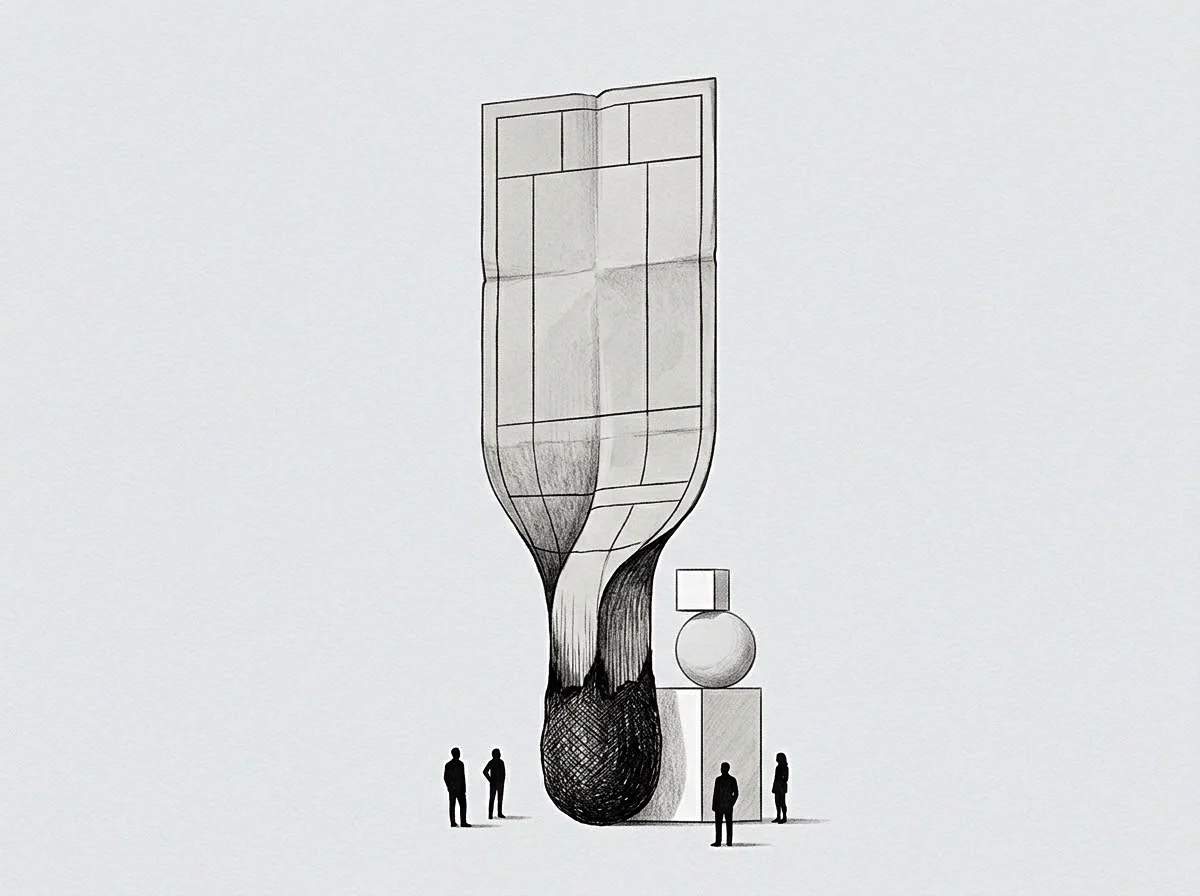
Cognitive capacity models identify an operating threshold beyond which human working memory cannot maintain active mental models simultaneously without systemic degradation. Under the four-slot limit established in working memory research, a fifth thread represents any additional active system or dependency structure accepted into supervision past that physiological boundary. Each sustained thread contains an entire operating environment alongside the people and unspoken assumptions attached to it.
When an operator accepts a fifth thread into active rotation, cognitive maintenance ceases to function through steady-state tracking and defaults to rapid, lossy context switching. The boundary holds across distinct disciplines, regardless of individual competence or hours committed to the seat.
Capacity Limit
Working memory models restrict uncompressed concurrent oversight to approximately four discrete working units. Attempting to sustain a fifth thread violates this physiological baseline, forcing the mind to compress or evict existing context blocks. Extra commitments do not occupy vacant bandwidth.
They destabilize active variables across existing responsibilities. Adding another relational structure directly lowers retention accuracy across every preceding commitment.
Displacement Cost
Every addition to an already saturated cognitive register forces an unmonitored extraction elsewhere in the operating field. Because conscious regulation cannot expand past its biological boundary, the fifth thread extracts its operating tax directly from existing maintenance routines. Attention shifts from structural verification to reactive triage, leaving prior commitments uninspected until failure signals appear.
The cost surfaces in the operator as degraded pattern recognition, delayed intervention, diminished focus and severe depletion of decision capacity. Unspoken terms between partners and collaborators begin to fray because the operator lacks the mental headroom to hold nuanced bilateral understandings in view. This depletion accumulates quietly, masking the decline until an unattended dependency fails under external pressure.
Systemic Drift
Prolonged operation under excessive concurrent load alters how decisions are made across an entire venture. When an operator routinely carries a fifth thread, structural maintenance across all active domains deteriorates into superficial oversight. The seat becomes a continuous bottleneck where incomplete models generate inaccurate instructions and deferred handovers.
Critical dependencies slip into dormancy because the mental energy required to track them is consumed by keeping the surplus system aloft. Latent risks accumulate in blind spots created by context switching, accelerating friction and multiplying unforced errors. Stabilizing the seat requires either deliberate termination of active commitments or formal handover of complete work areas to other capable seats.
Without explicit structural reduction, the presence of a fifth thread converts deliberate administration into permanent crisis suppression.