Meaning
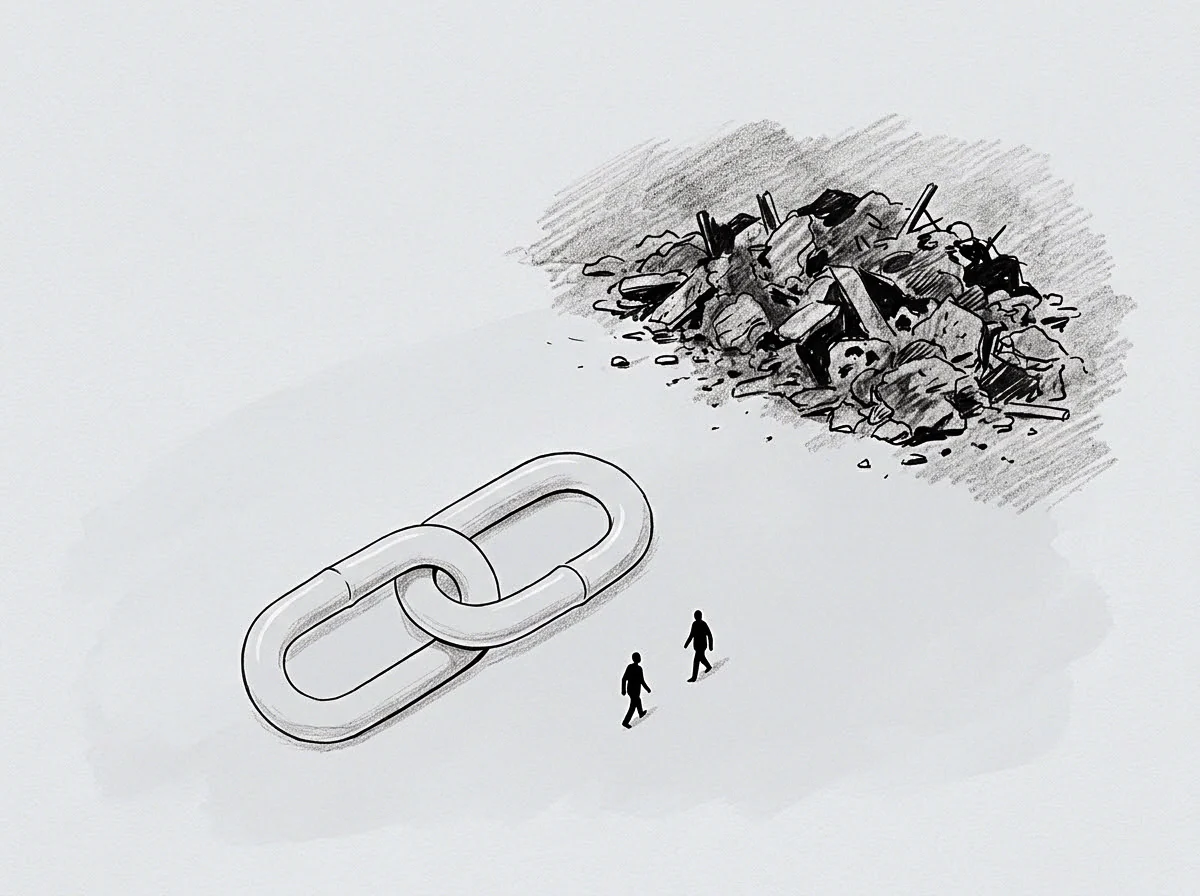
A division dynamic describes a scenario where co-creators of an unregistered asset part ways and the ownership defaults automatically to the party holding the formal administrative registration. This game-theoretic situation, known as the maynard smith, occurs when the effort to contest the registered title exceeds the potential return of the joint creation. It allows the registered partner to keep the asset while the non-registered operator retreats.
The boundary of this concept lies where explicit contracts pre-define the split of joint intellectual property before creation occurs.
Allocative Asymmetry
Formal registries create a natural imbalance between partners who contribute labor and partners who hold the legal name on a title. This disparity allows the registered partner to assume a posture of absolute ownership during a split. In a classic maynard smith, the unregistered contributor must evaluate whether the energy of a legal challenge outweighs the value of the shared asset.
When the cost of disputing the record is too high, the non-registered builder retreats. This choice preserves the personal capacity of the builder at the expense of forfeiting the shared creation. Because registries are cheap to maintain but expensive to challenge, the administrative holder holds a permanent advantage that dictates the terms of any separation.
The registered owner simply waits for the other to exhaust their resources. It is a war of attrition that the unregistered party cannot win.
Conflict Avoidance
Confrontation over unassigned assets typically resolves in favor of the party who holds the administrative default position. This resolution mimics the behavior where an occupant retains a territory without a struggle. Under the maynard smith dynamic, both actors understand that an active fight consumes more resources than the contested asset is worth.
A quiet capitulation follows.
Structural Resolution
The final distribution of value after a partnership dissolves depends heavily on the initial allocation of administrative controls. When no pre-existing agreement dictates the division of labor-created assets, the maynard smith operates as a stabilizing force that prevents endless litigation. This pattern ensures that the split terminates quickly, even if the result appears unequal to outside observers.
Loss of the asset is the price of exiting the seat, yet the operator gains immediate freedom of action. A clear boundary allows both parties to reallocate their attention to new projects. Thus, the system stabilizes through resignation.