
What the registrar says
Two seats that build together make a third thing neither would have built alone. At the split each seat carries out what it brought, and the third thing goes to the name on the register, not to whoever made it.
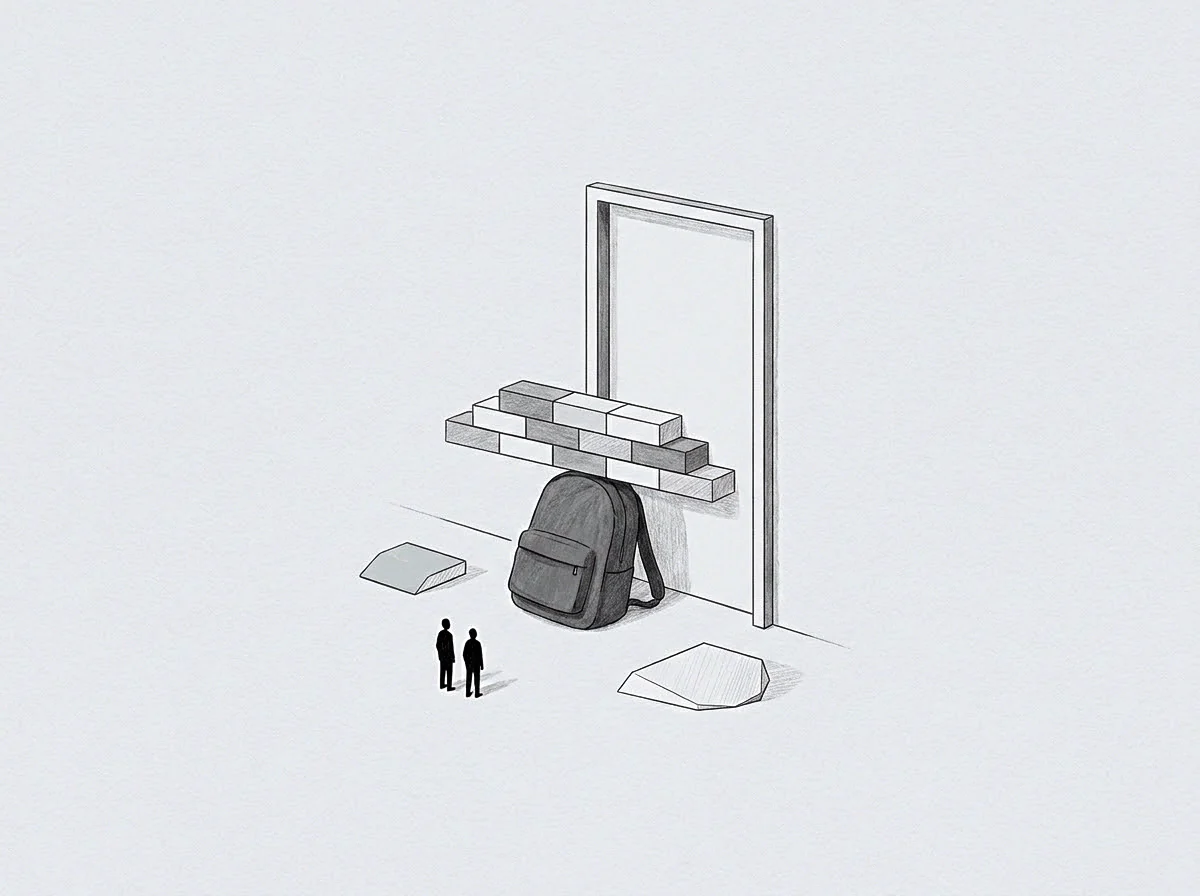
Triangle
Two seats start building. One brings a craft, the other brings a room of people who might buy what the craft makes, and for a while the arrangement runs on the plain fact that neither could do this alone. The one who builds would not have found the buyers.
The one with the buyers would have had nothing to put in front of them. What comes out of the building is a third thing: a name people start to recognise, a way of working with its own vocabulary, a body of work, an audience, a method that now exists as a product and not as one person’s habit. It sits between the two seats and it is the reason the arrangement exists at all.
Draw it and it is a triangle, two corners that are people and one corner that is the artifact they made between them. While the building goes on, nobody asks who owns that third corner, because asking sounds like planning the end on the first day.
The third corner gets an owner only at the split.
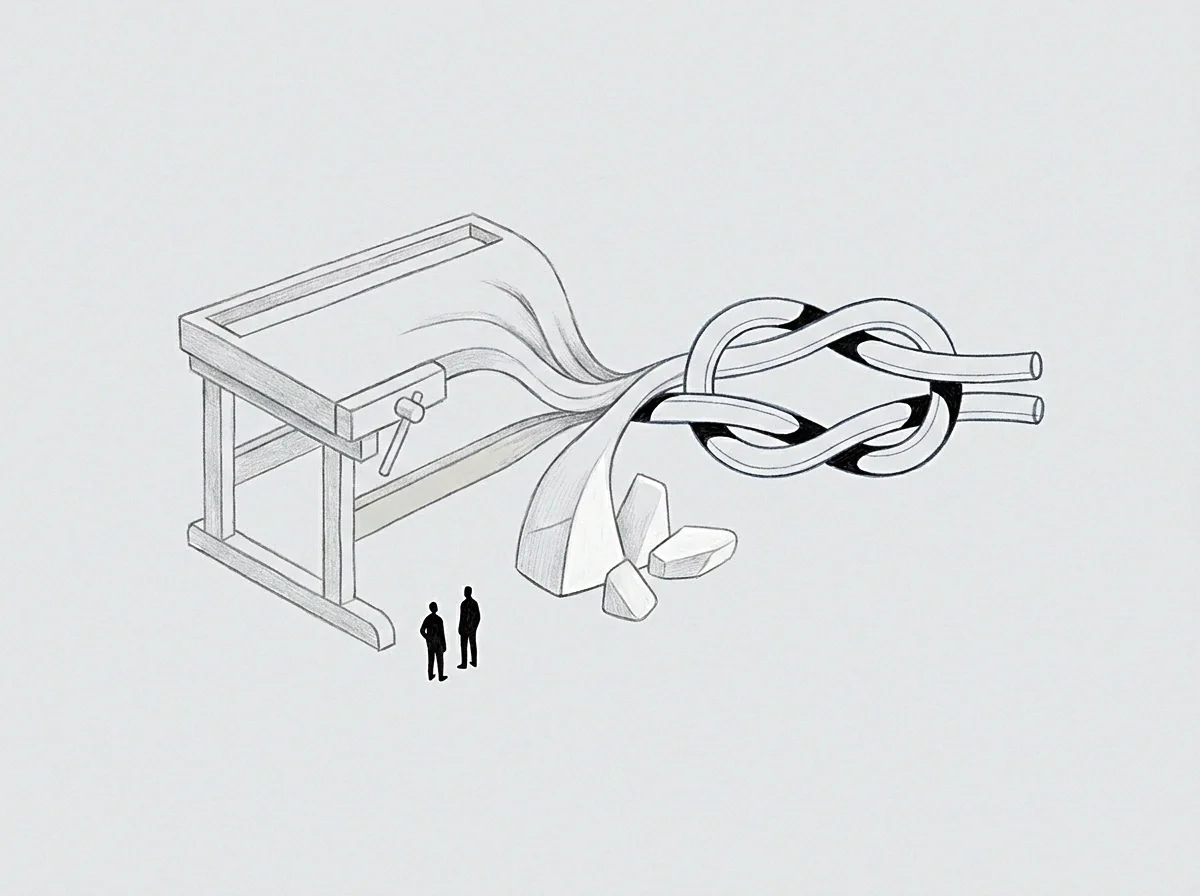
Control
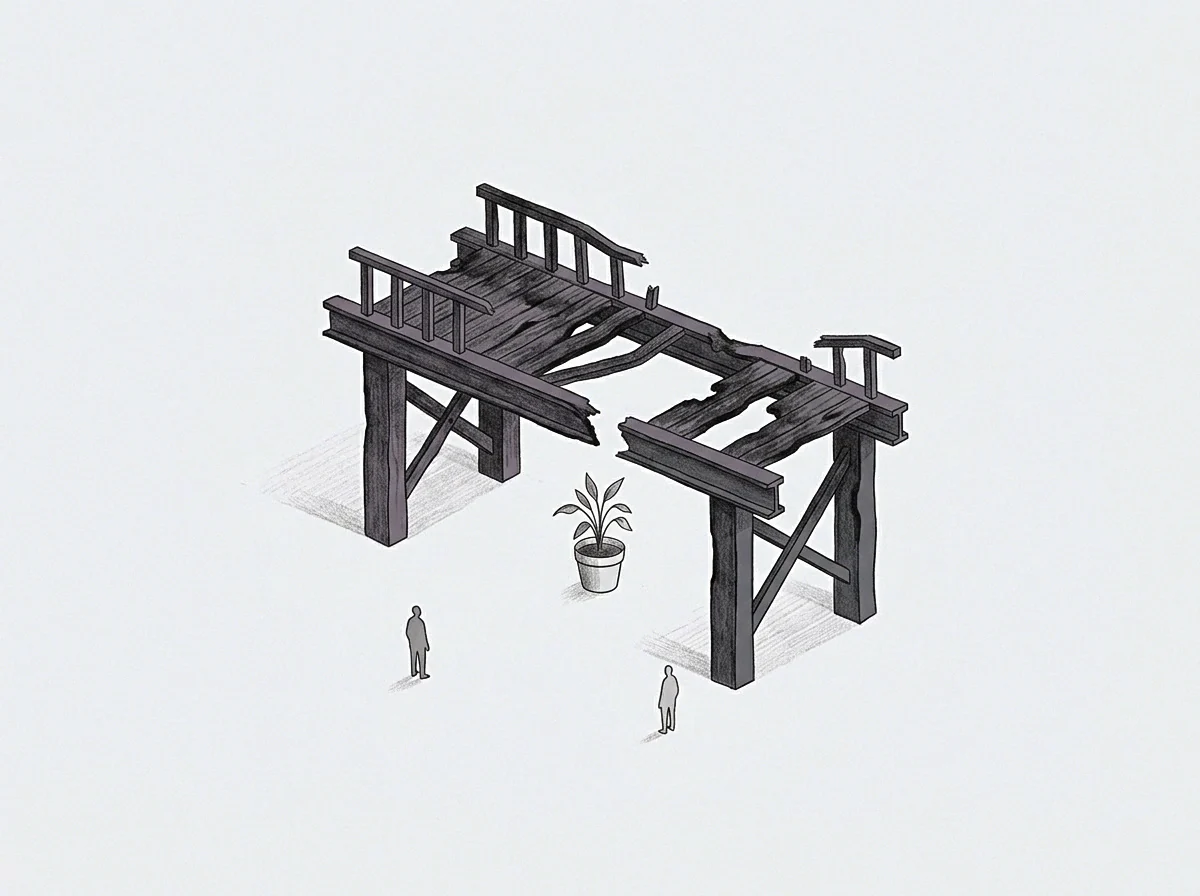
The Third Corner
Georg Simmel described this shape in Soziologie in 1908, long before anyone called two people a founding team. A group of two, the dyad, rests entirely on both members: either one can end it by leaving, and nothing of it survives the leaving. A group of three, the triad, is different in kind.
It has a structure that outlasts any single member, and the third element can mediate between the other two, or divide them, or gain from their disagreement, the position Simmel called the tertius gaudens, the third who rejoices. Sociology has used the triad ever since to read coalitions, brokers and families. Simmel wrote about people.
Put a body of work in the third position and the description holds with one change: the work cannot mediate and cannot rejoice. It can only be held.
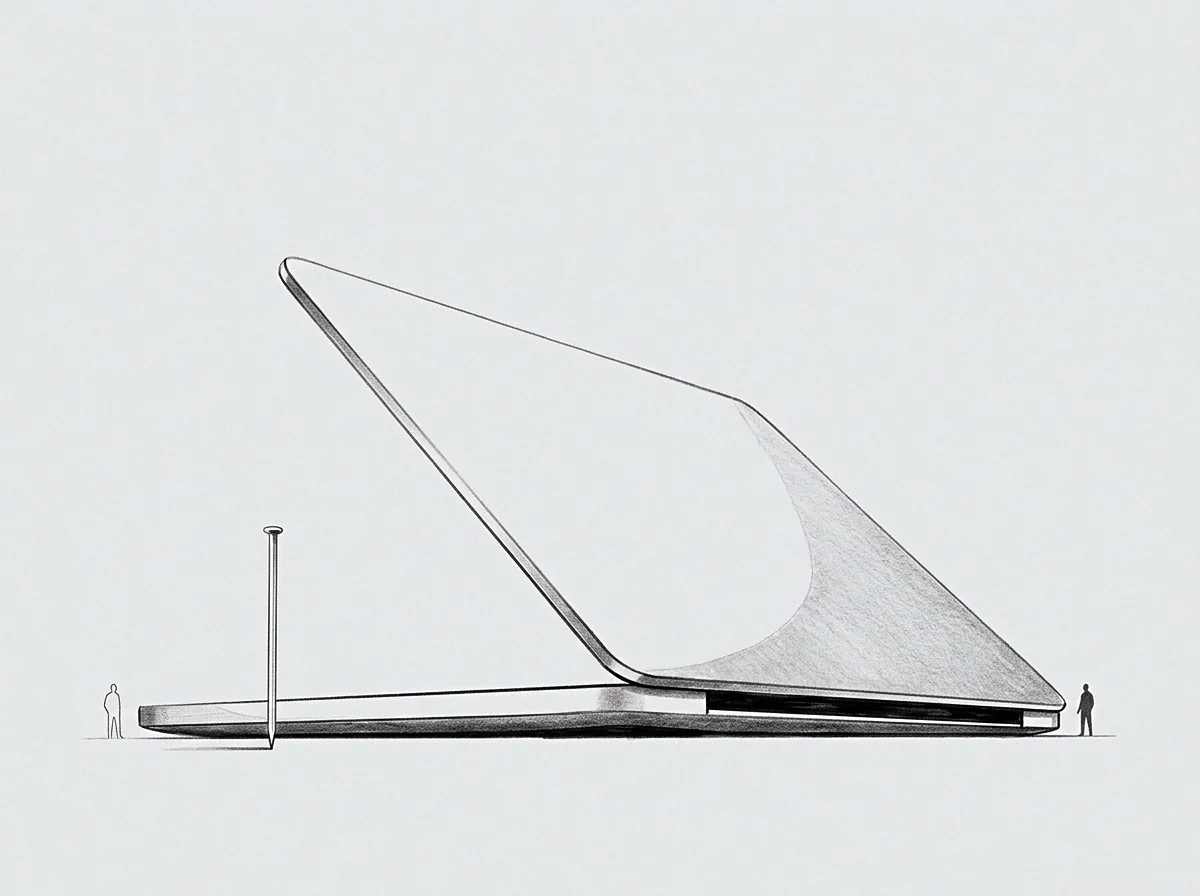
Residual Rights
The economics of who holds it came much later. Sanford Grossman and Oliver Hart in 1986, and Hart with John Moore in 1990, started from a plain observation: no contract between two parties can foresee everything that will happen, so every arrangement has gaps, and somebody has to decide what happens inside them. This is the theory of incomplete contracts.
Their answer was that the owner of the non-human assets holds the residual rights of control, the right to decide whatever the contract did not foresee. The person cannot be owned. Their skill leaves with them, and the theory calls that human capital for exactly that reason: only its bearer can hold it.
The owner of the asset keeps it when the relationship ends, and can refuse every proposal and lose nothing by refusing. The field has used this for decades to explain when one firm should buy another instead of contracting with it, and Hart later shared a Nobel prize for the line of work. The founder gets something simpler out of it: at the end of an arrangement, whatever cannot walk out by itself belongs to whoever the paper says.
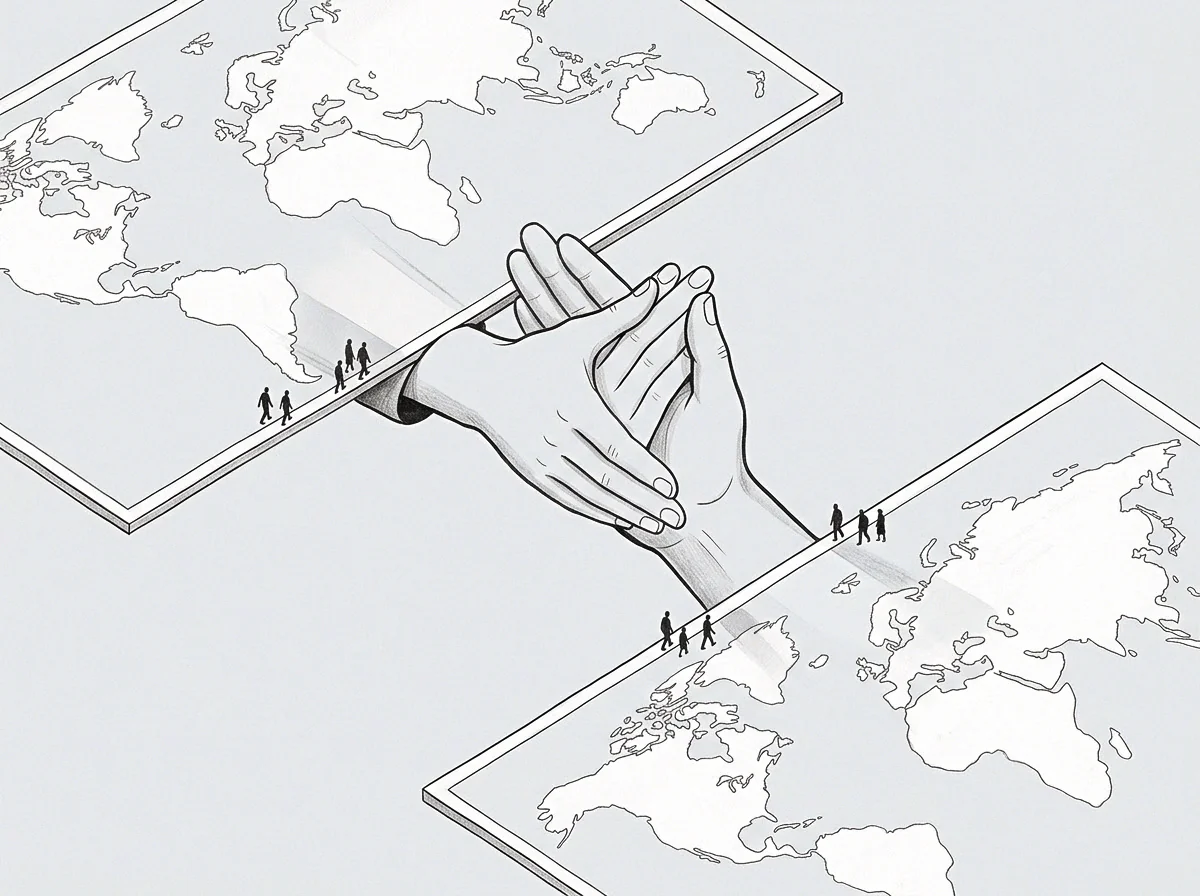
What Walks Out
Michael Polanyi named the other half in The Tacit Dimension in 1966: people know more than they can tell. The craft that built the thing, the sense of which client is real, the feel for when a piece of work is finished, none of it can be written down in full, so none of it can be handed over or kept back. It leaves with the one who has it.
I found both halves true in the wrong order. I treated what I carried as the valuable part for years, because it was the part I paid for with my own hours, and I guarded it. The split showed me that what I carried was the part nobody could take from me anyway.
The part that could be taken was the part I had never looked at: the corner that grew between the seats, and whose name it sat under. It cost me years of guarding the wrong half.
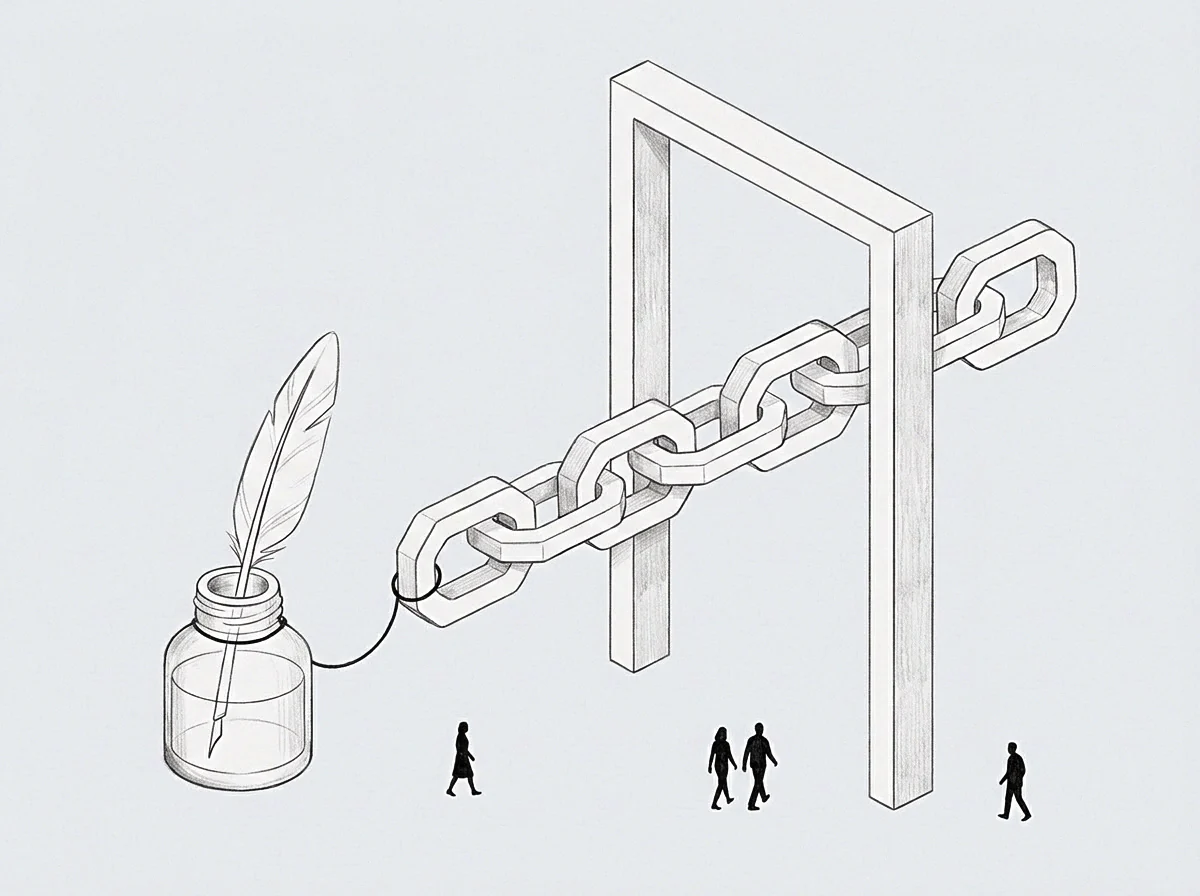
Inventory
At the split everything in the arrangement falls into one of two categories, and the two behave in opposite ways.
| What each seat brought | What grew between the seats | |
|---|---|---|
| What it is | the craft, the contacts, the reputation, the way of working | the name, the audience, the method as a product, the code, the data |
| Where it lives | in the person | between the persons, and on a register if anybody filed it |
| What happens at the split | it leaves with its bearer, whatever the terms say | the registered part goes to the name on the register; the rest has no owner |
The record has a pair of words for this: worn against held. What is worn walks out with its wearer. What is held stays with its holder.
The worn category takes care of itself. A skill leaves the room with its bearer, and the people who trust a seat cannot be handed over by order.
The held category is where every split actually happens, and inside it there is a further line, between the part that can be registered and the part that cannot. A name can be filed. An audience’s trust cannot.
Code can sit under a named owner; the working rhythm that produced the code has no owner at all. The unregistered part of the third corner does not pass to anyone at the split. It dissolves, or it follows whichever seat keeps doing the work that fed it, and the other seat watches it go without any paper to point to.
What could walk out needs no paper, and what could only be held needs a name on it before the split, not after.
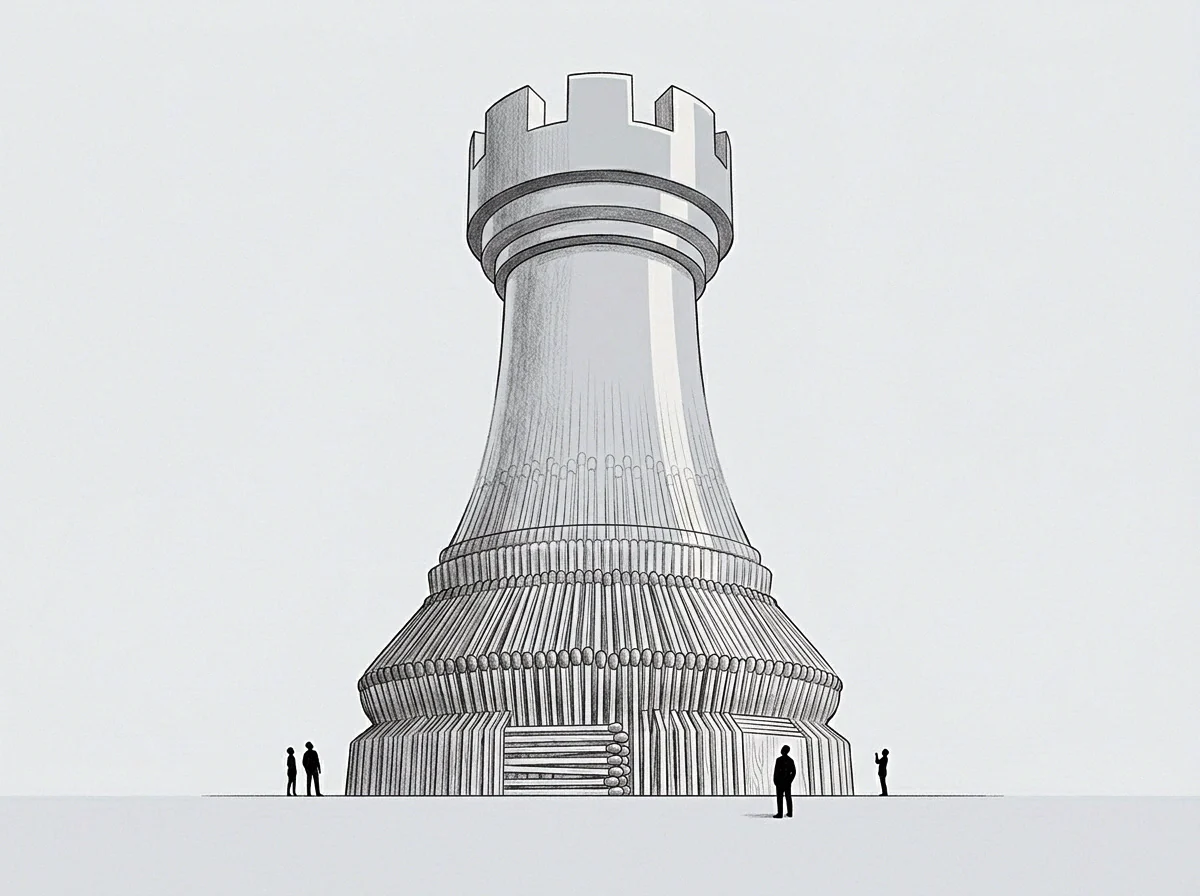
Register
The parts of the third corner that can be held are held on registers, and each register answers one question in its own words:
- the address the work is found at: whose name the registration sits under;
- the name itself: who filed the mark, and in which classes;
- the company that carries the work: who is entered as a holder, and of how much;
- the code: whose repository it lives in;
- the platforms the audience follows: which seat holds the administrator’s login.
Nobody at any of these registers asks who built anything. A registrar records who filed and repeats it to anyone who asks, the same way every time, and it has no field for effort. This is the difficulty with the intangible layer.
The work that grew the third corner was shared, often unevenly, sometimes very unevenly, and the evidence of who did it lives in the work itself, in hours nobody logged and decisions nobody wrote down. The title to the held part lives somewhere else entirely, in a line somebody typed into a form on an ordinary afternoon, usually early, usually without a thought for the end. The line that fixes this belongs in the first terms: for each thing the arrangement will register, which name it goes into and where it goes when the arrangement ends.
With it, a split is a transfer. Without it, the split is decided by whoever happened to fill in the form.
The register does not care who built it, only whose name went in the form.
In the paperwork that line has a name, and almost nobody writes it at the start: an assignment.
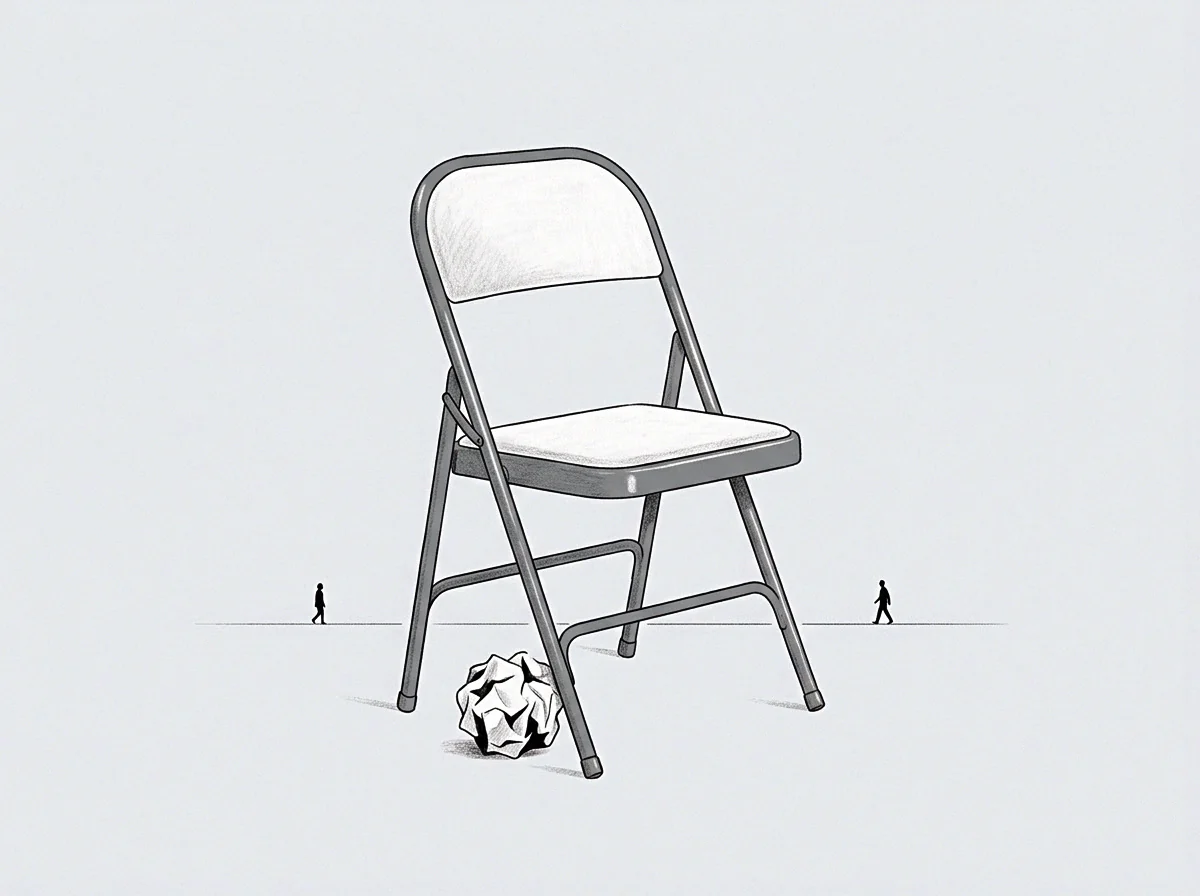
Severance
Without it, the other seat waits, and waiting is where it turns into a war.
John Maynard Smith described the war of attrition in 1974, for animals contesting a prize without fighting for it: each side simply stays, each pays a cost for every hour it stays, and the prize goes to the one who can bear the waiting longer. Biologists have used it since for territory, mates and nest sites, and economists for strikes and standoffs between firms. The contest goes to whoever waits at the lower cost.
The seat whose name is on the register waits cheaply at the end of an arrangement. The asset stays where it is. Nothing has to be done.
The other seat pays for every week. The first cost is the work it cannot continue, the second the thing it cannot sell, the third the line it keeps open in its head.
The seat that waits cheaply holds something more without doing anything for it: a free option on whatever the other seat builds next on top of the shared corner.
Erving Goffman’s essay On Face-Work, from 1955, describes how much work people put into keeping the standing they claim in an encounter, and how an encounter that costs someone their face has to be repaired before anything else in it can go on. Face is not vanity in Goffman. It is the position a person holds in front of others, and people defend it at real cost, often past the point where the thing in dispute is worth defending.
I took one thing from it for the split. A split that takes both the asset and the standing gets a war, because the other side is now fighting for itself and not for the thing. A split that moves only the asset, and leaves the other seat its standing, the credit, the story it tells about the years, has nothing left for anyone to fight about.
That is severance: the thing changes hands and the person keeps face.
Take the work if you have to, just do not take the years.
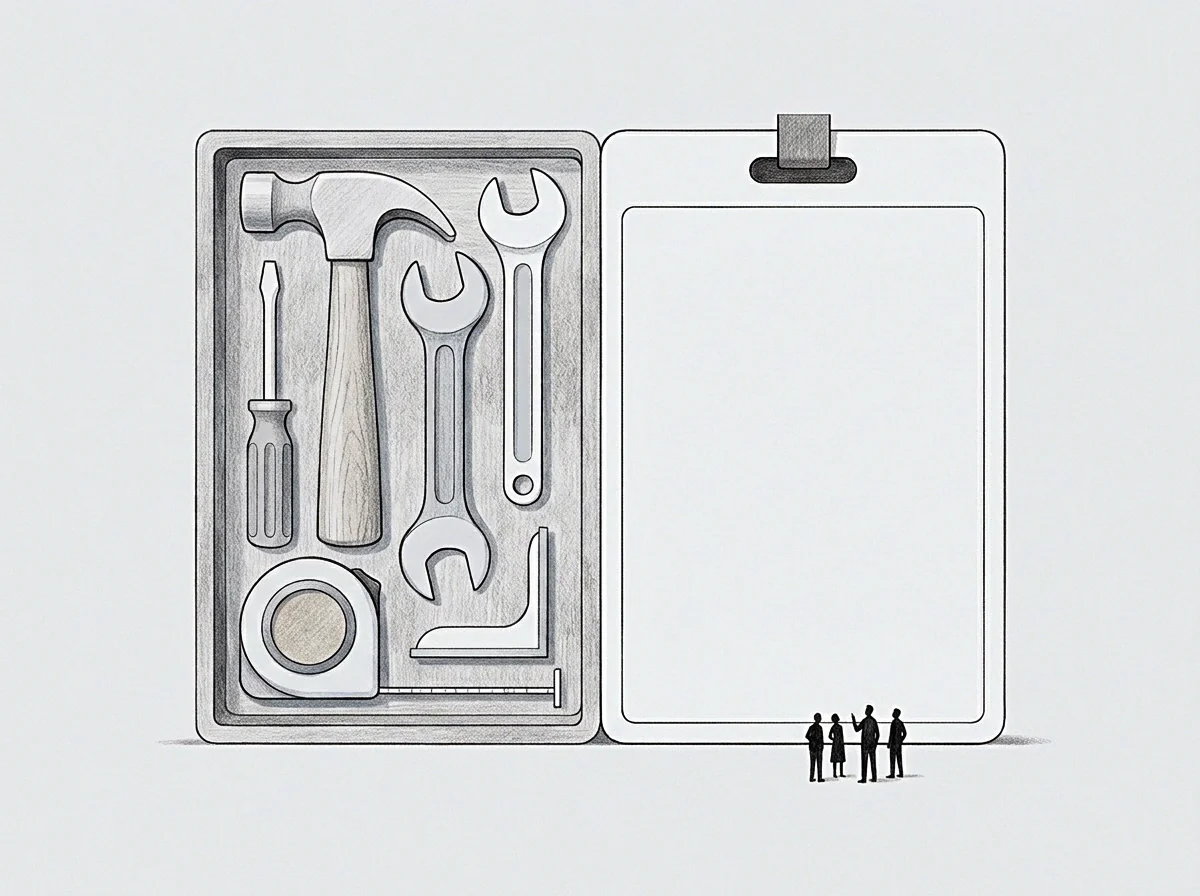
Unfounding
Everything written for founders is written for the way in: how to find the other seat, how to split the first equity, how to raise, how to grow. Almost nothing is written for the way out, and the way out is where most arrangements end, not in a sale or a listing but in two seats deciding, slowly, that the triangle is finished.
Noam Wasserman studied thousands of founding teams for The Founder’s Dilemmas in 2012 and found that most of them decide who holds what within the first month, and that many split evenly and quickly, because a long conversation about the split feels like distrust at the moment everyone is trusting. The same research put conflict between founders among the common reasons young ventures fail. The splitting is decided before anybody knows what will be worth splitting.
Then the end comes, and there is no word for the person it happens to. Nobody calls themselves a failed founder while it is happening. They are still inside the arrangement, sensing that something is off, and they search for the symptoms: the seat that stopped pulling its weight, the contract that never gets signed, whether the even split was a mistake.
Dean Shepherd wrote in 2003 about the grief that follows the loss of a business, and argued that the grief blocks learning from the loss until it is worked through, with recovery coming from moving between facing the loss and turning away from it to rebuild. The loss is real before it is admitted, and it cannot be divided before it is named.
Founding has a whole literature and unfounding has none.
To unfound is to take the triangle apart on purpose: to say what each seat brought and let it walk, to read the registers for the corner that grew, and to move the held part without taking anyone’s years.
The registrar will say what it has said since the day of the filing. Did anybody decide, at the start, what they wanted it to say?