Meaning
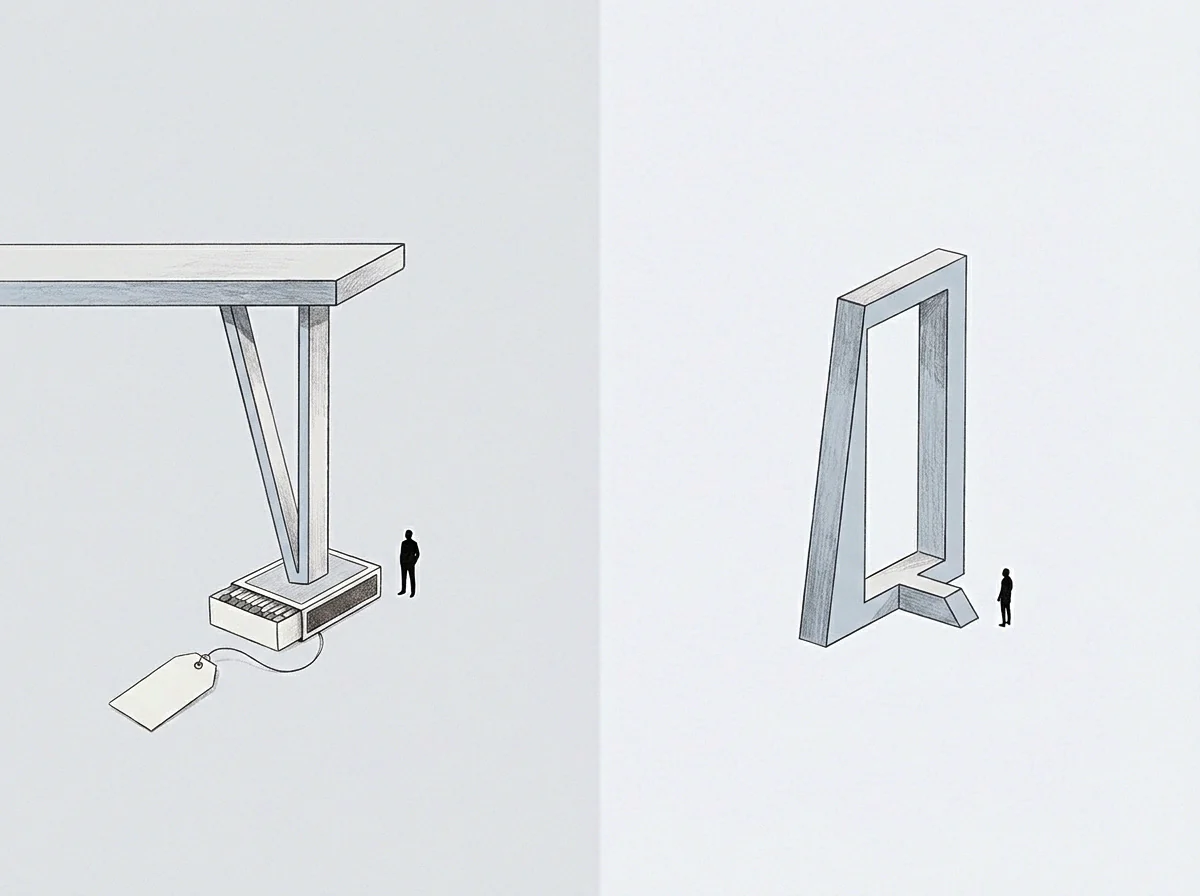
A set of comparable prior events or assets establishes the empirical distribution used to evaluate the probability or value of a new undertaking. In forecasting and valuation, this reference class provides the baseline data needed to counteract subjective bias and optimism. By systematically comparing a current project to a broader population of similar historical cases, an analyst can estimate realistic budgets and schedules.
This discipline overrides narrow personal projections.
Comparative Baseline
Selecting the historical population requires defining shared structural characteristics. When evaluating the output of an individual or an early-stage venture, a reference class must consist of peers operating under similar market constraints. This baseline allows an operator to distinguish between personal performance and systemic trends.
For instance, founders who exit a business often struggle to value their subsequent labor because they lack a room of peers doing equivalent work. The presence of an active peer group provides the valuation parameters that make individual assessment possible.
Information Limit
Data constraints often restrict the utility of a benchmark set when the work is highly specialized or unique. If a reference class is drawn too broadly, it aggregates irrelevant noise that distorts the forecast. Conversely, a class that is too narrow suffers from a small sample size, which makes statistical inference unreliable.
Operators who work in isolation or pioneer new domains find that the lack of comparable precedents forces them to rely on speculative intuition. In these situations, the absence of an external benchmark creates a ceiling on self-evaluation and strategic planning.
Calibration Cost
The absence of a clear comparison group imposes a heavy load on those who price their own contribution in attention and energy. When an operator lacks a reference class, negotiating without a baseline consumes many hours. This isolation often leads to underpricing or overestimating the value of their labor.