
Reading the seat, not the claim
Terms get argued with what a person claims to be, and then delivered out of the seat that person actually holds. I read one arrangement by its claim for years, and not because the claim convinced me: it was holding a seat I did not want to hold.
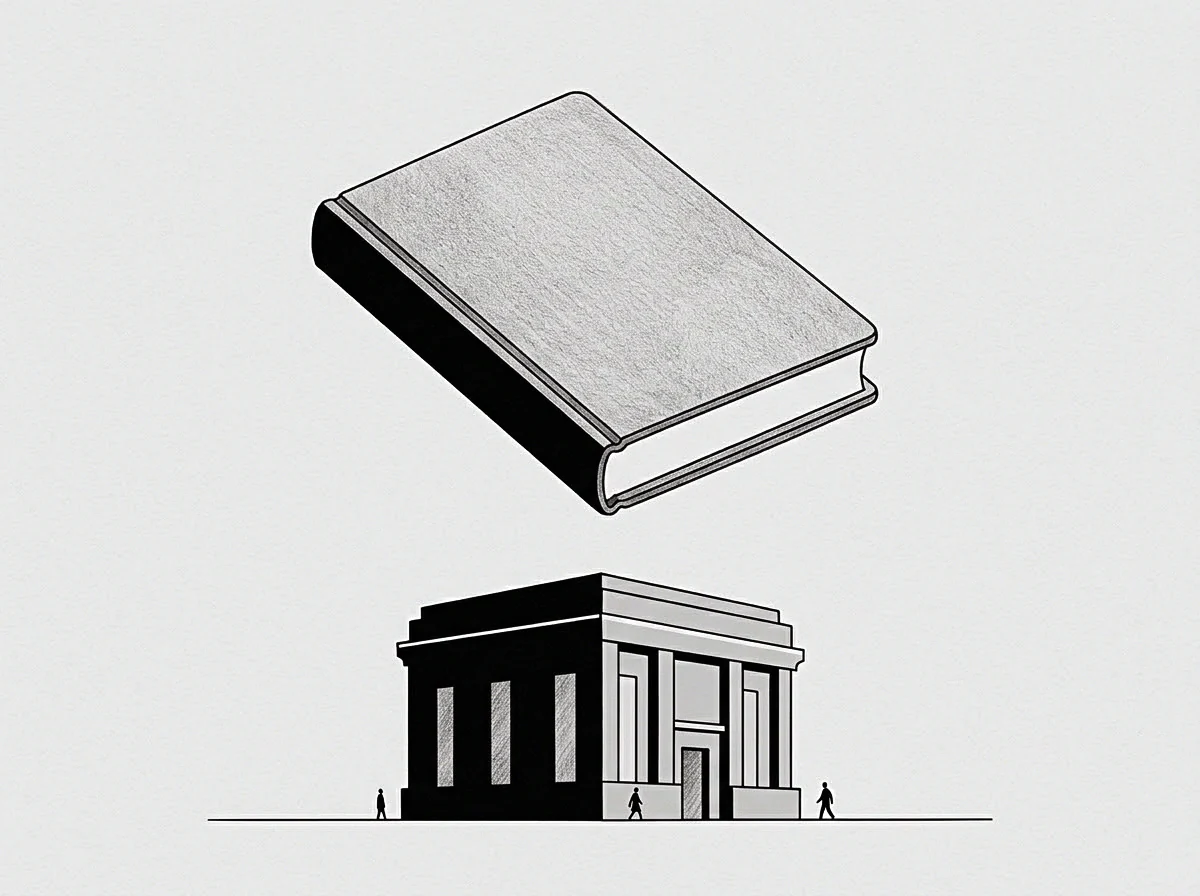
Claim
Somebody says what they are before any work gets done, and the saying comes with words on it. A title, a line on a public profile. The noun a person reaches for in a first meeting when asked what they do.
The table holds that one object at first, and for a while nothing else on it can answer back, so that is what gets argued with. The terms and the split get written against it, and everybody leaves with an arrangement. Then something falls due and has to come out of somebody’s hands.
The seat is where it comes from, and the seat was there the whole time, never at the table.
A claim is a position stated. A seat is the place in a person where value actually comes out when something has to be made, and it shows only in what that person does, over and over, in weeks with load on them.
The claim comes to every meeting and the seat comes to none.
Before anything falls due, there is nothing to hold the claim against. The seat is latent. It is fully formed and it is working, somewhere nobody at the table can see, because a table is not where a seat works.
So the two get taken for one object, and that is not carelessness. It is the only reading a table allows. What gets argued is the claim.
What gets delivered comes out of the seat, and the gap between them gets written into the terms on the first day, by people who were reading the other object.
A negotiation is work too, and it also comes out of a seat. That part I got last. Sit across from a claim and you can have a negotiation performed for you, warmly, with agreement on every line, and when it is over nothing is committed, because committing is not work that seat does.
Nobody is pretending.
For years I read one arrangement by its claim, with the seat in plain view every week doing exactly what it does. The evidence was never missing, and reading faster would not have helped. What was that claim holding up on my side, that I let it stand unread for so long?
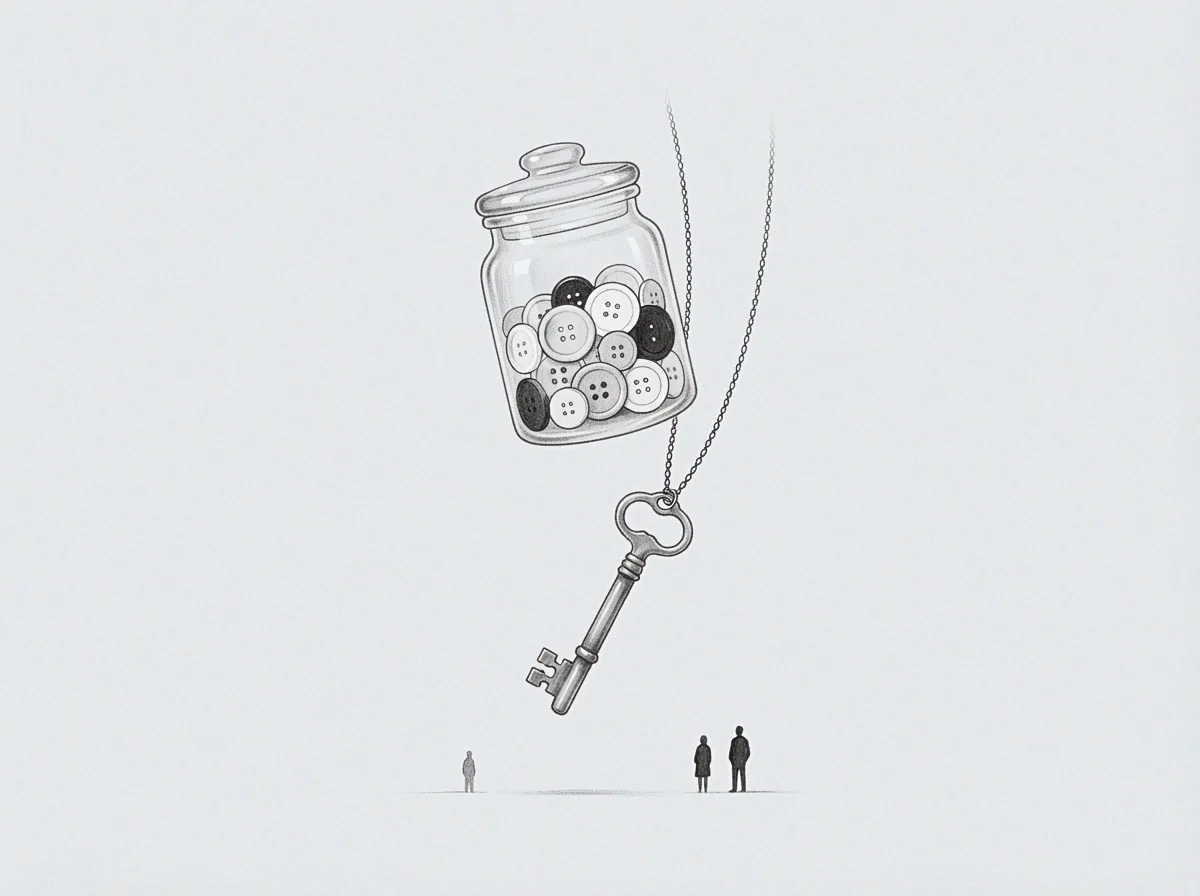
Craft
I had the fronting seat, the one that stands in front of the arrangement, down as a founder seat for years, because the arrangement said so and the public profile said so. The reading that holds now puts it in the technician seat, and the craft in it is real and done at a high level.

Where the Value Comes Out
The craft is managing the room. Its value gets made live, in the act, in the presence of the people it is for, and when the act stops nothing more gets made, because the value was never stored anywhere outside the act. That is technician work in the plain sense of the word.
Technician says where the value gets made and says nothing about how well. The better the craft gets, the less anybody around the seat thinks to ask what else it holds, because every room it works keeps saying yes. Outside the craft sits the other half of the work: choosing what gets resourced, carrying the thing that broke, signing for something that stays signed.
How the Claim Got There
The founder claim was acquired, and the craft is what acquired it. Acquired is not an insult here. The work was done and the rooms were real.
What the claim is made of is language, and the language was mine, built in my seat, and it went across in small pieces over a long time: a thing said in a way that fit, carried into the next room, and back the next time as part of a description of a person.
Nobody sent the founder seat as an offer and nobody accepted one. It set, one small episode after another. The seat was never sent, so it cannot be taken back by talking about it, and I talked about it for years.
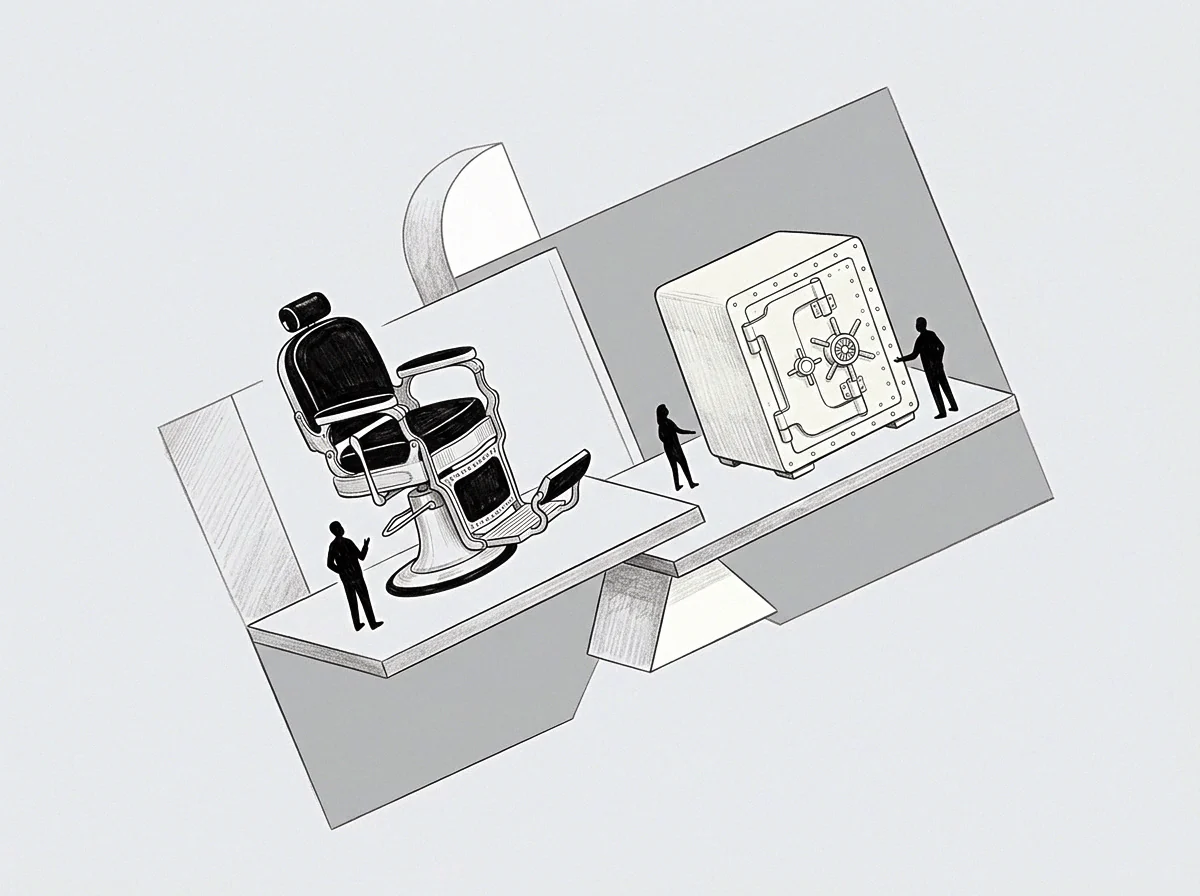
A Coat and a Skin
I first called a position like that worn, and the word was too light. Worn says coat, and a coat comes off at the end of the day and hangs on a chair. The word I came to later is skin.
Skin also came from outside, but it grew in, and seen from inside there is no seam left between it and the person. Under it sits the core, the seat actually held, which here is the craft.
A position that has become skin is not defended as a position. It gets defended the way identity gets defended. In an arrangement built over skin, a move toward separation is never only a change of terms: it is a move against the position, and it is answered as one.
A plain question about the operation passes first through what it does to standing and only then gets heard as information, so the answer comes back about standing. The room is what a proposal gets read for, and a proposal with no room in it gives the craft nothing to hold, which from outside looks like not understanding.
A coat can be talked about while it is still on.
Nothing into an Empty Seat
A system handed into an empty seat does not fill it. It puts the one who handed it into the seat, doing that seat’s work under another name, and that was my position for years: my language, my operation, and the claim standing on both.
The condition now is non-rescue: nothing I make goes into a seat I do not sit in. Every piece I leave where it lies is a piece the seat now has to learn, and a seat only learns what nobody is doing for it. My supply used to cover the gap, and from outside the cover looked like a founder.
What the condition changes is where the gap shows: uncovered, it shows in the seat it opened in, and it looks like what it is.
Behaviour
Seats before Direction
Jim Collins published Good to Great in 2001, and the study under it was built to catch something rare. The team started from 1,435 large American companies and kept only those whose stock had run level with the market or below it for fifteen years and then, from one turning point, returned at least three times the market over the next fifteen. Eleven passed.
Each was set beside companies from the same industry that had the same opening at the same time and did not take it, so that what the eleven did could be read against what the others did not do. Collins went in expecting the leap to start with a direction: a new vision and a strategy. It started with people.
The leaders who made the leap decided who sat in which seat, and who got off, before they decided where to go. The finding goes by first who, then what, and the picture drawn for it, a bus with the right people in the right seats, has been in management talk ever since.
Phil Rosenzweig put studies of that kind under pressure in 2007, in The Halo Effect, and the pressure falls on claims. Much of what such studies know about a company’s people comes from what was written and said about them after the results were in, and results colour description. A company that is winning gets its leaders called focused and its culture called disciplined.
Let the same company start losing and the same leaders, doing the same things, get called rigid. The effect in the book’s title is older than business research. Edward Thorndike named it in 1920, after officers rating the men under their command on separate qualities handed in ratings that moved together far more than separate qualities should, one general impression running down every column.
Described and Done
Daniel Katz and Robert Kahn built their theory of organisations on roles, in The Social Psychology of Organizations in 1966, and their definition of a role leaves the title out. A role is recurring action: what a person does again and again, fitted into what the people around them do again and again, so that the outcome can be predicted. What others expect of a position is a separate object in their model, and so is what the person in it hears of those expectations.
Much of the later research on role conflict and role ambiguity stands on that model. A claim belongs with the expectations. The seat is the recurring action.
Henry Mintzberg took the same line with the people at the top of companies. You ask managers what they do, and they give the answer that goes back to Henri Fayol in 1916: they plan, organise, coordinate and control. Mintzberg watched instead.
Five chief executives, a week each, every activity logged, and the book came out in 1973 as The Nature of Managerial Work. What the log showed did not match the description. Half of the activities were over in less than nine minutes.
The work ran on talk far more than on paper. The reflective planner of the textbooks was not in the record at all. Asked, managers give the claim.
Watched, they show the seat.
In the ten roles the watching produced, negotiating sits with the decisions, beside allocating resources and handling what goes wrong, and not with the roles that stand for an organisation and speak for it. The ten roles went into the introductory textbooks, and when Lance Kurke and Howard Aldrich repeated the watching in 1983, the title of their paper gave the result: Mintzberg was right. It is the placement of negotiating that turned my reading into a rule.
The negotiation that ends in warm agreement and no commitment is decisional work put to a seat that holds none of the decisions. I watched it for years and gave it the name delay.
When the Role Becomes the Person
Ralph Turner asked in 1978, in a paper called The Role and the Person, when a role stops being something a person plays and becomes part of who the person is. Turner called it role-person merger and gave signs for it, two of which can be seen from outside. The person keeps playing the role in places where it does not apply.
The person holds on to the role even when a better one is on offer. Neither sign asks anybody to guess at what goes on inside. Both are behaviour.
I had been calling what I do reading people. It was seat recognition, and the field built its definition of a role the same way round: the recurring action counts and the title does not. The halo is what makes it hard.
The room is where everybody is watching, so the room is where a halo gets made, and a craft that is excellent in the room gets its excellence carried down every other column, the founder column included. Saying so out loud lands as an attack, and merger is the reason. Collins puts the reading before the terms, because the terms are the direction of a small arrangement, and a direction set before the seats are read gets written for whoever the claim says is sitting there.
Finding it true cost me years in which the seat was in plain view and I kept writing to the claim, and the reason for the years is not in any of the research. The misreading was paying me. I never had to make a claim while the fronting seat held one.
I built underneath it and my name was nowhere on it, and nobody asked what I wanted or what any of it was worth to me, because nobody was standing on my side of the arrangement to be asked. That was a rest, and a rest is hard to read against. Nobody who is paid by a claim, in something they would not ask for out loud, reads that claim early.
It was holding up my side the whole time.
“Terms first, and who does what will sort itself out once it’s running.”
Map
The second reading was harder, and it broke the idea that reading a seat means putting a person into one of three boxes. The operator without shares holds pieces of all three seats. Scattered, and working.
- technician pieces that are real, where work gets made in the operator’s own hands and lands
- manager pieces that exist in intention and stop at the people they have to run through
- founder pieces that are live, where direction gets held for the growth of the whole company
None of the three runs at full strength, and that is not a defect. Nobody can read a map like that off a title, because a title names one seat, and this operator is paid for one kind of work and does three.
And the map is not only of the person. Two of the three seats are held down from outside. The manager pieces stop where the people they run through have the wrong skills for the work.
The founder pieces stop where the structure above has made no position for them. Read that map as the operator’s alone and you are reading an arrangement and calling it a person.
I watch a person in a week that gets tight, before I sit at any table with them. Not what they say they do, and not what sits under their name on a chart. What a person takes back into their own hands is the held seat, and it is the seat the terms get.
Manager
The manager seat fails without a sound. Nobody sends notice that a structure has stopped carrying.
The operator holds it in intention, and the intention is real. The pieces are handed out and the people are in place, and then the work has to travel through those people, and the skills at the other end are wrong for it. Not lazy people.
The wrong people for that job. So the work comes back late, with a date on it.
It is faster if I do it myself.
At that hour it is true, and the work gets finished. The operator also steps back into the technician seat for that piece, and the structure stays exactly as unproven as the day before, because nothing was ever allowed to run through it under load.
A manager seat is made of transfer: work goes out through other hands and comes back done. Two different gaps stop the transfer, and from above they look the same. In one, the people have the pieces of the work and not the assembly.
Hand them the assembly and they build with it, and what gets built is theirs; that is development, and it is what a manager seat is for. In the other, the pieces are not there. Work pushed into a seat like that does not get done by the seat.
It comes back and gets done by whoever sent it, who is now sitting in somebody else’s seat under a manager’s title.
That puts the seat somewhere else. It is not held by the person who declares it. It is held by the people it runs through.
Where the skills at the other end cannot carry the work, the seat describes something that has not happened yet.
Read that operator as a manager and the terms assume a week that is free to spend on direction. It is not free. It goes, in the act, on the pieces that came back, and the misreading gets paid for twice: first by the operator, as capacity gone before the week has started, then by the arrangement, as everything nobody built while the operator was finishing somebody else’s part.
Founder
Founder work wears no uniform. It looks like meetings, and it is the work that decides what a company becomes.
A person can do that work week after week from a seat with no founder position in it. The direction gets held from there, which is the work the structure above was supposed to do, and on paper the seat still reads as something else. What the work stands on then is a promise, and when nothing is written down, nothing holds that promise in a form that would survive anybody changing their mind.
Denise Rousseau’s name for a promise of that kind is the psychological contract: what one side believes the other has promised, carried in the head whether or not anything was ever written.
Sandra Robinson and Rousseau published a study of breaches of it in 1994 under a title that states the finding: not the exception but the norm.
Here the claim runs the other way.
In the fronting seat the claim ran out ahead of the seat, and the seat could not carry it. In the operator’s, the seat runs out ahead of the claim: founder work, and no founder position to do it from. One failure, read from its two ends.
In both, the terms were written against the wrong object, and in both the wrong object was the one with words on it.
Somebody doing founder work in a seat like that cannot decide from where they stand. They can propose. Every real decision routes back through a structure that has made no room for the person doing the work, and the structure moves slower than the work.
The work waits.