
If it does not ping
One sentence said before a silence, not after it, is the difference between a change of supply and a punishment. Until it is said, a founder's steadiness sits in the arrangement as environment: a thing that holds at one value for so long that nobody perceives it, prices it or expects it to move. The sentence turns the constant into a variable, and the one who moves it is the one who had been holding it still.
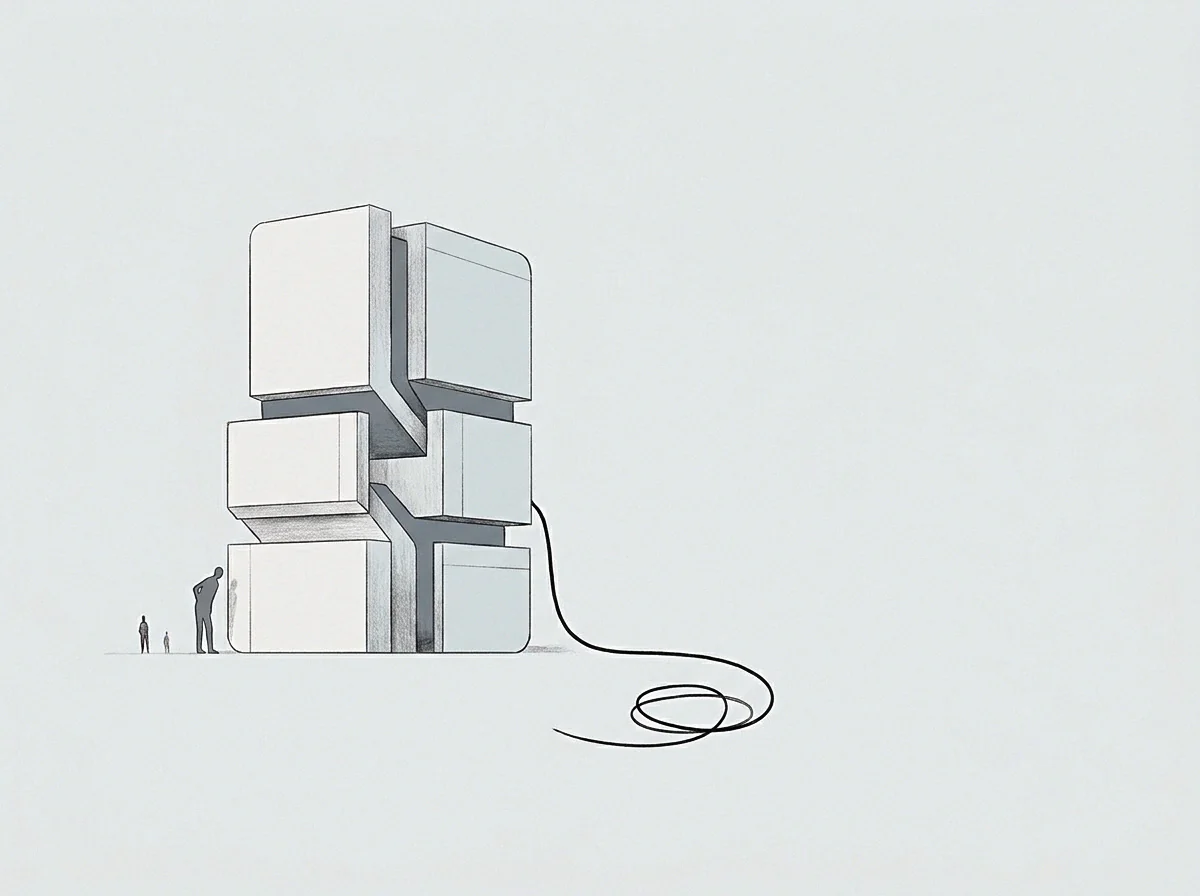
Ping
For days the channel had not pinged and I had not touched it. That was new. Before, the quiet was mine to fill.
A status, a question about a deliverable that had not arrived, a nudge, anything that showed the line was open, sent on top of a heavy workload nobody had written down, least of all me. I ran the operation. I ran the line to the fronting seat as well, and the line was the part nobody had priced.
Then I stated a derivation to that seat, the one that holds the relationships and none of the operation, and I stated it before the quiet, not after: the channel’s own traffic, not the seat’s character, would decide what got time, on either side.
It does not say I am stepping back. It does not say the other seat has to do more. It attaches my attention to the channel and takes it off me as a person, and it does the same at the far end of the line.
A channel that pings gets time. A quiet one does not, and the quiet reads the same from both ends. Nobody has to guess what a silence means, because the meaning was set before the silence started.
So when the quiet came I let it stand, and I watched what it did to the hours. The time that had gone into holding the line came back to the operation, and the other seat noticed, because a drop in time and attention cannot be hidden. What got noticed first was not the derivation.
It was the gap where the pinging used to be.
You used to answer straight away.
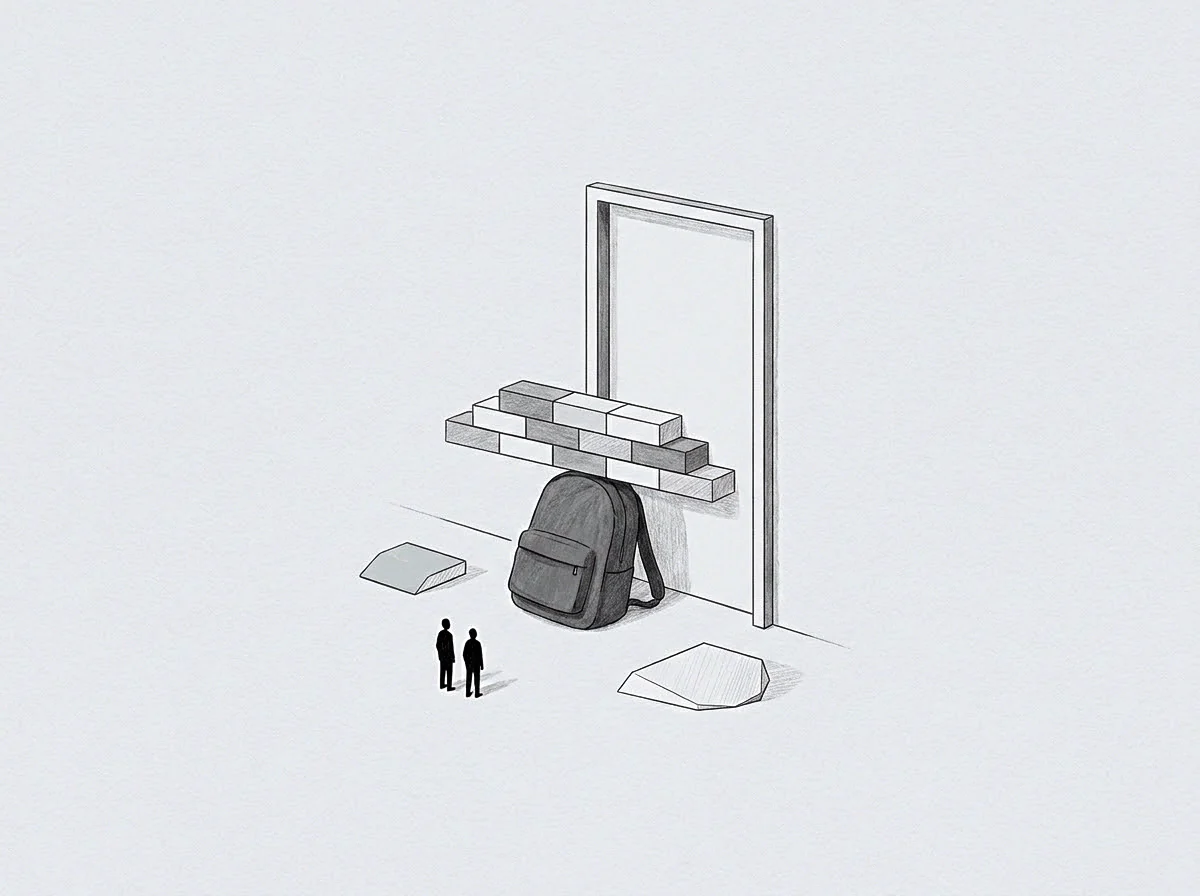
Priority
Availability that arrives as a consequence reads as punishment. That is the risk in every change of supply, and it has nothing to do with intent. A person who has had a steady flow of attention for years sees the flow drop and reads the drop as aimed at them, because the result is visible and the derivation is not.
The missing step gets filled with a motive.
The sentence exists to fill that step first. Said in advance, the drop is arithmetic: the channel went quiet, so the attention went where the channels were pinging. Said after, or not said at all, the same drop is a message, and the message reads as blame whatever was meant by it.
What the line takes away is the one surface left on which a silence could be read as what I think of whoever holds the other seat. The clock does the parking. I only read it, and so does the other side.
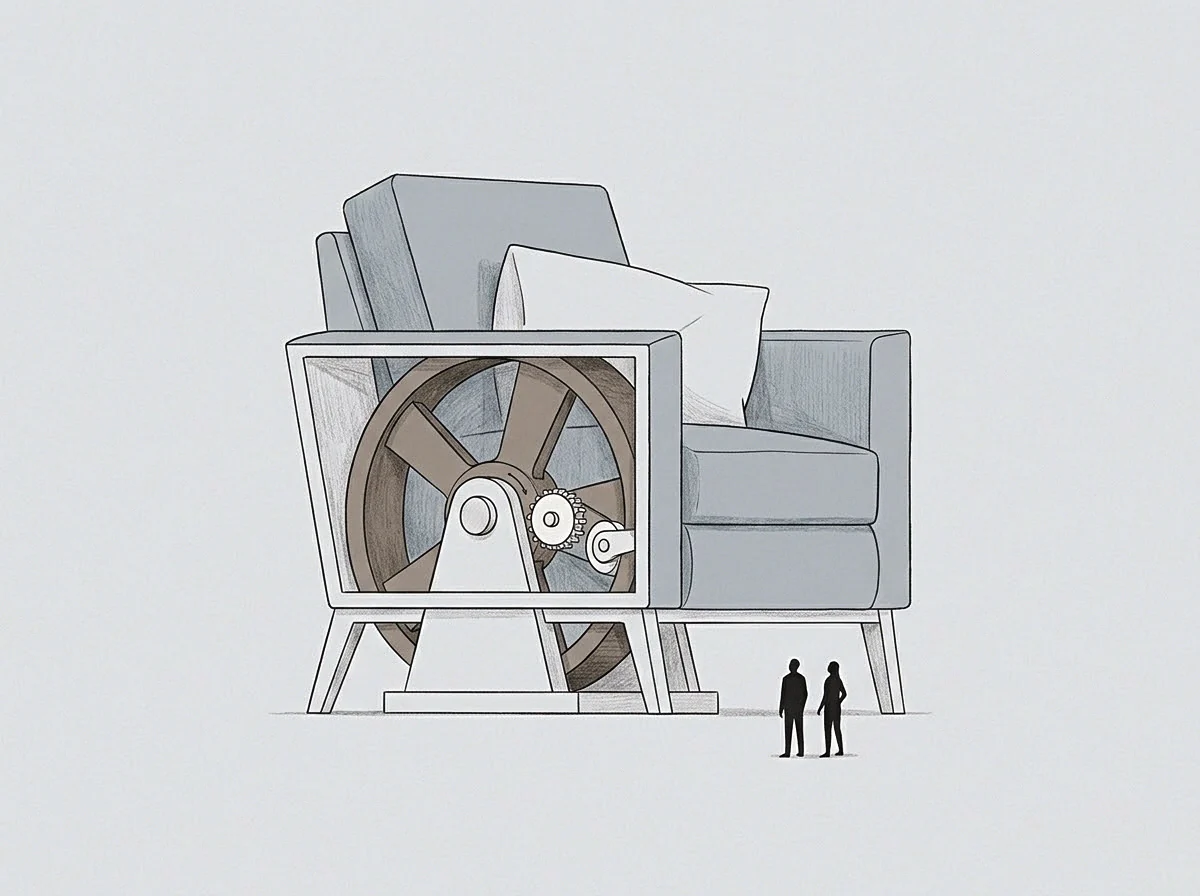
What the Quiet Exposes
The drop in time and attention shows something, and it is not something about the person in the other seat. It is about the channel. When I stop pinging and nothing pings from the far end, then the traffic on that line was mine.
All of it. I had been building, and the fronting seat was part of the build by being near it, not by being in it, and the pinging was what had made nearness look like attendance. Take the pinging away and the two come apart in front of everyone.
That is the exposure, and I do not think anyone can prepare the other side for it except by saying the sentence first.
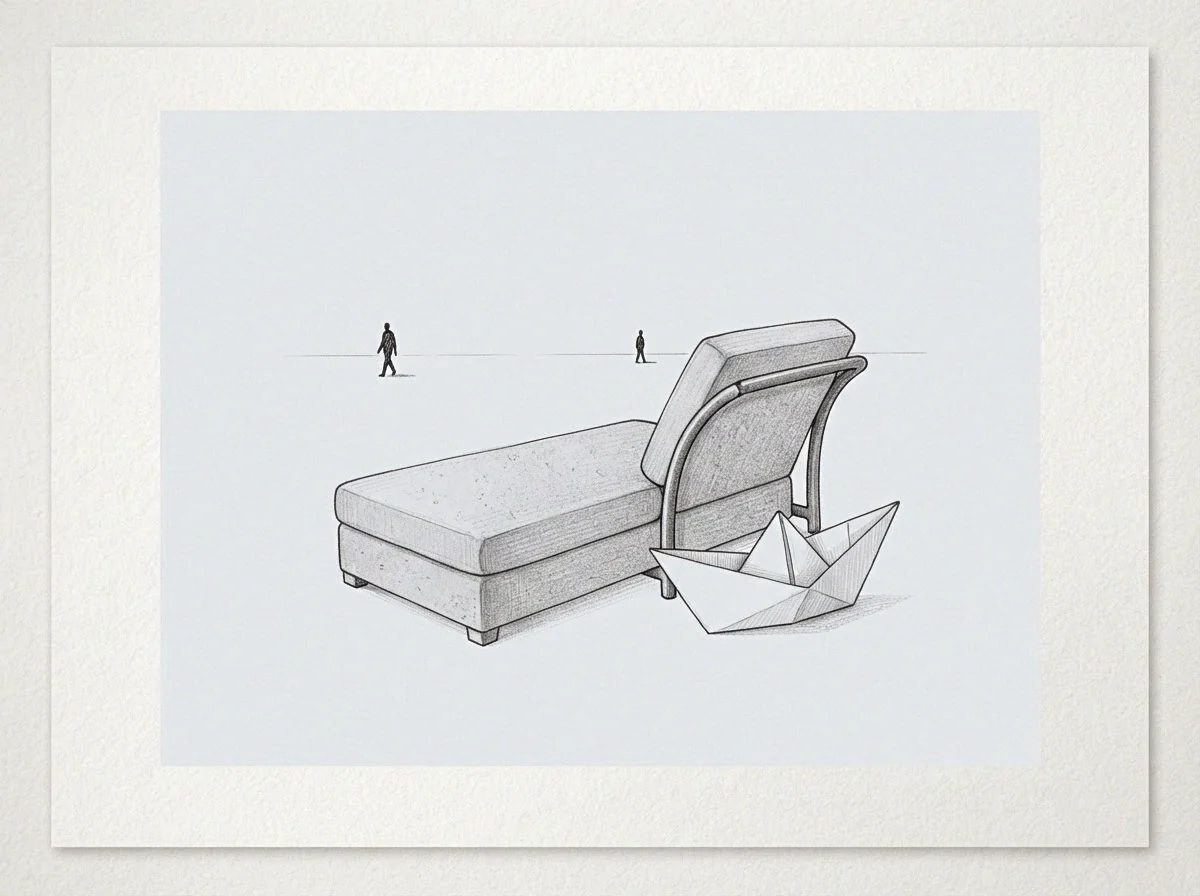
The Contract Nobody Signed
What the sentence broke was a covert contract, and it sat in the fronting seat before it sat anywhere else: that my position was unmovable, that the heavy workload would go on, that the supply of attention from my side was a fixture of the arrangement and not a decision anybody was making. Whatever had been built on top of that assumption had to be rebuilt when the assumption moved, and the rebuilding belongs to that seat, not to mine. I did not sign that contract.
I did not know it existed until the sentence broke it. But it had been paying out for years, and here is the part it cost me to say: I held the same contract with myself. My position was locked in, and I was the one who had locked it.
I had said, more than once, that I do not wait for anyone, that I keep moving anyway, and I meant it, and I did keep moving. So the reading in the other seat was not a misreading. It was an accurate reading of a resource that had not once behaved like a decision.
Nobody thanks it, nobody prices it, nobody expects it to change. Two seats held the same unwritten clause, one of them was mine, and the clause was true right up to the day a sentence turned it into a decision.
Steadiness that is not stated gets filed as environment.
There is nobody’s fault in that. The contract in the other seat was built from what was visible, and what was visible was me. Still a cost, on both sides, and mine was the years.
A supply nobody has stated is a supply nobody has to name.
A supply nobody hears stated gets heard for the first time the day it stops.

Weather
Whatever holds at one value long enough drops out of sight. That is not a complaint about people; it is how perception is built. The eye is made for change: it catches the delta, and a signal that stays flat long enough falls out of the picture, not because it stopped mattering but because there is nothing left in it to catch.
Reliability works the same way inside an arrangement. The seat that delivers on the same day every time, answers inside the hour every time, carries the load every time, is the seat whose contribution goes invisible, and it goes invisible in exact proportion to how reliable it is. The failure is not that nobody looked.
It is that there was never a moment when looking would have shown anything different from the moment before.
Put the five steps against it and the reason is plain. A supply somebody asked for can be met or not met. A supply with terms on it can be honoured or broken.
A supply with a price on it gets paid or not paid. Strip all three away and what is left has the standing of water from a tap: it is there, it was there yesterday, and nobody has ever had to ask for it. Nobody thanks the tap.
Nobody negotiates with the rain.
A person can be met.
Weather can only be dressed for.
For a long time my position was a fact of that second kind for everyone around me, and I was included in everyone. I did not live it as a decision either. It was the ground the arrangement stood on, and the ground is the one thing in a room nobody looks at.
Scarcity is what puts it back in the picture. Not withdrawal, not a threat, nothing aimed at anyone: only a supply that now moves, so the eye has a delta to catch. The first week the channel does not ping and nothing arrives, the attention that used to arrive gets counted for the first time, and it gets counted because it is missing.
No invoice could have done that. Years of steady delivery did not do it. One quiet week did.
So the constant becomes a variable, and the one who moves it is me. A position stated with a cost on it can be varied, what can be varied gets registered, and what gets registered can be met. The change itself is not small, even stated this plainly.
People do not meet the weather. They dress for it, they build on it, and they are surprised when it moves.
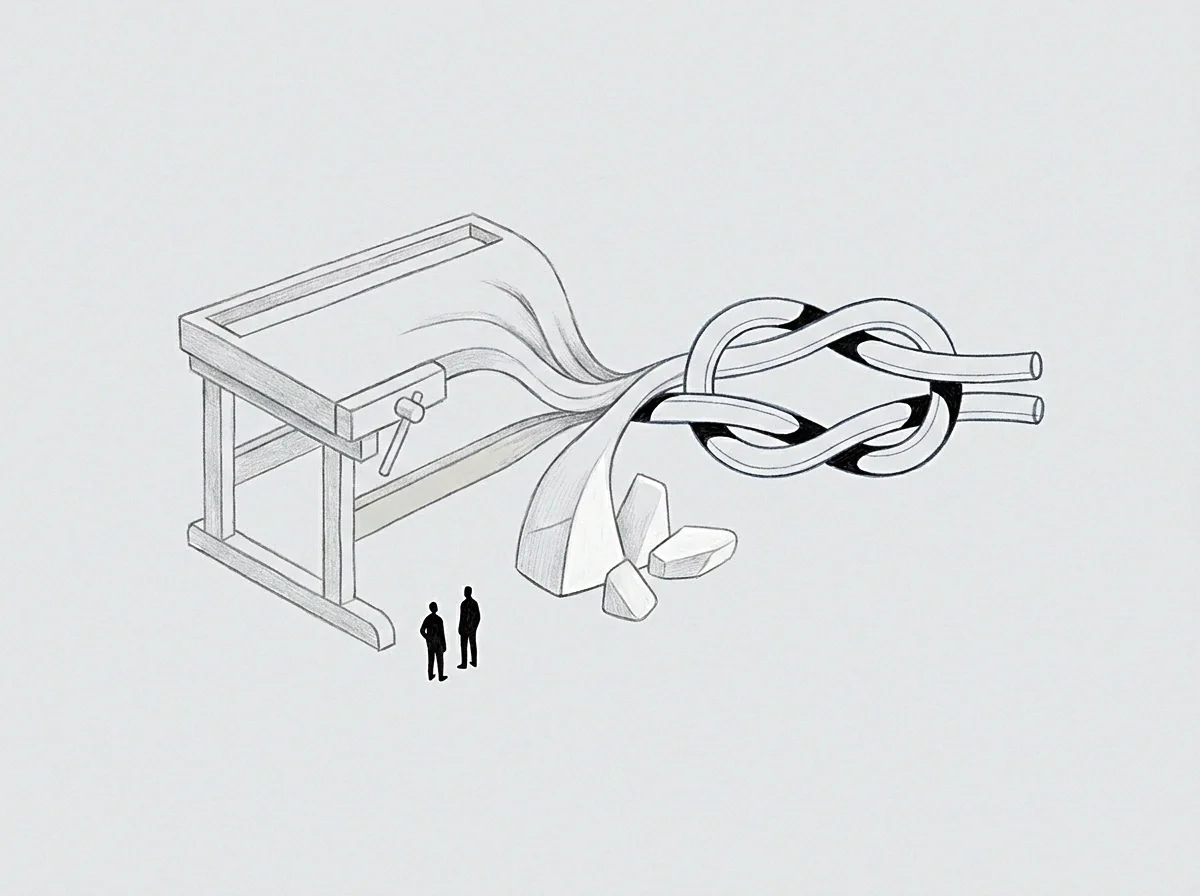
Derivation
I had to place availability somewhere in the five steps, because a thing with no place drifts back to where it was. Want, terms, cost, position, action. Where does the pinging live.
Not in the terms. I tried it there first and it does not fit, because terms are what two seats agree, and my availability is not a thing the other seat agrees to. It is mine.
It sits at the cost layer. The want is upstream, the terms are upstream, and by the time a channel pings or does not, the decision about what it gets is already informed. Nobody has to be pinged to make it.
In some instances it goes one step further down and is the action itself: the not answering is the action, and the sentence had already said so.
Capacity is a different object.
Capacity has a gate on it. It is me stating how much I can carry right now, and it moves with the moment, and it belongs to me and not to any line. Availability is what a channel carries.
One is a reading of me; the other is a property of a line. I had been running them as one thing for years, and that is how a person ends up with a heavy workload that nobody tracks: every channel gets the whole capacity, because nothing in the arrangement had ever separated the two.
Then the trap, and I nearly walked into it from the other side. Availability, once set, wants to settle. It becomes a constant.
A constant becomes environment again, only now the environment is the quiet instead of the pinging, and the other seat adjusts to the quiet as completely as it adjusted to the pinging, and nobody is deciding anything. So I had to port a mechanism into it, and the ping is the mechanism. The channel decides, each time.
I do not decide from a mood and I do not decide once for all time. Traffic sets the priority, on either side, and the derivation keeps running without me. Availability becomes a function of the signal and not of who sits in the seat, and that is the only version of it that stays a variable.
A term stated at the start takes nothing from anyone; a term stated after years takes back something already in use.
I had filed that long before and had to read it again. Early terms are uncharged. A late term revokes a permission, and the revocation is where the guilt lands on the one side and the punishment reading on the other.
My sentence was a late term. Years late. What it could still do was arrive as a derivation instead of an event, which is the nearest a late term can get to an early one.
Get it wrong, say nothing and let the quiet arrive on its own, and this is what it costs. The other seat reads the quiet as aimed at it. I read that reading as ingratitude, and I go back to pinging to prove I was not punishing anyone.
The supply becomes environment again, the workload comes back with it, and this time I know it goes unnoticed, which is the one thing I did not know before. It cost me years to get here once. I am not going to pay it twice.