
A title is not a gate
A founder title is a claim about standing, not a control right, and nothing in it stops the other party from using the word. So the rule that matters was never the one on the partner. It is the one on my own response, written before the day and sized to what the claim actually moves.
Title
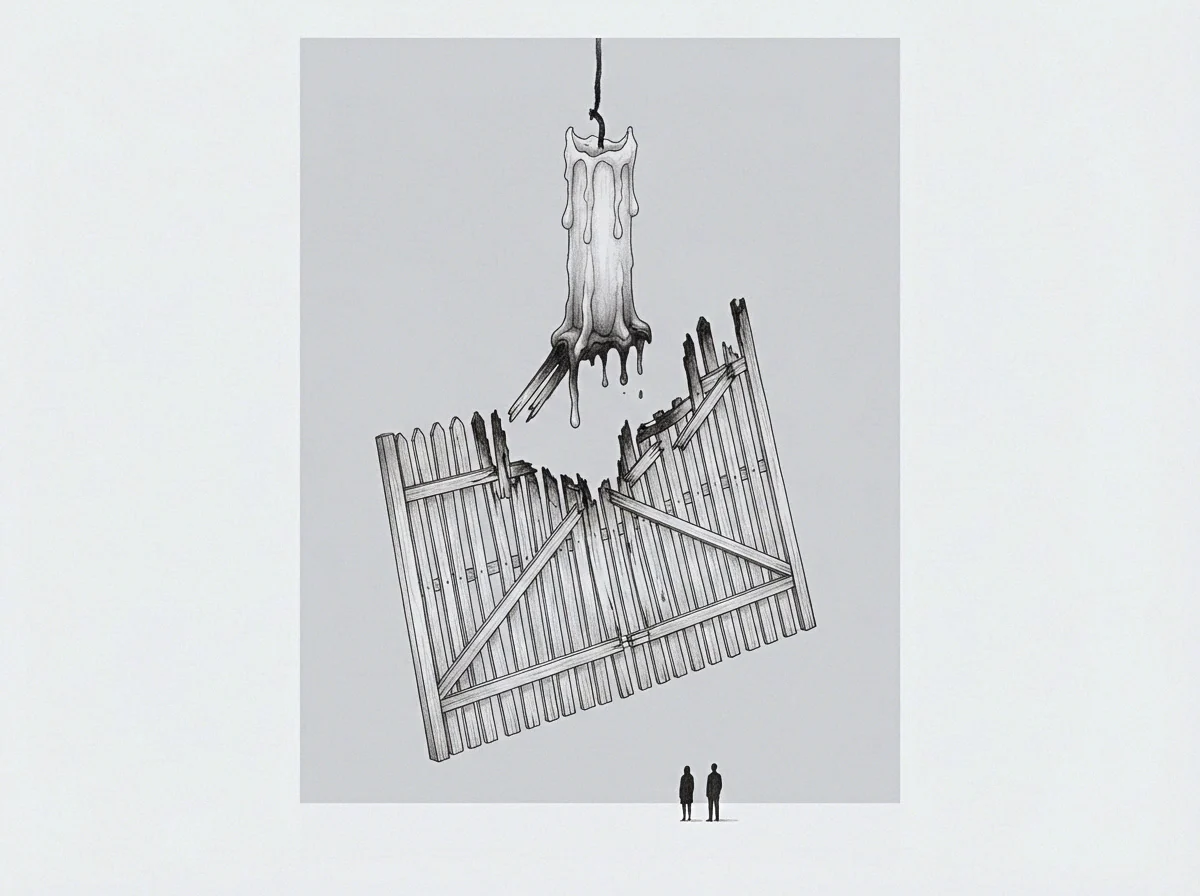
The partner cannot call himself a founder yet, people around the arrangement say, and what they mean is that it would be odd if he did. Odd is not the same as stopped. A title is a claim about standing: what a person gets called in a room, what goes into the first line of an introduction.
It goes under a photograph on a page anybody can open. A gate is a mechanism, and it holds something the other party wants on my side of it until a condition is met. The founder word gets handled as the second kind of thing.
It is the first kind.
I had been carrying it as conditional on a signature: sign the document, then the word is yours. Socially that is true. Everyone in the arrangement behaved as though it were true, and behaviour that consistent feels like machinery when you are standing inside it.
Practically the word can go on a page tomorrow morning and nothing in my hands stops it. There is no lock to keep shut, and no office anywhere that would take the complaint.
The reclassification I had already made says the same thing from the other end. Not a founder with the skin absorbed. A facilitator: a function that manages the room, where the operation and the thing it runs on belong to somebody else.
That is a real function, and it is not a small one. It is also not the function the word names, and the distance between the two is where a title claim lives.
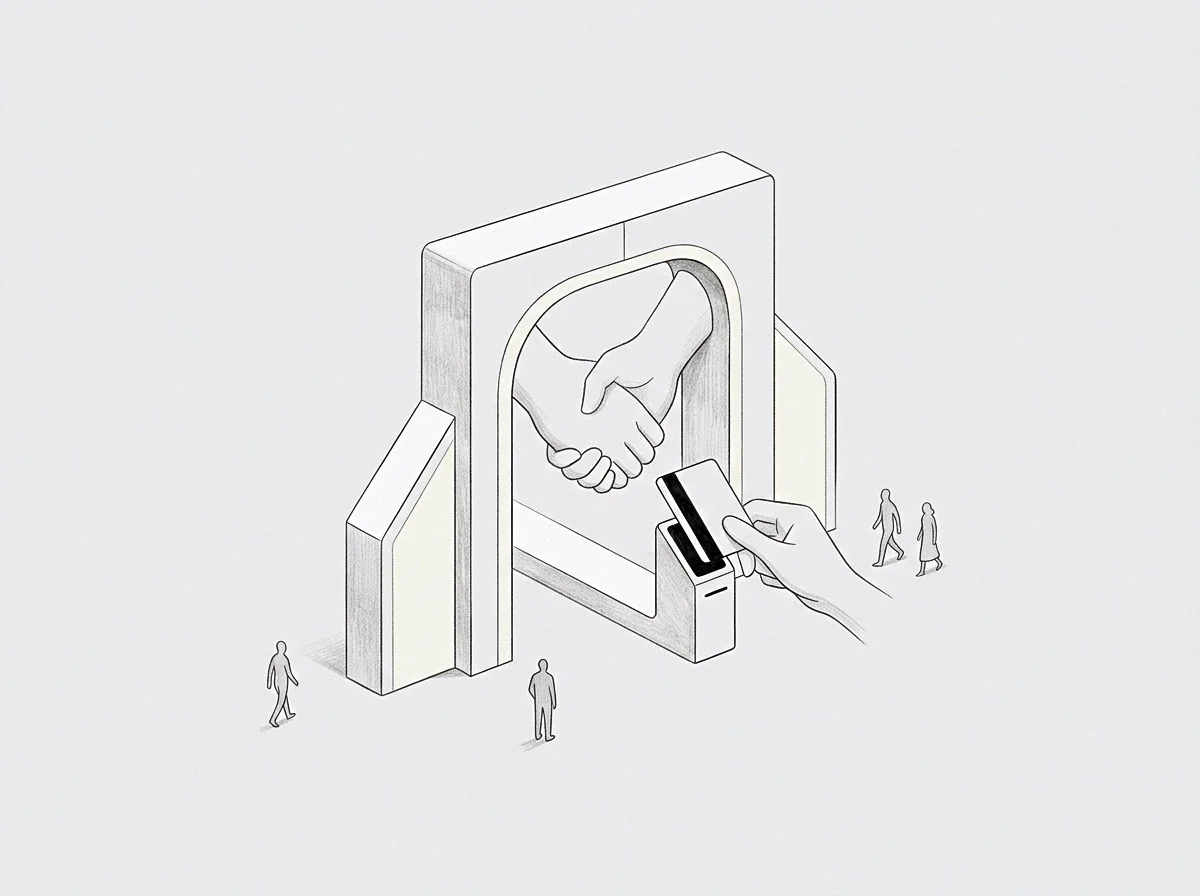
A word is a gate only where something the other party wants sits behind it, held by somebody who can go on holding it. Everywhere else the word is a request wearing the grammar of a condition.
Gate
The test for a gate is not whether the people involved agree that one is there. It is whether something is being withheld. I had a date in my head for the document and I took it off the table, because a deadline carries force only where the other side wants a thing that can go on being kept from him.
Nothing was. The running costs come out of the partner’s share either way, the machine runs whether the document arrives or not, and no decision anywhere in the operation was sitting waiting on his signature. The date was decoration.
Decoration is expensive, because it teaches the other party what my stated conditions are worth.
What the partner can actually do is a short list. I wrote it out in full once, to stop myself waiting on a sixth option that was never going to appear.
- produce the document, which is the action blocked from the inside, because a written specification specifies him, and what he supplies has never been put on paper by anybody, including him;
- delay, which costs him nothing, keeps every question indefinite, and is therefore where the weight settles when nobody pushes;
- reframe the thing toward unboundedness, so that what he owes stops having an edge to it;
- escalate on the emotional layer, through the relationship, where arithmetic does not apply and a no reads as an injury;
- fade.
Four of the five cost the partner nothing and hold the position he already occupies, and a word of mine stops none of them. The one that opens the gate is the one he cannot take without producing the paper that pins what he supplies. So the gate is not in my hands, and it is not in his either.
It sits in a document neither of us has.
Nothing has to be decided this week.
Nobody has to say that sentence out loud. It is the shape of the default, and the default has been running the whole time under everything else that looked like a conversation.
That puts the rule somewhere I had not been looking. A term I cannot put on the other party is not a term, it is a wish with numbering on it, and I had a stack of those, all correct, all waiting on a signature that has its own reasons not to arrive. What remains is a term that sits on my side: what I do on the day the word appears.
That one runs. It needs nobody’s agreement, it can be delayed by nobody but me, and it is the one piece of this arrangement I can write and execute with the same hand. For years I wrote rules for a partner who had no reason to run them and left the rule I could actually run unwritten.
I planned for the document never arriving. I did not plan for it arriving. Delivery opens the gate by my own rule, on a timeline the partner picked, and the conversation I said would follow has to happen then.
I have settled what that hour is for: the terms, and nothing in it that is not the terms. The paper exists and it is written, so the hour is where it gets put in front of him and he signs it or he does not. Warmth is not what the hour is for, and hearing him out is not either.
That is not coldness. It is what that hour can produce that I would still want a week after it. Delivery would land as a good surprise, and a good surprise is the exact condition under which I give things away.
If it were not settled now, who would be settling it, in a room where something good had just happened?
Commons
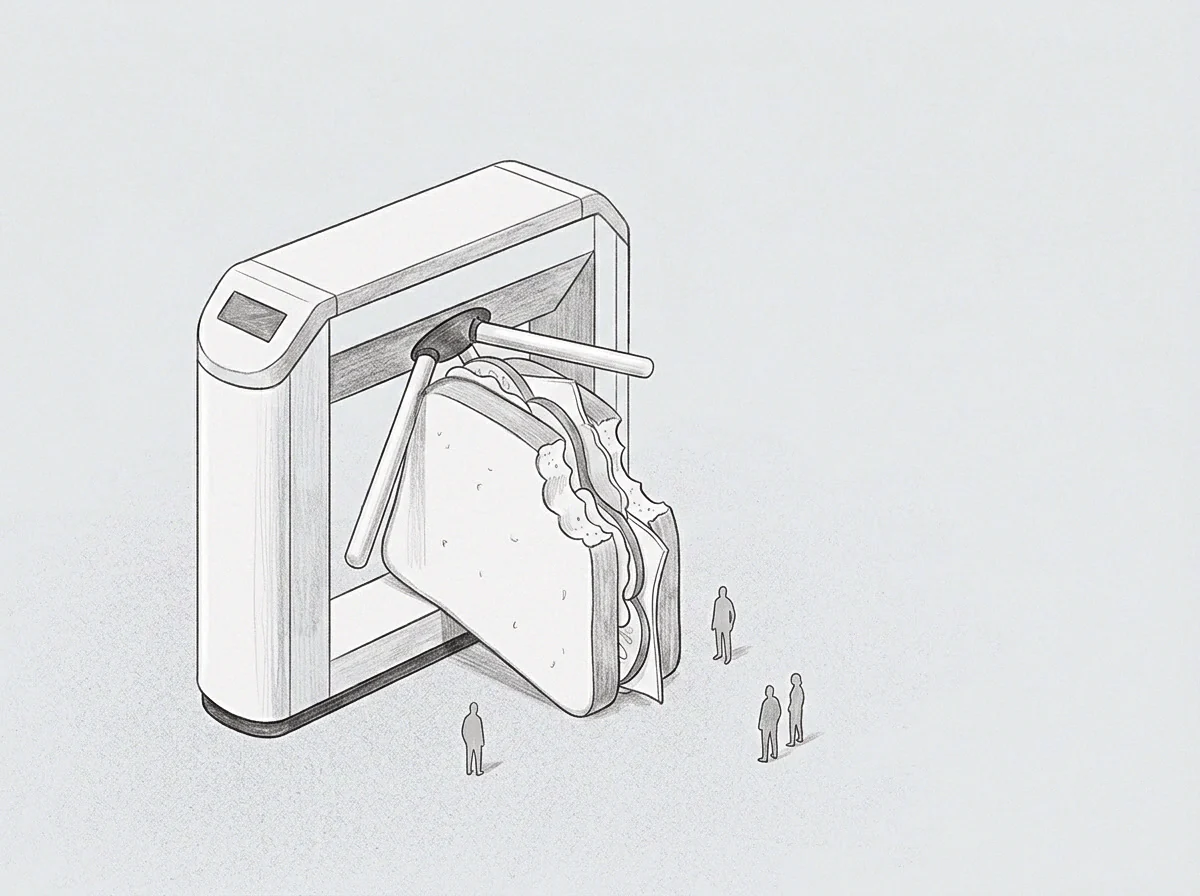
The question of what to do about a broken term has been worked properly, on arrangements far older than mine, and I read it late. Elinor Ostrom spent decades collecting cases of things held in common that did not collapse: irrigation ditches in Spain and the Philippines, mountain pasture and forest in Switzerland and Japan, inshore fishing grounds. She put the cases together in Governing the Commons, in 1990.
The economics of the day held that such arrangements had to fail unless somebody privatised the resource or a state took it over. She went and looked at systems that had held for centuries, and wrote down what the surviving ones had in common. The Nobel came in 2009.
She pulled a set of design principles out of the surviving cases, and one of them stands over this piece. Every durable arrangement had a consequence for a broken rule, and the consequence started small. A first breach cost the member very little.
A repeat cost more. The members applied it to each other rather than sending it up to an authority, and the field has been calling it graduated sanctions ever since. The part I did not expect is what she found about size.
The systems with the heaviest consequences were not the ones that lasted. The ones that lasted were the ones where the consequence was small, fixed before anybody breached anything, and in proportion to what was actually broken, so that a member could break a rule and still be in the arrangement the next morning. A consequence that ends the relationship ends the arrangement with it.
The size is decided before the breach, not while looking at it.
The principle assumes a thing I do not have. A graduated consequence needs a ladder, a ladder needs rungs, and every rung is something that can be taken back from the person who broke the rule. Where nothing is held on my side, the ladder has no rungs at all.
So the proportionate consequence for a word on a page, a word that moves no asset, no money and no operation, is nothing. Nothing, and not out of generosity. That is the size of what got broken.
The other half of the principle survives the missing ladder. The consequence is settled in advance, and a consequence settled in advance is a rule. Somebody deciding what to do while looking at the thing that annoyed him is not applying a rule.
He is having a feeling and giving it the grammar of one. So I wrote my zero down early, in a sentence, where the version of me deciding in the moment could find it.
What it cost me to get there was the years I spent building the wrong instrument. I kept asking for the document, and under the asking sat a belief that the document was the thing being withheld, the rung, the consequence I could apply if the word ever got used. It was never that.
It was a piece of paper that would have specified what the partner supplies, which is the paper he had every reason not to produce, and while I waited for it I had no rule at all for the day I could see coming. That is what reading a term as a gate costs. Not the word somebody takes.
The years spent guarding a thing that was never in your hands, and arriving at the day itself with nothing written down.
Default
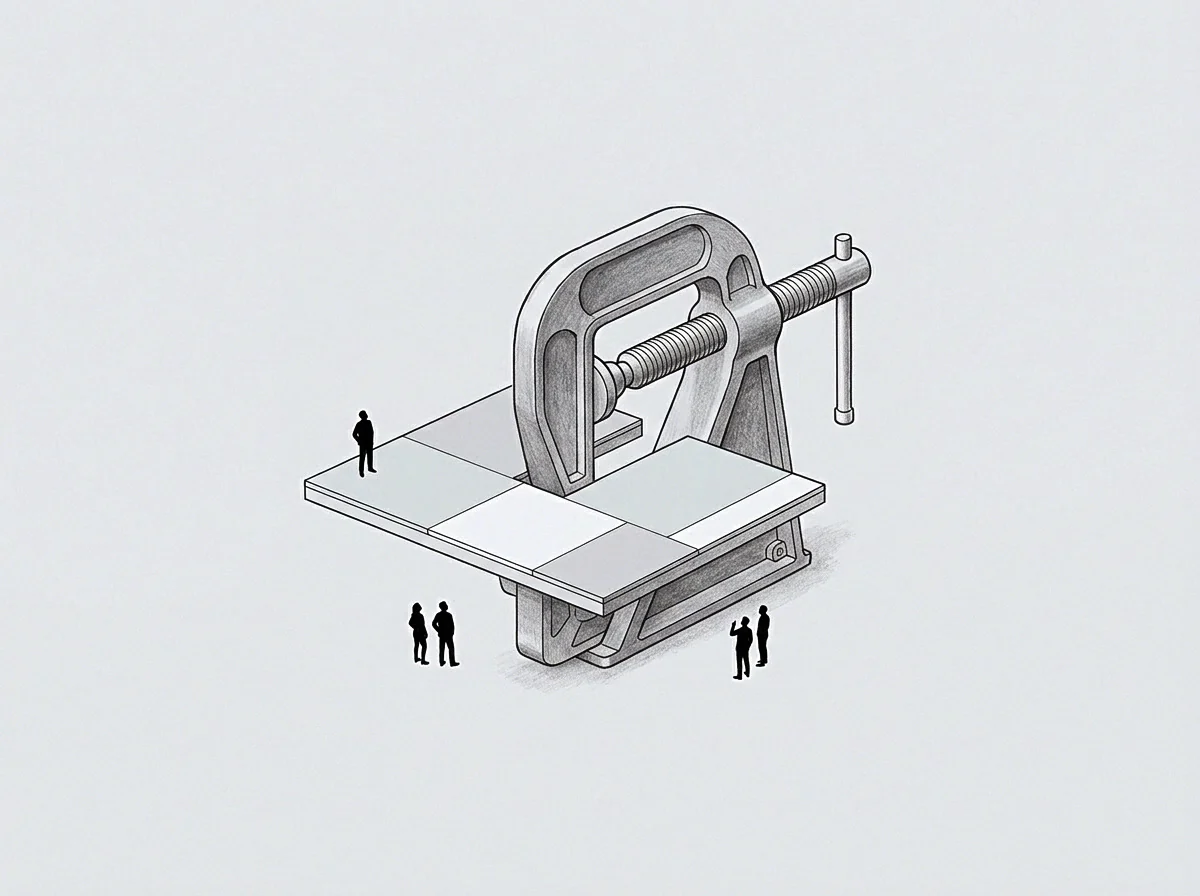
The decision about the day the partner uses the word gets made before the day, and it gets made in the tone I want to be carrying when it comes. My answer is nothing.
I say nothing about it, not to the partner and not to the people who would read it. Note it, and go on with the morning.
The reclassification is what makes that answer hold, once I take it seriously instead of using it as a name. A facilitator is not a person with a weak claim to a word. It is a trained function, and the training runs as reflex: the frame goes onto a conversation before anybody has stated what the conversation is about, and everything said afterwards is said inside it.
The move I know from the inside is the one where he asks me to walk him through my thinking. I explain accurately, because explaining accurately is the thing I do, and the account I produce is then the material. What I have against a repertoire like that is whatever I wrote down before the room, or improvisation inside a frame somebody else already set.
Each move costs one sentence to make and leaves nothing behind that anybody could point at.
The word placed on a public page has that shape. It is not a term being broken, because there was no term. It costs the partner one sentence, it does its work inside whoever reads it, me included, and a week later there is nothing there to examine.
So my answer can be nothing without the answer being weak. A correction would be the first written thing this dispute had ever produced, and I would have been the one who produced it.
The thing itself does not move because a word moved. It sits where it sits, in an account somebody owns and a stack somebody wrote, and anybody who needs to check can check. Contesting the word in public costs me more than it costs the partner: he loses a sentence, and I become the man who watches what other people call themselves.
I would be paying more than he pays, and paying it where everybody can see.
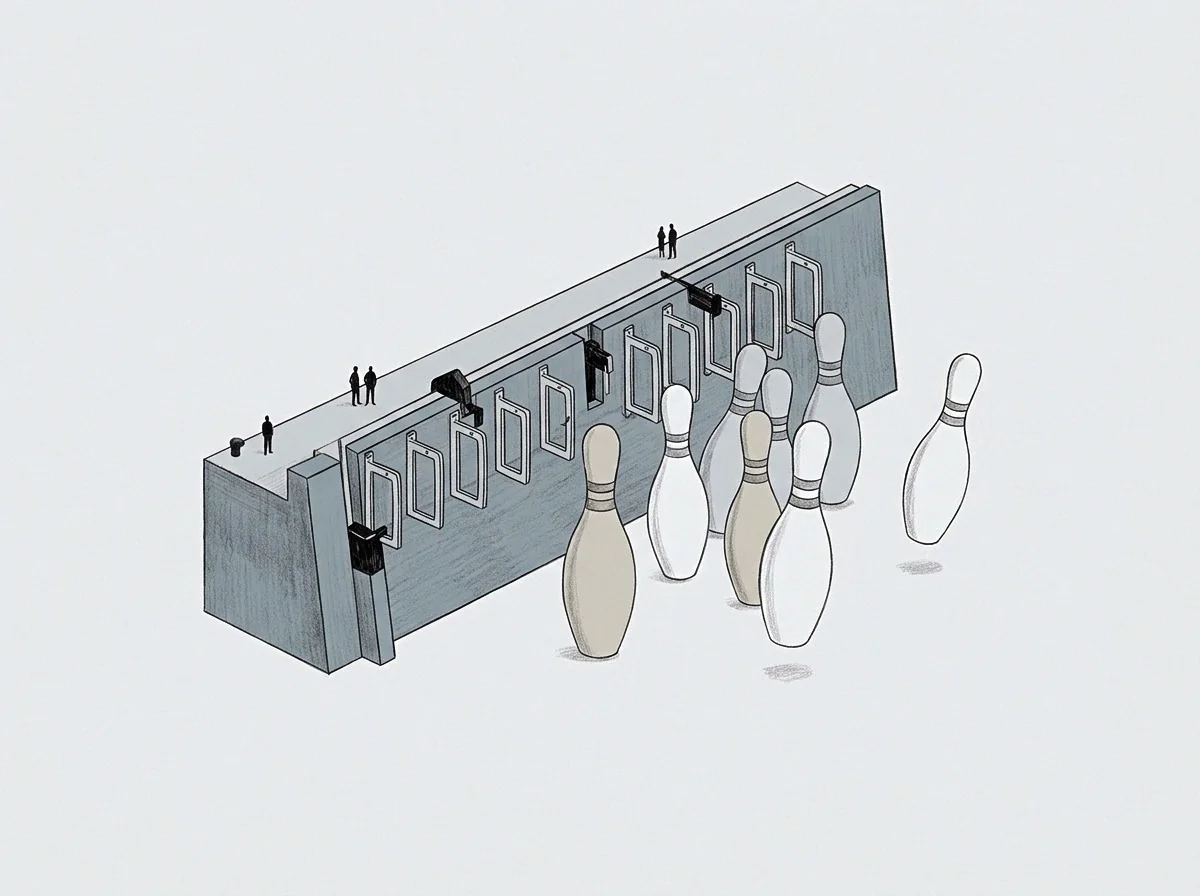
The Tone Carried into the Silence
Under the standoff there is an arithmetic that is not mine, and it runs one way. Moving costs the partner. Putting the thing on paper fixes what he supplies, and a fixed supply can be held against what it is worth.
Staying where he is costs nothing that shows up this month. So the position that looks like avoidance from where I sit is the cheaper of the two from where he sits, and it stays cheaper for exactly as long as nothing is written. That is not a flaw in a person.
It is where the arrangement puts the weight, and it would put it in the same place for anybody standing in that spot.
The document the partner did send reads plainly once that is held. One clause in it bound my work to this arrangement and no other, permanently, with nothing in the text that would let it be revoked. Read as a demand for money the clause makes no sense: it moves no share, it prices nothing, there is no sum in it anywhere.
What it takes is the exit. A term written to hold a person in place gets written by the side that cannot put on paper what it supplies, and that is the same reason the document came informally instead of through a process. A process is where a document gets read closely.
There is a second thing that document exposes, and it belongs to the term rather than to anybody’s character. Nobody ever wrote down what delivery means here. Where that is missing, both sides can hold that they delivered, and both can be right inside their own reading of the word, because selling and positioning and keeping a relationship warm leave no artifact behind them, and neither does architecture nobody watches being built.
An undefined term does not produce an agreement. It produces two private versions of the term, each one honest, and not one of them enforceable.
None of that changes a decision.
It changes the tone I carry into the quiet, and the tone is not decoration either. Contempt does not stay where it is put. It comes out in the one sentence I would say if we met by accident, and by then it was never a silence at all, it was a position held against a person.
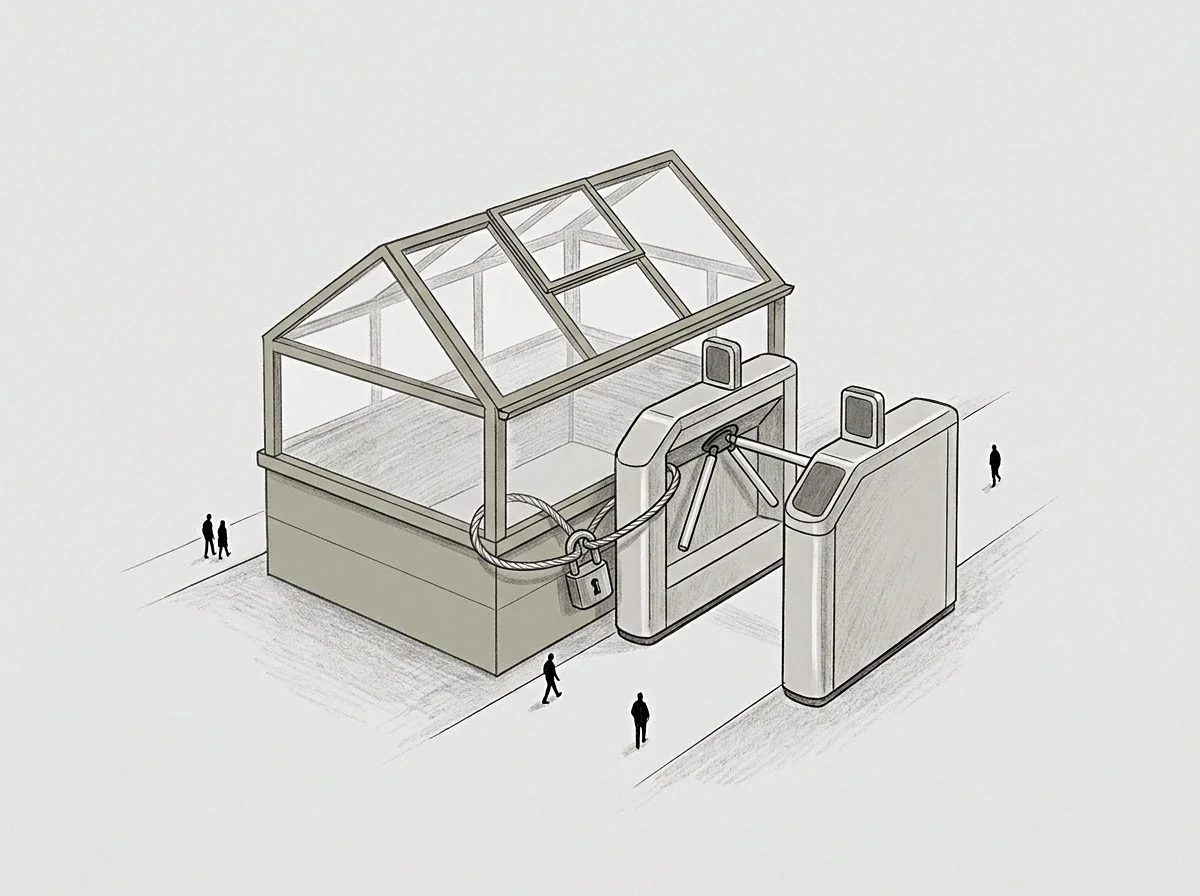
What Ends without Anybody Ending It
Attrition does not need a decision from anybody, which is the whole of why it works. Nothing gets said. Nobody sends a last message, there is no rupture, and there is nothing anybody would keep a copy of.
Work moves elsewhere one job at a time, the adjacent line goes cold with no act of retaliation anywhere in it, and at the far end of a long stretch the arrangement is a thing that used to exist. That cooling is the one part of the picture that could cost me something real, and it is why the answer is not to defend the word. The answer is the lines that do not run through the partner, and those get built whether he posts anything or not.
I am choosing the standoff, and I want it on the page that I chose it, because a thing chosen does not come back months later as a grief laid over the rest. Ending this by attrition still costs me something, even chosen. The partner will use the word or he will not, and if the day comes the rule is already written: say nothing, keep the file open on the thing itself.