Meaning
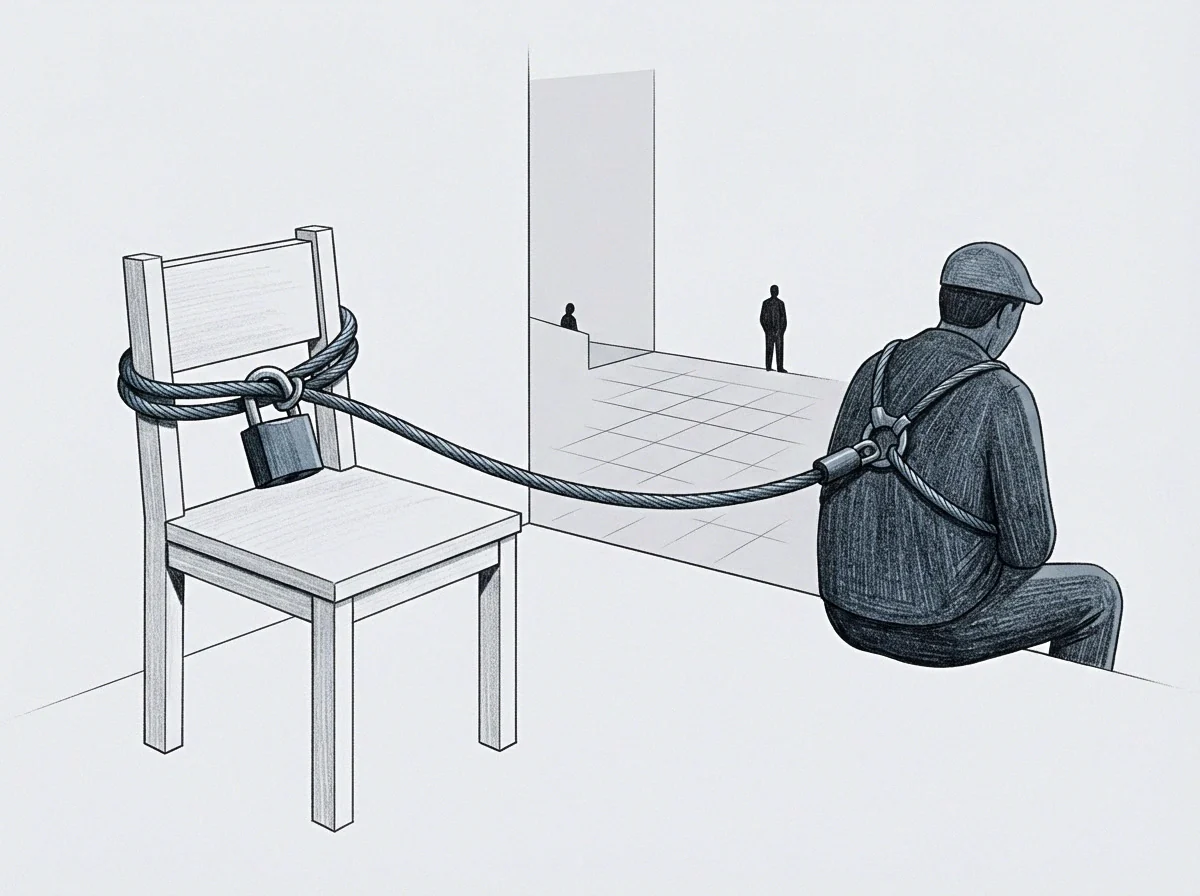
Total operational demand on human capacity consists of defined tasks alongside open-ended commitments that lack explicit scope. In the post-founding seat, load reflects the cumulative pressure of active obligations regardless of their formal scheduling. Attention is consumed when an operator continuously tracks open loops without visible terminal points.
The term stops applying to discrete, fully specified tasks that terminate cleanly upon delivery.
Structural Drag
Uncertainty in project scope generates disproportionate friction inside an operator’s daily schedule. When open obligations carry no expiration date, load accumulates independently of production volume. A founder carrying four bounded projects experiences predictable energy expenditure.
Adding a single un-scoped client relationship creates continuous background monitoring demands that drain attention hours. The mechanism operates through passive vigilance, where an operator remains responsible for undefined outcomes.
Capacity Drain
Physical exhaustion resolves through rest, whereas open-ended mental obligations compound despite periods of inactivity. The strain imposed by load becomes visible when un-scoped dependencies mask hidden delivery failures. Silent channels often signal broken feedback loops elsewhere in the delivery pipeline.
An operator who misinterprets quiet project channels as stability absorbs delayed friction when unmanaged obligations surface simultaneously.
Boundary Threshold
Explicit definition of deliverables caps human capacity expenditure at predictable limits. Establishing clear deadlines and hard termination points converts indeterminate load into measurable output. Unbounded load collapses when every active commitment is constrained by explicit termination criteria.