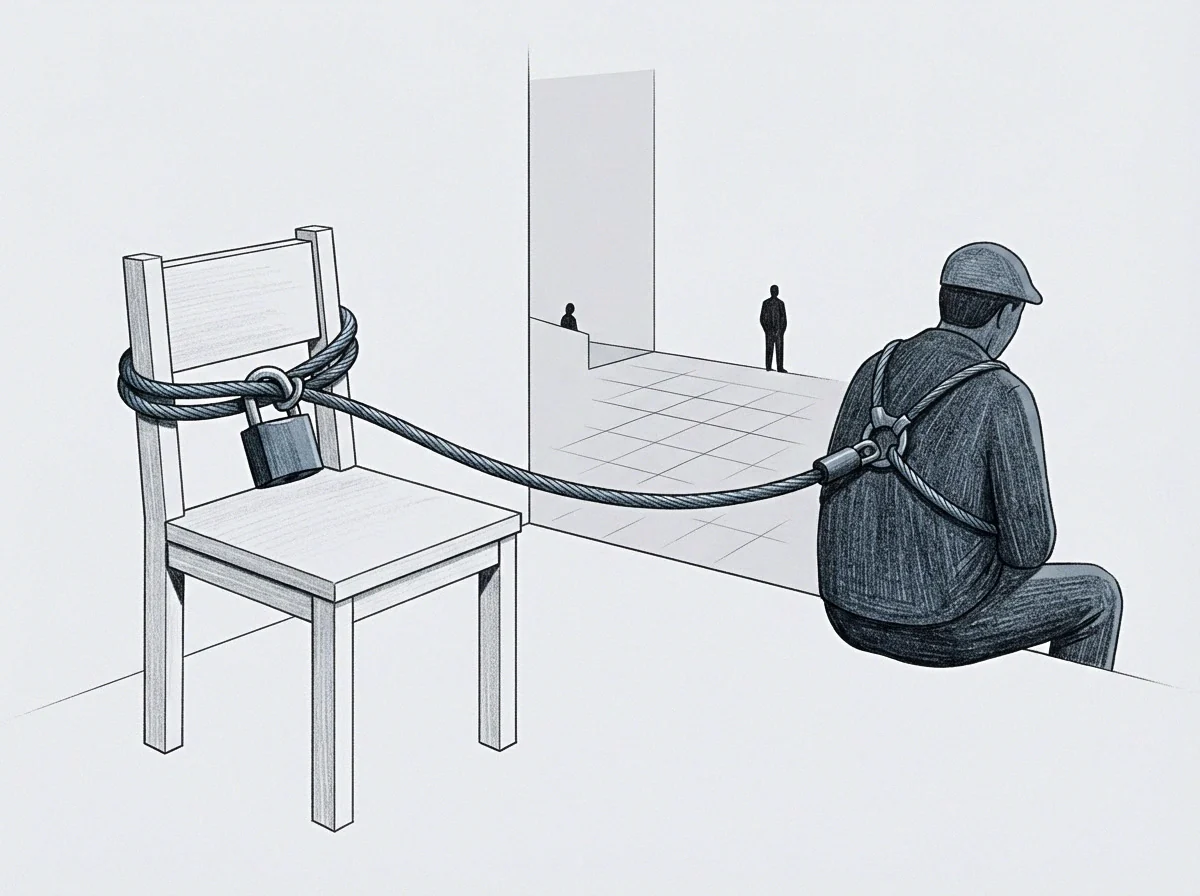
Meaning
A selective mechanism for the allocation of internal resources governs the distribution of energy by a person who has held primary responsibility for the work. The gate functions as a final check on the distribution of attention after the period of founding has concluded, ensuring that the heavy load of previous obligations does not dictate the future use of personal capacity. It establishes the boundary between a standing supply of energy and the specific actors who may access it.
Selection Protocol
Discretionary control over personal attention constitutes a primary shift for the individual in the post-founding seat. While the initial years of building an arrangement often require an open posture toward every demand to ensure survival and growth, the gate introduces a filter that prioritizes intent over proximity. This mechanism prevents the exhaustion of personal reserves by requiring a specific set of conditions before any engagement occurs.
Decisions regarding where to point this attention rely exclusively on the internal state of the person and the long-term value of the interaction.
Capacity Threshold
The total volume of available energy remains substantial even after a founder moves away from daily operations. Because this capacity is often treated as an unlimited resource by those nearby, the gate operates as a regulator to ensure that help reaches those who can utilize it effectively, preventing the random dispersal of effort. Without such a barrier, the person in the seat risks collapsing under the weight of external needs that offer no reciprocal value.
It is the tool that transforms a passive resource into a directed force. Maintaining this threshold requires a detachment that observers might mistake for coldness. This closure of the internal room protects the primary assets of the individual, allowing for a redirection of focus toward projects that yield a genuine return on investment.
Reciprocal Exchange
Relationships within a professional or social circle often rely on an unstated expectation where one party provides a continuous supply of support. The gate terminates these one-way arrangements by forcing an explicit evaluation of what moves between people. When the flow of support is consistently unidirectional, the cost to the provider becomes unsustainable in terms of both hours and mental capacity, especially when the recipient assumes the provision is a permanent fixture of the arrangement.
Implementing this structure ensures that the record of a person’s work reflects only deliberate choices and purposeful engagements.