Meaning
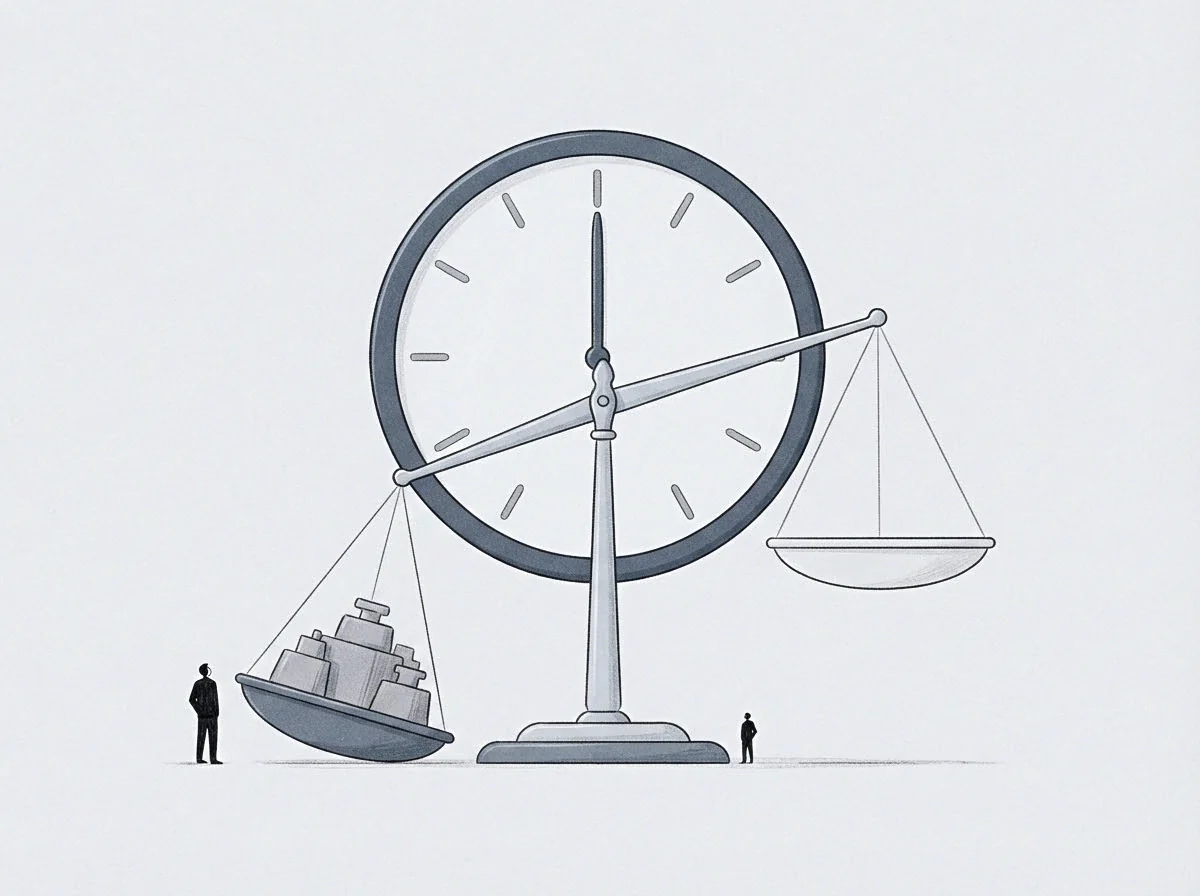
An administrative protocol for pending work halts active resource expenditure by documenting every potential resolution in advance of an external response. Under a frozen line, an unfinished initiative sits on a structured, inactive track until the counterparty takes a specified action. This status allows the operator to store the project without further investment of cognitive or material assets while waiting for an external response.
The boundary of this protocol is defined by the absolute absence of internal work, which must not resume until the anticipated external event occurs.
Deferred Liability
Unresolved issues that linger without a defined pause inevitably consume the limited focus of a founder. By drawing a frozen line, the operator converts an ambiguous, ongoing demand on attention into a dormant record. This transformation ensures that the project rests in a secure, administrative state where it cannot demand further attention or create guilt.
It halts the continuous drainage of executive capacity. By archiving the unfinished tasks with a clear resumption protocol, the founder secures the freedom to focus entirely on immediate, productive operations without the fear of forgetting a critical detail.
External Trigger
A structured pause requires a clear mechanism of resumption to remain effective. Re-activation depends on a frozen line being crossed by a specific, documented action from the counterparty. This signal must be entirely unambiguous.
If no signal arrives, the project remains inactive, preventing wasted attention.
Operational Boundary
The utility of a suspended track is restricted to scenarios where the operator does not control the next step. Applying a frozen line to internal tasks that lack momentum is a misuse of the protocol, as it converts simple procrastination into a formal deferral. The method requires an external bottleneck to justify the complete suspension of tracking.
When the constraint is internal, the task must remain in the active backlog where it is subject to standard progress metrics and routine review.