
A shelf with a clock on it
A thing I cannot finish stops costing me once whatever can happen next on it, down to nothing happening at all, has an answer written down outside my head. Then a project can sit on a shelf, frozen and still unfinished, until the seat across the table acts, and draw nothing from the rest of the work while it waits.
Loop
Something opens, and from that hour it will not stay where it was put. It comes back. Not when there is time for it, and not in any order the day would choose: on the walk, at four in the morning, halfway through a call about something else.
Each return lands a little heavier than the one before, because the line comes back carrying every time it was moved to later.
What comes back is not the work. It is a question, the same one each time: what is the next thing that happens here, and is some of it waiting on me. The head asks it on the second day and again on the twentieth, in the middle of whatever else is on the desk, and every time nothing written down answers it, the asking takes a little of the attention that other work was using.
Nothing in the question needs the work done tonight. It needs an answer it can find when it looks.
Where the last step is mine, the repair is to do it: the question gets its answer, and the line stops coming back the same evening. The trouble is the other kind, where the last step sits in another seat. Finishing is off the table then.
What is on the table is pushing: the follow-up, the redraft, the same request sent again in softer words, the meeting asked for a second time. The one pushing is trying to make the other seat move, so the thing can end and the head can have its capacity back. Every push also asks the question again, out loud this time and at full weight, and hands the hour of its next return to the one seat that is not carrying it.
I pushed for years, and the item got no nearer its end. It only got better rehearsed.
The work did not grow.
The push is not the repair. It is the drain, wearing the repair’s clothes.
Finished means the thing is done. Open means the question of what happens next still comes back empty, so the head goes on asking it. And a line can be frozen: my part delivered, the next move written down as the other seat’s, and a clock that says what happens if that move never comes.
A frozen line is unfinished and asks nothing of me. The word on a line decides its drawer, and the drawer, not the work left in the line, decides what the head carries.
Plan
Bluma Zeigarnik, a student in Kurt Lewin’s laboratory, published the finding in 1927: small tasks cut off before their end came back to mind at about twice the rate of tasks that had been let run to the finish. It has been known ever since as the Zeigarnik effect. The explanation was Lewin’s.
An intention makes a quasi-need, a need that exists only because a decision was taken, and each quasi-need keeps its own tension system charged from the moment of the decision until the goal it points at is reached. Nobody has to be thinking about the goal for the charge to hold. An open loop, in Lewin’s terms, is a charge left standing.
A year later Maria Ovsiankina, from the same group, looked at the hands instead of the memory. Interrupt a task, leave the person alone with it and a free moment, and far more often than not they went back to it on their own, to finish work nobody was waiting for. Psychology still calls that the resumption tendency.
An unfinished thing does not only stay in mind. It pulls the hand back to it.
The charge is live and the hand wants back in, and where the next step belongs to another seat, the hand finds whatever part of the task it can still reach, which is the asking. A follow-up is the resumption tendency with nowhere else to go. It feels like work.
It is a pull discharging through the last opening left, and every time it goes out it charges the line again.
What I was paying for was the asking, not the waiting.
The finding that changes what to do came much later, in 2011, from Masicampo and Baumeister. They asked participants to think about an important goal of their own that was still unmet, and then looked for that goal in places it had no business being: goal words turning up when people filled in word fragments, attention wandering off a passage they had been set to read, weaker work on unrelated tasks. The traces were there, as the older finding predicts.
Then some participants got one more instruction, to set down in writing how they would reach the goal, with the when and the where of it. In that group the traces were gone. The goal was no nearer than before.
On the measures, the people with a plan looked like people with nothing left to do. The paper’s title gives the result in three words: Consider it done.
What I kept from the paper is how its authors read their own result: the pull Lewin described is a request, sent up from the part of the mind that works below attention to the part that can make plans, and what it asks for is a plan. Once a plan is written down, the request has been met, and the part below attention stops sending it.
Peter Gollwitzer had worked through the 1990s on one form of plan in particular, the implementation intention: if the situation comes, then I do this. Gollwitzer’s 1999 paper set it against the plain intention to reach a goal and gathered the evidence that the if-then form gets goals met more often, and a meta-analysis with Paschal Sheeran in 2006 pooled the tests run by then and found an effect of medium to large size, which for one sentence written down is a lot. The if hands the start of the action to the situation.
Nobody has to stand watch for it.
I had the other model for a long time, and it is the intuitive one: the carrying ends when the thing ends. So where the end was not mine to make, I went after the end, and going after it was the load. It cost me years of asking for a signed page that did not arrive, and a tiredness that had no work behind it I could point to.
I was right that the thing needed to close. I was wrong about which of two things lets it go.
Drawer
The line went quiet before anything out in the world had moved. What changed was on my side, and every piece of it was paper: the plan, and three more.
The Wrong Drawer
I had the line filed as waiting for a reply. Waiting for a reply is open, and open is the drawer the head carries, because the next thing that happens is somebody else’s answer and nothing says when it will come. The true state was something else: my part was delivered, and the next move sat in the other seat.
In every way but the file the line was not mine to carry, and the file is the part the head reads. So the head was right to keep bringing the line back. It had one way of saying the drawer was wrong, and it used it.
I wrote the true state down and gave it a clock. Not one fact of the line was different afterwards. Only the drawer changed, and from then on the line stayed where it was put.
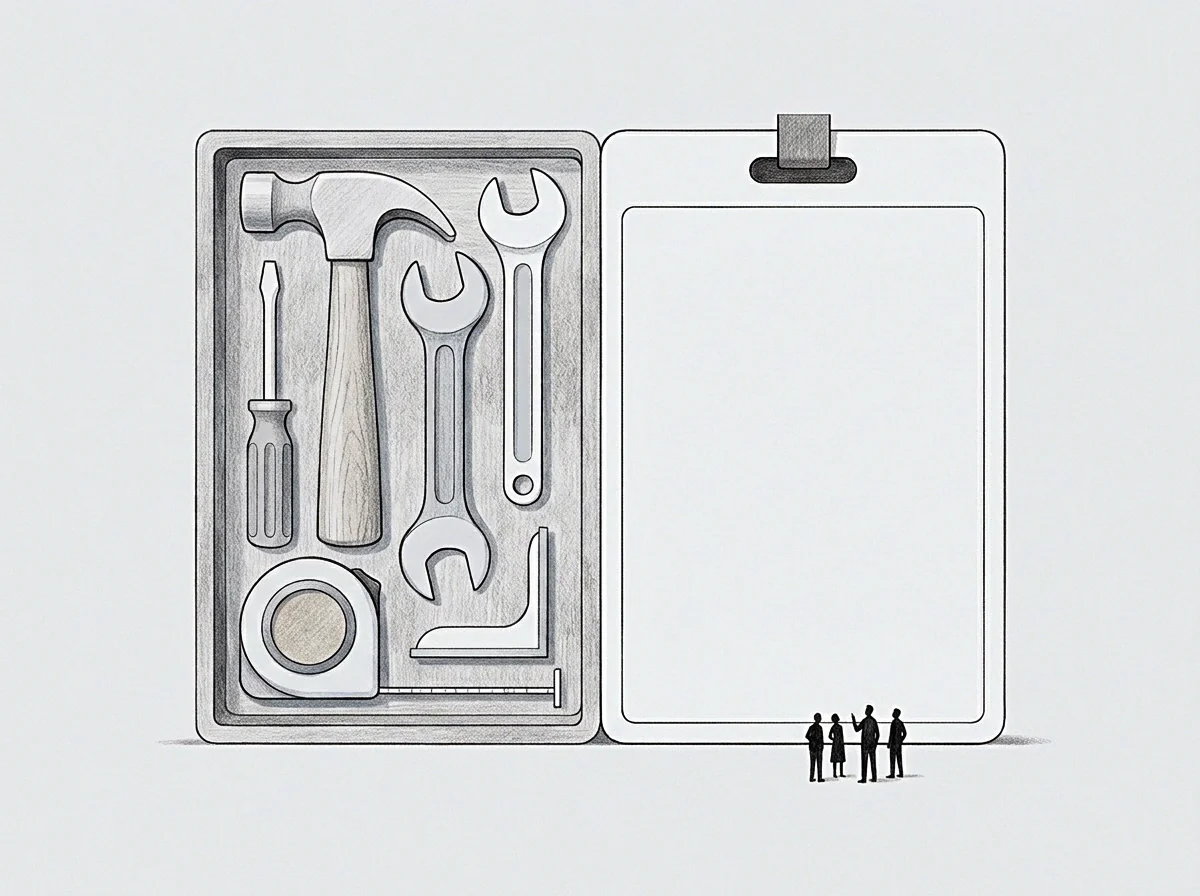
Whose Move It Is
The second half of the question was the last to clear: is some of it waiting on me. In a seat built for finishing, the answer is yes before anybody looks. A line stops moving and that seat takes it as its own to move, because moving things is what the seat is for, and so behind every open line a hand waits half up.
Reassurance does not bring the hand down. Telling myself the line is not mine is one more sentence, and a sentence can be argued with. The seat map is a drawing, and a plain one: who has to approve the next step, and through whose hands it moves.
The map said no, in ink, and ink does not argue back. The hand came down.
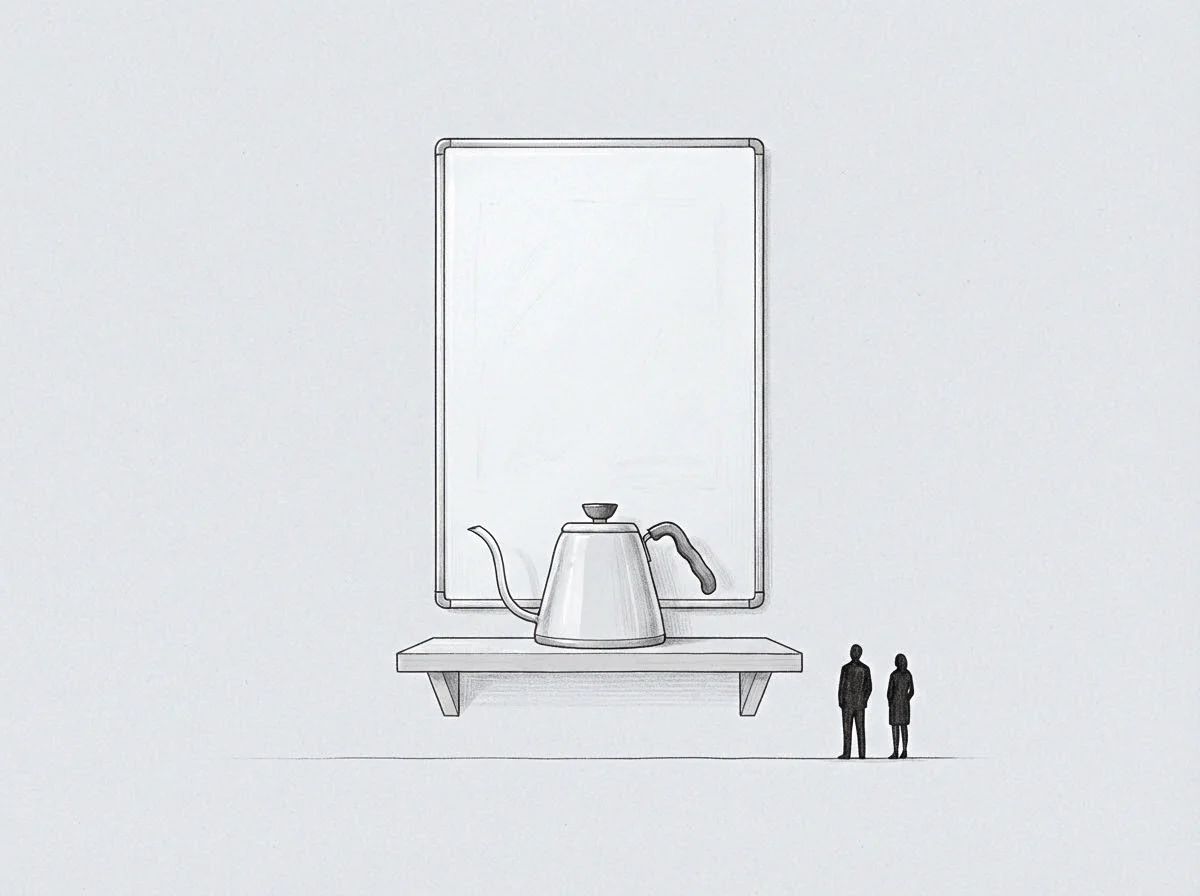
The Copy in the File
The last change was where the copy lived. A head holding an intention for later pays for it on everything else it does, and the work on prospective memory has measured the charge. Rebekah Smith showed in 2003 that people asked to press a key whenever a certain word came up did their main task more slowly, even through long stretches in which the word did not appear.
Betsy Sparrow, Jenny Liu and Daniel Wegner showed in 2011 what happens to the holding when something outside the head takes it: people who were told a piece of information would be saved kept less of it in their heads, and kept better where it was saved. In 2016 Evan Risko and Sam Gilbert gathered this kind of work under one name, cognitive offloading: moving part of the holding out into the world, onto a note, a calendar, a file, so the head carries less of it. The line has its own page now: a date at the top, the clock under it, and the one event that would show the plan was wrong.
The page holds the line. My head can put its copy down.
Messages from the other seat land in the same inbox as everything else, and a line filed right on a quiet morning has to stay filed through a loud afternoon. Can one of them, arriving unasked between two other things, lift the line back into the open drawer, or does a page with a clock on it hold against that too?
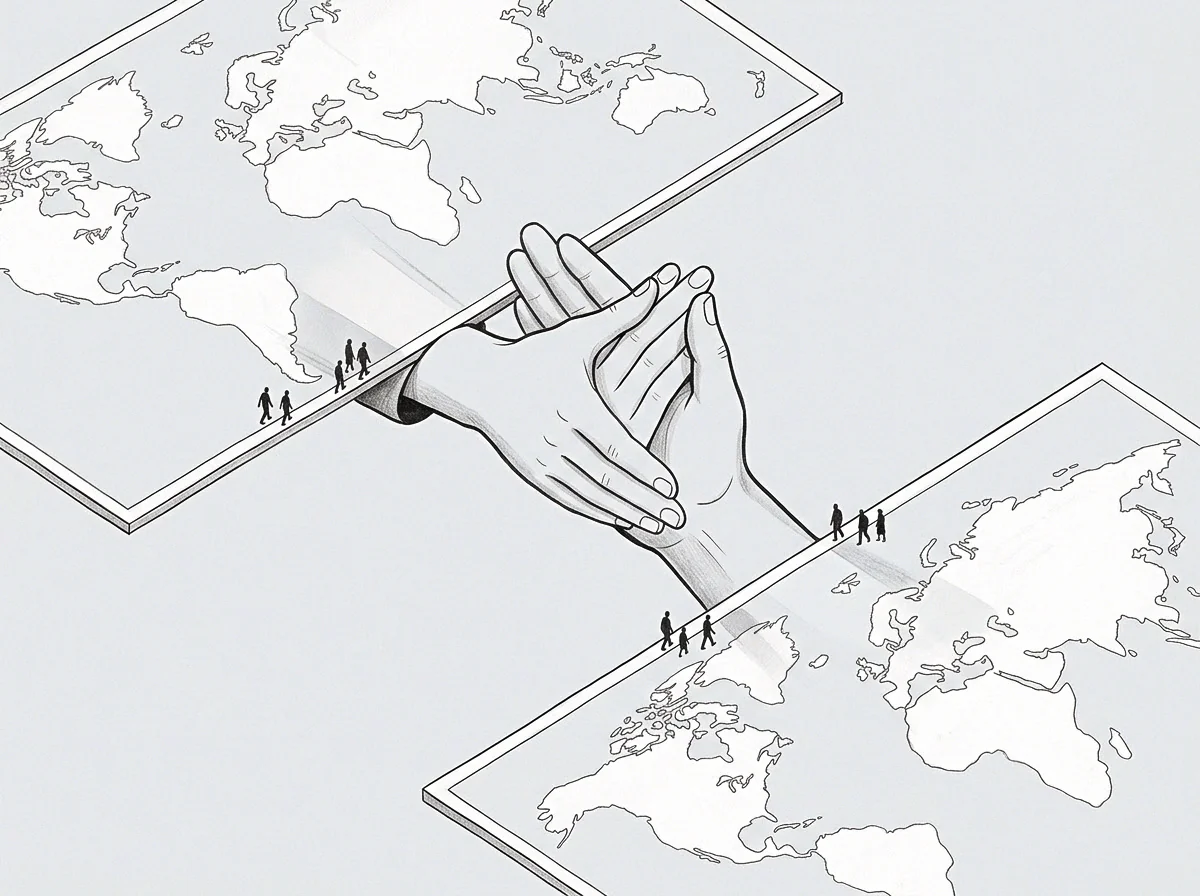
Shelf
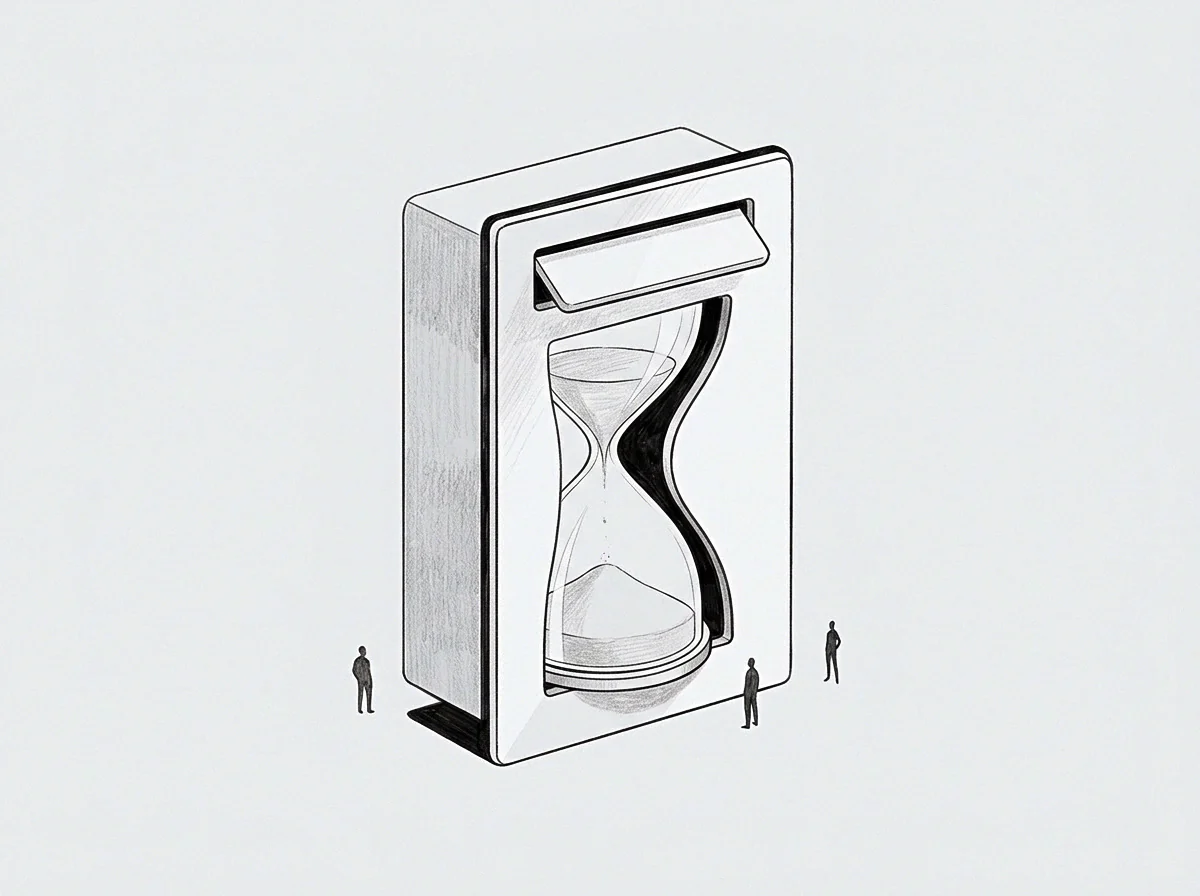
I freeze things now. Not close them, not kill them, and not keep them warm with a message every few days to show I am still there. The line goes up on a shelf at a stated condition, and I put it out of my head on purpose, which works only because the condition lives on paper now.
Only lines whose next step is not mine go up there. A project I am slow on does not qualify. Slowness is work, and work stays on the list where work goes.
- Deliver my part first, so nothing on the line is waiting on me.
- Name the other seat’s move in one line, as an act that can be seen to happen, not as an attitude and not as a promise.
- Give the line a clock, and decide now what happens when the clock runs out: the work retired, or its parts moved to something that can use them.
- Say the condition once, in writing, where the other seat can read it, and send nothing after it.
- File the line outside my head, dated, with the clock and with the event that would prove the plan wrong.
- Move the capacity to work that needs nobody’s permission.
A shelf looks like quitting from inside the push. Paul Watzlawick, John Weakland and Richard Fisch, who worked together on brief therapy, put the reason into a short book in 1974 called Change. They split change in two.
In first-order change a system varies its moves and keeps its rules: the same move again, made harder, or better put. In second-order change one of the rules is what changes. One of their cases is sleep, where the harder a person works at falling asleep, the longer the night gets.
They are known for the claim that the effort spent on solving a problem is often what keeps the problem in place, and for a second one beside it: a change of the second kind, seen by someone still inside the first, reads as nonsense. The push was first-order through and through. Every request was the old request said better, and every draft I wrote made it plainer, to both sides, whose job the writing was.
The shelf changes a rule instead of making a move. From the day it goes up, the next step on that line can only start on the other side.
A frozen line is not dead, and I am not sulking at it. It comes down when the condition is met, and the condition is something the other side does, not a mood on mine. A grudge needs feeding.
A freeze runs by itself. And a message about the condition is not the condition. The other side can write to say the thing is on its way, and the line stays where it is, because a sentence like that costs the same to send for a seat that means it and for a seat that does not, and the shelf was built to answer to an act.
It is coming, I have not forgotten about it.
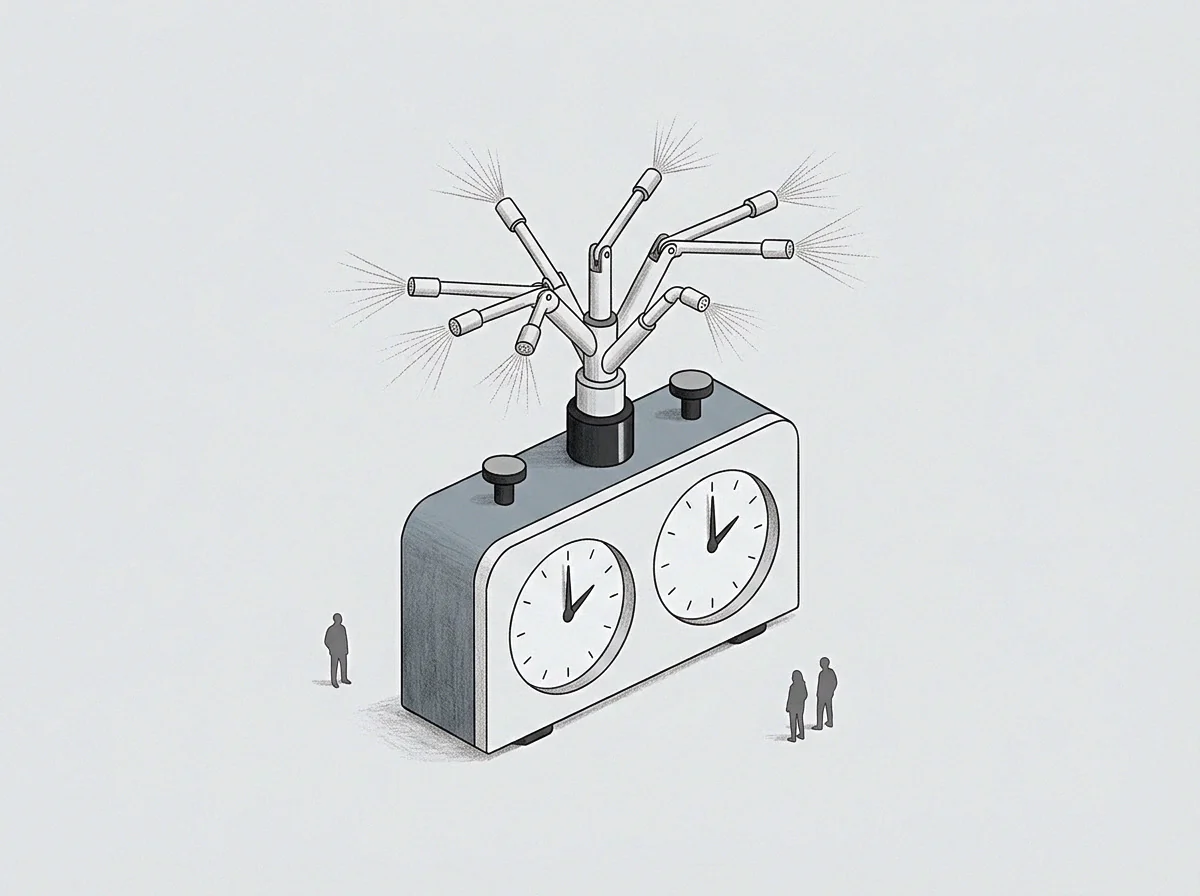
Scope
A shelf treats a loop that is already open. The later move was to stop opening loops that cannot close. A shared project with no end state is one of those.
Nothing in it is ever finished, so leaving any part of it means damaging all of it, and everyone inside knows that. The project holds its people the way a lock holds, and the lock has no date on it. Nobody built it to hold anyone.
I take the work in scopes now, with the edge drawn before the work starts. A named piece, the hours on it priced so the edge is a figure both seats can see. Delivered.
Parked. Only then the next piece, and only if both seats want it. Every scope that ends is a way out that nobody has to ask for, and each one hands the capacity back on a day I knew about in advance, where the open version would have let it leak, week by week, into a story with no last page.
Every scope I take now has a day on which it stops being mine.
The same rule decides what I leave out. I do not open a stage that needs decisions from a seat that cannot make them yet, however good the work in it would be. A stage whose end sits in somebody else’s queue is a loop I would be choosing to carry, and I know what carrying one costs.
That turned completion round, too. For years it was the thing I chased on lines where it was not mine to give. Now I build it into the work before the work begins, and it arrives whatever the other seat does next.
Leave the end undrawn because drawing it felt unfriendly at the start, and the cost comes due later and all at once, when the only way out of a project with no last page is to break it.
Release
The capacity went back to the work that needs nobody’s permission, and it went back before anything on the shelf had moved. Quiet has two sources, though, and the first days do not tell them apart. The line on the shelf can be quiet because it is answered, or because I am holding it under, and holding a thing under is the old load carried somewhere I cannot see it.
I tell them apart by going to the line on purpose when nothing has prompted me, reading it through, looking at its clock, and leaving it. An answered line lets me do that and charges nothing for it. A line held under does not: it costs something on the way in, and I catch the hand finding reasons to go round it the next time.
The check is cheap, so I run it more than once.
A quiet I have to guard is not the quiet I built.
For as long as the end of a line sat in another seat, the pulling did not stop for one day. Under all of it is an order that runs one way: the pulling has to stop before the work can be fixed, the work needs fixing before the capacity comes back, and only with the capacity back is there anything to turn up for anyone else with.