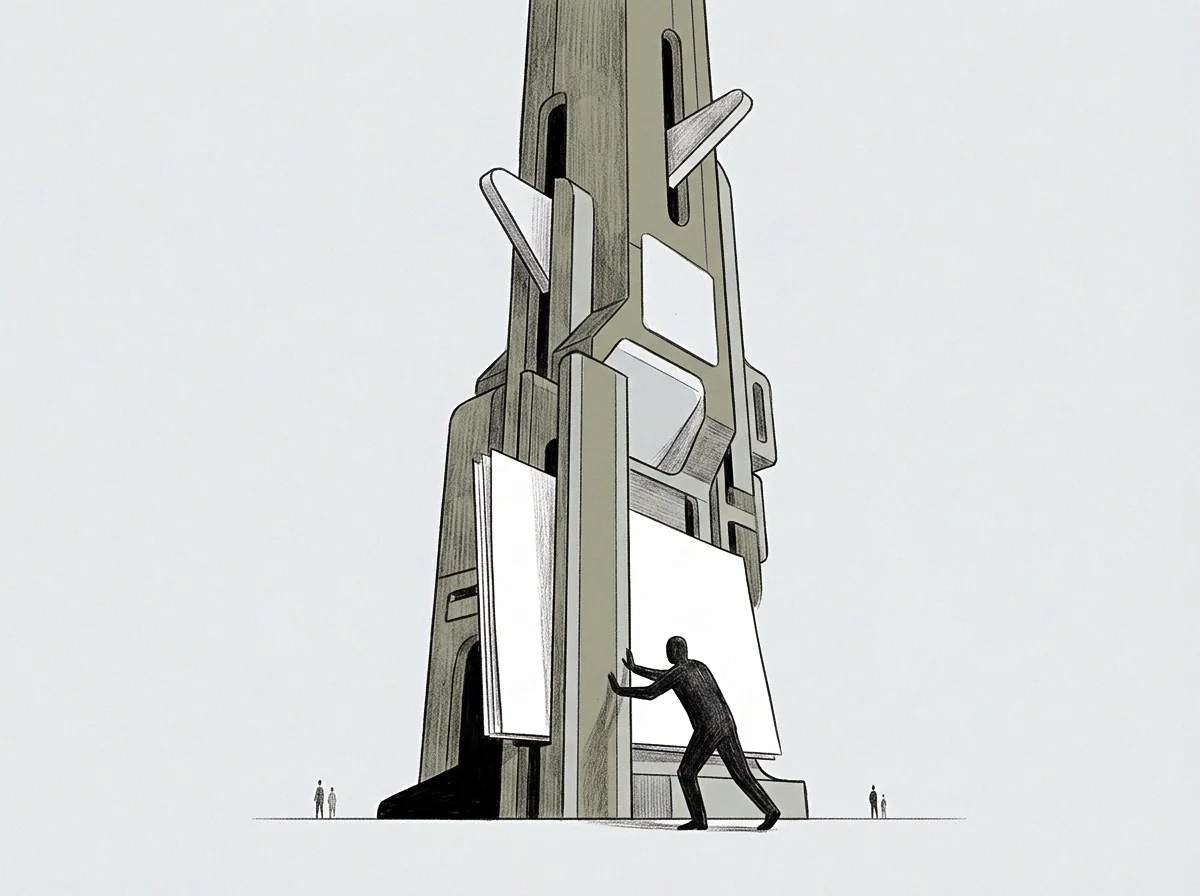
Meaning
The live operational presence of a founder or skilled practitioner constitutes the personal mediation layer that makes brittle systems function. A human layer absorbs structural friction, interprets ambiguous inputs, and bridges gaps between automated tooling and messy client demands. This mediation remains distinct from formal software features or documented protocols because it depends on real-time judgment and uncodified craft.
The term stops applying when an interaction becomes fully codified, automated, or transferred to fixed procedural rules that run without individual discretion.
Friction Mediation
Complex operations frequently rely on unwritten founder intervention to repair small misalignments before clients notice them. Without this human layer, rigid software workflows and standard terms break against real-world edge cases. The practitioner steps in continuously, reformatting client files, answering vague requests, and adjusting project scopes on the fly.
Such intervention creates an illusion of system maturity while masking underlying procedural deficits.
Concealed Expense
Providing unbilled human mediation generates a substantial drain on founder capacity, cognitive stamina and unrecoverable hours. Because counterparties interact with a polished outcome rather than the underlying repair work, they undervalue the service and resist paying higher platform rates. The provider ends up subsidizing technical or structural shortcomings through personal exhaustion.
Systemic Decoupling
Documenting edge cases and turning tacit judgment into explicit automated logic marks the limit of personal mediation. When an operator enforces clear boundary criteria and replaces manual translation with self-serve client requirements, the human layer recedes. The system must then survive on its own code, explicit documentation and contractual terms.