Meaning
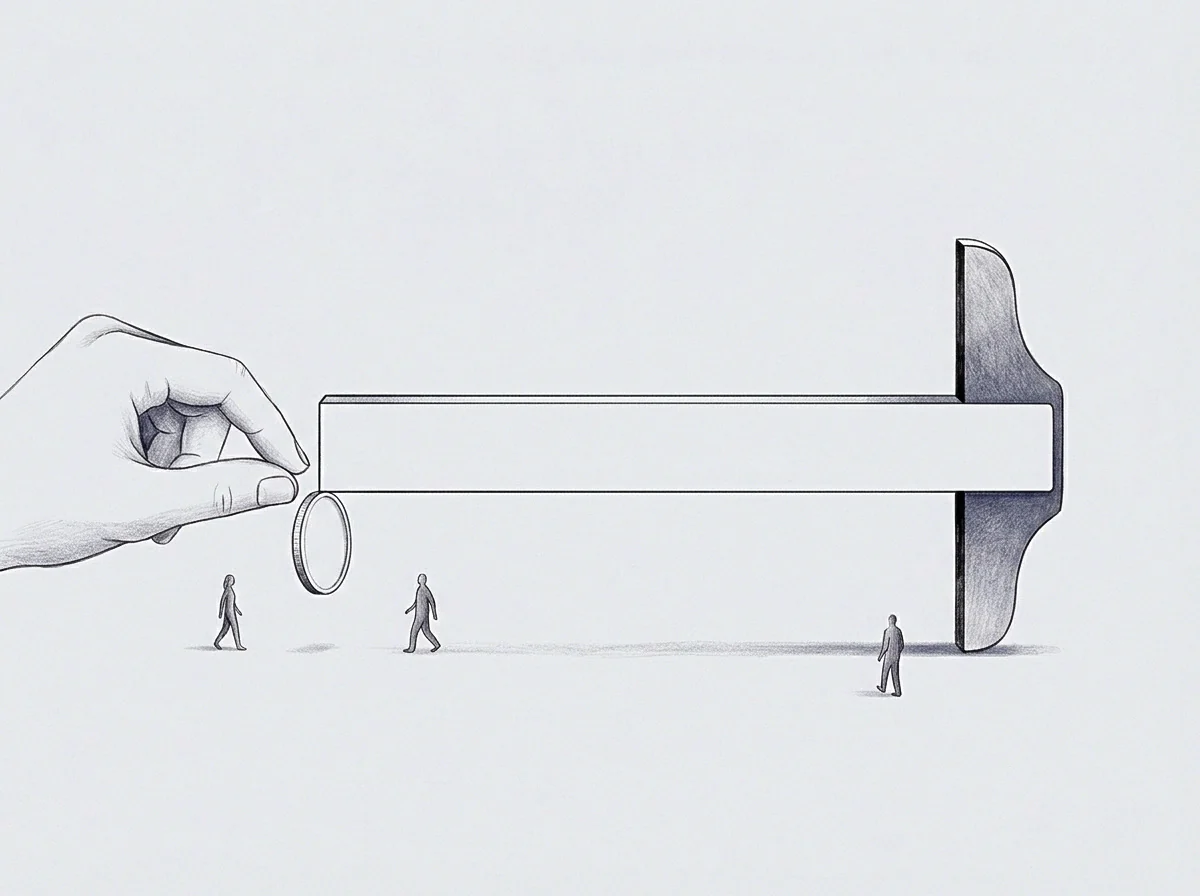
Behavioral adaptation consists of the deliberate withholding of personal dissent to preserve an existing social or professional arrangement. Within post-founding dynamics, self-silencing occurs when a former operator retreats from active feedback to prevent conflict with incoming managers or buyers. This behavior operates as a defense against relational rupture but generates a quiet depletion of personal capacity.
By withholding corrections when the new operators deviate from established protocols, the individual protects the immediate transaction at the expense of long-term alignment. The boundary of this concept stops at explicit contractual gag orders, as it describes a voluntary psychological choice distinct from legally mandated restrictions.
Behavioral Cost
Internal tension accumulates when an individual observes the dismantling of their prior work without offering correction. Undergoing self-silencing requires a constant expenditure of attention to suppress immediate reactions during joint reviews. The person in the retired seat must actively monitor all reactions and written correspondence to ensure no dissatisfaction escapes.
This effort consumes cognitive energy that would otherwise support new activities or passive oversight. Over time, the unexpressed feedback hardens into a chronic cognitive load. The cost is paid in hours spent ruminating on unmade points and energy spent managing the friction of forced neutrality.
Relational Boundary
Clear communication often suffers from a false assumption that silence equates to endorsement. When an observer chooses self-silencing, the active partners read the lack of friction as complete validation. This misunderstanding creates a covert contract where one party expects gratitude for their restraint.
The silence functions as a widening gulf that eventually makes casual interaction impossible.
Structural Consequence
Systemic drift occurs rapidly in any system when the primary repository of historical context refuses to intervene. Through prolonged self-silencing, the founder deprives the new team of the underlying rationale behind early architectural decisions. Errors that were resolved years prior are repeated because the warning signs are ignored in the name of non-interference.
The incoming operators spend unnecessary capital and time solving solved problems. This absence of critical feedback loops accelerates the decay of technical standards. When the veteran voice retreats, the guardrails that protected the quality of the output are silently dismantled.
The choice to remain quiet to protect a temporary peace results in the steady erosion of the very asset the individual built.