
What a swallowed request turns into
A need that is said once and then taken back does not go away. It keeps running against a setting nobody else can see, it costs the body and the person across the table while it runs, and it comes out later as an edge aimed at whatever is nearest. The repair is never more volume. It is going back to the step that was skipped.
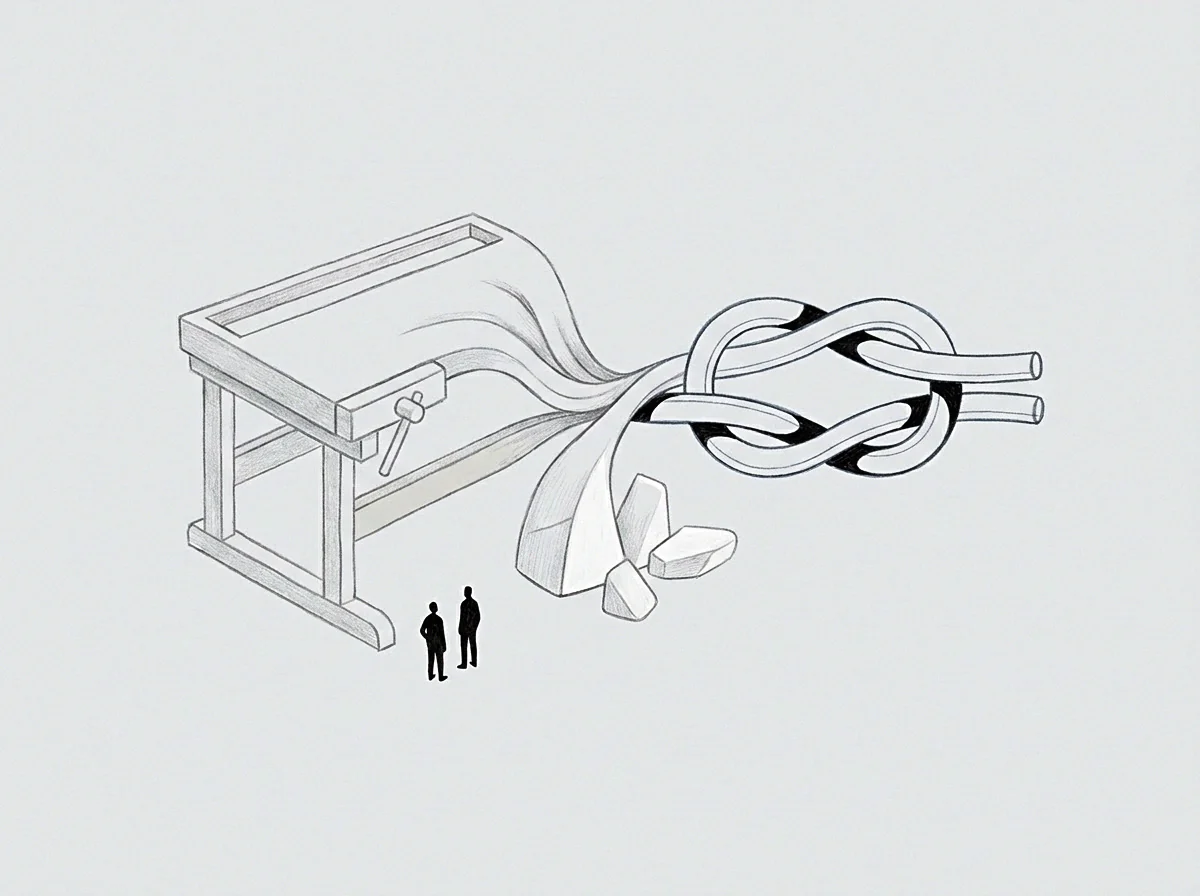
Reference
A request runs in a fixed order. The person sets a want first, somewhere inside, before anything else can happen. Then the want goes out as a term, a sentence the other seat can meet or refuse.
Something comes back, and the person compares it with what was set. If the two match, nothing more is needed. If not, the gap produces a cost, and the cost is supposed to move the person: say it again more precisely, change the terms, change the position, leave.
Self-silencing breaks the order at the second step. The want goes out once, faintly. Nothing comes back.
The person takes the want back inside, and the comparing carries on with no term on the table, against a setting the other seat saw for a moment and then not again.
I called it patience for years. It was a thermostat with the dial behind the wall.
The term changes one thing. Once the setting is said and left there, a mismatch belongs to both seats. Before that it belongs to one seat alone, and that seat pays for it alone, in instalments nobody asked for.
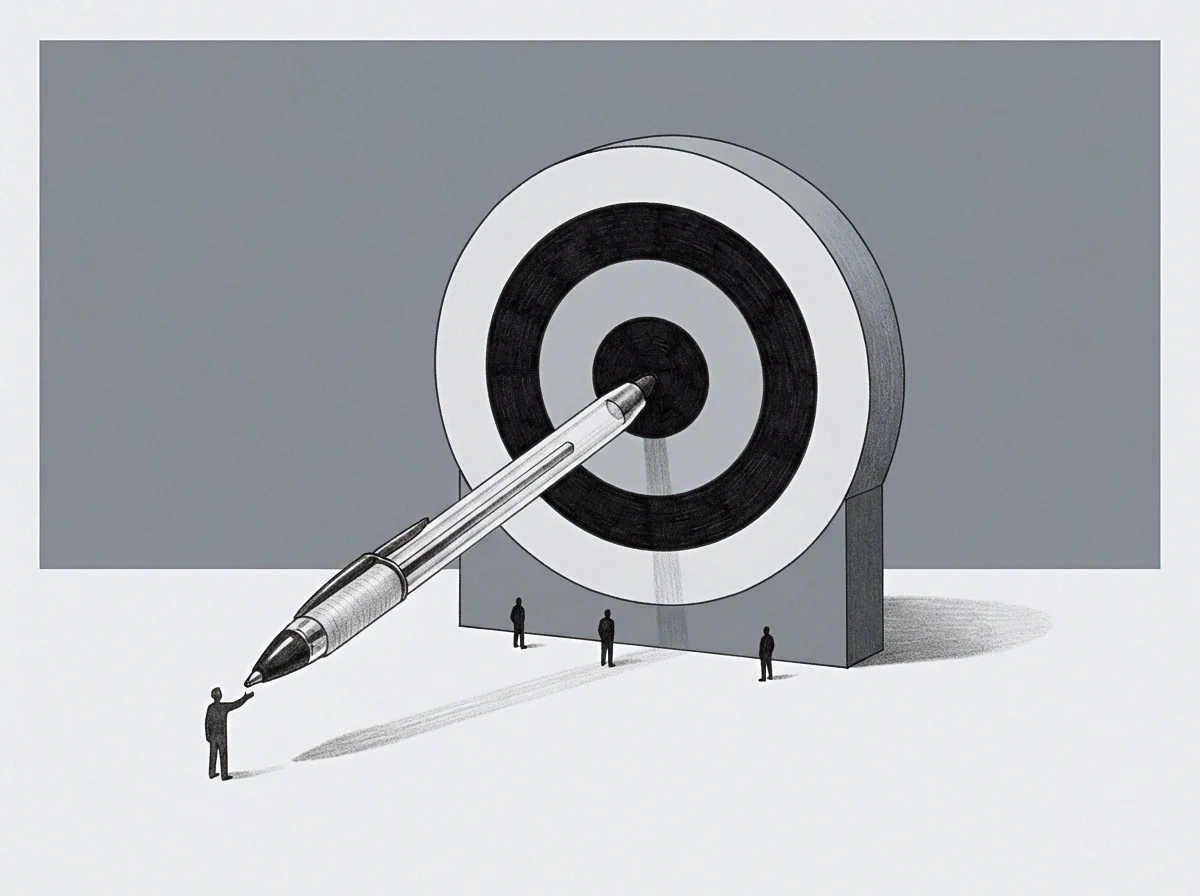
Thermostat
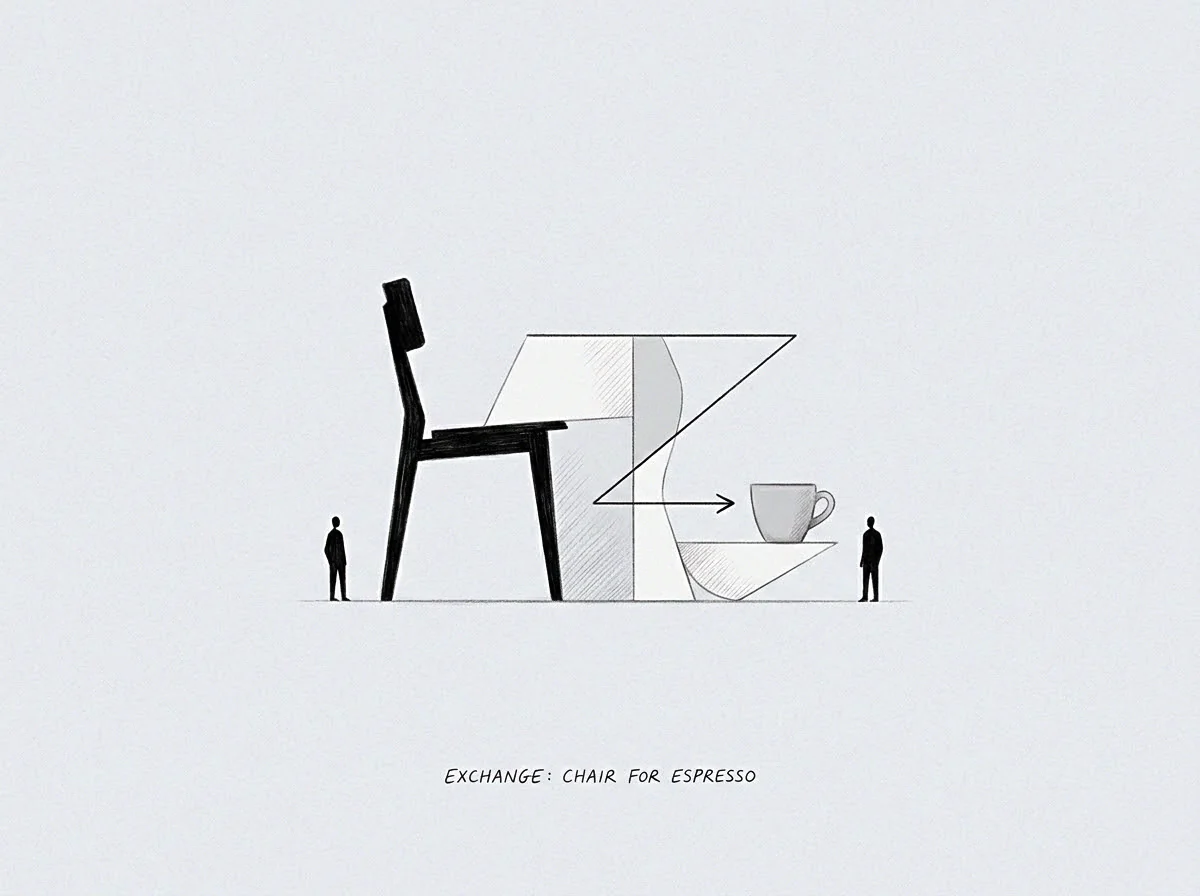
The Setting Inside the System
William Powers, a control engineer by training, published Behavior: The Control of Perception in 1973, and the claim in the title sounded backwards to the psychology of the time. Behaviour does not control the world. It controls what a person perceives of the world.
Every control system is built like a thermostat: a sensor reads the room, a comparator checks the reading against a reference value, and when the two differ an output acts until the difference closes. The thermostat does not care how cold it is outside. It cares about one reading, and it does whatever the moment needs to hold that reading where it was set.
The point Powers kept coming back to, and the one later readers tended to soften, is where the setting comes from. A thermostat is set by a hand from outside. The person sets the dial from inside, and nobody else can read it directly.
The body of work that grew from the book is called perceptual control theory.
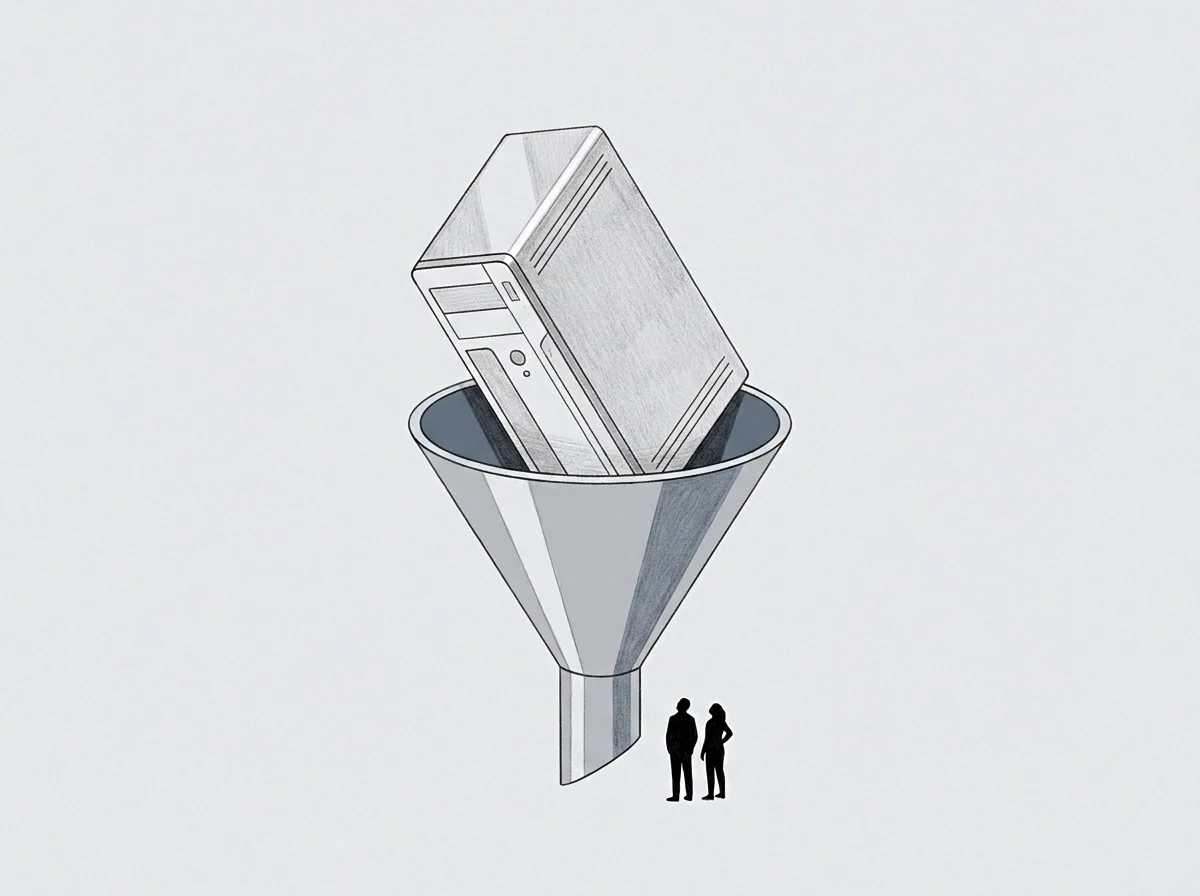
The Rubber Band
Powers liked to show it with two rubber bands knotted together. One person holds one end, a second person holds the other, and the second person’s only job is to keep the knot over a dot on the table. The first person moves their end around however they like.
Somebody watching only the hands sees a person reacting to the first, mirroring every pull. That reading is wrong. The second person is not following anybody.
They are holding one perception still, the knot on the dot, and the hand does whatever that takes. From outside, the movement is visible. The thing being held is not.
The way to find out what somebody holds, Powers argued, is to push on it and watch what pushes back. Powers called it the test for the controlled variable. Disturb a thing a person controls and the person resists; disturb a thing they do not care about and nothing happens.
Nobody has a more honest way to read another system from outside, and every working arrangement runs it all day without the name. A client asks for one more revision and watches what comes back. A colleague moves a deadline and watches.
A setting nobody can see is a setting nobody can meet.
A Second Loop for Speed
Charles Carver and Michael Scheier carried the frame into personality and health psychology in a long paper in 1982, and in 1990 they added the piece that matters here. Next to the loop that closes the gap there is a second loop, and that one watches how fast the gap is closing. In their version this second loop is where feeling comes from.
Progress faster than expected registers as something good, and the good feeling is a signal that this goal can be left to run for a while and attention can go elsewhere; Carver later called that coasting. Slower than expected, or none at all, registers as something bad, and the bad feeling grows with the shortfall and pulls attention back. Affect, read this way, is the meter on the work, not noise laid over it.
The same frame explains giving up. When the person comes to expect that the gap cannot close, the loop disengages, and the goal is dropped or scaled down until it can be met. Carver and Scheier set the whole frame out at book length in On the Self-Regulation of Behavior in 1998, and it has been used since to read why people persist, why they quit, and why some quit without noticing they decided to.
Put self-silencing into these two pictures and three things follow. The test fails first. The other seat pushes, a revision, a weekend, a little more scope, and nothing pushes back, because the resistance is being held on the inside, so the other seat concludes, correctly from the evidence, that the thing does not matter.
Then the second loop keeps reporting. No progress. No progress.
No progress. The cost is real and it is accurate, only it is paid inside a system nobody else is connected to. And then, given long enough, the third piece of the frame arrives: the loop disengages, and the setting itself starts to come down.
I liked this the moment I read it, because it took the moral layer off. I had been treating the cost as a softness, something to get over and stop mentioning. In the diagram it is the instrument doing its job.
What was wrong was the wiring, and I had wired it myself. Which leaves the part the diagram cannot answer: where a hand learns to switch its own output off, and what it was protecting when it did.
Pressure
Keeping a need off the face has a price of its own, separate from the need, and it has been measured. James Gross ran the study in 1998. Participants watched a short film made to provoke disgust, and some of them were asked to keep their faces still, so that anybody watching them would not know what they felt.
They managed it. Their faces gave away much less. But they reported the disgust as strongly as everyone else, and their bodies went the other way from their faces: the sympathetic arousal, the stress side of the nervous system, went up.
A second group was asked to think about the film differently, coolly, the way a professional would, and that group felt less and showed less, with no extra arousal. Gross named the first strategy expressive suppression, the second reappraisal, and the pair became the backbone of emotion regulation research for the next two decades.
Later studies added the rest of the bill:
- people suppressing during a conversation remember less of what was said in it, because holding the face takes attention the listening needed (Jane Richards and Gross, 2000);
- people who suppress as a habit report less positive feeling, more negative feeling, and fewer close relationships than people who do not (Gross and Oliver John, 2003);
- and the cost does not stay inside the one who suppresses.
The third one is the finding that reaches the arrangement. In 2003 Emily Butler, Gross and their colleagues paired strangers to talk about an upsetting documentary, and secretly asked one in each pair to suppress. The partners of the suppressors felt less rapport with them, were less willing to become friends, and showed bigger rises in blood pressure than the partners of people who talked normally.
Nobody in the room was told what was happening. The other person paid anyway, in the body, for something that was never said.
So self-silencing is not a private economy. The person carries the arousal and loses part of the meeting. The seat across the table feels a distance it cannot name and starts to trust a little less.
The quiet one in the arrangement is not the cheap one.
Eye
Dana Crowley Jack came at the same wiring from the other end. Silencing the Self, in 1991, was built on long interviews with women in depression, followed over time, and what the interviews kept returning to was a set of rules about how to keep a bond safe: put the other first, keep anger out of sight, measure the self by how it looks from outside. A year later, with Diana Dill, Jack turned the rules into the Silencing the Self Scale, thirty-one statements a person agrees or disagrees with, read in four parts:
- externalized self-perception: measuring the self by standards that come from outside it;
- care as self-sacrifice: putting the other’s needs ahead of one’s own as the way to keep the bond;
- silencing the self: keeping thoughts and feelings out of the room to avoid conflict or loss;
- the divided self: an outer self that goes along while an inner self disagrees and stays hidden.
The scale has been used for decades since, in many countries, with men as well as women, and in several of those samples the men came out as high or higher. That moved the reading. The rules are not a trait of women.
They are what a person learns in any position where speaking has cost more than staying quiet, and a junior seat in somebody else’s business is such a position as surely as any family.
Four parts, one rule seen from four sides: the outside sets the standard, so the inside stays out of the room.
The Watching Voice
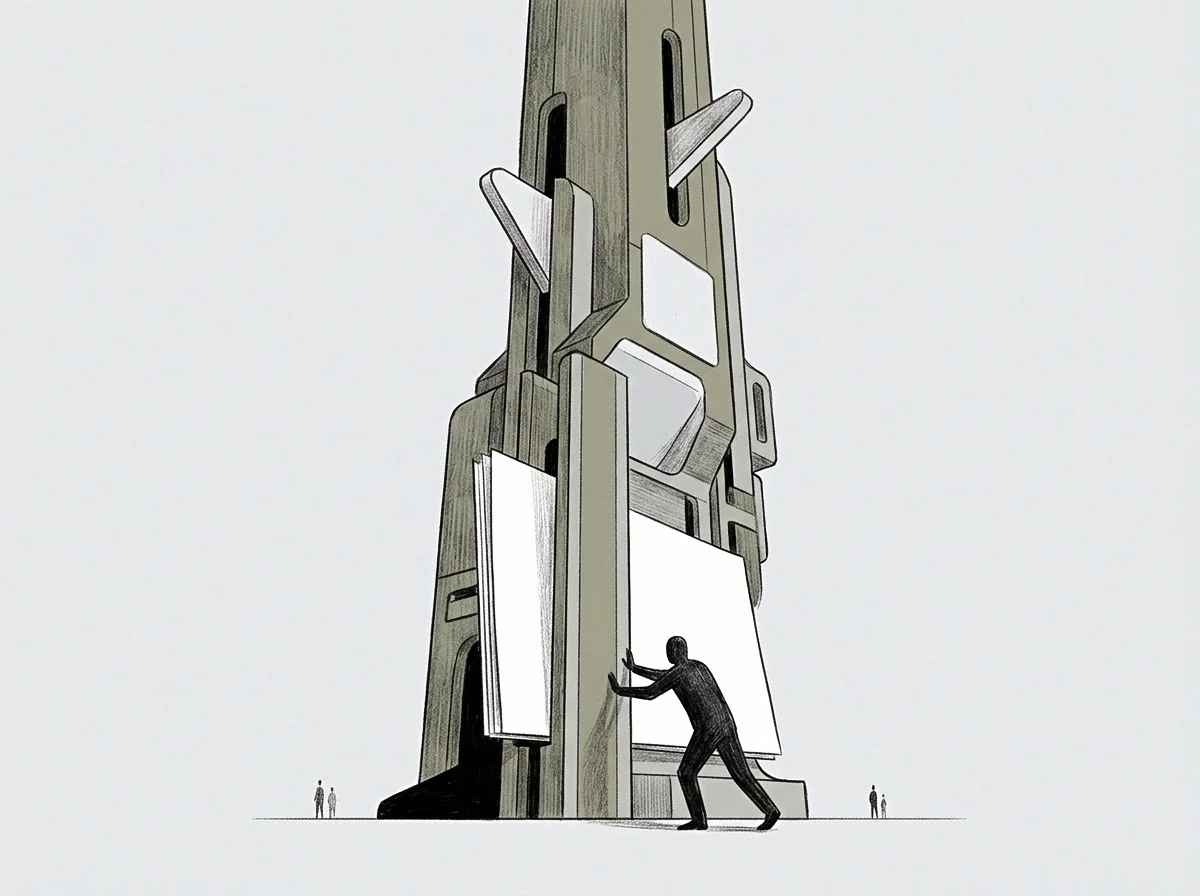
Jack’s sharpest image is a second speaker. In the interviews there was the I, which wanted something, and above it a watching voice that measures the self against outside standards, which Jack named the Over-Eye. The I wants.
The Over-Eye checks how the wanting will look. Usually the Over-Eye wins. Nobody in the room hears the argument, because the argument happens before the sentence, and what reaches the room is the sentence the Over-Eye allowed.
Where the Anger Goes
Eight years later, in Behind the Mask, Jack followed the anger the rules kept out of sight, and found it did not disappear. Blocked from the direct route, it took indirect ones: a coldness, a withdrawal, a remark with an edge that could be denied, a sudden flare over something small. The book’s argument is that the indirect forms are what a direct need turns into when the direct form is forbidden, and that reading them as character misses the rule that produced them.
I recognise the divided self in the work, the client side of things, not only in private. Outside: fine, of course, no problem, delivered. Inside: a running list of what was not fine.
The list was the reference value. The Over-Eye was the reason it stayed on the inside, because saying it would have looked demanding, and looking demanding was the thing I was paying to avoid.
Jack’s readers state the limits plainly. The scale measures association, not cause, and the first material came from one group of people in one kind of distress. The loop has carried further than the frame it was found in.
Weather
A cost with nowhere to go attaches to something, and in 1983 Norbert Schwarz and Gerald Clore showed how. In one study they had people recall a sad or a happy event from their own life, in a small soundproof room, and then asked how satisfied they were with their life as a whole. Recalling the sad event lowered the answer.
But some of the people had been told beforehand that the room itself tends to make people feel tense, and for them the sad memory stopped lowering anything: they had a cause for the feeling that was not their life. In the second study the researchers phoned people on sunny days and on rainy days with the same life question. On rainy days the answers came out lower.
When the caller first asked, in passing, how the weather was, the gap disappeared.
The feeling was still there in both studies. It had been given its real cause, so it stopped being used as evidence about something else. The field calls this feelings as information: people read a feeling as data about whatever is in front of them, unless something points to where it came from, and Clore and Schwarz spent the next decades showing how far the effect reaches, into how people weigh risk, other people, whole decisions.
Run that in a working arrangement, in a seat nearly everybody has sat in.
The one in the seat stays late for a stretch, and says once that the scope has grown.
Nothing comes back. The scope keeps growing.
No second sentence. The want goes back inside, and the second loop starts its report.
Now the cost has no cause in the room, because the cause was taken out of the room.
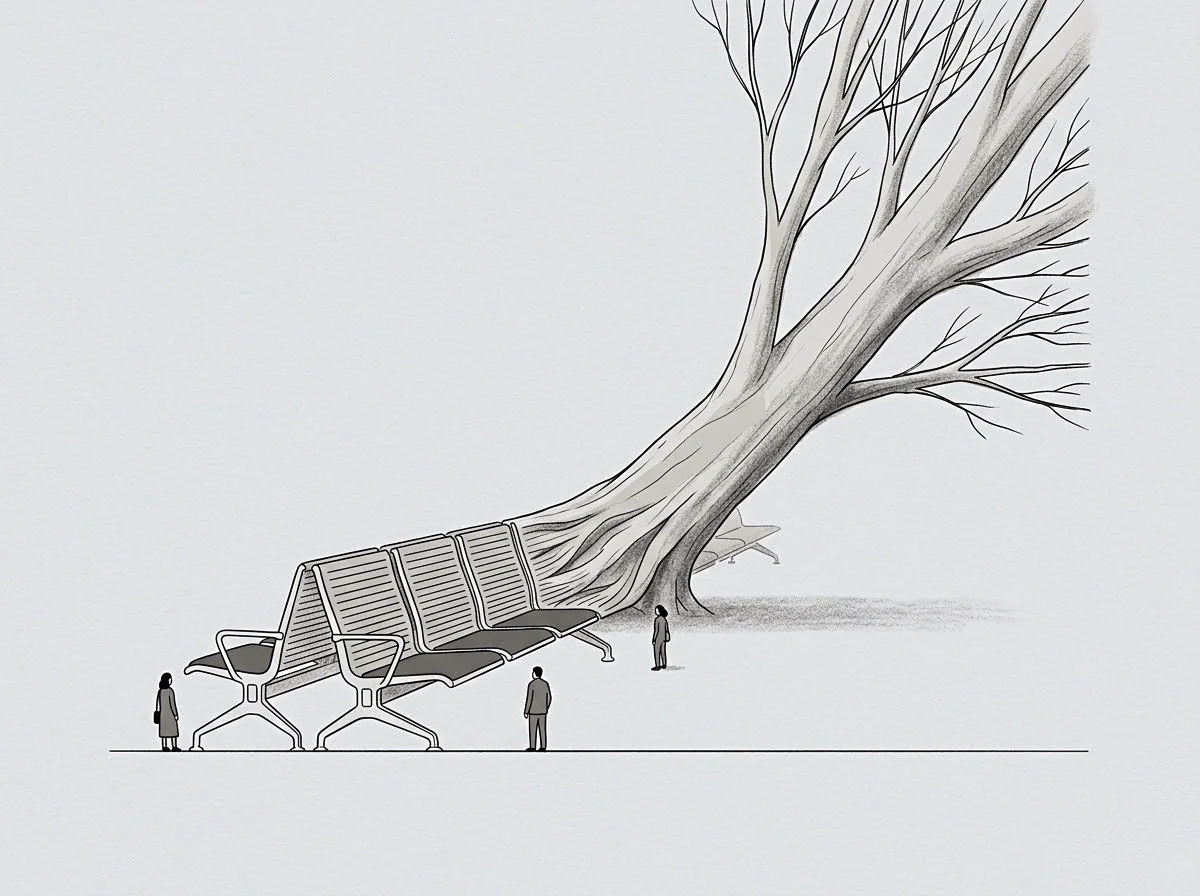
So it attaches to the nearest thing. A late reply. A typo in a brief.
A question asked twice.
The edge lands there, on something small, at the size of the whole stretch.
The seat across the table sees a person who flared at a typo, and is right about what it saw.
That is Jack’s indirect route and Schwarz and Clore’s rainy day in one event. The edge is accurate about the cost and wrong about the cause. Nobody on the other side has a way to know it, because the one fact that would explain it is the one fact that was kept out.
I had the sharpness named back to me more than once, and each time I filed it as temper, a thing about my character to manage harder. Managing it harder was suppression again, one level up.
Where did that come from, it was one typo.
Backtrack
Other people’s wants and terms ran my life for a long time, and the reason is plain. I did not state mine.
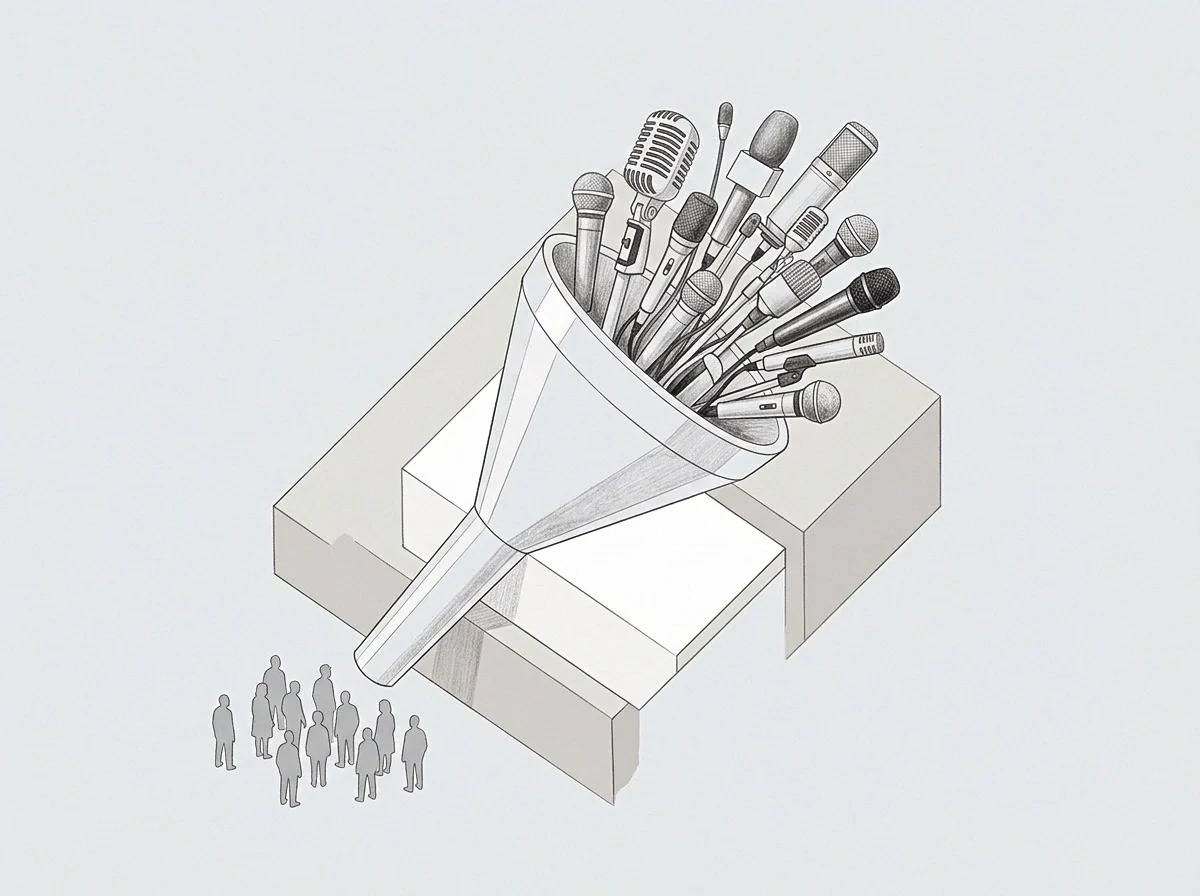
The cost works as the alarm. When it starts to pile up, the move is back two steps, not forward. Was the want set?
Was it ever said as a term the other seat could actually meet, in words, with nothing to guess? If not, the cost is not information about the other seat yet, and nothing done at the front of the loop will fix it: not more effort, not more patience, not the flare at the typo. The repair is upstream.
Say the setting. Let the other seat run its test against something it can feel. Then watch what comes back, and only then read the cost as something about the other seat.
Done early, this is one sentence in an ordinary voice, about the size of asking for a deadline to move. Done late, the same words carry a whole stretch of swallowed cost behind them, and they arrive as the edge everybody remembers instead of the term nobody would have noticed.
The cost is the alarm for a step that was skipped.
Left long enough, the loop spends more than attention. It spends appetite. The second loop reports no progress on a setting nobody can see, again and again, and Carver and Scheier’s disengagement does the rest: the system turns the setting down so the reports will stop.
Wanting less is cheaper than wanting in private. That is what the swallowing buys in the end, and it costs more than anything it protected.
I go back. Early, while the sentence is still small.