Meaning
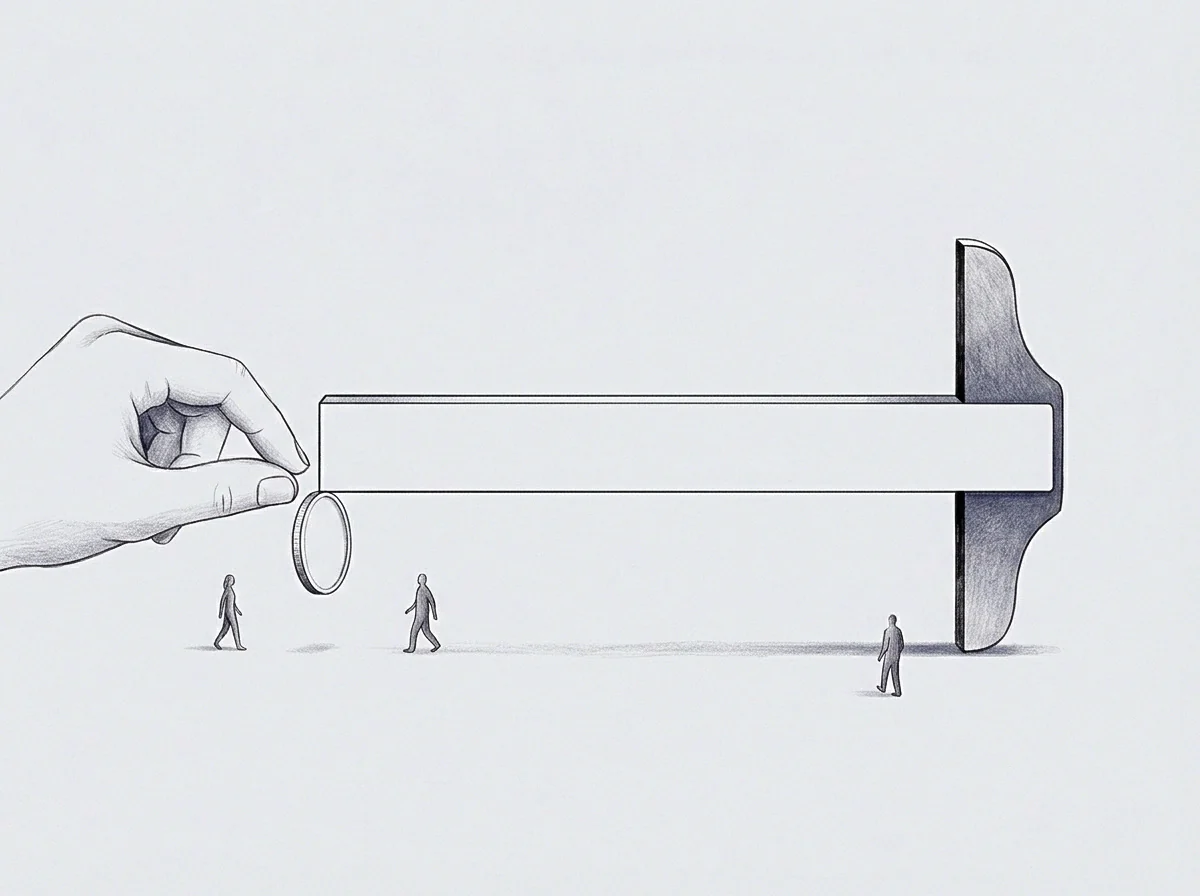
A relational pattern in systems psychology occurs when an individual habitually transfers execution responsibilities and structural tension to a partner within a shared structure. In founder partnerships, under-functioning describes the process by which one person cedes authority and execution, compelling the adjacent partner to absorb the unhandled load. The concept measures the displacement of functional capacity across two seats, recording how load shifts between operators regardless of individual technical skill.
The boundary of the term stops at clear technical incompetence or deliberate contractual delegation, where tasks are reassigned through explicit written terms.
Capacity Erosion
When an operator routinely relinquishes initiative, the surrounding room adapts by expanding the counterpart’s jurisdiction to prevent execution failure. Persistent under-functioning lowers the active partner’s expectation of standard output, which causes the under-functioning individual to experience reduced confidence and diminished agency over time. This feedback loop converts temporary hesitation into permanent reliance.
The cost to the retreating party appears as a progressive loss of technical mastery, while the cost to the holding party accumulates in depleted attention and chronic fatigue. Over several quarters, the division of labor hardens into a fixed structural arrangement that neither person can adjust unilaterally without provoking conflict.
Structural Dyad
Interlocking roles require two active participants who continuously calibrate their efforts against each other’s perceived stability. Within this system, under-functioning cannot persist without a partner who manages tension by assuming extra duties and maintaining continuous control. The two behaviors form a single closed loop where every act of withdrawal by one operator prompts an immediate expansion of effort by the other.
Removing the over-functioning counterpart forces the remaining operator to face the raw exposure of the work without a buffer. Systemic equilibrium collapses the moment either party refuses to maintain the unwritten contract.
Position Reversal
Altering a habitual pattern of low engagement relies on direct structural intervention. Personal appeals fail to modify the underlying dynamic. When a founder stops absorbing unassigned tasks, under-functioning becomes visible through missed delivery and daily friction.
The resulting gap forces a clear choice between explicit renegotiation of the seat and complete departure from the record.