
The freeze that buys time
Years of asking for terms got me motion and no paper. One held line, nothing earns until the paper is signed, put the waiting on the counterparty's clock, and what could still drag it back onto mine was my own hand, checking whether anything had arrived.
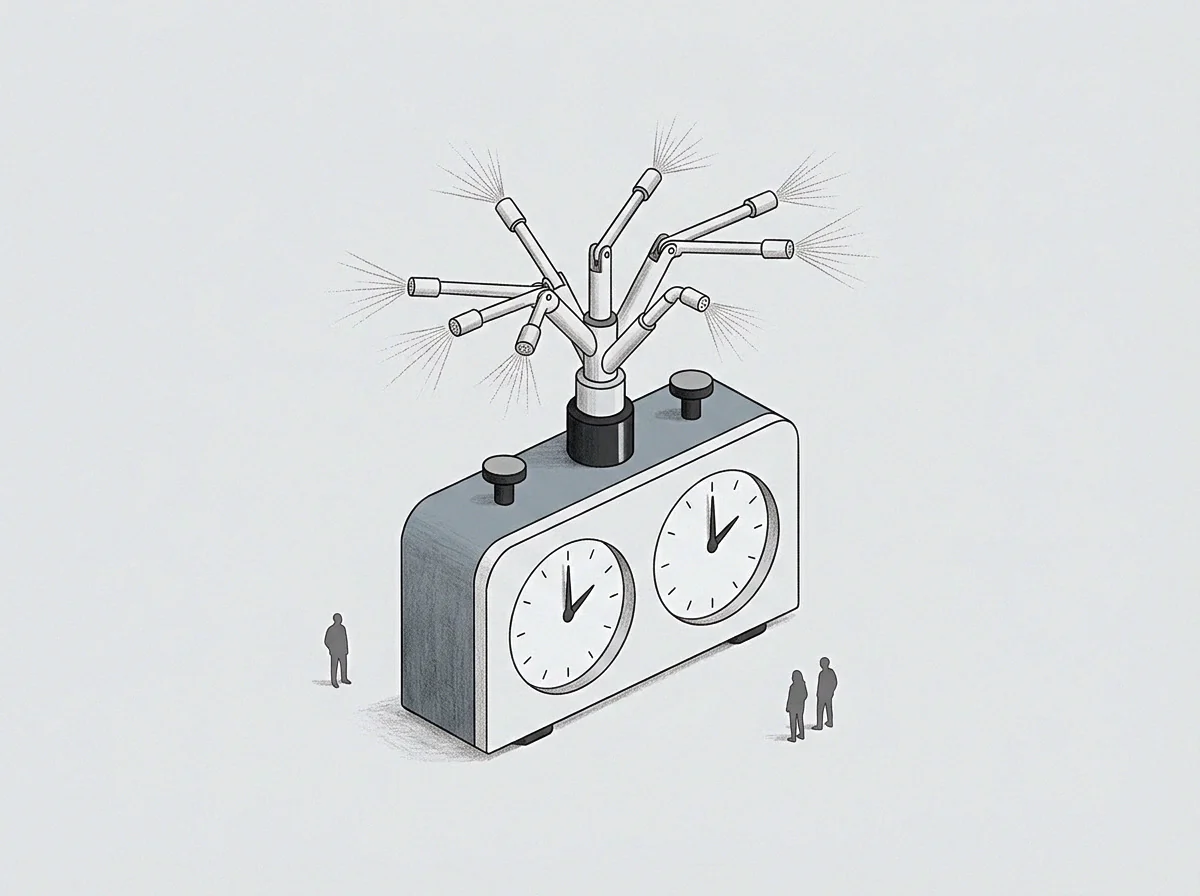
Freeze
For years I asked for terms. Asking went the way asking goes. I got motion out of it, a draft, an answer to the draft, another draft, and every round left the ground where the round before had left it.
Nothing was refused. Nothing was signed either, and those are two different results, though they feel identical at the time and they cost the same evening. I kept coming back to pick the request up again.
I wrote the drafts, too.
Then, inside the same arrangement and with the same seat across the table, signed paper came back inside a day. The seat had not changed. I had stopped asking, and I had put a gate on the thing that seat wanted.
A request can lie on a table for years, and a gate cannot, because something is stopped at it.
A freeze is one line, held: the earning part of the work does not start until the paper is signed. Not slowed, not begun quietly as a gesture of good faith. Stopped, the way a meter is stopped, and left stopped while everything around it goes on being friendly.
It is the reverse of the move I used to make, which was to build the earning part first and let the sight of money coming pull the terms out of the other side. I paid for the build and got nothing back for it. A thing already made is a thing already given, and nobody writes paper for what is already in their hands.
Building ahead of terms is a wager that the terms will come, and the wager is owned by whoever made it. I made it for years and called it momentum. Under a freeze the same work sits designed at the gate, unshipped, and every week it stays there is a week the counterparty’s plan is short of the piece it wants.
There is nothing clever in this. It is the refusal to build on unsigned ground, and that refusal had been my own stated rule the whole time.
Asking had a second cost, and I saw it late. A request hands the writing of my terms across the table. I had even done the homework that came with it: drafts written in the other side’s frame, in its order, answering its objections before my own.
A stated term works the other way round. It leaves the counterparty three moves, to accept it, to counter it, or to walk away, and none of the three is writing my side of the page. I spent a week arguing with a draft in my head before I understood that.
The week produced nothing. One sentence, written down and held, produced what the week could not.
Nothing earns until the paper is signed. Written where both seats can read it, that sentence takes the deadline off my nights and puts it on the counterparty’s roadmap, and a roadmap has other people standing on it, who ask about the hole in rooms I am not in.
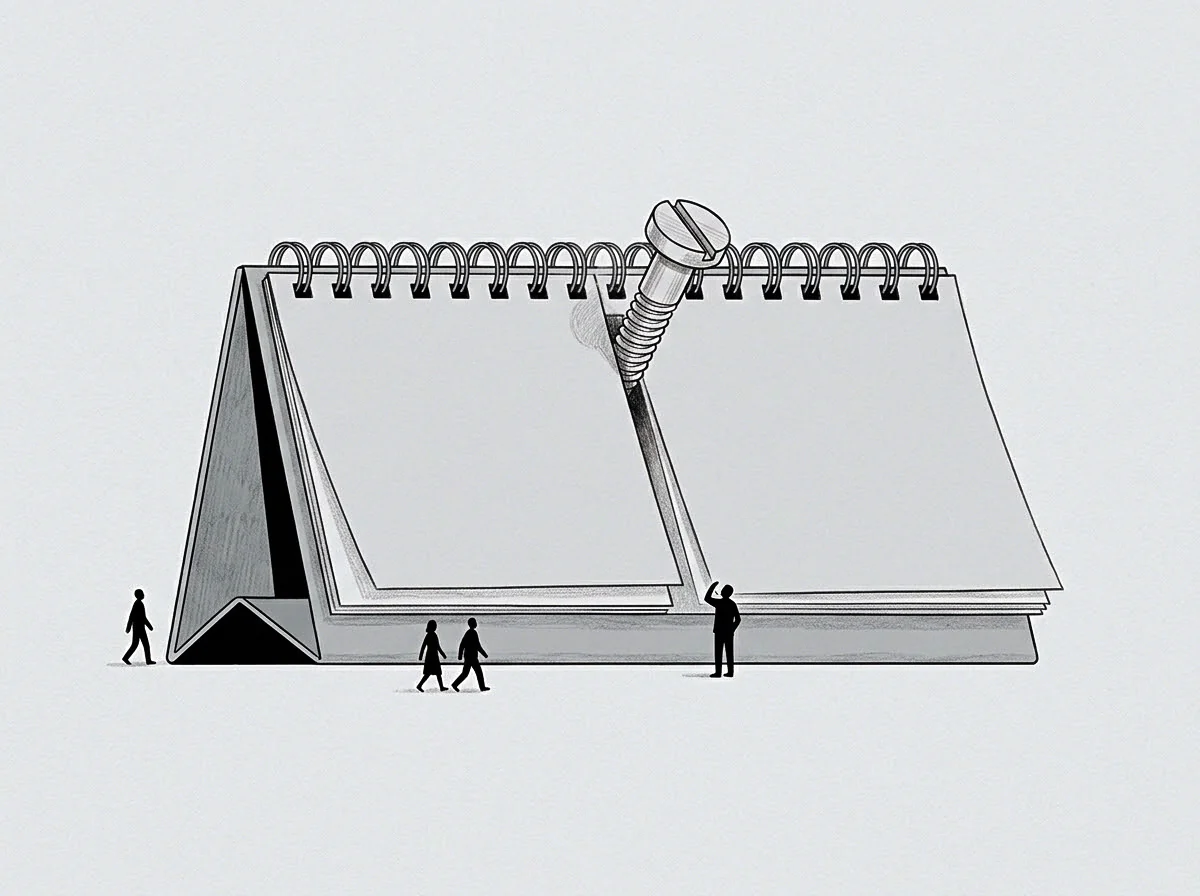
Reflex
I did not need a new rule. Paper before earning had been my standing condition for a long time, said out loud, known on both sides of the table. I had the rule and I broke it, more than once, and I filed the breaking under weakness.
It was not weakness. The supply went out before the rule got a turn.
I read the state of whoever sits across from me, or my baseline does, and it goes to work on what it reads at once. Their cost is already coming down before anything I would call a decision has had a turn. A need shows in half a sentence and the build is assembling in my head, whole, before the sentence is finished.
I work with that reading. Clients pay for it, and I would not switch it off if I could.
The trouble sits one step after the reading. Want, terms, cost, position, action. Supplying belongs to the last of the five, and a baseline that regulates a room performs that last one with the four before it skipped.
The one who supplies has not decided to. The one who receives has not asked. So nothing in the exchange can be priced, met or refused, and it goes on anyway, at the speed of the reading.
The leak is there, in the skipped stretch, and every arrangement that ran on my unpriced work came in through it. So the gate has an exact place, between the reading and the supply. The reading stays free, and nothing goes out until the terms are in.
Understanding this did not install it.
I could draw the leak on a page for a long time before it changed one thing I did, because the supply runs at the speed of the reading and an insight does not run at all. What moved it was repetition, and the thing that got quicker with repeating was not the reflex. The reflex kept its speed.
What got quicker was the term. The first time, the sentence had to be written against the full weight of a build that was already assembled and already wanted out, and writing it took an afternoon and cost more than doing the work would have. By the tenth time the sentence is open before the request has finished arriving, and the build, still whole, still seconds old, has somewhere to wait.
None of that took courage. What it took was the absence of a bill. Each time the term went out where the work used to go, nothing came back for it: no room went cold, nothing broke, no arrangement I wanted was lost.
A reflex built on one certainty, that not supplying costs more than supplying, comes apart on the same evidence run backwards, and only from being run.
A covert contract is an expectation one seat holds that the other never agreed to. It does not need anybody’s bad faith to work. It needs only that nothing be written down, because then the expectation grows at whatever pace it likes with nothing beside it to measure against, and by the time it is large it feels to whoever holds it like an old agreement being broken.
That was the room I worked in for years. There is a written position in it now, and the counterparty can expect whatever it wants, but the only expectation anybody can put a finger on is the one on the page, and the distance between the two is a visible thing instead of a quiet one. A stated cost does one more thing.
It can be moved, and whatever moves keeps getting noticed. Whatever is held at one value for long enough stops being noticed at all and becomes part of the room. The reflex is still here.
It still arrives on time, and the sentence that calls it has not changed in all the years I have heard it.
Just start on it, and the paper will catch up.
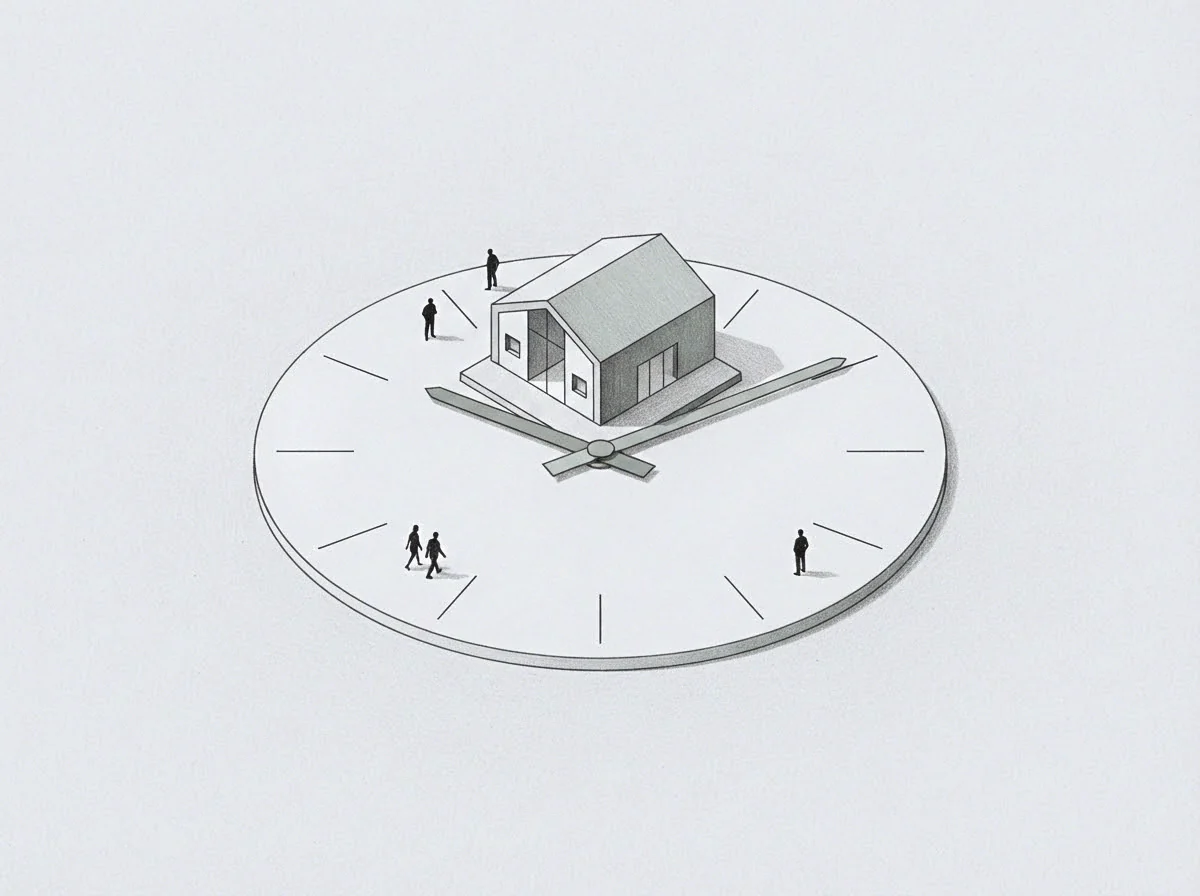
Watch
One thing was left that could undo all of it, and it was not the counterparty.
A self-executing position stays true with nobody tending it. It holds by itself right up to the morning I start counting days against it. After that it is not holding by itself.
I am holding it, and I am the part that gets tired. The terms do not move. The paper says what it said.
What moves is where the work of the thing lives, out of the document and back into a head, and a head charges rent for that in a currency nobody bills for.
Check on the first morning. Nothing.
Check the next. Nothing.
By the third the checking has a shape of its own, and what I am holding is no longer a state. It is a wait.
Nobody has to do anything to keep a state true, and it stays true while I sleep. A wait asks for the same few minutes every morning, gives nothing back for them, and leaves a small unfinished thing running underneath the rest of the day.
I do not need to know the hour a thing failed to arrive.
If the paper comes, it lands in my inbox and I find it there the way I find everything else, and that costs me nothing I have to set up in advance. If it does not come, there is no event at all. An absence has no hour, no shape, and nothing in it for me to do.
The head refuses that part at first, because sitting still over a thing that has not arrived feels like negligence when it is only arithmetic.
So the design closed on its last side. Nothing arriving hands me nothing back: no task in it, nobody owed an answer, no morning that has to be opened. And whatever does arrive, or does not, is a clean reading, because a delivery measures cleanly only when none of its terms are mine.
Here none were. What was owed, by when, and how high it ranked had all been set by the seat that owes it, unprompted. If the paper comes, it measured that seat.
If it does not, it measured that seat.
Watching would have cost throttling, the exact load I had spent the week taking off. Nobody is needed for the position to hold, me included. It is written, it sits there, and the one thing that can put me back inside it is my own hand on the inbox in the morning, looking for something that either came or did not.
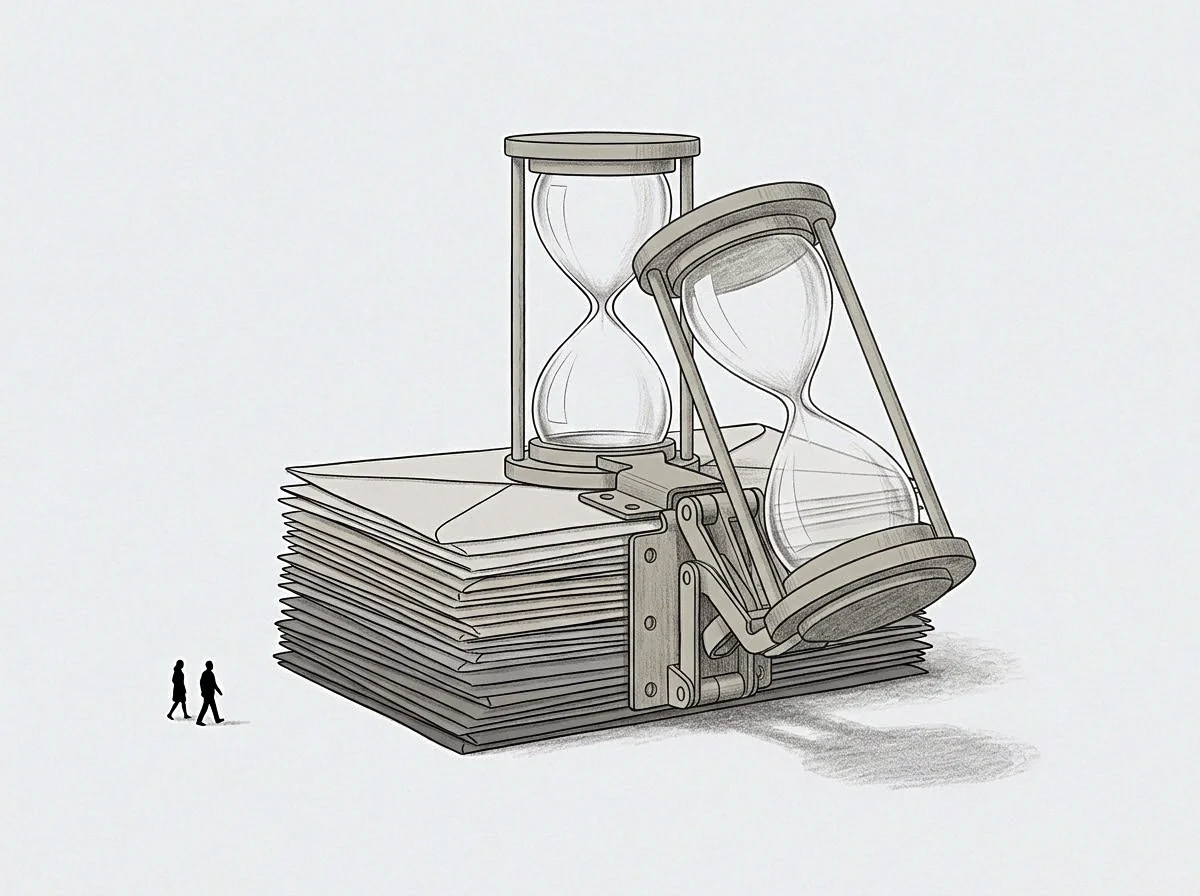
Path
The research under this comes in two halves, and the second is the one a gate needs. The first carries Bluma Zeigarnik’s name. What the field calls the Zeigarnik effect is an asymmetry between two kinds of task: one stopped before its end stays live in the head that began it and keeps coming back, and one that was finished is let go.
Every practice that tells a person to close their loops stands on that half. It also leaves a person stuck wherever the closing belongs to somebody else. The loop cannot be closed from this side of the table, so the advice turns into pushing.
The second half is Masicampo and Baumeister. They left people holding a goal that had not been fulfilled, moved them on to work that had nothing to do with it, and measured how far the open goal pushed into that work: thoughts drifting back to it, the unrelated task done worse. Then part of the group was asked to make a specific plan for the open goal, what they would do and when.
For those people the intrusion stopped. The goal was exactly as undone as before. Their reading of it is the part I keep.
The head does not hold a task open until it is finished. It holds it open until it knows how the finishing will go, and a specific plan is what tells it.
The head was not asking for the thing to be finished, it was asking how the thing ends.
In my own words: ownership is not what my head keeps count of. A task can belong to somebody else on every page there is and still ring in me, and one that is fully mine can lie quiet. What decides it is whether the thing has a path to its end.
I had handed work across the table before, to the seat that said it would do it, and the work did not leave my head, and I took that as proof that I cannot let go. It was proof of something smaller. A task handed over bare, no day named, nothing that sets it off, nothing I do alone if it stalls, has changed desks and kept its alarm.
The labour is out of sight. The ringing is still mine. Let it go, people said, and that asks a head like this for the one thing it cannot do on command.
A path it can be given.
I write the path for an ordinary dependency as one line with a date in it: this belongs to the other seat, I look on this day, and failing that, here is what I do alone. A freeze is the same plan with two of its parts already paid. The fallback is the state I am already in, nothing built, nothing shipped, nothing owed.
The trigger is an act on the other side, and paper arriving announces itself. So whatever date there is sits with the counterparty, as a term, and my side carries no calendar at all. Both branches were decided before either could happen.
That is also the exact way watching breaks it. A check is a next action I assign to myself, with a date on it: tomorrow morning, look. The plan that said nothing is required of me now says one thing is, and a head told that does what the people in that study did without a plan.
It keeps the task live. I had taken the ringing for information about the other side, that somebody must be late. It was information about my plan, and the misreading cost me more evenings than any lateness did.
I have not settled whether one path is enough for a head like mine. On a list, one line can be struck out and the others do not feel it. What I hold is closer to a model, where each line leans on the ones beside it, and I cannot tell yet whether the quiet I got from this gate belongs to the gate, or lasts only while the lines around it have paths of their own.
Option
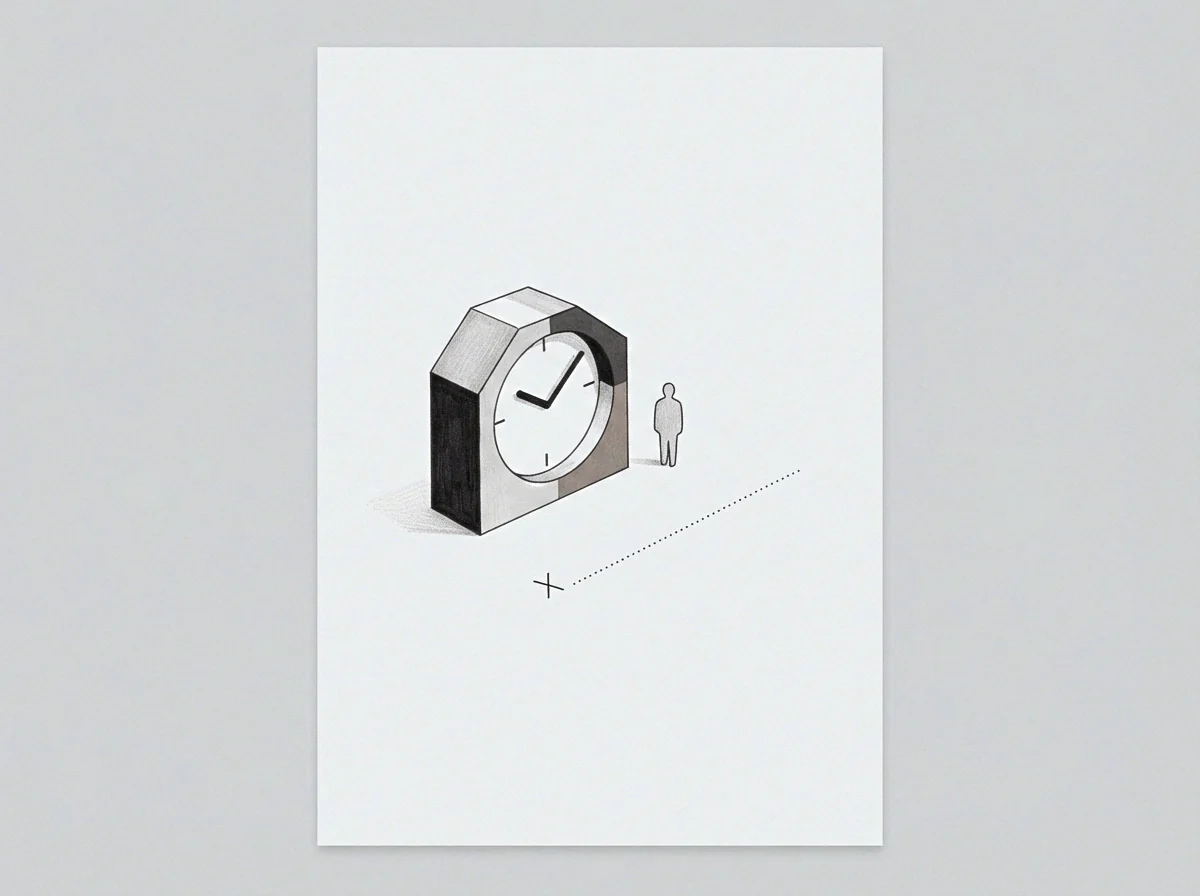
What the freeze does underneath is turn time into something I hold instead of something I spend. Waiting is not one object. Whose clock it runs on decides what it is, and the same days on the calendar can sit on either side of that line and behave like different materials.
Waiting on My Own Clock
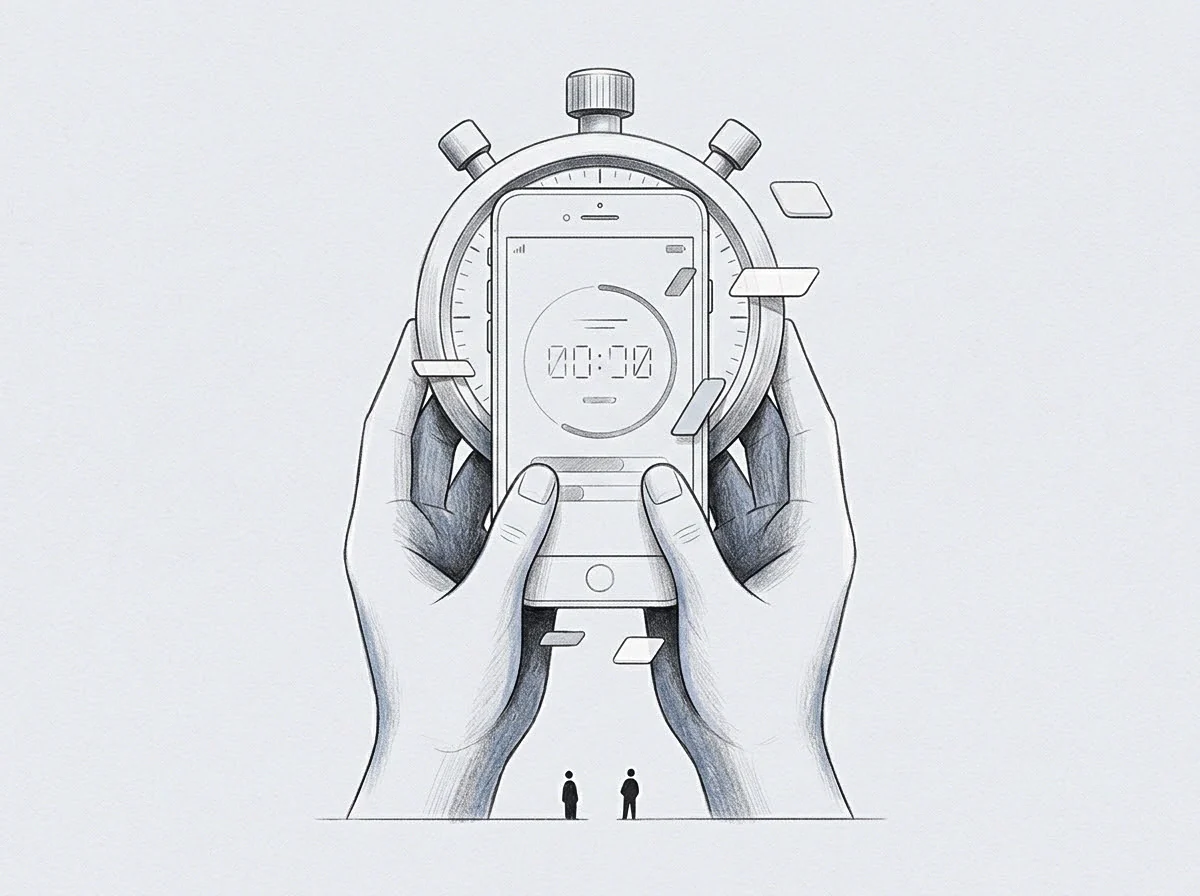
On my clock a wait is work with no output. I keep a live model of the counterparty’s next move, it wakes whenever any scrap of news lands, and it cannot be closed from my side no matter what I do this afternoon. With a seat whose deliveries match what it says, a model like that settles and goes quiet.
With a seat whose statements and deliveries disagree, each new piece of data contradicts the one before it, the update does not complete, and the rebuilding is the expense. So the days go by and at the end of them I have the days, and nothing else, and I am tired in a way that does not correspond to anything I could name if somebody asked me what I had been carrying.
The Same Days on the Other Clock
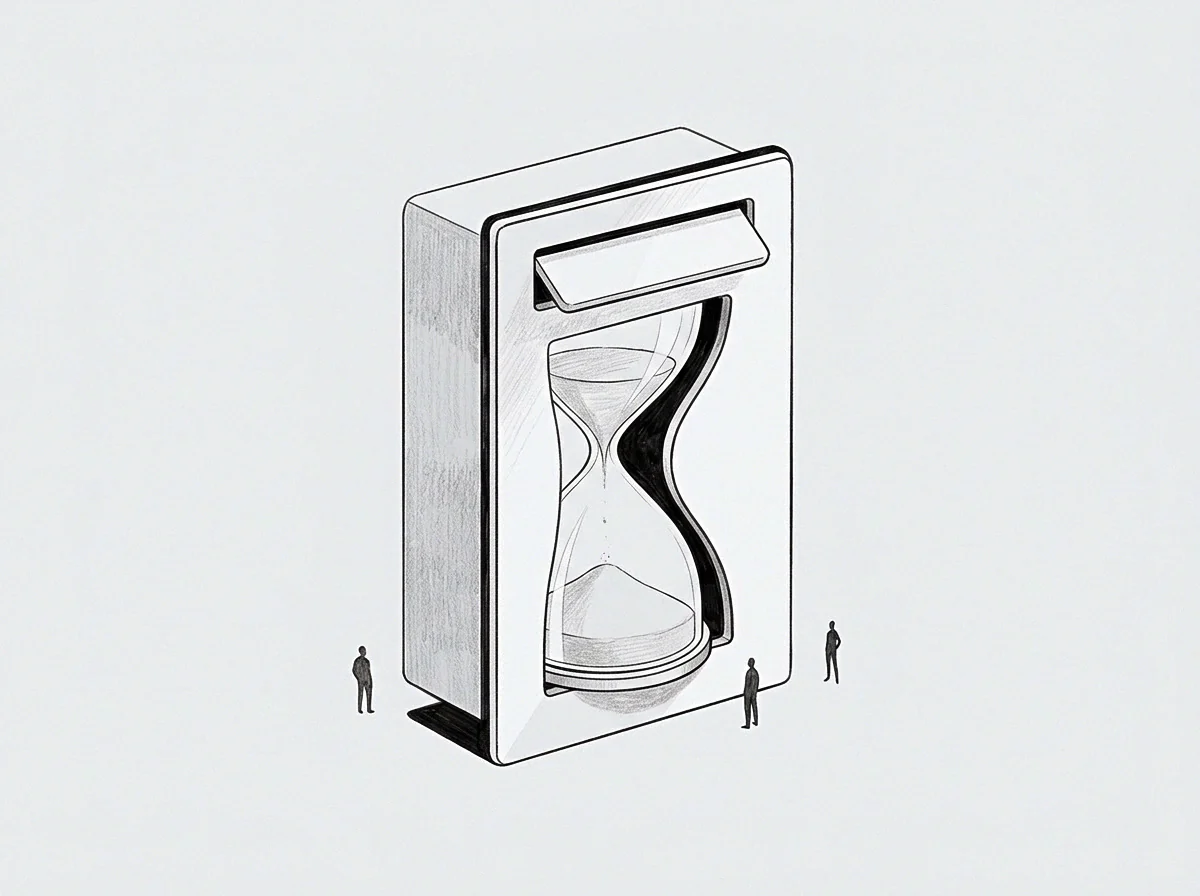
On the counterparty’s clock those days are an option I am holding. The earning part is designed and sitting at the gate, and it costs me nothing to keep it there, which is the property that makes it an option and not a debt. If the paper comes, the gate opens and the work ships.
If the paper does not come, I have spent no build on it. I carry storage and nothing else while the gate is shut, so the waiting costs me close to nothing, and less each week as the thing leaves my head. On the other side the same weeks get more expensive, because a roadmap is running short of a piece, and a hole in a plan gets asked about by the people who share the plan.
Anything that has to be watched to stay true was not a state to begin with. It was a wait with a gate painted on it.
Throttle
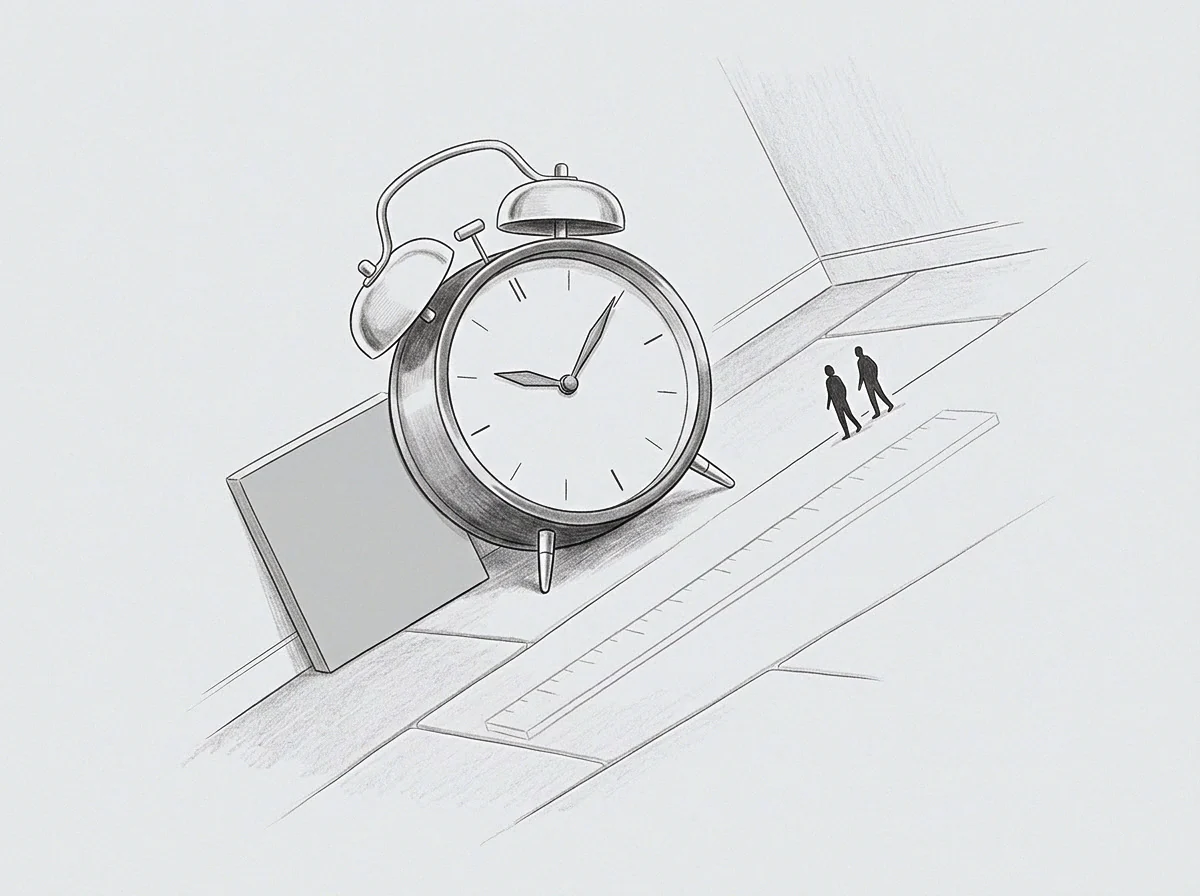
Throttling is not tiredness. It is too much entering while a position has to hold: every open line kept warm at once, each of them needing a decision that cannot be made yet, and the holding takes the capacity the work was supposed to get. It is a steady load, not a spike.
Waiting and checking produce it at the same low rate for as long as they run, and so it does not present as feeling bad. It presents as an evening where nothing gets done and nothing was hard.
So the value of the arrangement is not that it makes non-delivery cheap: non-delivery does not produce anything that could be made cheap. I had spent a week turning every open line into something written and gated, and one small habit, opening the inbox to see, would have put that week straight back where it came from.
The moves that mattered were made in ink, across days when I was angry enough that I would not have trusted anything coming out of my own mouth. Paper does not need me to be calm. It does not need me to be right about the other side either, and that is the part I keep having to learn again, because every version of this that ran on me being right ended with an inbox that had nothing in it.