
The governor
Two different things get called control, and only one of them falls apart the moment somebody says no. The other one is a limit set on my own output, metered by what actually comes back, and the week it went in, an old pattern stopped completing.
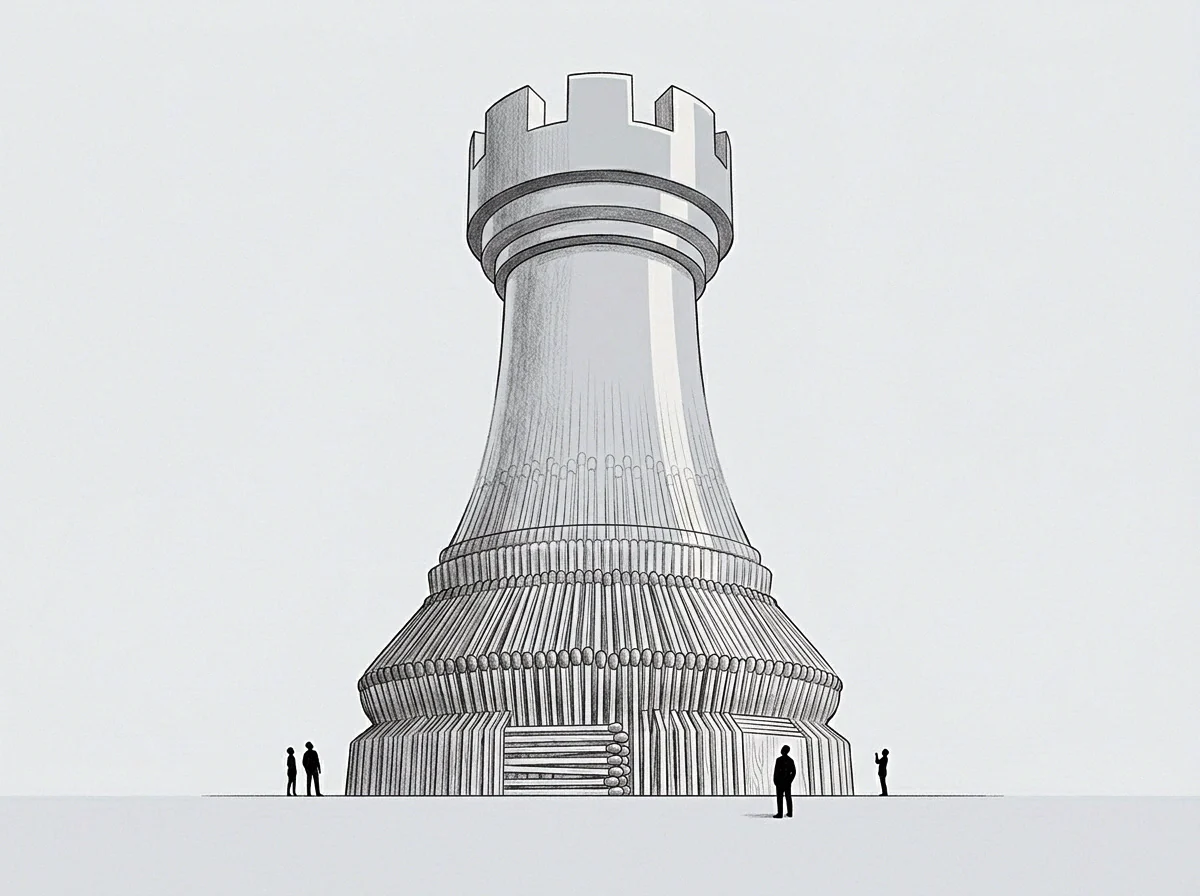
Meter
One man works on another until the other does the thing he already decided the other would do. A refusal there is the obstacle, so a no starts the next round: more pressure, a better framing, the same request in a shape he might take. Another man decides what he himself will put in, says it plainly, and lets the answer be whatever comes back.
A no there is not an obstacle. It is the answer. Both of these get called control.
I spent months asking which of the two I had turned into.
The test sits on the refusal and nowhere else. I said what I needed from the friend, said what I would put in, and the answer was no. I did not chase it.
I let the no stand. Steering cannot do that. It needs the outcome, so it runs until the outcome arrives or the person walks.
What I was doing needs the refusal to stay available, or it is not that thing at all.
The governor: a stated limit on my own output, set by what actually comes back, not by what I hope will come back once I have given enough. It governs my side. It leaves the other party where he was, free to say no.
What it changes is where the terms sit. They used to sit in my head, unsaid, and the other party was expected to work them out and honour them without being told, which is a covert contract, and a man on the far end of one has agreed to nothing. Now they go out loud.
A hidden term is what makes a man feel used. A said term is just a price.
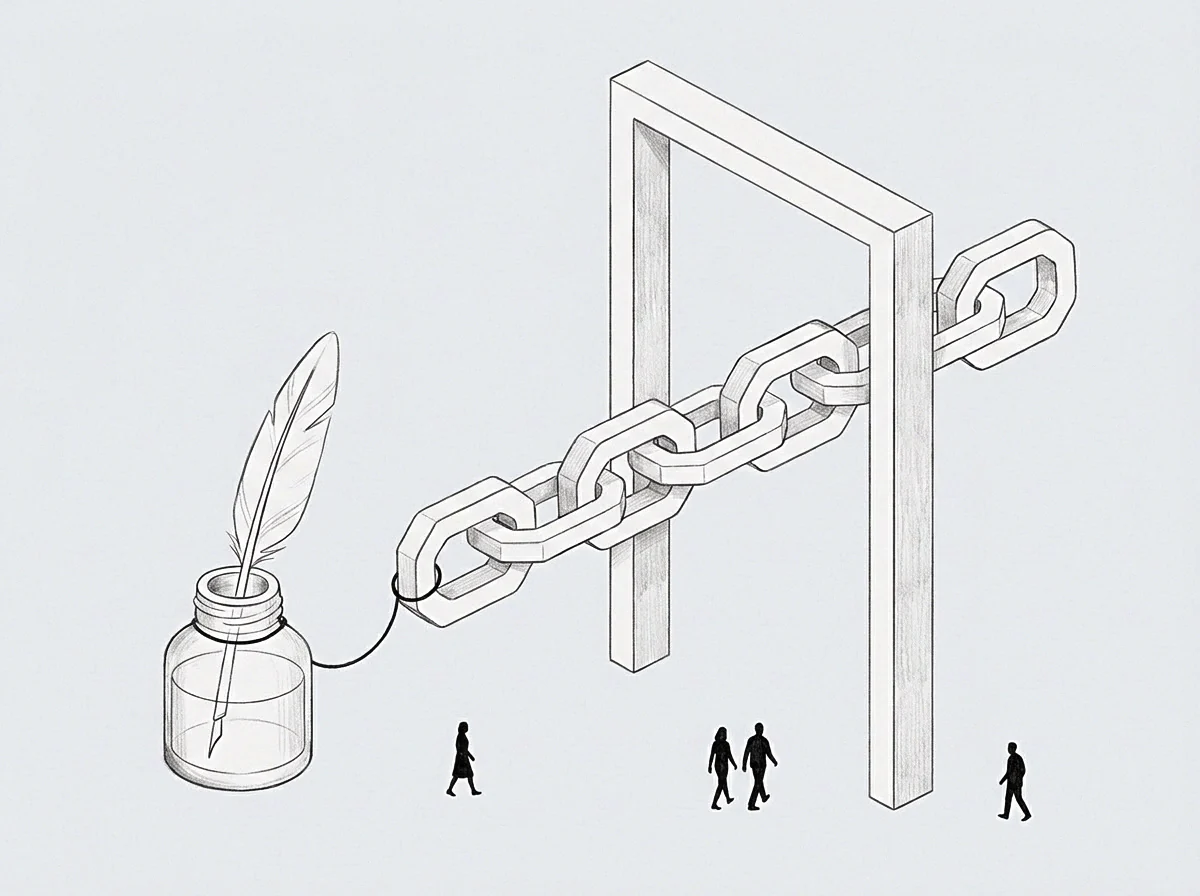
Supply
Before it went in there was one setting and it ran on everything. Give it all, absorb the cost, let the flow go one way, and hope somebody notices at the end what it took. That is not generosity.
Generosity has a limit standing behind it that the giver knows about. This had none, which is why it was never a decision. Put a child in the supplying position, with nothing coming the other way and no stop written anywhere, and he comes out of it fluent in the giving and with no idea where the stop would be.
The willingness was never the missing part. The equipment was.
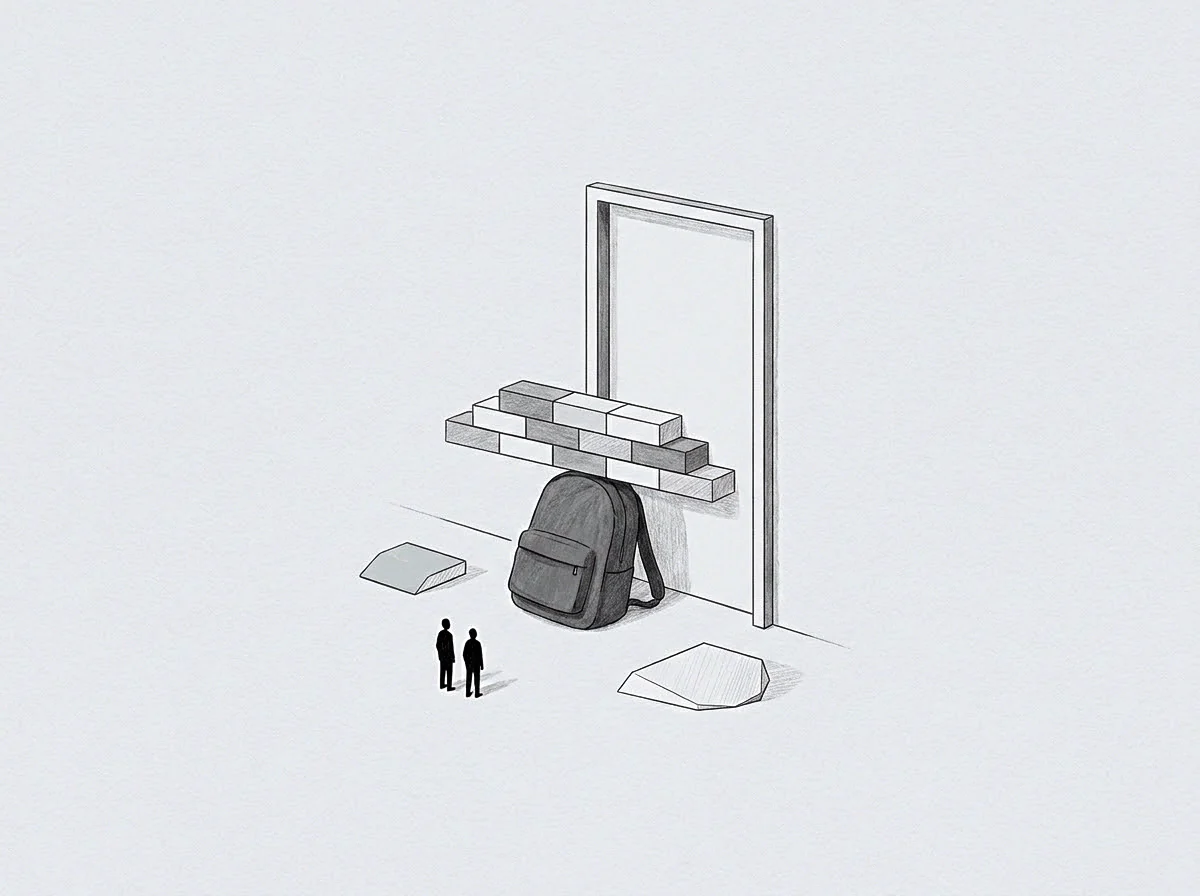
What Went Out Unpriced
- Work, in the plain sense: hours put in with no price on them, inside an arrangement with no date set on when it would close.
- Availability: a line held open in the head, which costs something every day it stays open whether or not anybody uses it.
- The reading: what I could see about a man’s situation, handed to him in full, unasked.
Somebody can point at the first two afterwards and put a figure near them. Nobody puts one near the last, and the last is the one that did the damage. I was slow to see it as supply at all, because it does not look like giving.
It looks like being helpful.
What goes out unpriced does not get counted at the end.
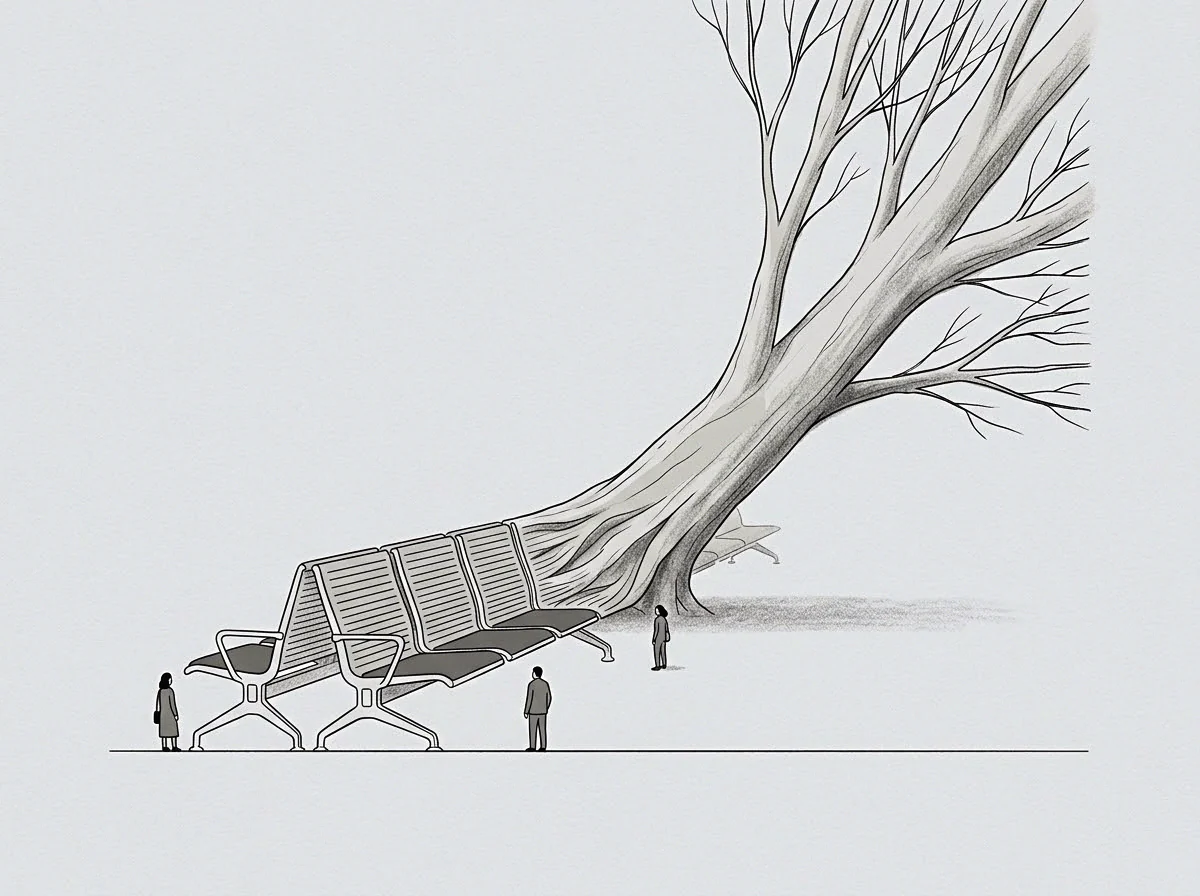
The Lesson at the End
The way I think is a loop. I go round a thing out loud, gather, circle, contradict myself, and land it flat at the end in one sentence that holds the whole of it. That landing is the payoff of the loop, and in my own head it is the point of the exercise.
The trouble starts when the loop gets pointed at a person I am in a conflict with, because then the last step stops being a position and turns into a reading of him: what he is, what he does, the name for the shape he runs. And a reading of a man is the one thing in the message he can pick up and use, because a position says where I stand and there is nothing in it to argue with, while a reading says what he is and can be argued with all night. I was handing over the ammunition as the closing line, every time, and calling it honesty.
Cutting that line off felt like being silenced, and I had to look hard at whether it was. It is not, and the difference is what the sentence is about. What I spent my life swallowing were needs: this is not working for me, I need something back, I am not doing this any more.
Those go out at full volume, on the day they happen, and if the practice ever starts eating those it goes in the bin. A reading of another man is not a need at all, it is teaching, and teaching him about himself is the job I have been trying to put down since I was a kid.
So the needs go out and the reading stays in the head that made it, and does the job it was built for, which is making me certain about where I stand. One of those is the silence I spent years climbing out of. The other one is the teacher standing up and leaving the room.
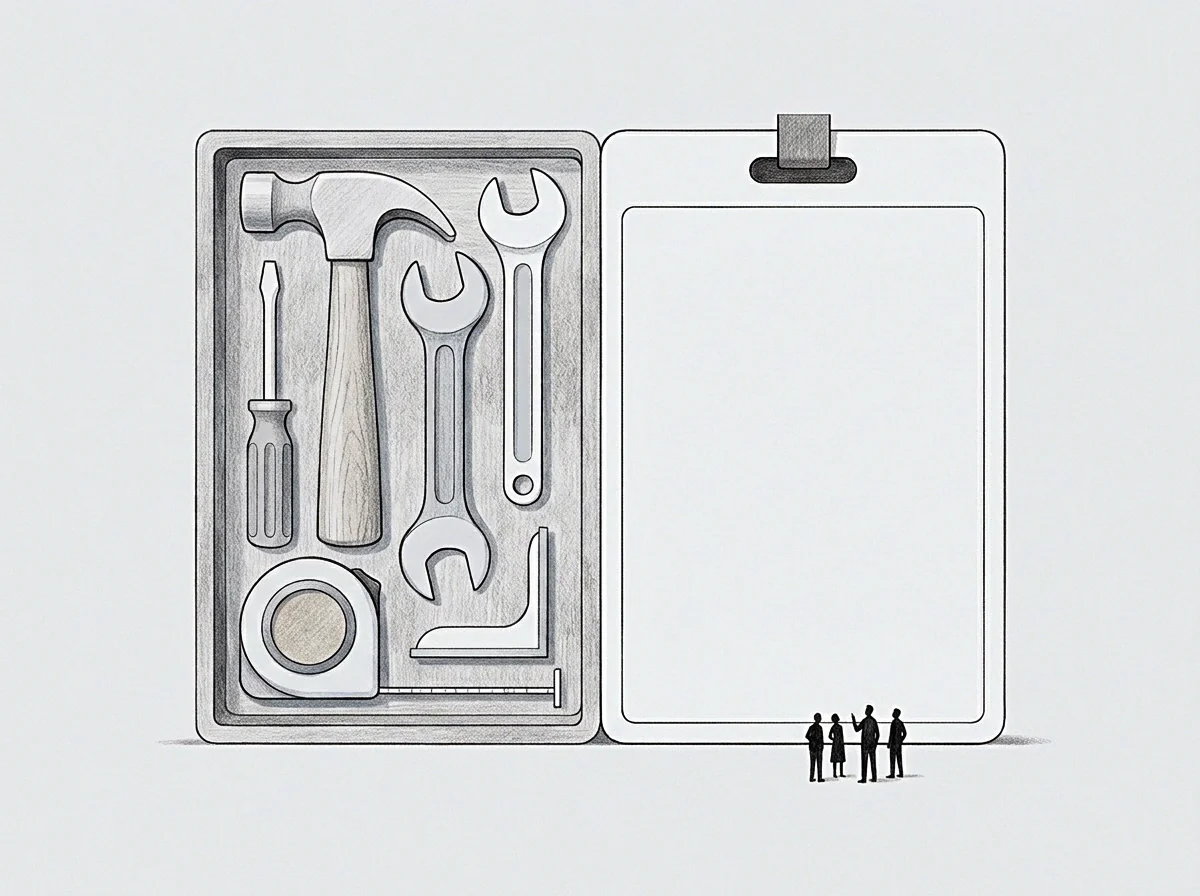
Completion
A stated limit sounds like willpower and it is not. What catches a person is not the giving.
It is the defining.
Psychological ownership is a body of work in organisational research, and the argument that put it on the map is Jon Pierce, Tatiana Kostova and Kurt Dirks, writing in the Academy of Management Review in 2001. Their case was that a person comes to hold a thing as mine inside his own head long before he holds any title to it, and often instead of ever holding one, and that this happens by three routes: taking control of the thing, coming to know it in detail from the inside, and putting something of his own into it. Run one route and the feeling starts.
Run all three and the thing is his. The field has used it since mostly to explain workers who behave like owners of work they do not own: why they defend it past any instruction to, why they carry it home, and why a change made to it lands on them as a change made to them.
Set my own habit against that list. A request arrives with a half-formed idea in it and I define the idea, which platform, which structure, which sequence, what attaches to what and in what order. Three routes, one afternoon.
By the evening the thing is mine, whoever asked for it and whoever takes the upside, and after that, not building it does not feel like turning down a request. It feels like walking out on my own work. That is how a stack of proposals happened over the years.
Nobody made me own them. Defining them did.
Under it sits an older finding. Bluma Zeigarnik, working in Kurt Lewin’s group in Berlin, published in 1927 what she got from stopping people in the middle of small tasks: they came back with the interrupted ones about twice as often as the ones they had been allowed to finish. The story the work started from is the waiter who could hold every unsettled order in his head and lost the lot the moment the bill was paid.
The finding is that an unfinished job stays live and a finished one goes quiet, and psychology has leaned on it since for the cliffhanger, the progress bar, the count sitting unread on an icon, with replications that hold up smaller than the story does. Say an arrangement in those terms and it reads straight. An idea I have defined is an unfinished job sitting in working memory asking to be closed, and my way of closing anything is to build it.
An idea I have only costed is a shut question. Nothing opened, so nothing is waiting on me, and the whole thing leaves my head the same day the conversation ends.
A number can be handed over; a structure cannot.
The third one comes off a different shelf. Talk between two people runs in fitted pairs: Timothy Leary drew that map in 1957, and the rule that came off it is complementarity, which says a move pulls its own answer out of whoever is standing there. One pursues and the other pulls back.
One attacks and the other defends. One bids and the other reassures. Interpersonal researchers took the next step later and asked what a person can do by withholding the fitted answer on purpose, and non-complementary behaviour is the name that stuck to it.
I keep the academic name as a lookup key and nothing more. The working version is short. The answering move does not arrive.
Doing it costs something and I feel it in the room while it happens. I can see the whole build in seconds, and holding that in my mouth is not the same act as saying no to a request. Saying no is a limit and it has a shape everybody recognises.
Sitting on a solution while the man in front of me throttles reads to me as sabotage, and goes on reading that way for the length of the conversation. I do it anyway, on every request that arrives with an idea inside it, because the handle is short and it holds. Say the hours.
Do not say the shape.

Tension
A bid is a move that only pays if the other person finishes it. They came close together, and not one was a request for information.
They all had the same build. A message that asks where a thing stands and asks nothing else, so that the only way to answer it is to say more than was asked for. That is the whole class, and there is no point quoting one, because the words are never the working part.
A question that wants a response, not an answer.
I only saw the pairs after I stopped supplying my half of one. The second half is what lets the first half finish, and most of the time both parties hand it over without ever deciding to. Break the fit on purpose, giving neither the fitted answer nor its opposite, saying where you stand and then nothing, and the move that called for an answer has nothing to close on.
Each one is a shape with a hole in it, and the hole is my size. Supply the ending and the move lands. Supply the reassurance and it lands.
Supply the reading of what the man who bids is, and it lands with something left in his hand. So here is the sequence, and I can describe it because I ran it. He bids.
I say where I stand, once, in one sentence. I do not reassure him and I do not refuse him.
Then I stop.
The move does not resolve, and whoever opened it stays holding the tension he was building, with a choice that is now his to own.
Every move of that kind calls for an answering move, and mine was the same one every time: the reassurance, or the reading, delivered before anybody asked for it. I know the shape of my half better than I know the other side of it, because I supplied it for years without noticing I was the one holding the thing up. He was steering with my half, and my half did not arrive.
What I took from it is small and it changed how the quiet feels: the silence in the room after I say where I stand is not me being cold, it is a pattern failing to complete, and it is supposed to feel like that.
What it cost to find that out is that it does not feel like strength while it is happening. It feels like a power move, like I have crossed into being something I did not want to be. I gave for years and put a figure on none of it, so now the plain act of saying what I will put in and what I need back arrives in me as an attack on somebody.
That much I have worked out. The harder version I have not: on the day somebody takes my terms, uses them against me and goes, do I hold the position, or do I find a reason to open the line again and call it kindness?
Return
The meter reads what comes back, and it reads it one arrangement at a time. Nothing gets set once and laid over everybody.
Where it came back, the healthy version is not a refusal to help. A partner who carried real risk for me and gave me the room to learn what I know asked for a build, and he got a yes with one condition on it: write down what your half is. Not a test and not a punishment.
If the document arrives, he is in the thing with me. If it never arrives, the limit held itself and I did not have to do anything to hold it. Where the answer came back as a plain no, there was nothing to build on.
I did not treat the no as a first offer to be worked on. Nothing was hidden in it and nothing needed reading into it. The terms go out once, in one sentence, and nothing gets stacked on top of them.
The capacity is finite, and the terms for its use are mine to set.
Same me, two settings, and neither setting is a mood about the person. Both come out of what the arrangement actually does, read off what arrived and not off what was said would arrive.
So the meter is new equipment and it does not read well yet. It over-corrects in one direction and sits at zero in the other. Saying the terms once and adding nothing to them still arrives in me as something hard done to a man who only answered honestly.
That is the old setting, still running underneath.